You want power without the bulk. These tiny machines deliver.
Picture dual 4K screens running smooth, your apps flying open, storage that keeps up. Wi-Fi 6 connects fast. Ethernet holds strong.
You’ll plug in, power up, multitask without pause. Some let you swap RAM, upgrade SSDs, grow with your needs. Ryzen, Intel N95, i3, each chip brings fight. Quiet fans hum. Metal cases stay cool. Your workspace stays clean.
But one stands out, and you’ll want to know which.
Quick Overview
- AMD Ryzen 3300U powers the KAMRUI Pinova P1 with 16GB RAM and triple 4K output for future-ready multitasking.
- GMKtec’s Intel N95 mini PC delivers 36% better performance than prior models with efficient quad-core processing.
- The GMKtec G3 Pro features Wi-Fi 6 and 2.5GbE for high-speed connectivity in compact, quiet designs.
- BOSGAME’s Ryzen 5 3501U mini PC supports triple 4K displays and offers easy RAM and storage upgrades.
- GMKtec G3 Pro with i3-10110U provides Hyper-Threading, PCIe SSD performance, and Ubuntu/Proxmox compatibility.
| KAMRUI Pinova P1 Mini PC (16GB RAM 256GB SSD) | 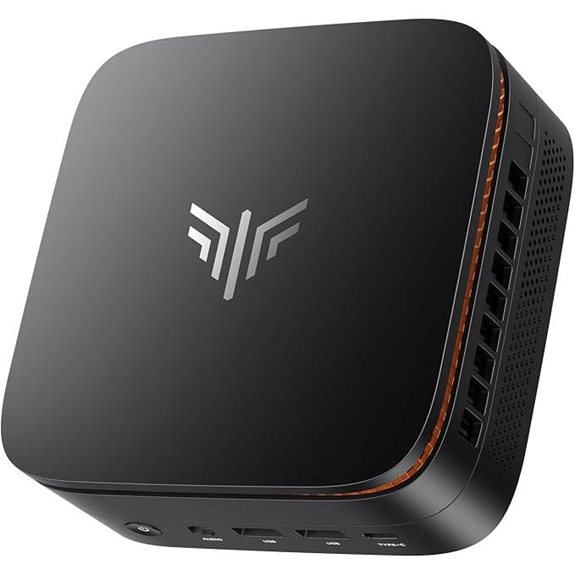 | Best for Multitasking | Processor: AMD Ryzen 3300U | RAM: 16GB DDR4 | Storage: 256GB SSD | VIEW LATEST PRICE | Read Our Analysis |
| GMKtec Mini PC Computers Intel N95 Processor (Turbo 3.4GHz) | 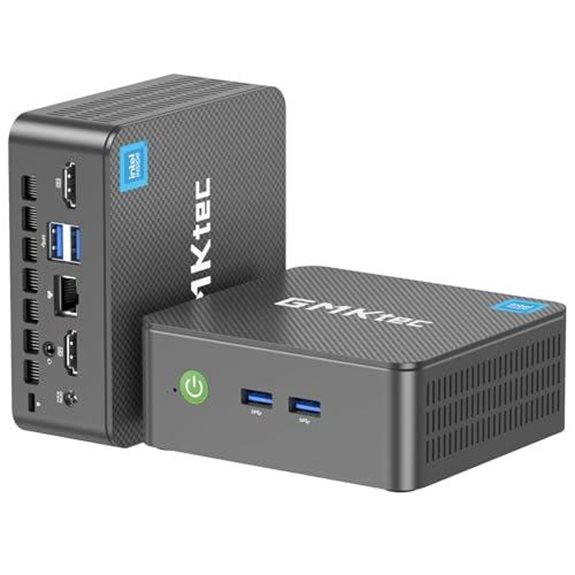 | Budget Performance Pick | Processor: Intel N95 | RAM: 8GB DDR4 | Storage: 256GB M.2 2242 SSD | VIEW LATEST PRICE | Read Our Analysis |
| GMKtec G3 Pro Mini PC Intel Core i3-10110U 16GB DDR4 512GB PCIe M.2 SSD | 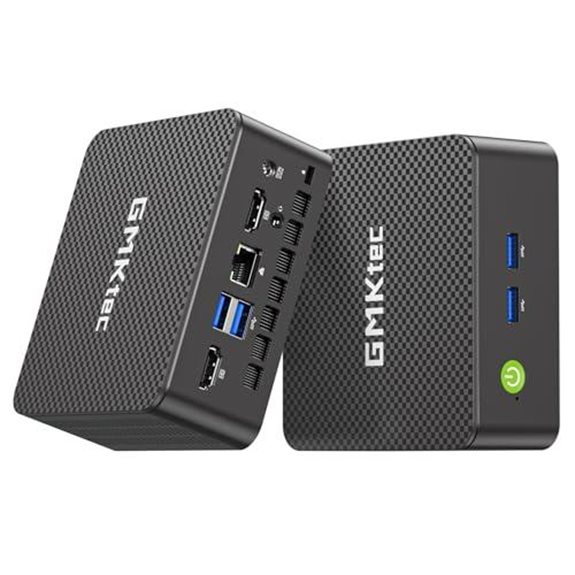 | Top Productivity Pick | Processor: Intel Core i3-10110U | RAM: 16GB DDR4 | Storage: 512GB M.2 SATA SSD | VIEW LATEST PRICE | Read Our Analysis |
| GMKtec Mini PC G3 PRO (i3-10110U 16GB 512GB) | 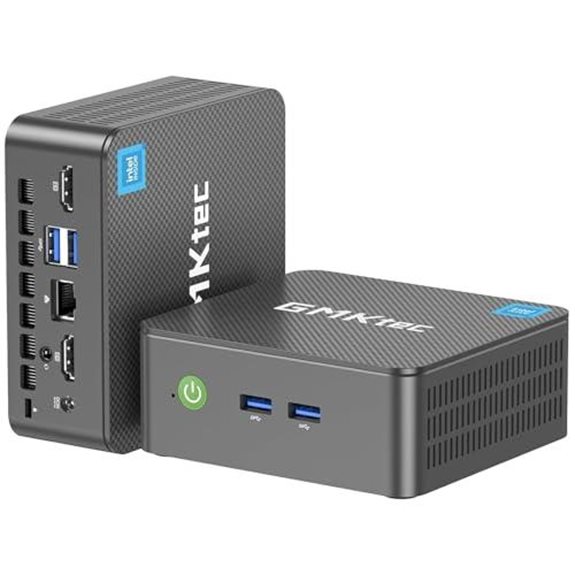 | Best for Professionals | Processor: Intel Core i3-10110U | RAM: 16GB DDR4 | Storage: 512GB M.2 SSD | VIEW LATEST PRICE | Read Our Analysis |
| BOSGAME Mini PC AMD Ryzen 5 3501U 8GB RAM 256GB SSD | 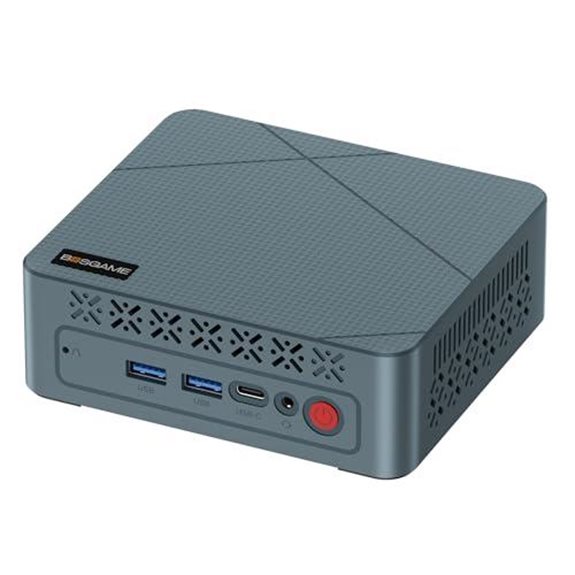 | Best for Multi-Display Setup | Processor: AMD Ryzen 5 3501U | RAM: 8GB DDR4 | Storage: 256GB SSD | VIEW LATEST PRICE | Read Our Analysis |
More Details on Our Top Picks
KAMRUI Pinova P1 Mini PC (16GB RAM 256GB SSD)
Need a compact powerhouse that keeps up with your busy workflow? You’ve got it. The KAMRUI Pinova P1 hums with an AMD Ryzen 3300U: 4 cores, 3.5GHz boost, crushing spreadsheets, streams, and edits. Its 16GB RAM handles tabs, apps, and light video work smoothly. Feel the speed jump over N-series chips.
A 256GB SSD boots fast, stores docs, photos, and more, expandable to 4TB. See triple 4K displays light up: HDMI 2.0, DisplayPort 1.4, USB-C feed them all. Vega 6 graphics push 1.2GHz, outclassing UHD rivals. Five USB ports link devices. Wi-Fi 5 and Gigabit Ethernet keep you online.
It’s small, just over 5 inches, but runs 24/7, cool and steady.
- Processor:AMD Ryzen 3300U
- RAM:16GB DDR4
- Storage:256GB SSD
- Graphics:AMD Radeon Vega 6
- Display Output:HDMI, DisplayPort, USB-C
- Wireless:Wi-Fi 5, Bluetooth
- Additional Feature:Dual M.2 2280 slots
- Additional Feature:24/7 operation capable
- Additional Feature:Wake-on-LAN support
GMKtec Mini PC Computers Intel N95 Processor (Turbo 3.4GHz)
Want serious power without the price tag? You’ve got it. The GMKtec Mini PC packs the Intel N95 processor: 4 cores, 3.4GHz turbo, 36% faster than older models. It flies through office work, browsing, and 4K videos. With 8GB RAM and 256GB SSD, boot-up is quick, multitasking smooth.
Need two 4K displays? Plug in both via dual HDMI 2.0 ports. Stream, work, or watch AV1-encoded movies with ease. It connects to Wi-Fi 5, Bluetooth 5.0, and gigabit Ethernet. Use USB 3.2 for fast transfers.
Set it as a server with Wake On LAN, PXE, or auto power-on. Compact, capable, and backed by a 1-year warranty, you’re ready.
- Processor:Intel N95
- RAM:8GB DDR4
- Storage:256GB M.2 2242 SSD
- Graphics:Intel Graphics
- Display Output:Dual HDMI 2.0
- Wireless:Wi-Fi 5, Bluetooth 5.0
- Additional Feature:36% faster than N100
- Additional Feature:PXE Boot support
- Additional Feature:Server-ready Wake On LAN
GMKtec G3 Pro Mini PC Intel Core i3-10110U 16GB DDR4 512GB PCIe M.2 SSD
What if your desk could do more with less? You get real speed here: Intel Core i3-10110U hits 4.1 GHz, handles web, office apps, multitasking with ease. You’re not just streaming; you’re running spreadsheets, browsing, and video calls smoothly. Hyper-Threading boosts performance, better than basic chips.
You’ve got 16GB DDR4 RAM, so apps fly. A 512GB PCIe SSD loads fast. You’ll boot in seconds. Need more storage? Add a drive with an extra NVMe slot.
With HDMI 2.0 x2, you power dual 4K screens. Plug in monitors, projectors, TVs. You’re ready for work, media, even light gaming. Wi-Fi 6, 2.5GbE, Bluetooth 5.2 keep your connections strong, sharp, and reliable.
- Processor:Intel Core i3-10110U
- RAM:16GB DDR4
- Storage:512GB M.2 SATA SSD
- Graphics:Intel Graphics
- Display Output:Dual HDMI 2.0
- Wireless:Wi-Fi 6, Bluetooth 5.2
- Additional Feature:2.5Gb Ethernet
- Additional Feature:Hyper-Threading enabled
- Additional Feature:Supports Proxmox/VMware
GMKtec Mini PC G3 PRO (i3-10110U 16GB 512GB)
Looking for a compact machine that handles office tasks without breaking a sweat? Meet the GMKtec G3 PRO. You get an Intel Core i3-10110U, fast at 4.1 GHz, smooth for web, documents, and multitasking. With 16GB DDR4 RAM, apps fly. The 512GB SSD boots fast, loads files quick, keeps you moving.
Dual HDMI 2.0 ports pump out 4K at 60Hz, great for dual screens. You multitask, stream, and present without hiccups. WiFi 6 and 2.5GbE keep you connected, while the cooling fan stays quiet, even under load.
Ubuntu, VMware, Proxmox, it runs them. You’re covered with a 1-year warranty. Compact, yes. Weak, never. This tiny box delivers.
- Processor:Intel Core i3-10110U
- RAM:16GB DDR4
- Storage:512GB M.2 SSD
- Graphics:Intel Graphics
- Display Output:Dual HDMI 2.0
- Wireless:Wi-Fi 6, Bluetooth 5.2
- Additional Feature:Dual HDMI 4K output
- Additional Feature:Upgraded cooling fan
- Additional Feature:Enhanced thermal paste
BOSGAME Mini PC AMD Ryzen 5 3501U 8GB RAM 256GB SSD
Need more screen space without the bulk? You get triple displays here: two HDMI 2.0 ports push 4K at 60Hz, and USB-C adds a third screen. Juggle spreadsheets, Zoom calls, and streaming smoothly.
The AMD Ryzen 5 3501U powers through tasks fast, with 4 cores, 8 threads, up to 3.7 GHz. Vega 8 graphics handle daily work without lag. Multitask easily with 8GB DDR4 RAM and a quick 256GB SSD.
Need more power later? Swap or add memory, up to 32GB total. It’s compact, quiet, and fits anywhere: desk, classroom, store. Plug in printers, speakers, projectors. Use it with Windows 11 Pro or Ubuntu. Upgrade-friendly, tough, ready.
- Processor:AMD Ryzen 5 3501U
- RAM:8GB DDR4
- Storage:256GB SSD
- Graphics:Radeon Vega 8
- Display Output:Dual HDMI, USB-C
- Wireless:Wi-Fi 5, Bluetooth 5.0
- Additional Feature:Triple display support
- Additional Feature:OS pre-installed
- Additional Feature:Supports Windows 11 Pro
Factors to Consider When Choosing Mini Computers
You need speed, so check the processor-it’s the brain of your tiny PC. Memory and storage? They matter-8GB RAM handles daily tasks, but more helps if you run heavy apps or games.
You need speed, so check the processor: it’s the brain of your tiny PC. Memory and storage matter. 8GB RAM handles daily tasks, but more helps if you run heavy apps or games.
Look closely: graphics, ports, and display options shape what your mini computer can truly do.
Processor Performance Comparison
Speed.
You need power in small machines. The Ryzen 3 3300U runs at 2.1 GHz base, boosts to 3.5 GHz, with 4 cores and 4 threads, solid, smooth, 25% faster base speed than most N-series chips. You’ll feel that edge. But Intel’s Alder Lake N95 jumps ahead, 36% better overall, burst up to 3.4 GHz, same 4 cores, same threads, but smarter design. It hums.
Then there’s the Core i3-10110U, dual-core, yes, but clocking 4.1 GHz peak, Hyper-Threading included. You multitask. You breeze through spreadsheets. You handle video calls and browser tabs like it’s nothing. Machines using this chip shine in light work.
You want speed? Watch boost clocks. Count cores and threads. Compare architectures: Ryzen, Alder Lake, N-series. Each breathes differently. Single-core bursts matter. So does multi-thread muscle. You match the chip to your tasks, fast clocks for snappy response, more threads for juggling jobs. Pick right. Move fast. Stay smooth.
Memory And Storage Options
What keeps your mini PC snappy when juggling apps or loading giant files?
RAM and storage choices do. You’ll find 8GB to 16GB of memory, and going dual-channel boosts speed-apps open faster, tabs stay smooth. Most let you upgrade RAM later using SO-DIMM slots. Start small, grow as you need.
Storage starts at 256GB, often 512GB, all SSDs in M.2 form. That means quick boots and swift file access. Need more. Some models offer two drive slots: add a second M.2 or SATA SSD. Combine drives for extra space or split tasks between them.
Big files, video edits, or running virtual machines. More storage and RAM make it effortless. Don’t settle for base specs, build room to grow. Your workflow will move like a drumroll: sharp, steady, never stumbling. Keep speed, keep space. You’ve got this.
Graphics Capabilities Evaluated
How sharp do your screens need to run?
If you’re pushing 4K video, Intel UHD’s 1000MHz cap handles playback fine. But for tougher tasks, AMD’s Radeon Vega 6 flexes, up to 4× faster in some workloads. You’ll want that punch if editing or streaming.
These chips share your system RAM, so 16GB DDR4 helps, but remember: heavy graphics eat bandwidth. Newer Intel GPUs decode AV1, great for streaming; Vega leans into media centers and triple-display setups.
Thermal design is crucial. Good cooling keeps clock speeds high, so performance doesn’t nosedive during long renders. Some minis drive triple 4K screens through HDMI 2.0, DP 1.4, and USB-C. Others max out at dual 4K@60Hz.
Pick based on your setup. Demand matters. Match the machine to your screen goals, no more, no less.
Display Output Flexibility
Your screen setup starts with the right connections. Look for multiple independent outputs-HDMI 2.0, DisplayPort 1.4, USB-C with DP Alt Mode-so you can drive two or three monitors at once. Each port should support at least 4K@60Hz for crisp, smooth visuals. Need triple 4K screens? Check that the system won’t throttle under load.
USB-C must carry video, not just data. Don’t assume it does. Test dual-display flexibility: can both run 4K content side by side without jitter? A good mini PC handles streaming, browsing, and video calls across all screens, no hiccups.
You want seamless. You want reliability. Match your display needs to its specs, don’t settle for less. The right machine powers your work, your play, your flow, exactly how you need it.
Connectivity And Port Types
Where do your devices plug in, and do they have room to grow? You’ll need USB ports-lots of them. Look for USB 3.2 Gen 2, not just Gen 1. Speed matters.
USB-C with data and video lets you connect monitors and fast drives. Need multi-monitor setups? Check HDMI, DisplayPort, or USB-C DP Alt Mode. 4K support isn’t optional anymore.
Stay wired with Gigabit Ethernet for rock-solid connections. Go wireless with Wi-Fi 6 and Bluetooth 5.3. They keep lag low and links strong.
Expansion counts too. M.2 slots, NVMe or SATA? More options mean faster storage later. You’ll want PCIe flexibility. Need remote access? Features like Wake-on-LAN, PXE Boot, or RTC Wake help. They turn tiny PCs into workhorses.
Don’t guess. Plan. Plug in now. Build for what’s next. Your mini PC must grow with you.
Cooling And Noise Levels
Why does your mini PC sound like a jet engine when you’re just streaming a movie?
Because tiny cases trap heat, forcing fans to scream under load. Your multi-core processor heats up fast. Without smart cooling, temps soar. Fan noise spikes. You hear every spin.
Efficient designs use larger heatsinks, dual airflow paths, even phase-change tech. They move heat fast. Quietly. Overheat too much, and thermal throttling kicks in, your speed drops. Performance stumbles. You lose momentum.
Look for systems that balance cooling and calm. A well-cooled mini PC runs cool, stays quiet, and keeps clocks steady. Even under stress, it won’t roar. Good airflow means silence during movies, power during games.
You get both, only if the design respects thermals. Noise shouldn’t cost performance. It’s not too much to ask. Stay cool. Stay quiet. Demand both. Let your mini breathe.
Expandability And Upgrades
How much can your mini PC grow with you?
You want power now and room to expand later. Look for dual M.2 slots: they let you stack NVMe and SATA SSDs, boosting storage fast. Need more speed? Add extra RAM in dual-channel mode for smoother multitasking. Many mini PCs support higher capacities, so your system keeps up as demands rise.
Want faster drives down the road? PCIe-based M.2 slots (2280 or 2242) let you upgrade storage easily. No case to open? Use USB-C for external docks or extra displays, expand without tools.
Even better, features like Wake-on-LAN and PXE Boot mean you can reimage or reboot remotely, like a pro server. Your tiny PC stays flexible, ready to adapt, upgrade, and grow quietly and confidently, right beside you.
Use Case Suitability
When your work demands speed and smarts, pick a mini PC that keeps pace with what you do. Match the CPU to your tasks-boost clocks and multi-cores power through editing, coding, or heavy tabs. For emails and videos, simpler chips work just fine.
Load 16GB RAM with fast NVMe storage if you juggle spreadsheets, browsers, and design tools; 8GB struggles under heavy loads. Need dual 4K screens? Go for models with HDMI and DisplayPort outputs, perfect for editing, trading, or immersive browsing. Check ports: USB-A, USB-C, Gigabit Ethernet, Wi-Fi 6, and Bluetooth keep you connected and fast.
Want a home server or digital sign? Pick one with Wake-on-LAN, PXE boot, and room to expand via M.2 slots. Compact doesn’t mean limited-choose right, and it fits classrooms, offices, or your clutter-free desk with quiet strength.
Frequently Asked Questions
Can Mini PCS Be Upgraded After Purchase?
Yes, you can upgrade some mini PCs after purchase. Open the case carefully. Swap the RAM or SSD like changing clothes. More memory speeds things up. Bigger storage holds games and videos.
Check your model first. Many let you boost storage. Few allow RAM changes. Wi-Fi cards sometimes upgrade too. Power adapters stay put. You can’t change processors.
Plan smart. Keep drivers ready. Upgrade step by step. You’ve got this.
Are Mini PCS Good for Gaming?
Yes, you can game on mini PCs, but pick wisely. Some run AAA titles smooth; others handle indie gems or esports hits like *Valorant*. You plug in, boot up, and expect crisp 1080p if your rig’s built right.
Look for strong CPUs, dedicated GPUs, and cooling vents. A NUC with an RTX card roars. Don’t cram a potato into a power role. Match game demands to specs.
You play smart, you win. You upgrade parts if allowed. Mini doesn’t mean weak. You’re ready.
Do Mini PCS Support Dual Monitors?
Yes, you can run dual monitors on most mini PCs, some juggle screens like a circus pro with ease. Just plug one display into the HDMI port, another into the DisplayPort or USB-C. You adjust the display settings in your OS.
Drag windows between screens. Stretch apps across both. Most modern mini PCs handle this smoothly. Some even drive four monitors.
Always check video outputs before buying. Simple. Powerful. Yours.
How Do Mini PCS Handle Overheating?
You manage heat in mini PCs with smart design and airflow. Tiny fans spin fast, moving hot air out. Heat pipes pull warmth from the CPU. Metal cases help shed heat.
You place the PC upright, vents clear. Dust clogs cooling, so you clean often. You avoid stuffing it in tight spaces.
When busy, the system throttles speed. But good models stay cool, quiet, and strong. You stay focused. Performance stays steady.
Are Mini PCS Suitable for Kids?
Yes, mini PCs are great for kids. You keep them safe. You save space. You limit distractions. They browse, learn, and create without hassle.
A mini PC runs school apps, videos, and games smoothly. It fits under a desk, out of reach. Cables stay tidy. You control screen time.
It connects to any monitor. No loud fans. No bulky tower. Simple. Strong. Ready for homework, art, or math. You’ll trust it. Kids stay focused. Learning wins.