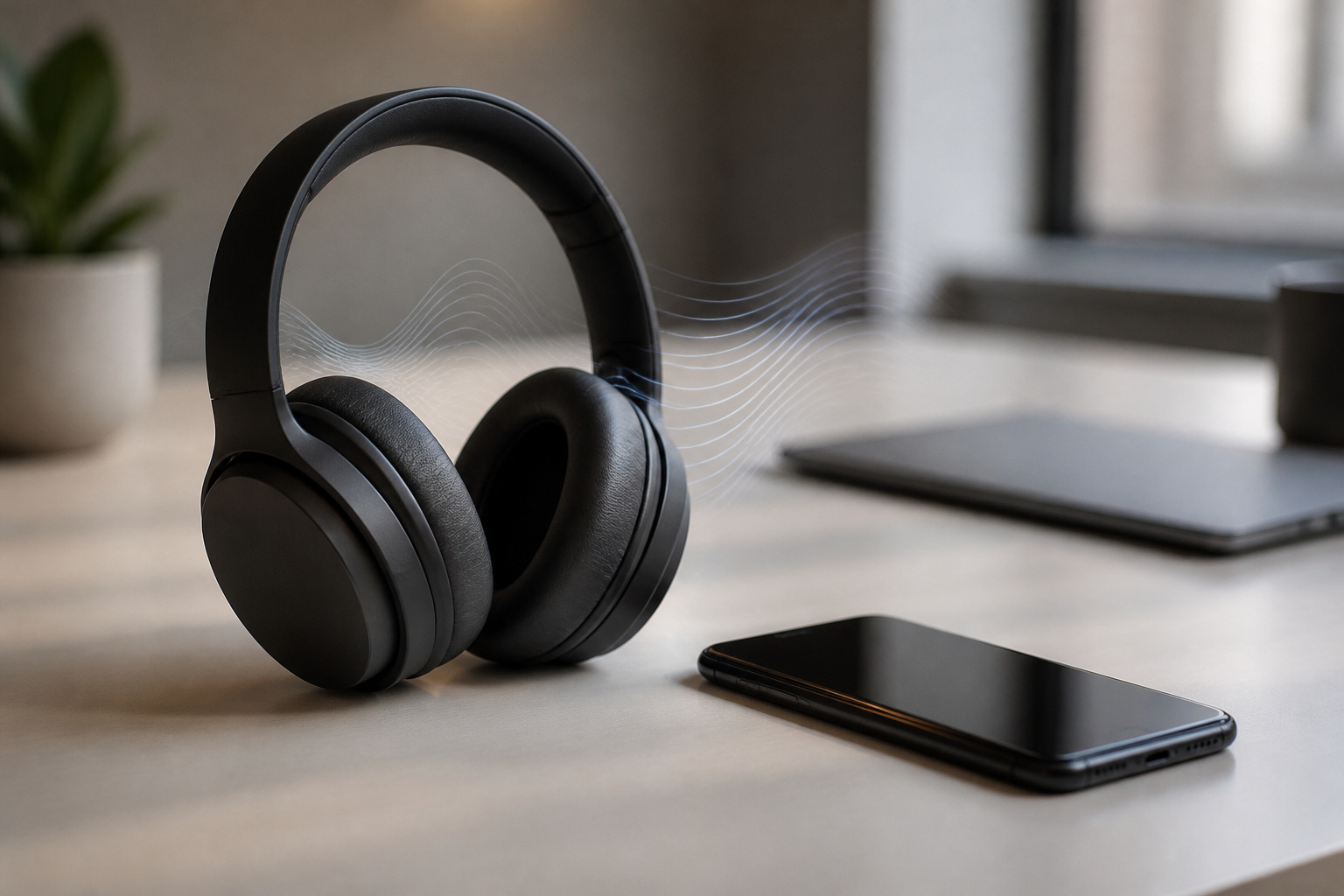
Bluetooth codecs are the formats that compress audio so it can travel wirelessly from your phone to your headphones. The codec affects sound quality, delay, and battery life. Both devices must support a codec for it to be used, so the best one is the best one your phone and headphones share.
What a Bluetooth Codec Does
Bluetooth cannot send music in its original form, because it has limited bandwidth. A codec compresses the audio at the sender and decompresses it at the receiver.
Better codecs keep more detail, or use the available bandwidth more efficiently. Your devices pick the best shared codec automatically.
SBC
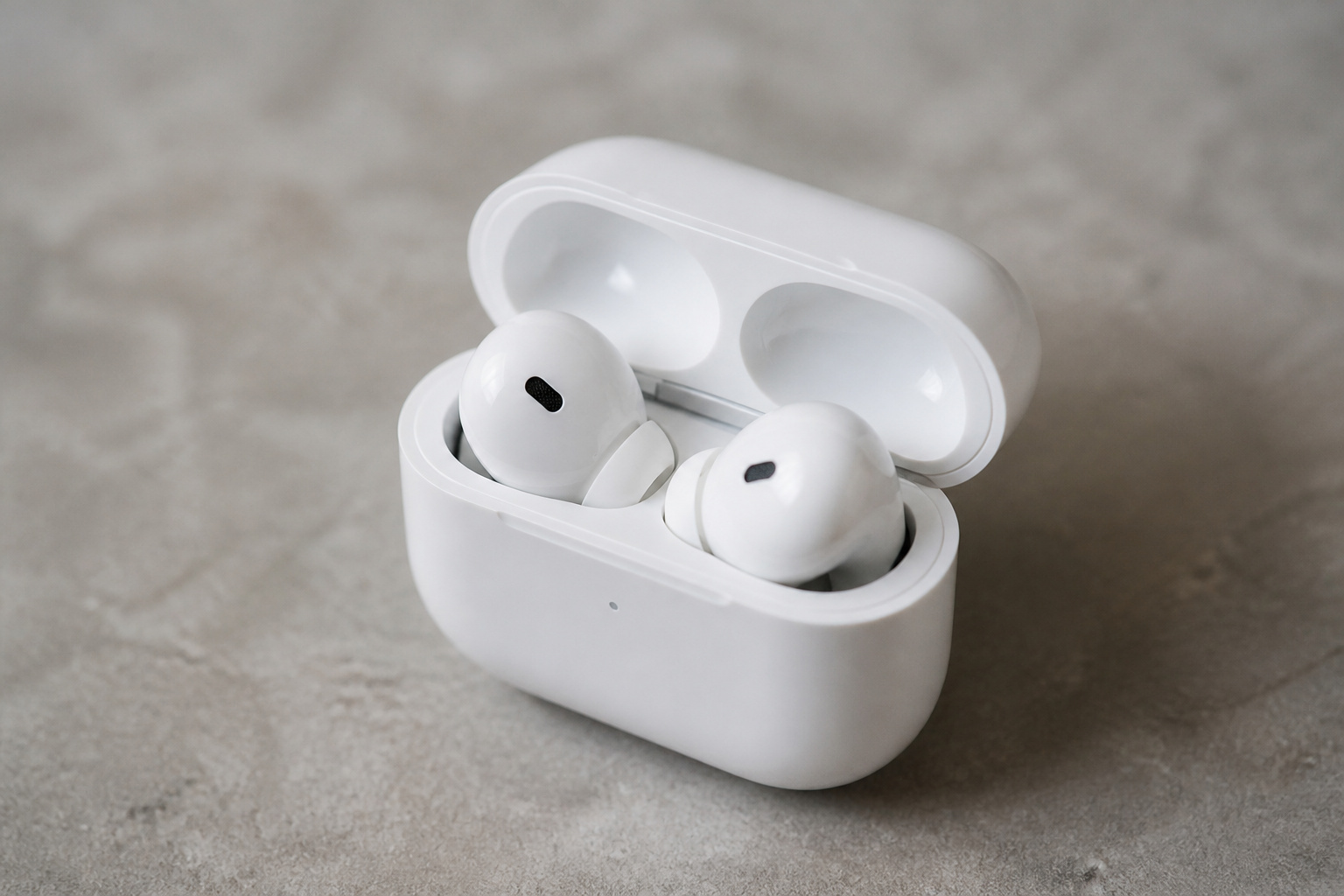
SBC is the basic codec that every Bluetooth audio device supports. It works everywhere and sounds fine for casual listening.
It keeps less detail than newer codecs and often has more delay.
Recommended Products

【ASTONISHING SOUND PRODUCTION 】: High Definition Stereo Headphones, specially developed software and noise reduction technology designed to prevent you from heating ambient noises and makes you focus on what you want to hear. Lose yourself in immersive music even in the lowest volume levels! The goal that provide Customers with outstanding sound quality is our constant pursuit.
【Larger Dynamic Lower Distortion】The 13mm dynamic driver consists of a composite flexible suspension diaphragm with a Beryllium-plated dome, offering excellent treble extension and fine detail, with exceptional bass and superior low distortion.

Headphones Wireless Bluetooth: Pair with your Bluetooth devices and listen to your favorite music for up to 10 hours on a single charge! These bluetooth headphones over the ear are compatible with Netflix, Hulu, Pandora, Spotify, and Apple Music.
AAC
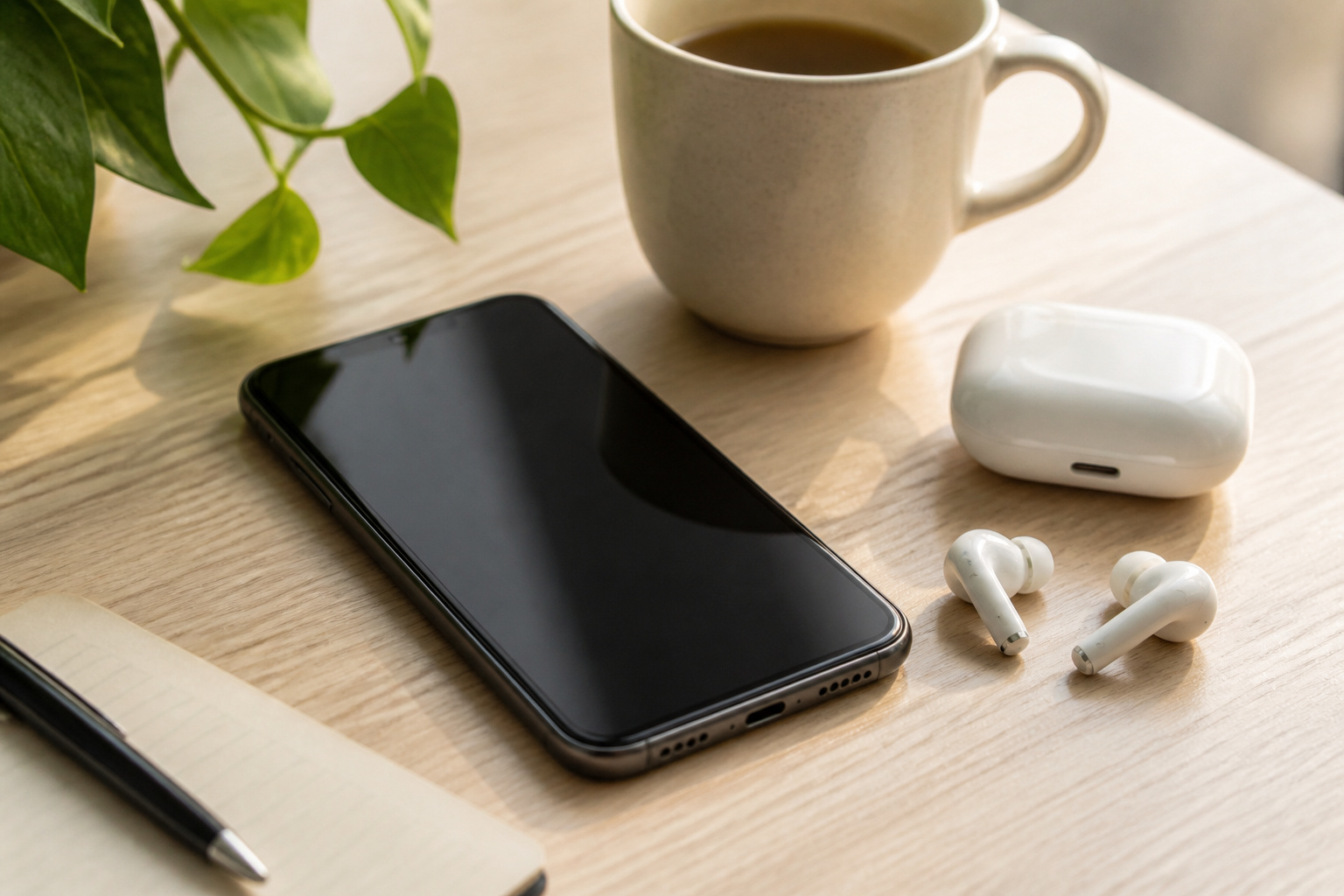
AAC is the codec Apple devices favor, and many other devices support it too. On an iPhone with AAC headphones, it sounds noticeably better than SBC at similar settings.
On some Android phones, AAC performance varies depending on how the phone implements it.
Recommended Products
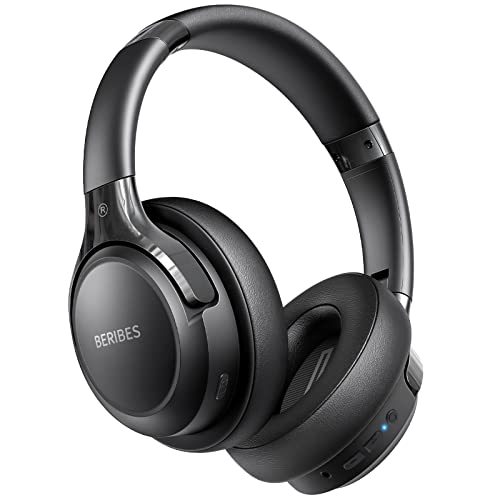
65 Hours Playtime: Low power consumption technology applied, BERIBES bluetooth headphones with built-in 500mAh battery can continually play more than 65 hours, standby more than 950 hours after one fully charge. By included 3.5mm audio cable, the wireless headphones over ear can be easily switched to wired mode when powers off. No power shortage problem anymore.
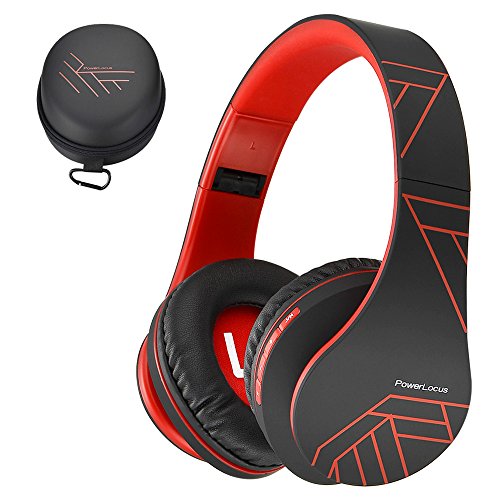
AMAZING SOUND QUALITY: High Definition Stereo Headphones, specially developed software and noise reduction technology that aims to deliver the music from your iPod on a whole new level! Deep Bass in combination with Dynamic Power Sound, results in Superior Audio Quality, even in the highest volume levels!
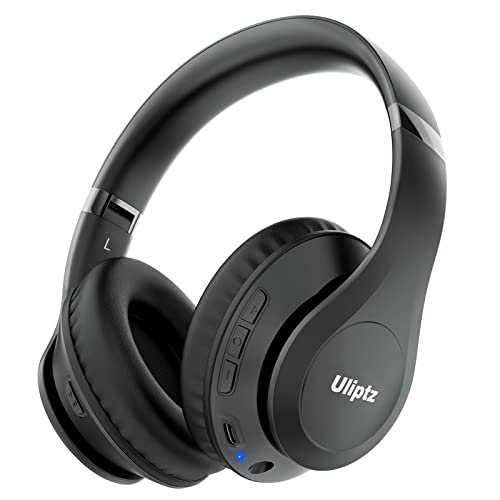
HIGH FIDELITY AUDIO - Uliptz Bluetooth headphones deliver crystal crisp highs, balanced mids and powerful bass through 40mm acoustic stereo drivers. Equipped with 6 EQ modes, switch according to different music the balanced sound. You can enjoy high-quality crystal clear stereo sound with our over-ear headphones.
aptX
aptX is a family of codecs developed by Qualcomm, found on many Android phones and wireless headphones. Variants aim at better quality or lower delay.
It is a solid middle option, with less delay than SBC for video and games.
Recommended Products

Active Noise Cancellation: Engage Active Noise Cancellation to block outside noise, such as an airplane engine or other background noise. The external microphones "listen" to the environment and then generate a reverse phase signal that eliminates background noise and lets the music take center stage.

【For PS5 Users Only】 Specifically designed for PS5 to connect Bluetooth headphones (e.g., AirPods, Bose, & more) for audio playback. For optimal voice chat experience, please use the PS5 controller microphone instead of headphone mics.

User-Friendly: Connect your wireless headphones to your PS5 or other gaming consoles with the UGREEN adapter and enjoy high-quality audio with no wires, drivers, or software required. Also Add Bluetooth audio capability (AUDIO devices ONLY, no data) with ease to your Desktop, Computer, iMac
LDAC
LDAC is Sony’s high-resolution codec, supported on many Android phones and some headphones. It can send much more data than SBC, which lets it preserve more detail when the connection is strong.
It needs support on both devices and works best close to the phone.
Recommended Products

High sound quality LDAC decoding: The Bluetooth audio adapter features the LDAC audio codec, audio sampling rates up to 24bit/96KHz, delivering uncompromised high-definition sound quality; the audio receiver also obtained Hi-Res Audio Gold Label professional sound quality certification. Whether listening to classical or pop, experience audio at its best. (LDAC requires devices to support, some older devices may not be compatible.)

[Multifunctional Bluetooth Audio Adapter] Use 1Mii B03Pro+ as a Bluetooth Receiver allows you to take the advantage of Bluetooth 5.3 technology to stream all your favorite music from any cellphone, tablet, laptop or desktop to your old sound system you already own. Use B03Pro+ as a Bluetooth Transmitter can also be used to connect Bluetooth headphones/speakers to your existing TV

【Studio-Quality Wireless Sound】Experience sound as the artist intended. With Hi-Res Audio certification and LDAC technology, the Q40HD transmits 3 times more data than standard Bluetooth codecs, delivering stunning clarity and detail in every note—from the subtle pluck of a guitar string to the deep resonance of a bass, works well for calling
Which Codec Matters for You
If you use an iPhone, AAC is what you will use, so look for AAC support. On Android, check whether your phone supports aptX or LDAC and whether the headphones do.
For most people, the difference between good codecs is small compared with headphone quality and fit. For wired listening, none of this applies.
See wired vs Bluetooth headphones for the larger comparison, and how to improve headphone sound for other ways to improve it.
Recommended Products

【Open-Ear Comfort】Aamft bone conduction headphones, Featured by the newest 2026 bone conduction technology which transmit premium audio through the cheekbones directly to your inner ear,enabling clear sound reproduction even in noisy environments for an outstanding audio experience. The open ear bone conduction headphones allows you enjoy music without missing the sound of surroundings around you,comfortable listening,keeping your safe and comfortable wearing while doing outdoor workouts for long time.
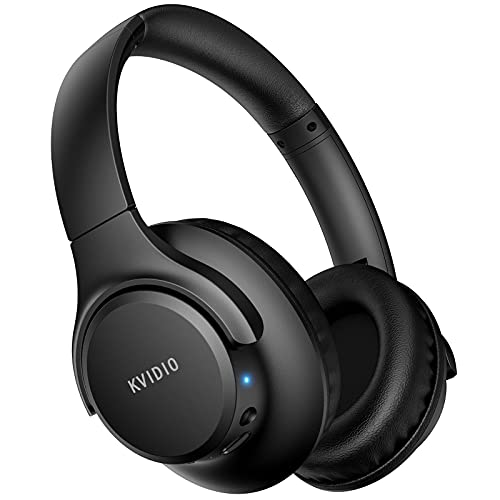
Stereo sound headphones: KVIDIO bluetooth headphones with dual 40mm drivers, offers an almost concert hall-like feel to your favorite music as close as you're watching it live. Provide low latency high-quality reproduction of sound for listeners, audiophiles, and home audio enthusiasts
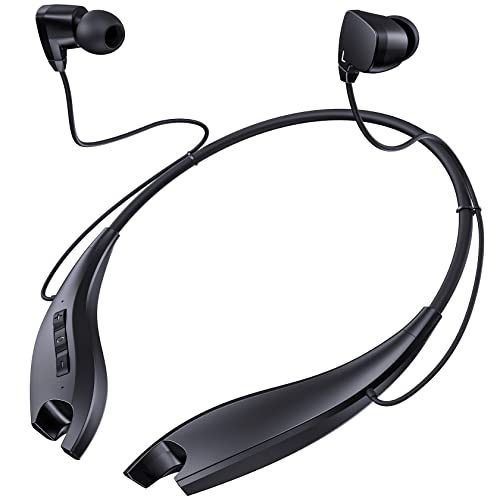
24 HOURS OF CONSECUTIVE PLAYBACK: You can use these neckband Bluetooth headphones from dawn to dusk. Charge 10 minutes and listen for 4 hours. No more worrying about needing to keep your headphones charged up at all times, with one full charge we will provide over 24 hours of entertainment
Frequently Asked Questions
What Devices Support Multiple Bluetooth Codecs?
Most phones support several codecs, and many Android phones support SBC, AAC, and aptX or LDAC. A device uses one codec per connection, picking the best one both sides support. iPhones support SBC and AAC only. Check the specifications for both your phone and headphones.
Can Bluetooth Codecs Affect Battery Life?
Yes, a little. Higher-bitrate codecs move more data and can use more power on both devices, though the effect is usually modest compared with other factors such as noise cancelling.
Do Wired Headphones Use the Same Codecs as Wireless?
No. Wired headphones receive the audio signal directly, so there is no wireless compression. Quality depends on the headphones and the sound chip in your device.
Is There a Noticeable Difference in Voice Call Quality Between Codecs?
Not usually. Phone calls use separate voice codecs designed for speech, not the music codecs. Call quality depends mostly on the headphone microphone and the phone network.
Can I Switch Between Bluetooth Codecs on My Phone?
On many Android phones, yes. You can enable developer options and choose the Bluetooth audio codec manually, as long as the headphones support it. iPhones do not let you choose.