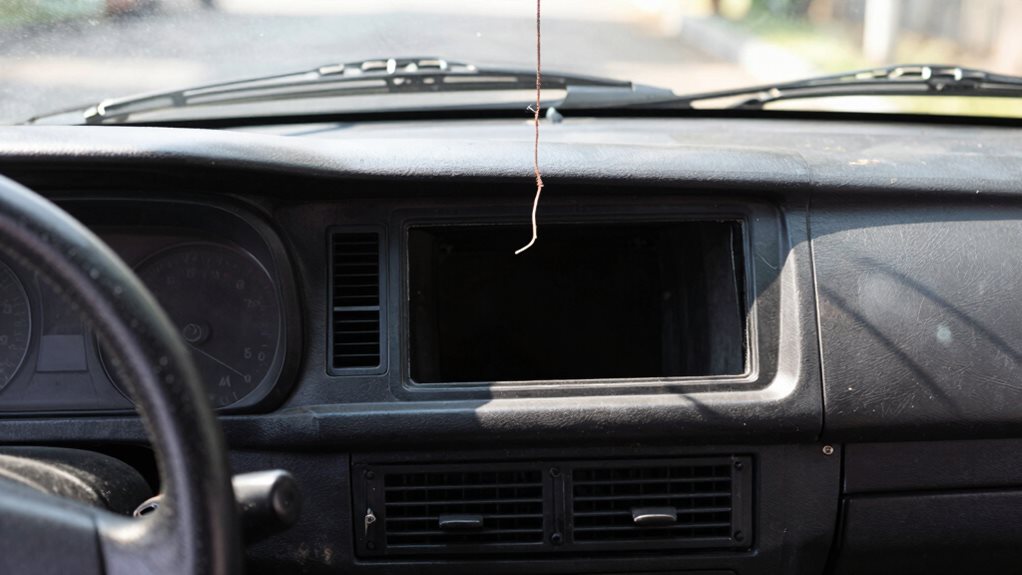
When you pop your car’s stereo trim, you’ll discover either a compact two-inch opening or a roomier four-inch slot.
That’s the difference between single-DIN and double-DIN head units.
What DIN Actually Means
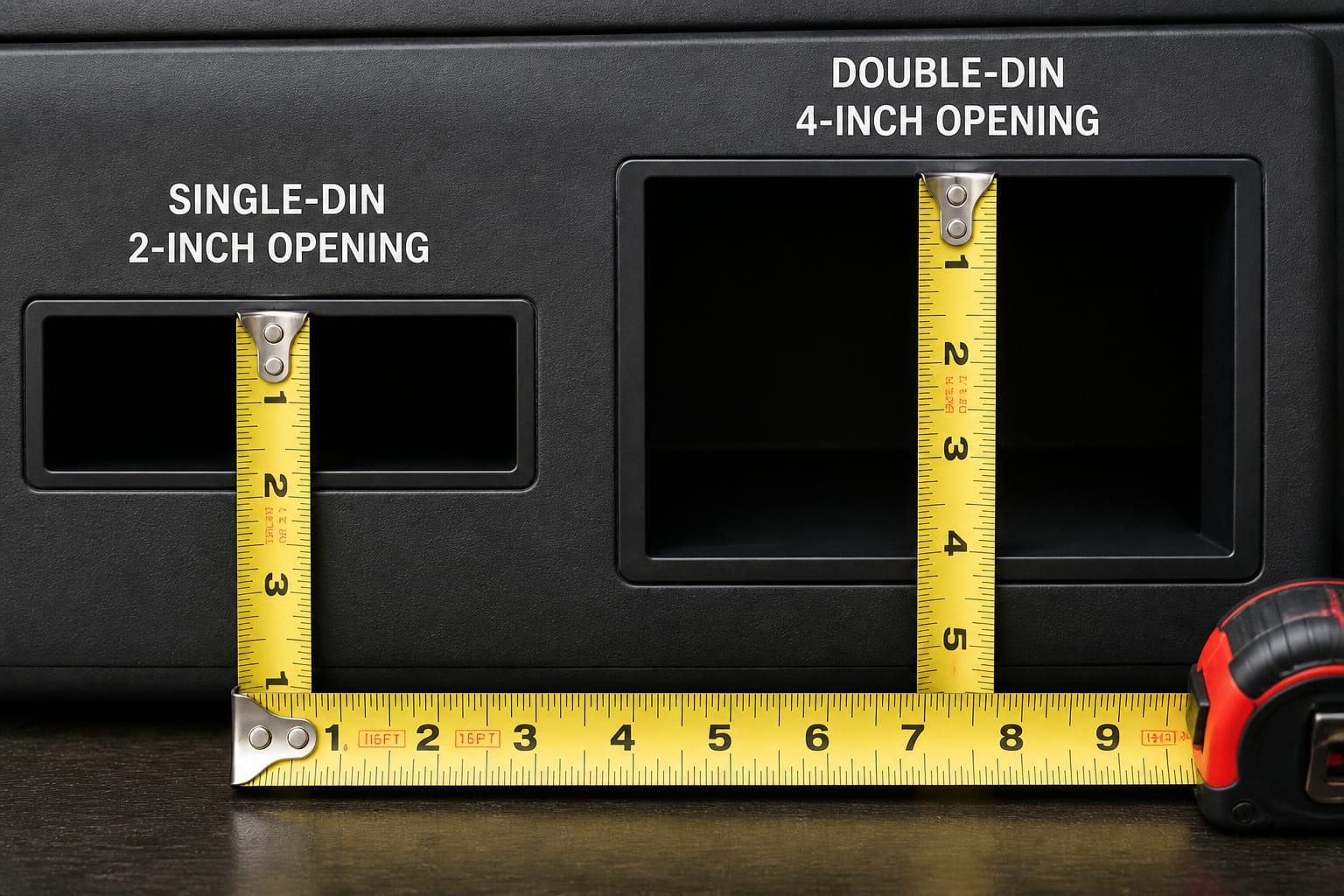
DIN stands for Deutsches Institut für Normung, a German standard that car manufacturers adopted worldwide.
The single-DIN measures two inches tall by seven inches wide. Double-DIN is simply twice that height, at four inches tall, with the same width.
Your vehicle’s dash determines exactly which size fits, no exceptions.
Single-DIN: What You Get
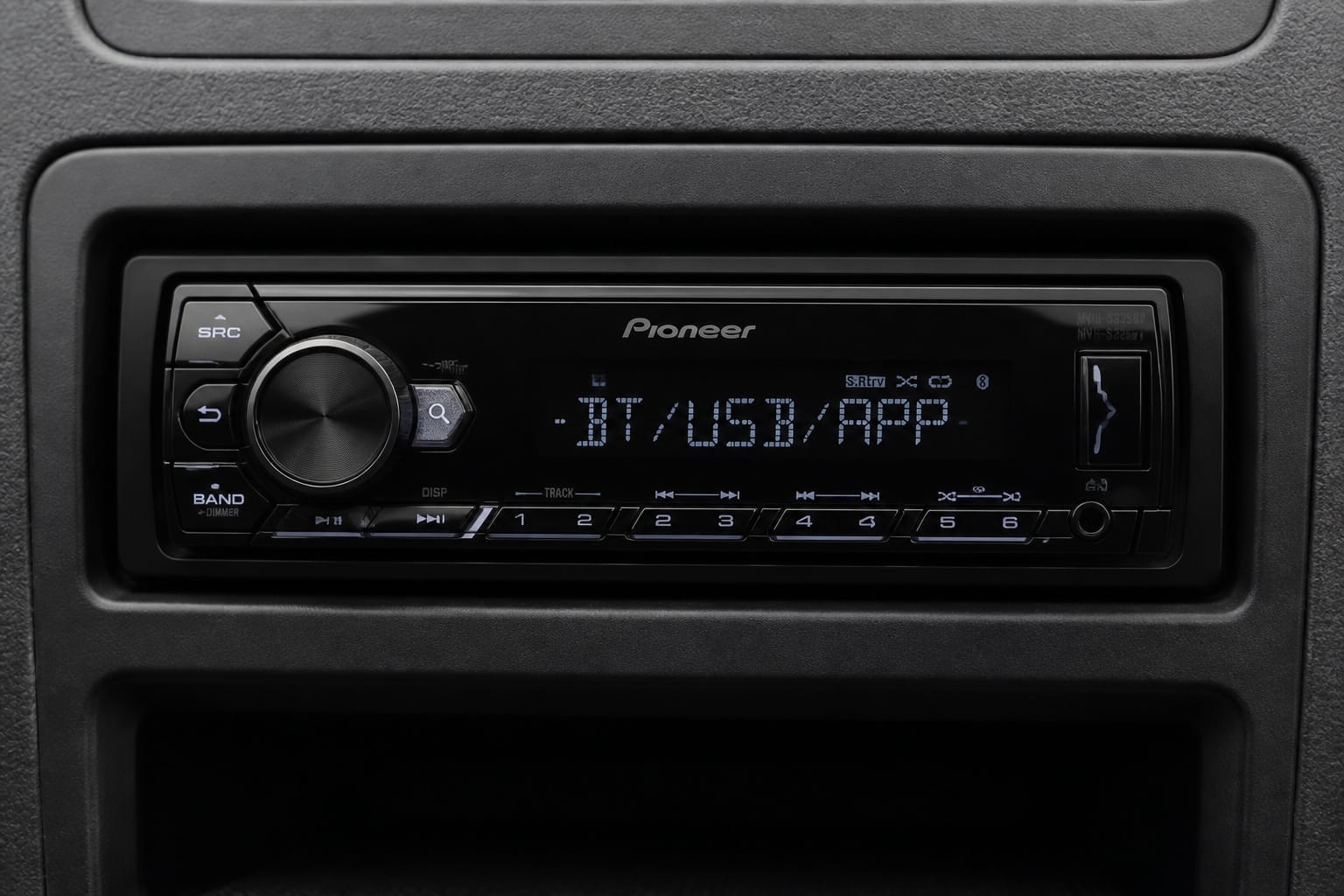
Single-DIN car stereos pack essential features into a tight space. You’ll find AM/FM radio, Bluetooth, and USB ports. They cost less, typically $50 to $200. Installation stays simple: a single metal sleeve slides in and is fastened in place. These units work perfectly for older cars or basic upgrades.
Good single-DIN stereos still deliver real power despite the compact form factor; look for a MOSFET amplifier stage and a steady RMS power rating for cleaner sound at higher volumes without distortion.
The display shrinks, though, showing maybe one line of text. You won’t get touchscreen capability, but you gain a clean, minimalist look that doesn’t distract while driving. Many truck drivers actually prefer this less flashy option.
Recommended Products

【Wireless Smartphone Integration】 Seamlessly connect your smartphone to this single DIN touchscreen car stereo for convenient access to navigation, music, calls, and compatible apps. Wireless smartphone connectivity helps keep your drive connected without the hassle of repeatedly plugging in your phone.
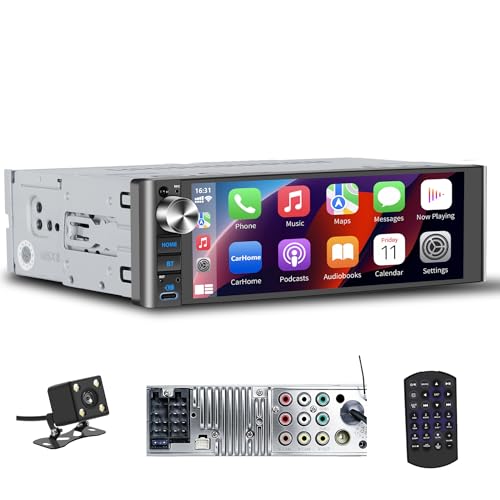
【Dual Wireless Connectivity & Ultra-Fast Response】Supports both wired and wireless Apple CarPlay and Android Auto, featuring 5G Wi-Fi and Bluetooth 5.3. Touchscreen responsiveness is 1.35 times smoother and 25% faster than comparable models. Navigation, calls, and music playback are virtually lag-free. Whether you’re commuting daily or embarking on a long road trip, you’ll enjoy a stable, seamless smart connectivity experience.

Seamless Bluetooth Connectivity: Car stereo with Bluetooth technology allows you to enjoy hands-free calling and high-quality wireless music streaming from your iPhone and Android devices.
Double-DIN: What You Get
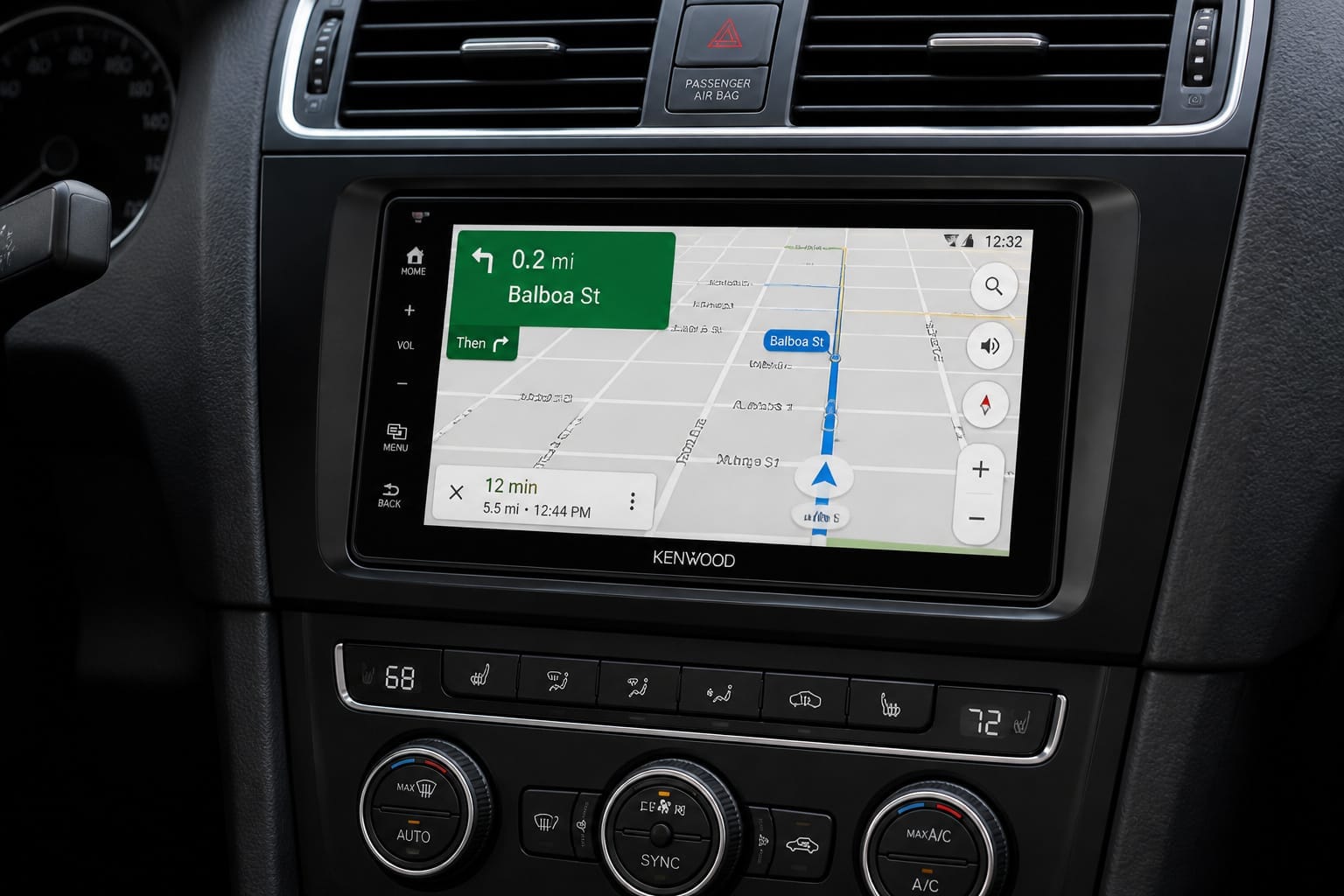
Double-DIN car stereos open up your dashboard’s potential. You get large, vibrant touchscreens spanning six to seven inches, with capacitive touch that supports swipe and pinch gestures for intuitive control.
Navigation maps appear clear and detailed, and Apple CarPlay and Android Auto integrate seamlessly, showing your phone’s interface beautifully. See our guide to car stereo features for more on what CarPlay and Android Auto actually do.
Backup camera feeds are large enough to see obstacles. You’ll pay more, usually $300 to $1,000, and the installation needs more dash space, sometimes requiring a custom kit.
Modern cars favor this size, but measure first, because some double-DIN radios have motorized screens that tilt out, so depth is important. It matters as much as height.
Recommended Products

Double Din Car Stereo: 7 inch HD Car Radio MP5 Player with Digital Touch Screen. Lots of vehicle-based features - Specific FM Radio tuner, preset max 4*45W amplifier with higher 4*24W RMS power out, USB/SD/AUX-in/Backup camera/dash camera input, Bluetooth hands free, steering wheel key control and more

【Wireless & Wired Carplay / Android Auto with Voice Control】 This double din car stereo supports both wireless and wired apple carplay & Android Auto. Your phone connects automatically when the car starts. Use voice commands via Siri or Google Assistant for hands-free navigation, calls, messages, and music—keeping you focused on the road while enjoying smart connectivity.

Entertainment on the Road: Stay connected on the go with the built-in Bluetooth functionality. Make hands-free calls, stream audio wirelessly, and control your music directly from your device on a 6.8" capacitive touchscreen display
How to Measure Your Dash
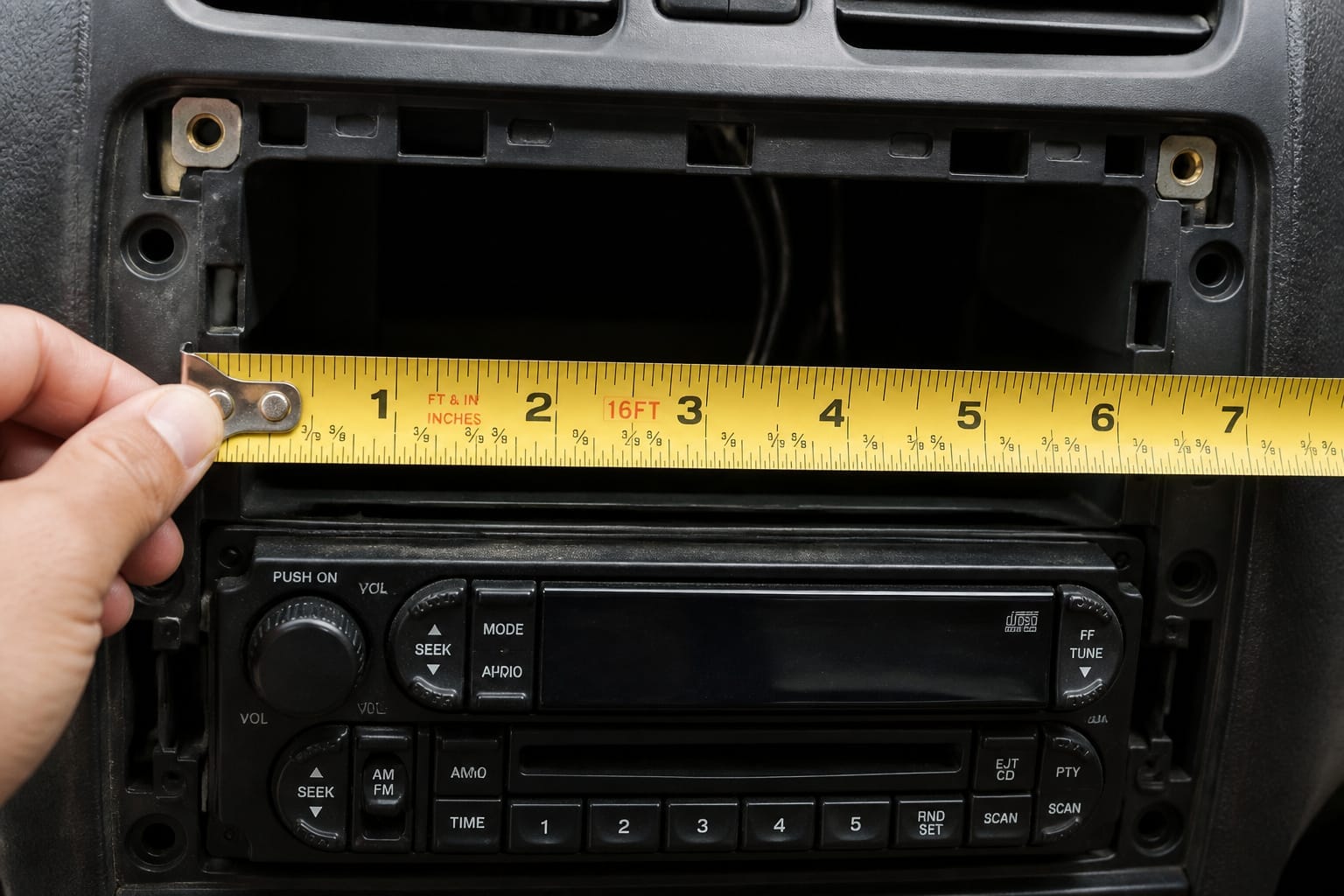
Check your dashboard before buying anything. Remove that trim piece and measure the hole. If you see two inches, you’re locked into single-DIN unless you modify your dash, which costs extra. Four inches gives you freedom to choose either size, because you can install a single-DIN with a pocket underneath for storage.
Most retailers offer vehicle-specific kits that include the right brackets and wiring harnesses. A good installation kit saves hours of frustration. They cost $20 to $50 but eliminate cutting or splicing, and quality RCA cables with oxygen-free copper help maintain signal integrity if you’re running the output to an amp or sub.
Recommended Products
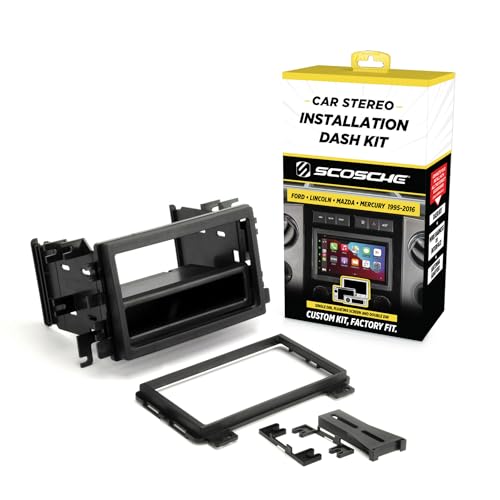
Perfect Fit - Designed specifically for Select 1995-2016 Ford, Lincoln, Mazda and Mercury vehicles, the Scosche FD3090B dash kit ensures a seamless fit for your aftermarket car stereo. See Fit Guide and notes in images to verify your vehicle is compatible.
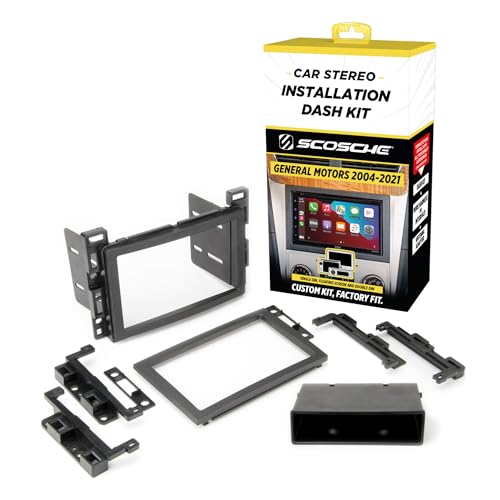
Perfect Fit - Designed specifically for select 2004-2021 GM Vehicles, the Scosche GM2500B dash kit ensures a seamless fit for your Single or Double DIN car stereo radio. See Fit Guide in images to verify compatibility.
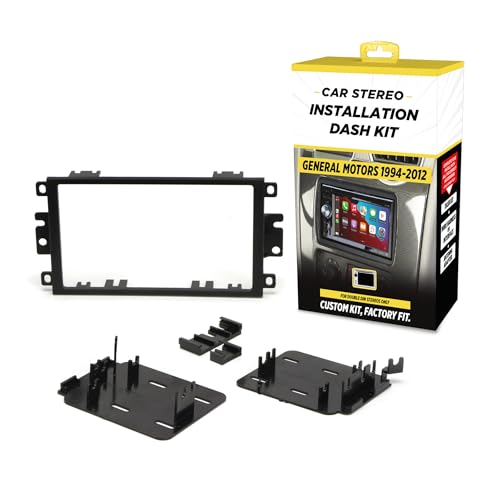
Perfect Fit - Designed specifically for Select 1994-2012 Buick, Cadillac, Chevrolet, Geo, GMC, Honda, Hummer, Isuzu, Oldsmobile, Pontiac, Suzuki and Toyota vehicles, the Scosche GM1590DDB dash kit ensures a seamless fit for your aftermarket car stereo
Making the Choice
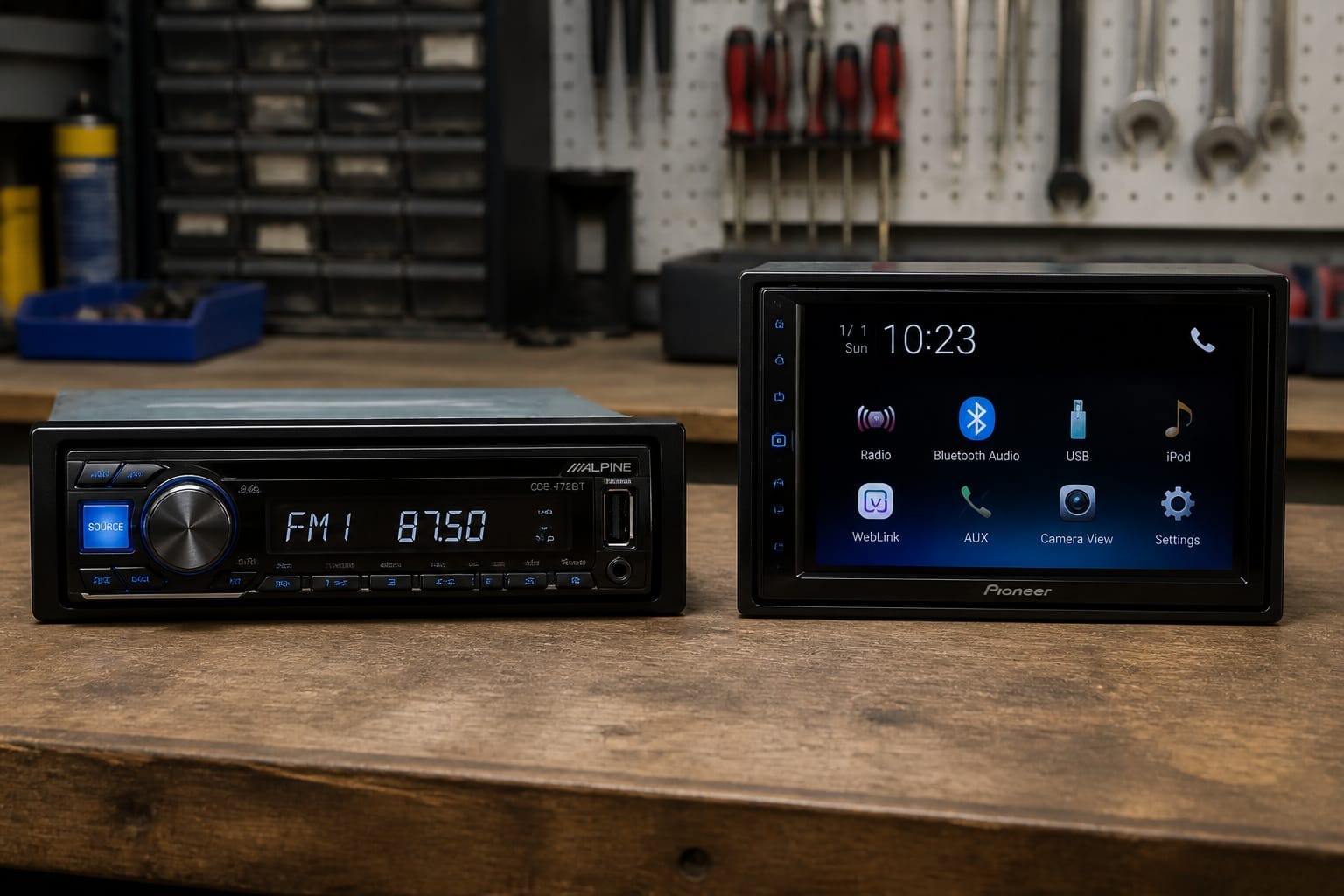
Your decision boils down to features versus simplicity. Want touchscreen and navigation? Go double-DIN. Need basic audio upgrades? Single-DIN gets you there. Both deliver quality sound when you pick a reputable brand and install everything properly.
Start with a budget. Then measure your dash. Then list your must-have features. This three-step process prevents expensive mistakes. Don’t fall for gimmicks you won’t use. A $600 stereo with DVD playback sounds impressive, but when did you last watch a disc? Focus on Bluetooth reliability, daylight screen visibility, and intuitive menus. Your daily drive improves when your stereo works flawlessly without any fuss.
Frequently Asked Questions
Will Upgrading Affect My Car’s Warranty Coverage?
Your warranty stays mostly intact. The Magnuson-Moss Act protects you from blanket voiding.
However, if your new stereo damages the factory wiring or electrical system, those specific repairs aren’t covered. Dealers must prove that your upgrade caused the problem. Keep your original stereo, document every installation step, and consider professional installation.
You’re still covered for engine issues, but you’re responsible for electrical problems linked to your upgrade.
Can Single-DIN Units Support Wireless Apple CarPlay?
Yes, you can get wireless Apple CarPlay in a single-DIN unit. Most newer single-DIN stereos pack it in now.
You’ll need a model with built-in Wi-Fi and Bluetooth. Check specs carefully because not all units offer wireless. Look for brands like Alpine, Sony, or Kenwood.
Installation takes skill, so consider professional help. Wireless means no cable clutter, but you’ll typically pay about $50 to $100 more than standard wired versions.
Do Double-DIN Stereos Consume More Battery Power?
Yes, double-DIN stereos consume more battery power. That big touchscreen and built-in features pull extra juice continuously; think tablet versus a simple alarm clock. You’ll see higher draw, maybe 3 to 5 amps more, especially with bright screens and wireless connections.
Keep your engine running during long listening sessions. Check your battery’s health first. Proper installation matters a lot.
Which Type Is Less Prone to Theft?
Double-DIN stereos are less prone to theft. They’re harder to yank out. Thieves want quick, easy grabs, and a double-DIN’s size works against them since it’s bulky and integrated into your dash.
Your single-DIN is a more universal fit, easier to pop, easier to fence. But you’re not helpless. You can install either type with anti-theft cages, detachable faces, or security codes to make thieves work much harder.
Can I Install a Single-DIN in a Double-DIN Dash?
Yes, you can. You’ll need a dash kit. The adapter fills the space and creates a storage pocket beneath your new stereo. Installation is straightforward, but you’re downsizing the opening.
Most kits cost around $20, and you’ll complete the job in about an hour with basic tools. Your single-DIN unit snaps securely into place, and that pocket holds your phone perfectly. It’s a clean, professional-looking upgrade with no permanent modifications.