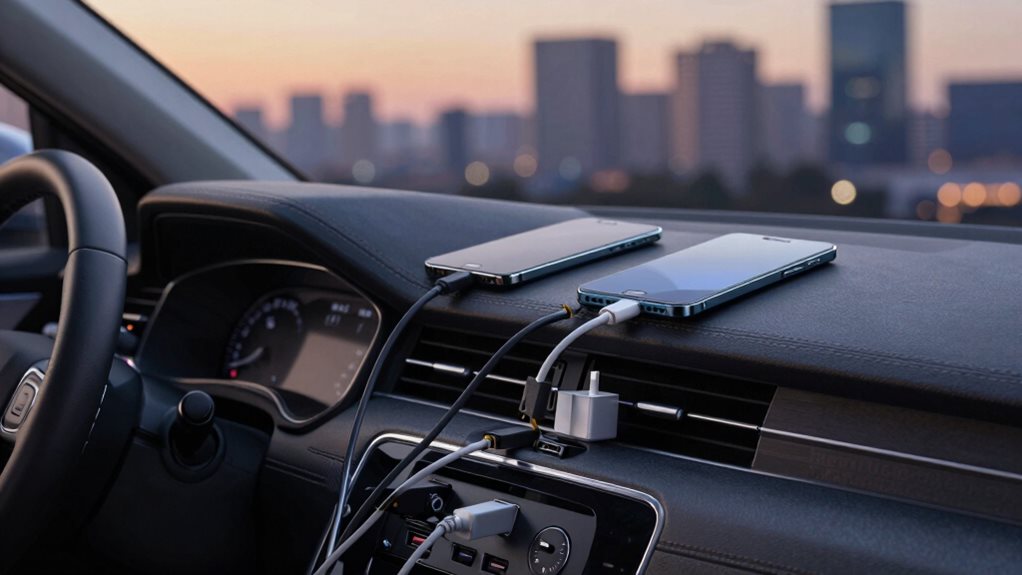
One USB port can change everything. You plug in your phone, and suddenly the drive feels smoother, safer, quieter. No more fumbling with chargers on the passenger seat. No more dead batteries mid-navigation. You’re connected, powered, in control.
Charge-Only vs. Data Ports
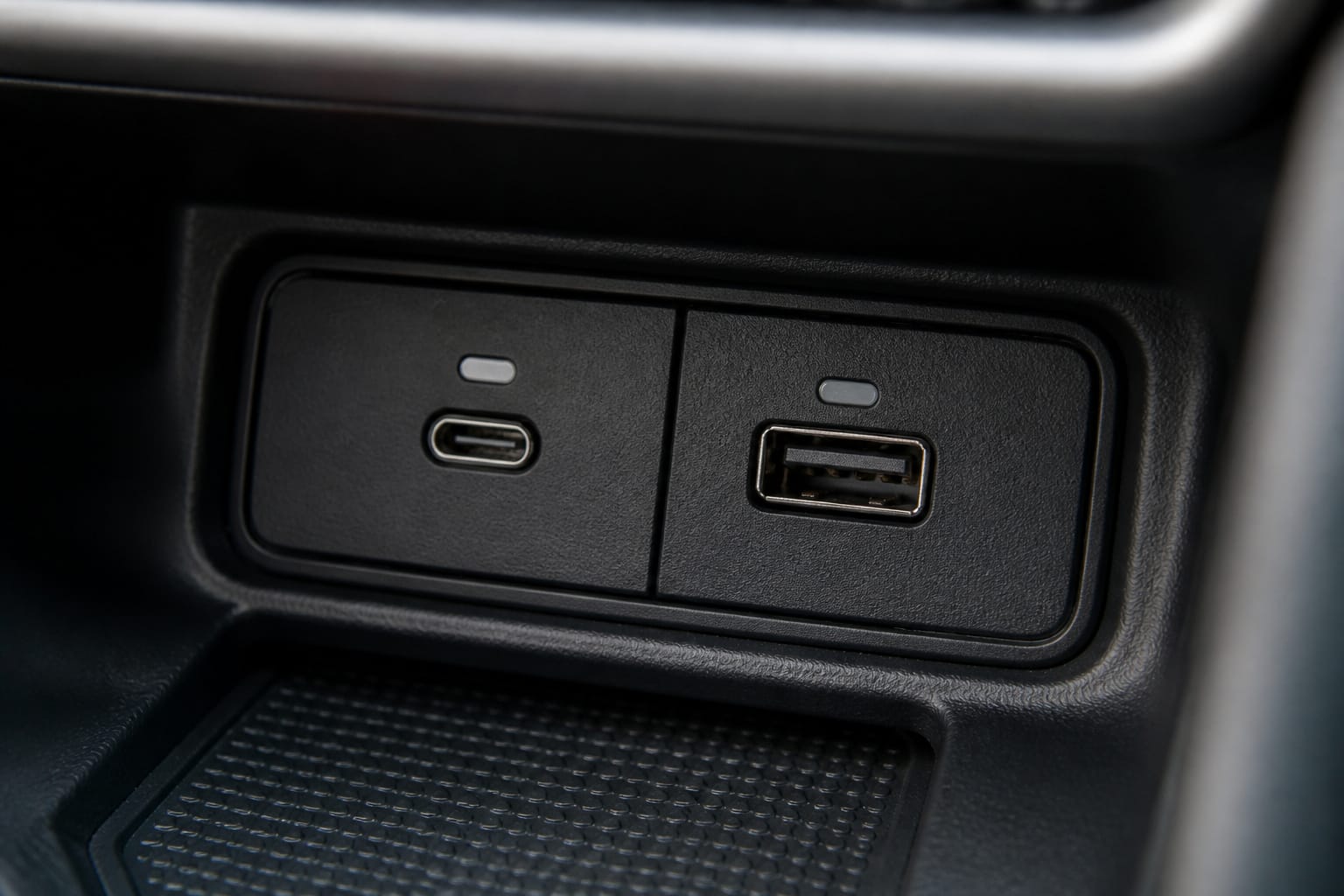
But not all ports are equal. Some charge fast. Some barely trickle. Some play music; others only charge. Knowing the difference helps you decide what’s worth upgrading.
You’ve seen those flimsy ports buried deep in the center console. They’re slow, hidden, awkward to reach. They frustrate more than they help. That’s not real convenience. Real convenience means speed, access, and reliability.
Look for ports labeled “charge” and “data.” Charge-only ports power devices but won’t let you play music from your phone. Data ports do both. If you stream songs or use maps, you need data capability.
Recommended Products

【IN THE BOX】: 1 x USB C to USB A Charging Cable(White)

【IN THE BOX】: 1 x 3.3FT USB C to USB A Charging Cable (Black)

Fit for PS4 controller, DualShock 4, PS4 Slim/Pro, and Xbox One controllers (for Xbox Elite Wireless Controller models 1537, 1697, 1708, 1698). Fit for Kindle Gen 2-10 (2009-2019), Kindle Paperwhite Gen 5-10 (2012-2018), Kindle Oasis, Voyage, DX, Touch. Fit for Amazon Kindle Tablet Fire 7 (2017/2019), Fire HD 8 (2015/2017/2018), Fire HD 10 (2015/2017)
Port Location and Speed
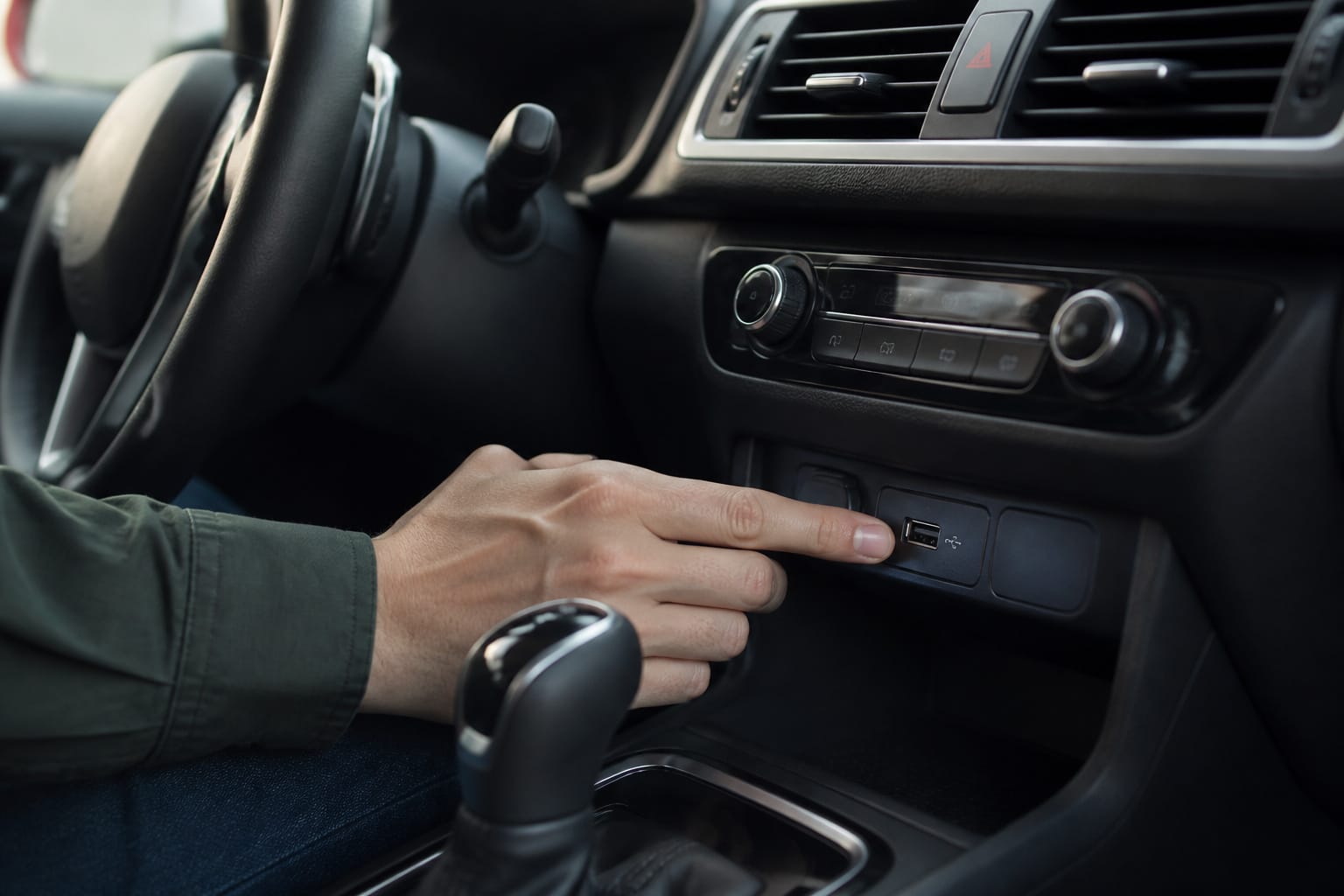
Location matters just as much as function. Front dash ports beat glove box slots every time. You reach them easily while driving. Rear seat ports are great for passengers, but useless for you. Armrest or console ports sit close to your hand, perfect for quick access.
Think about how you use your car. Do you drive alone? One front port might be enough. Family trips? Add rear ports for tablets and phones.
Speed is the silent game-changer. USB-A ports are older and slower. USB-C is faster and more durable. A USB-C port can charge your phone in half the time. It handles more power, supports newer devices, and lasts longer. If your car only has USB-A, consider upgrading: our USB-C vs USB-A car charger comparison lays out exactly what you gain.
Even better, add a dual-port hub with one USB-A and one USB-C to cover all devices, old and new.
Recommended Products
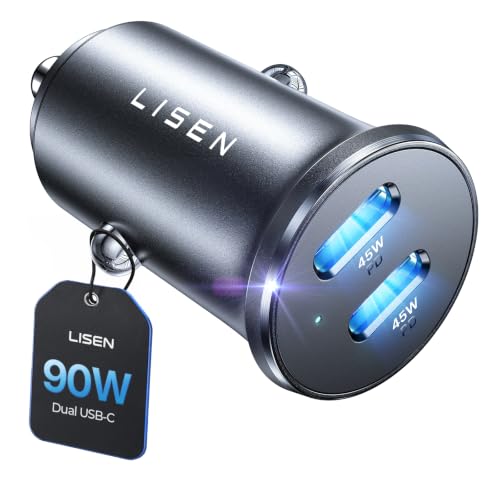
THROW AWAY THE OLD A+C CAR CHARGER: What sets the LISEN usb c cigarette lighter adapter fast charger for iphone Duo & 18 pro max apart is its dual USB-C ports, each capable of delivering up to 45W of power. This configuration is particularly beneficial for users looking to fast charge two high-power devices at once, such as an iPhone 17 Pro Max and an iPad Pro. The simultaneous 45W output is a game-changer, significantly reducing charging times and ensuring your devices are ready to go when you are
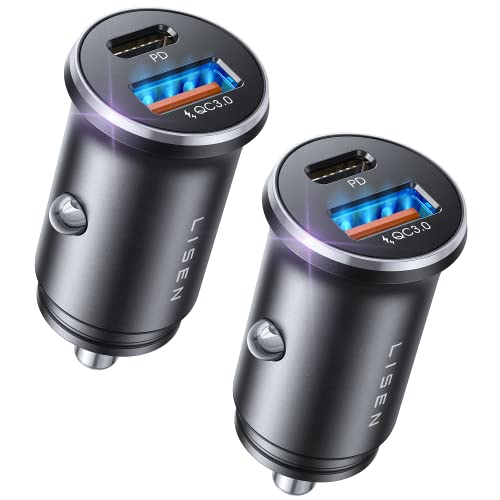
🔹 Smarter Than Multi Port Chargers — Less Heat, Less Clutter: Most multi port car chargers force 3–4 cables across your dashboard, creating visual clutter and unnecessary heat buildup in a single cigarette lighter adapter. This dual port car charger delivers just what you need — no tangled wires, no overloading — keeping your car interior clean, modern, and safe

FAST CHARGING TECHNOLOGY: This 42W USB-C car charger lets you fast charge an iPhone from 0-50% in just 21 minutes or a Galaxy from 0-50% in 26 minutes, allowing you to spend less time charging and more time carrying out the tasks of your day!
Wiring and Build Quality Matter Too
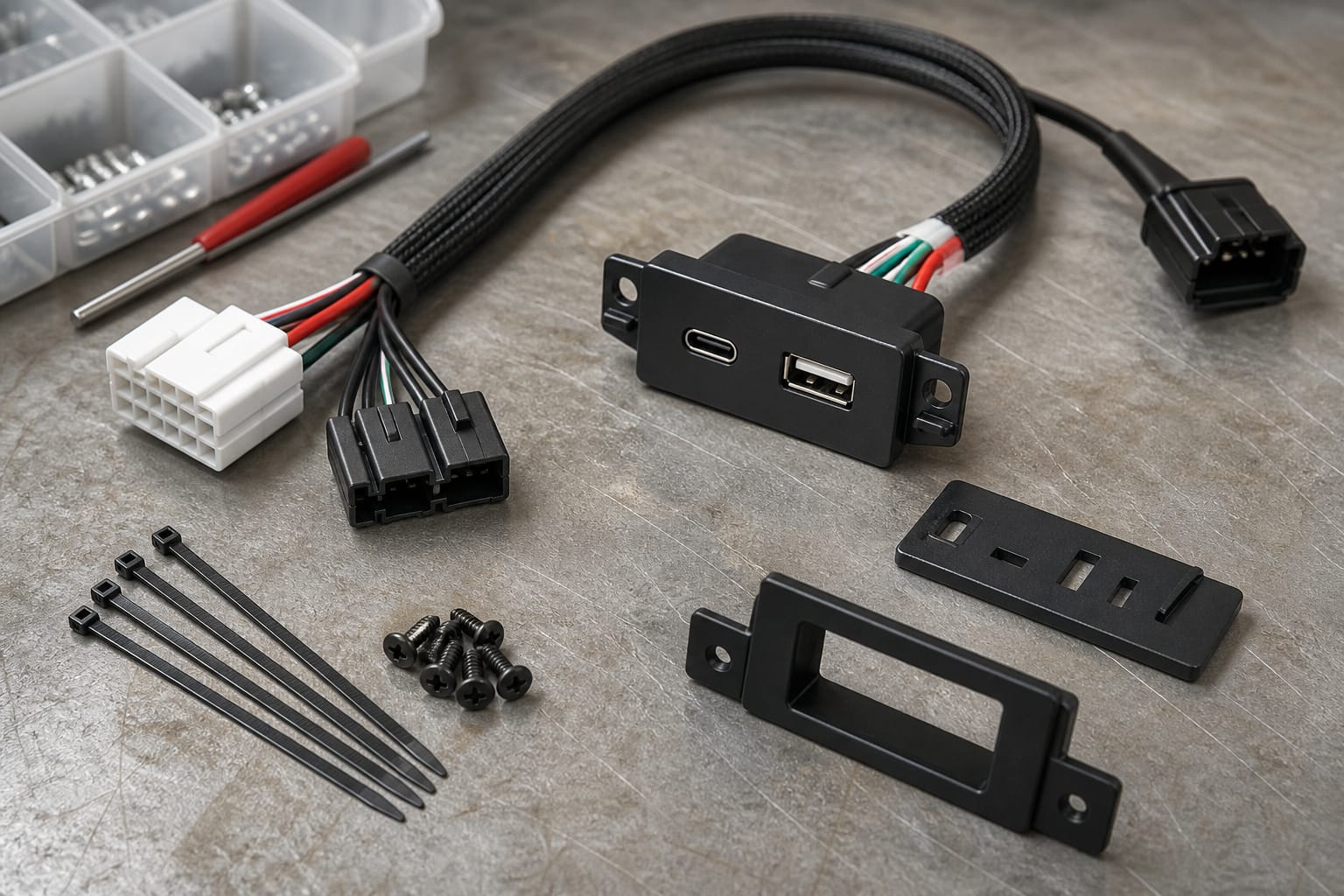
Don’t forget the wiring. A port is only as strong as its connection. Cheap aftermarket kits often underperform. They draw limited power and overheat. Factory-installed ports usually link directly to the car’s electrical system. They’re stable, powerful, and built to last.
If you’re upgrading, choose OEM-grade parts or high-quality aftermarket units with solid amperage, ideally 2.1 amps or higher.
You don’t need five ports. You need the right one, in the right place, doing the right job. Test your current setup. Does your phone charge while using GPS? Does the music cut out? If yes, it’s time to upgrade.
Focus on quality, not quantity. A single fast, reliable data port beats three slow, weak ones. And if you need to run something bigger than a phone or tablet, like a laptop, a mini fridge, or a small appliance, a USB port won’t cut it: that’s a job for a properly sized power inverter instead.
Your car should work with you, not against you. A good USB port keeps you powered, focused, and moving. It’s a small part, but it carries a big impact. Choose wisely. Upgrade smart. One strong port can change everything.
Recommended Products

Superior Charging Capabilities: The Anker 320 Car Charger comes with dual USB-A ports, delivering a combined power of 24W for efficient simultaneous charging of two phones. Please be aware that it does not support Qualcomm Quick Charge.

DUAL USB PORT FAST CHARGING: Two ports total output up to 5V/4.8A max, each port output up to 5V/3A max, The car charger can charge two devices at safe charging of Dual devices at full speed simultaneously

Universal Compatibility: 2-Port car charger adapter works for iPhone 15,15 Pro,15 Pro Max,15 Plus,14,14 Pro,14 Pro Max,14 Plus,SE 2022,13,13 Pro Max,13 Mini,12,11,11 Pro,11 Pro Max,XR,XS Max,X,8,8 Plus,7,7 Plus,6,6 Plus,6s Plus,SE, iPad Pro/Air, Samsung Galaxy S23 S22 S21 S20 Ultra S10 S10e S9 S8 Plus S7 S6 A03S A13 A53 A02S A32 A10E A20 A50 A51 A70 A71, LG Stylo 6 5 4 V60 G8 G7 ThinQ, Moto G Play/G Power/G Stylus/G8 G Z4, Google Pixel 7a 7 Pro 6a 6 5 4a 4 3a 3 2XL, android phones, kindle fire
Frequently Asked Questions
Can I Use a USB Hub in My Car?
Yes, you can use a USB hub in your car. Just plug it into your vehicle’s USB port.
Use a powered hub if you’re charging multiple devices. Your phone, GPS, and tablet can all draw power smoothly. Avoid cheap, unpowered hubs; they slow charging. Choose one with built-in surge protection. Keep cords tidy. It’s a simple fix for too many gadgets. You’ve got this.
Do USB Ports Work When the Car Is Off?
Yes, you can use USB ports when your car’s off, but only for a short time. Most cars cut power after ten minutes.
Plug in your phone, grab your charger, and go. Some cars keep power flowing longer; others stop fast. Check your manual. Try it tonight. Turn the key off, leave the door open, and watch the clock. Your port might stay alive longer than you think.
Know your car. Test it. Stay charged.
Will Charging My Phone Drain the Car Battery?
Oh, sure, go ahead, leave your phone plugged in. The car’s *thrilled* to power it while you sleep. But yes, it *can* drain the battery, especially overnight.
Modern cars sip power wisely, though. A quick charge is safe. Days of inactivity with devices drawing juice are risky. Unplug when done. Your battery will thank you. Think of it like leaving lights on; small drain, big consequence.
Are Car USB Ports Compatible With All Devices?
Yes, most car USB ports work with all devices. You’ll plug in your phone, tablet, or GPS just fine. But some older ports charge slowly, which is annoying.
Newer cars use USB-A and USB-C. Both handle modern gadgets well. Check your car’s manual. If it says “data transfer,” that port’s strong. If not, it might only charge. Upgrade wisely. Fast-charging ports are worth it. Keep your tech alive on every ride.
Can I Install USB Ports Myself Without Professional Help?
Yeah, you can install USB ports yourself; no pro needed. Just pick the right kit, match the wires, and snap it in.
Sure, wiring seems tricky, but color-coded leads make it simple. Use a multimeter to test power first. Connect red to positive, black to ground. Mount the port securely. Wrap connections with electrical tape.
Done right, it’s safe, solid, and saves cash. You’ve got this.