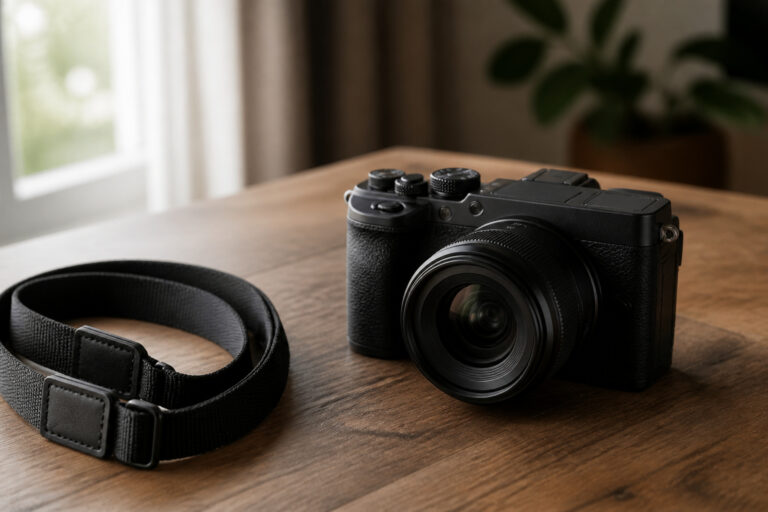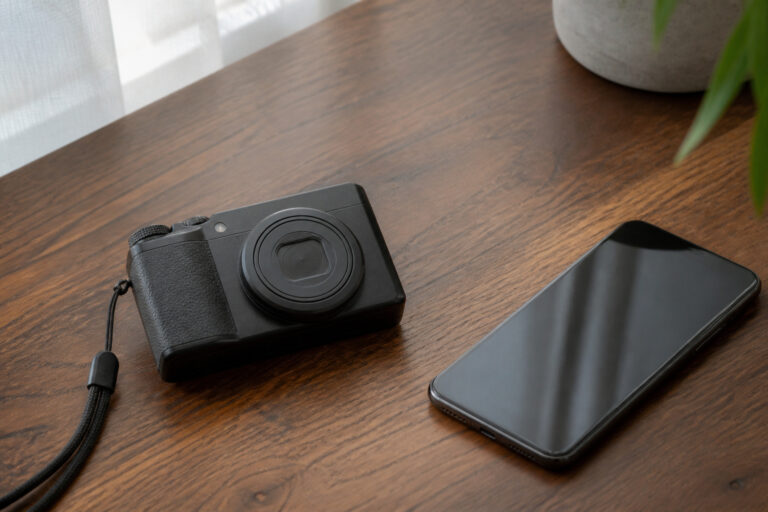
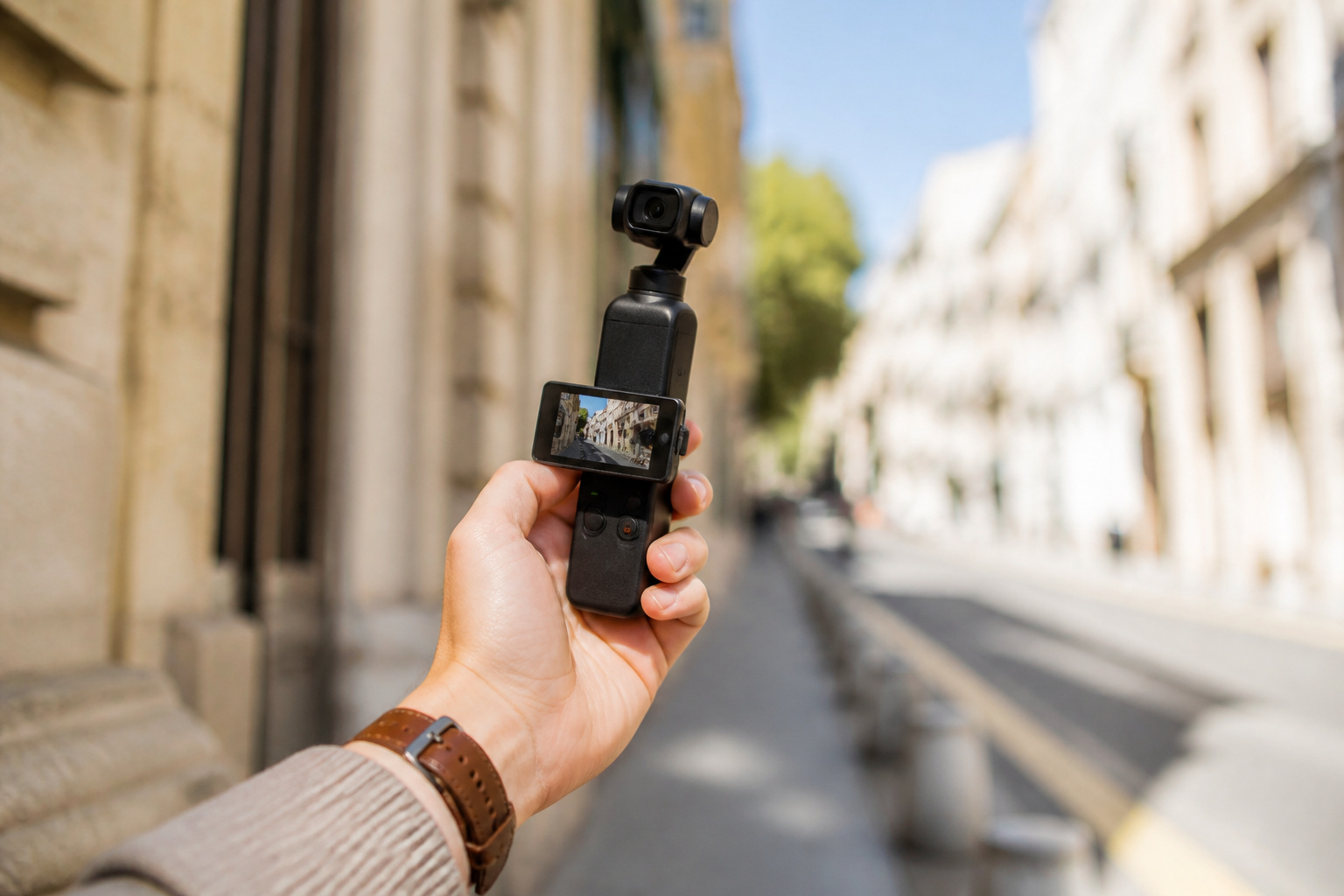
A pocket gimbal camera is a small camera with a built-in stabilizing gimbal, a screen, and a larger sensor than most phones put in their main lens. The DJI Osmo Pocket 3 is the best-known example, and it is popular with vloggers, travelers, and anyone who wants smooth video without carrying a camera bag. It is also a very specific tool, and it is not the right camera for everyone.
This guide explains what a 1-inch sensor and a built-in gimbal actually give you, where reviewers find the Osmo Pocket 3 strong, and where they find it weak. It also covers audio, vertical video, and heat, and who should look at a different kind of camera instead. Specifications below come from DJI’s published spec page, and reviewer findings are attributed to the outlets that reported them.
What a 1-Inch Sensor and Built-In Gimbal Give You
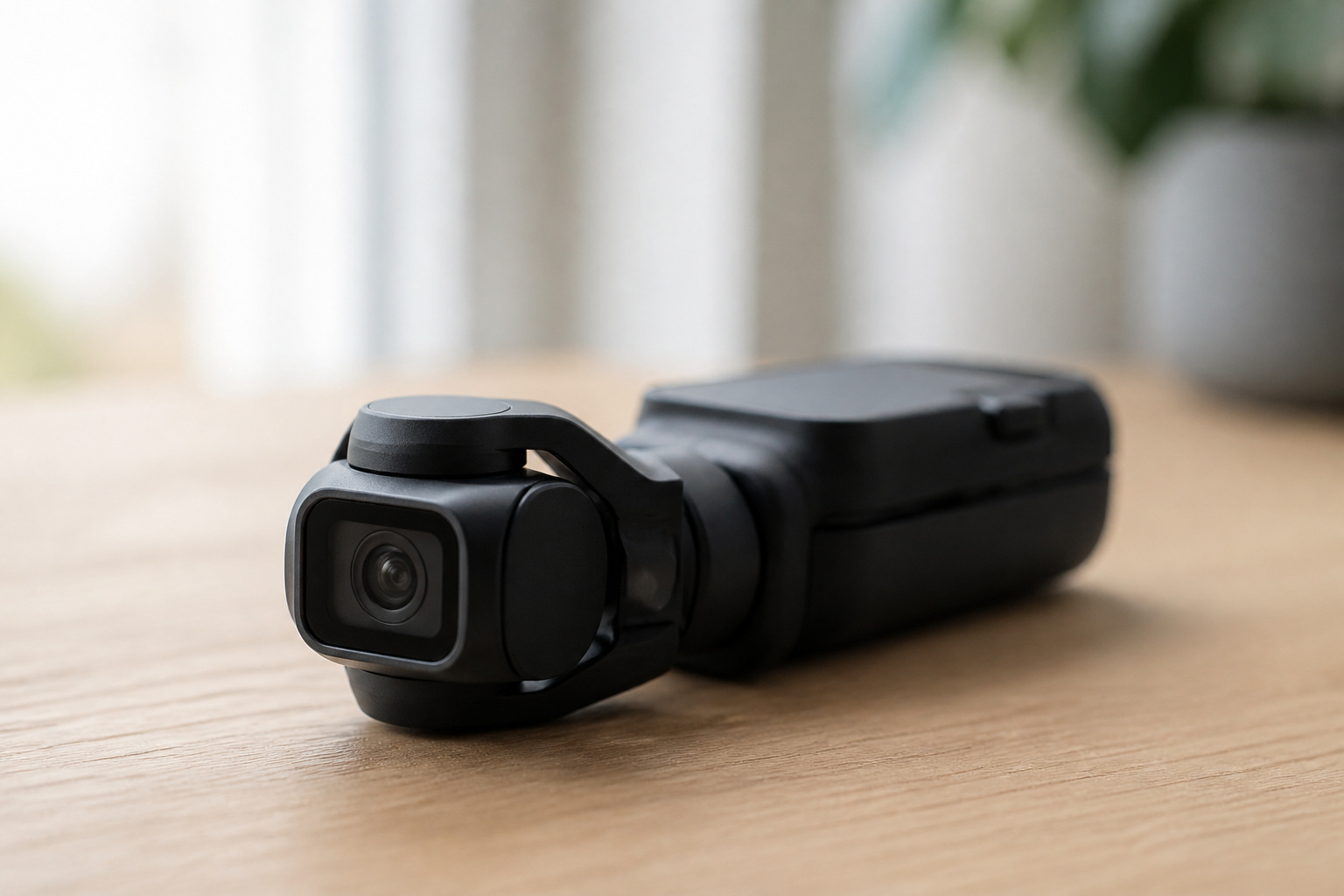
DJI lists the Osmo Pocket 3 with a 1-inch CMOS sensor, a 20 mm equivalent lens at f/2.0, and a 3-axis mechanical gimbal. A larger sensor collects more light than the tiny sensors in most phones and compact cameras, which usually means cleaner footage in dim rooms and a more natural background blur. The gimbal physically moves the camera to cancel out hand shake, so walking shots look smooth without cropping into the frame the way purely digital stabilization can.
DJI also lists 4K video at up to 60 frames per second, slow motion at 120 frames per second in 4K and 2.7K, and 1080p at up to 240 frames per second. Video records as MP4 using H.264 or HEVC. Put together, the camera is built for travel clips, vlogs, family events, and walking tours, where smooth handheld footage matters more than lens choice.
Recommended Products

Multifunctional -- Come with Smartphone Video Rig, both sides handles and Removable handle ideal for recording different wonderful angles quality Videos.

4K HD Camera: This portable video camera supports 4K ultra high definition videos and 64MP photos, showcasing texture in every frame, supporting high speed focusing. Equipped with 1.72 inch for clear playback and immersive visual experience.Cinematic-Style Footage - Experience the power of 1-inch CMOS sensor, capable of recording breathtaking 4K resolution videos at 120fps.
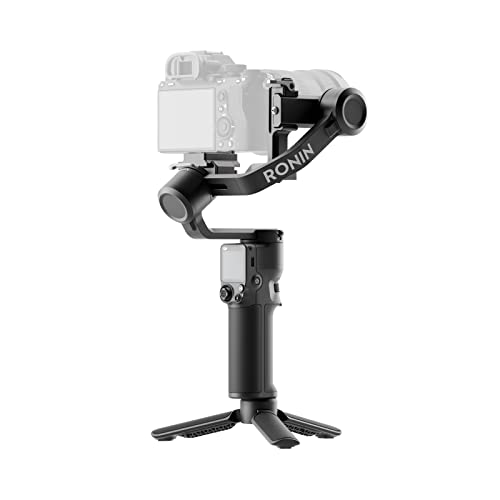
795g (1.75lbs) Lightweight and Portable - DJI RS 3 Mini is an ultra-compact gimbal stabilizer for camera convenient for travel. Weighing only 795g (1.75 lbs), RS Mini 3 is easy to hold for extended shooting.
Low Light and Image Quality
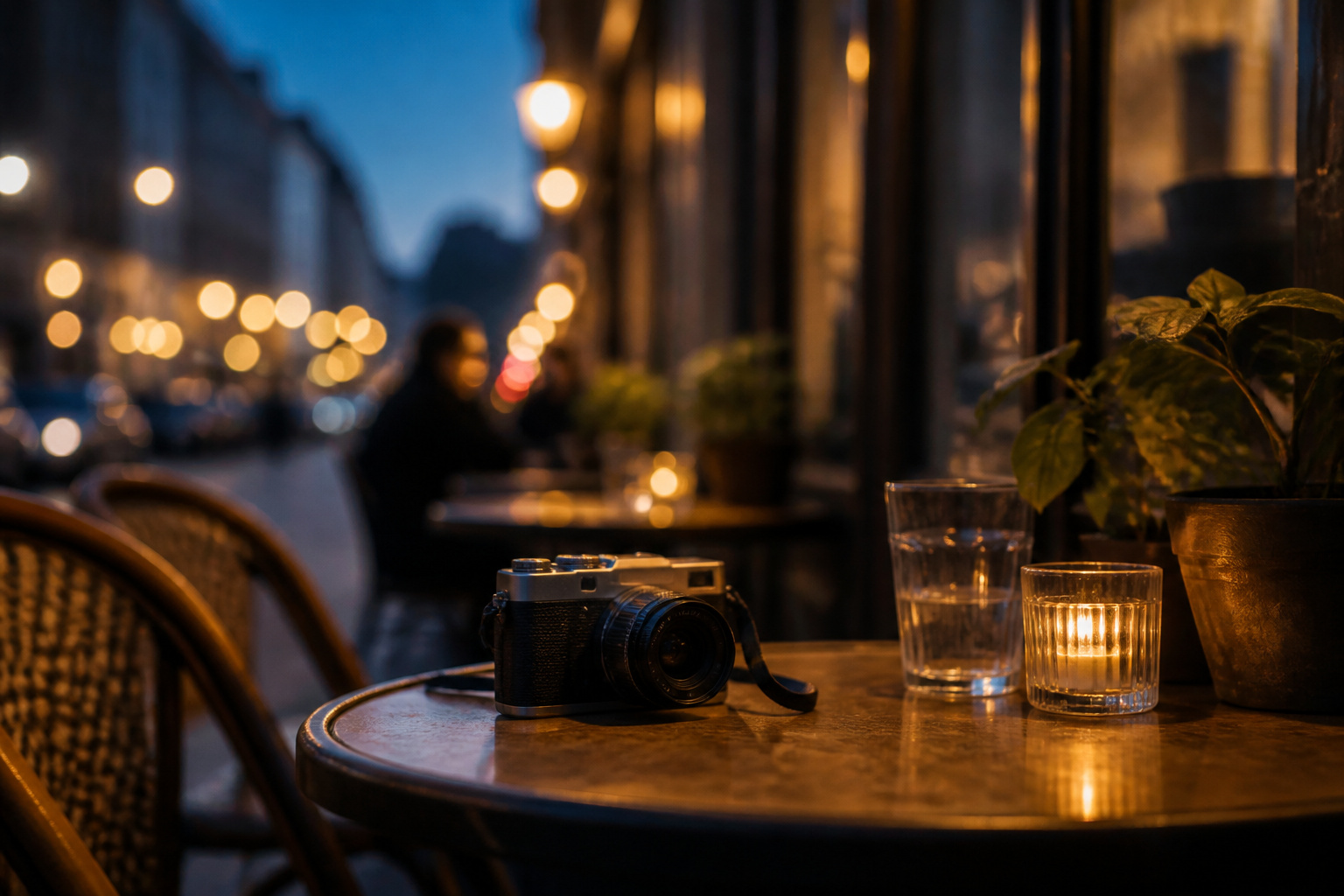
Low light is where the larger sensor shows up most. TechRadar’s review reported strong dynamic range and color, and a big improvement in low light compared with earlier pocket gimbals, with some visible noise in dark scenes. Tom’s Guide also called the 4K video lovely and found the Low Light mode impressive.
The same reviews note limits. TechRadar reported some loss of sharpness and chromatic aberration toward the edges of the frame, and described the camera’s still photos as weak when compared to its video. DJI lists photos at about 9.4 megapixels, so treat the Pocket 3 as a video camera that can take snapshots, not as a replacement for a dedicated photo camera or a recent phone.
Stabilization and Tracking
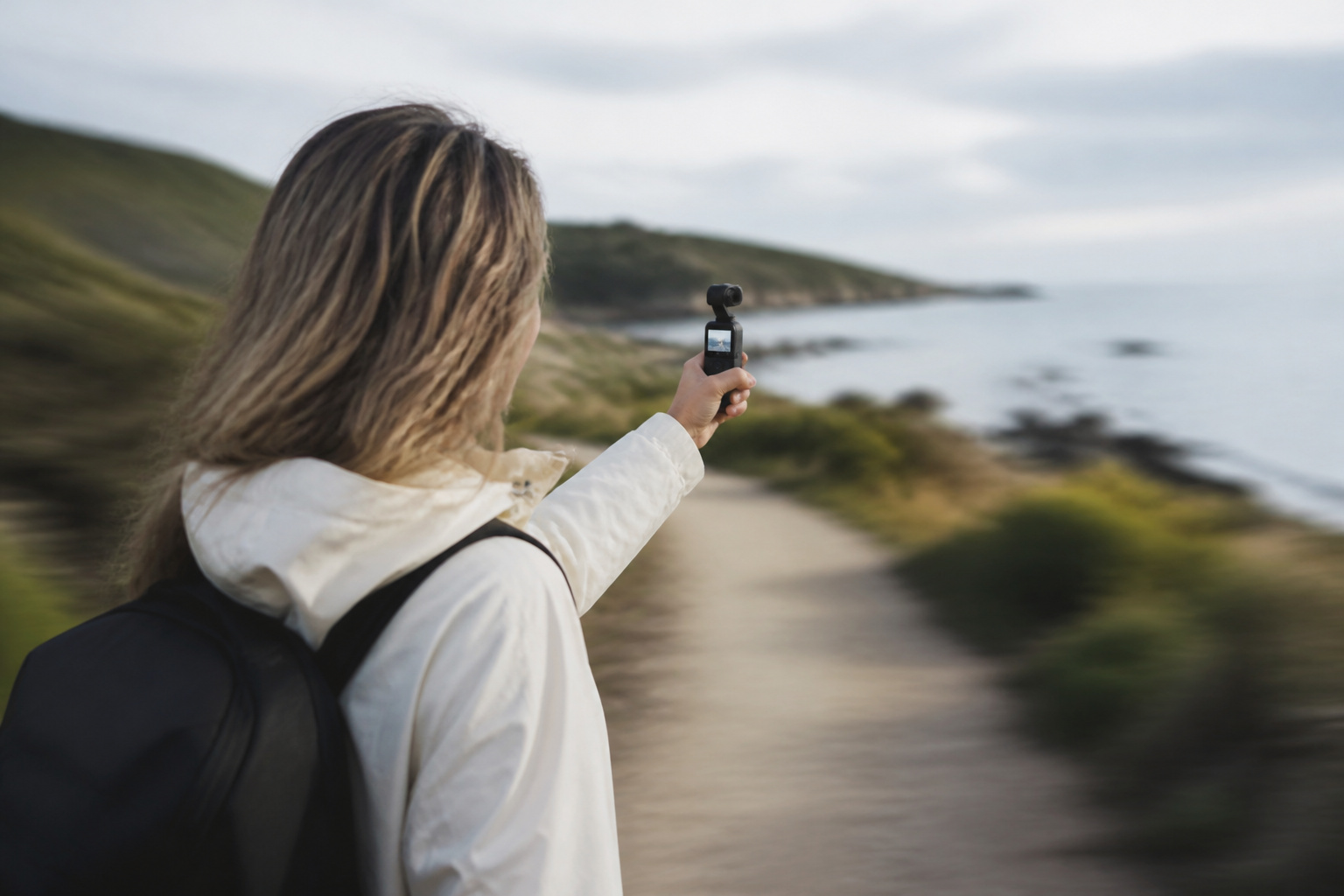
The gimbal is the main reason to buy this type of camera. Tom’s Guide called the gimbal excellent and highlighted features like Tilt Lock for keeping the horizon steady. TechRadar reported that ActiveTrack and face tracking work well, which helps if you film yourself or keep a moving subject centered.
Gimbals are not magic. Tom’s Guide noticed some gimbal drift in Follow Mode, and very fast movement or running can still produce visible bounce. For most walking and handheld shots, the result is much smoother than a phone without a gimbal, but it is worth testing in a store return window with the kind of movement you actually film.
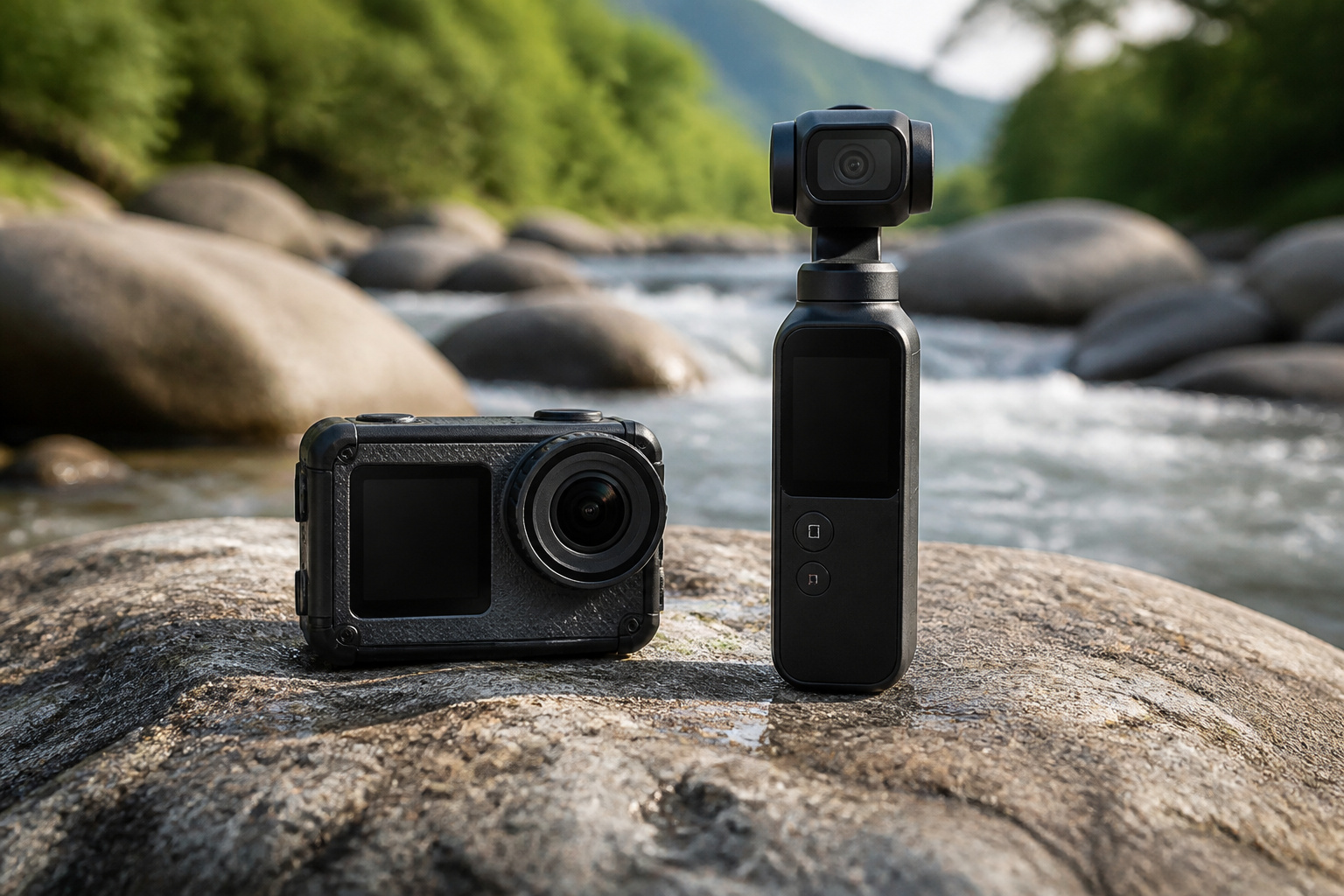
If your filming involves water, impacts, or extreme sports, a different kind of camera is probably a better fit. Our guide to action cameras explains how rugged cameras differ from pocket gimbals.
Recommended Products
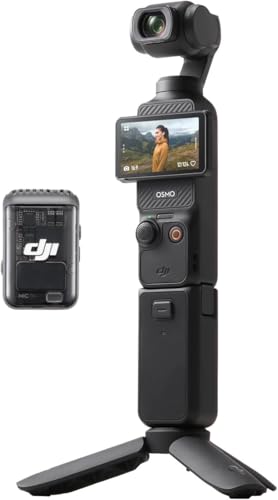
Capture Stunning Footage - Osmo Pocket 3 vlogging camera features a 1-inch CMOS sensor and records in 4K resolution at an impressive 120fps. Capture breathtaking night views and sunsets with enhanced clarity.

5K Video & 80MP Photos with Advanced Stabilization: This vlogging camera records detailed 5K video and captures high-resolution 80MP photos. A dual-axis gimbal, 6-axis gyroscope, and EIS work together to reduce shake for smoother footage, making this digital camera ideal for travel, family moments, and everyday recording.

Audio and Wireless Microphones
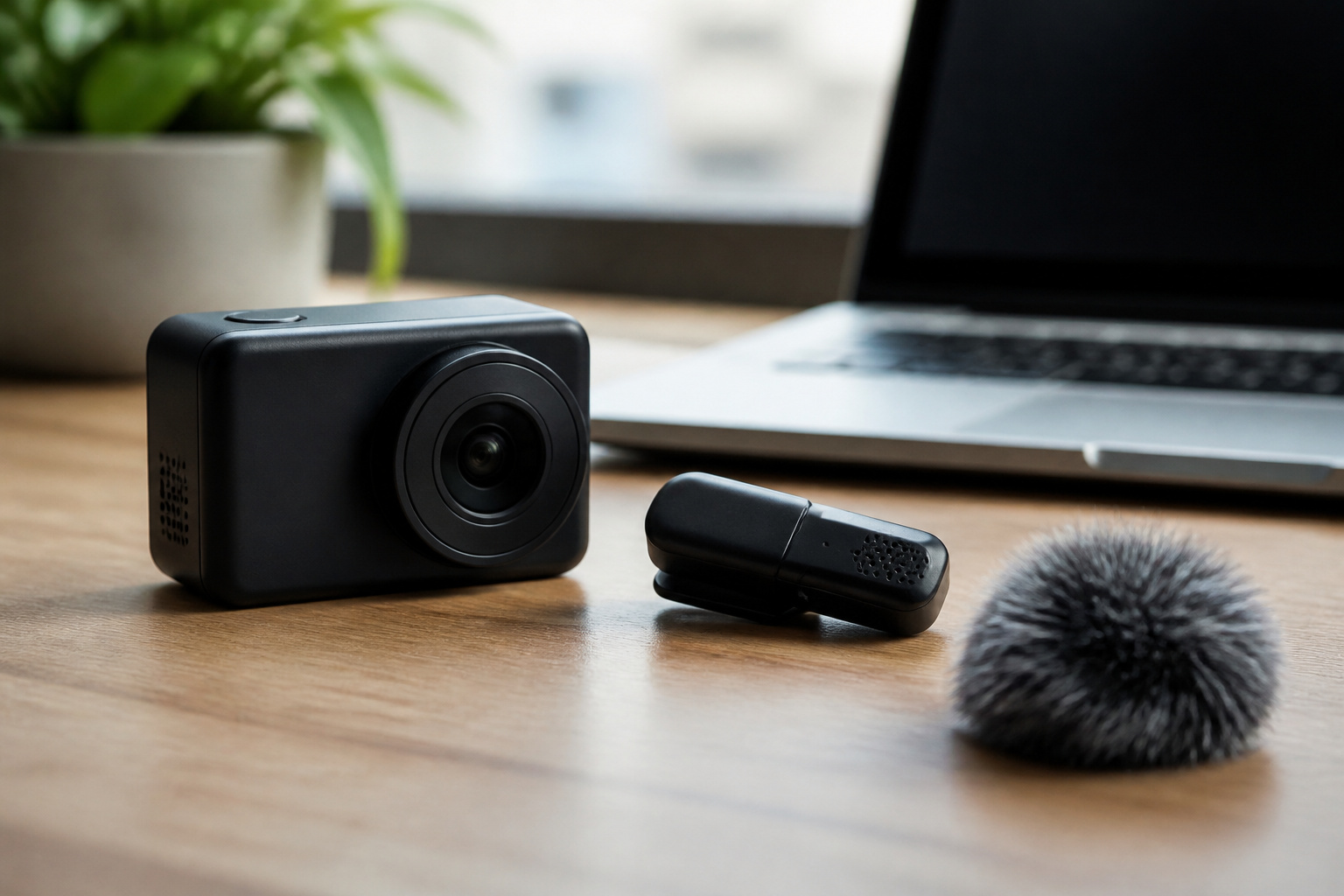
Audio is where many pocket cameras disappoint. DJI lists three built-in microphones on the Osmo Pocket 3, but Tom’s Guide found the built-in microphone sounded tinny and was sensitive to wind. When talking outdoors, an external microphone is usually worth considering.
Tom’s Guide also reported that only DJI’s own wireless microphones connect directly, and that third-party microphones need a wired adapter. Check current compatibility on DJI’s site before you buy a microphone, since accessory support can change with firmware. A small windscreen helps with outdoor wind, and recording close to your mouth makes a bigger difference than any setting.
Recommended Products

Small but Mighty - The DJI Mic Mini lavalier microphone transmitter is small and ultralight, weighing only 10 g, [1] making it comfortable to wear, discreet, and aesthetically pleasing on-camera.

Universal Compatibility: Just switch"Camera" or "Phone" on the microphone body without the TRS &TRRS cable adapter. Universal for iPhone, Android Phones, Cameras, Camcorders, Audio Recorders, etc. (the devices should have a 3.5mm mic jack) Video Mic for filming YouTube Vlogs, interviews, etc.
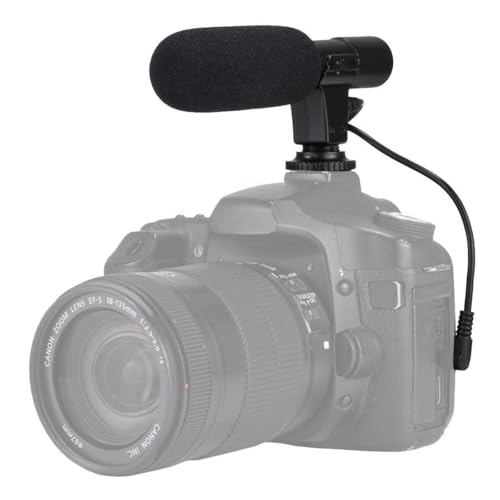
Universal Compatibility Universal mini shotgun microphone designed for use with cameras, camcorders, DSLR cameras, and compatible smartphones using a 3.5mm audio input for external audio recording.
Vertical Video, Webcam Use, and Battery
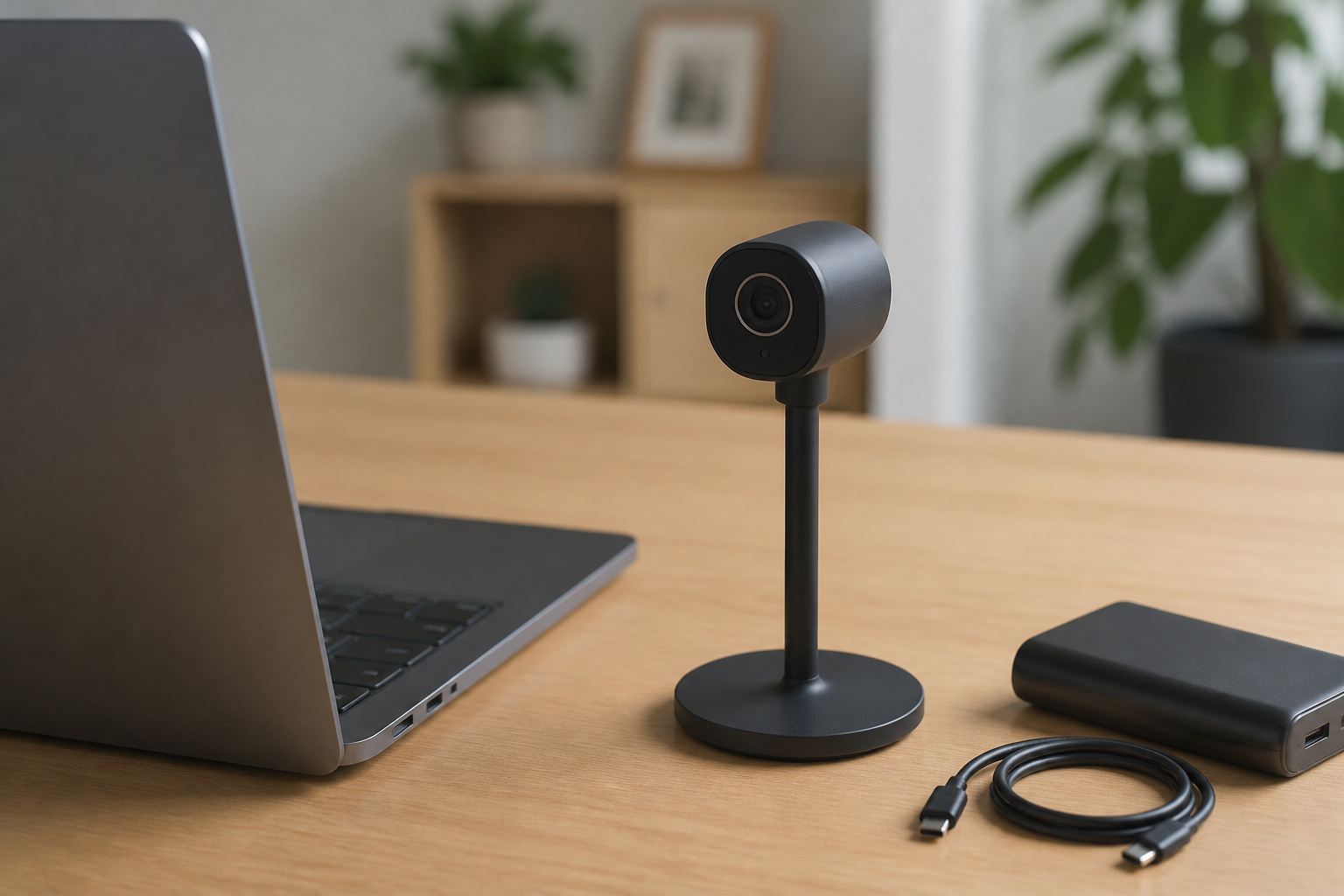
The Pocket 3 has a rotating 2.0-inch touchscreen. DJI lists it as 700 nits, which helps in bright light, and the camera can rotate to shoot vertical video for social platforms without cropping a wide image. DJI also lists UVC and livestream support at 1080p, so the camera can be used as a webcam.
Battery life is modest. DJI lists a 1300 mAh battery with 166 minutes of recording at 1080p and 24 frames per second with the screen and Wi-Fi off, and says it can reach 80 percent in 16 minutes with a 65-watt USB Power Delivery charger sold separately. In real use at 4K and 60 frames per second, Tom’s Guide measured about 113 minutes. Plan for spare batteries or a power bank on long days.
Recommended Products

CAPACITY : Get 10000mAh of extended CLUTCH power -- in your hand and when you need it; Premium cells for longer battery life and run-time

【🎬 4K Video & 75MP Clear Imaging】Shoot in 4K at 30fps with a powerful 75MP CMOS sensor, paired with 18x digital zoom and 31 creative filters for vivid, detailed results. This easy-to-use camera is perfect for creating YouTube videos, TikTok clips, travel vlogs, and everyday recording — capturing life's best moments with ease.

4K Video & 140° Ultra-Wide-Angle Lens – Capture crisp, high-definition 4K footage for travel vlogs and daily moments. The 140° wide-angle lens expands your field of view, allowing you to capture more scenery and detail in every shot—an excellent choice for creators seeking clear and immersive visuals.
Heat, Screen Menus, and Other Limits
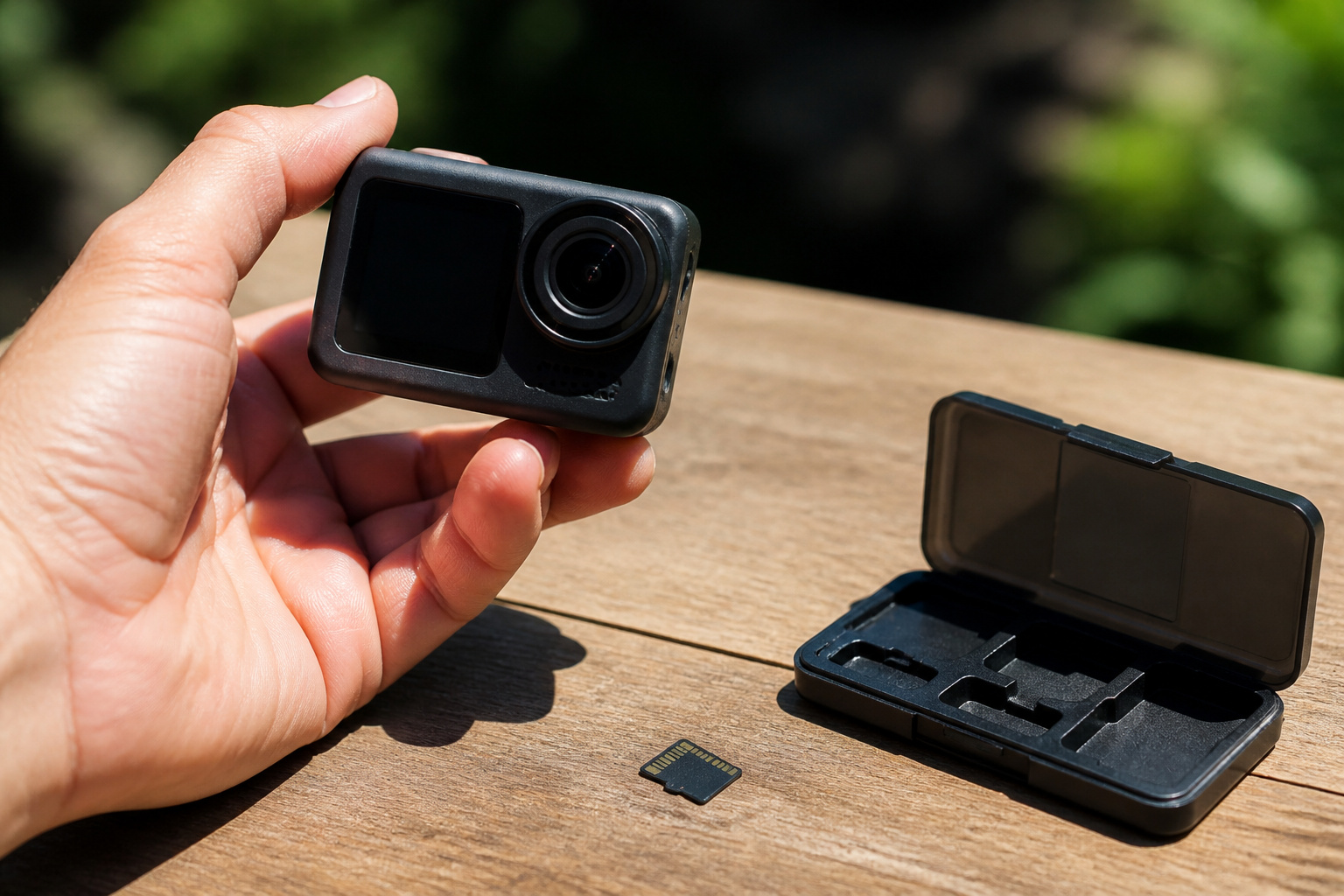
Both TechRadar and Tom’s Guide reported overheating at high resolutions and frame rates, so a hot day or long 4K60 session can cut recording short. TechRadar also found the 2-inch screen menus hard to use, with many settings easier to reach in the phone app. Tom’s Guide found the app weaker than some rivals.
There is also no built-in storage. DJI lists microSD cards up to 1 TB, so plan to buy a fast card too. The camera weighs 179 grams and works from 0 to 40 degrees Celsius, so filming in cold weather needs extra care. DJI’s spec page doesn’t list waterproofing, so assume you need a separate case or a different camera for wet conditions.
Who Should Skip It
- Photographers who care about stills: The sensor is made for video, and reviewers found photo quality weak.
- Action sports and water: A rugged camera with a waterproof body is a safer choice.
- Buyers who need perfect audio out of the box: Plan to add a microphone, and confirm that it works with the camera.
- Anyone who films mostly in hot conditions at high frame rates: Overheating is a documented complaint.
- People who already own a recent phone with good stabilization: The gain may not justify a second device.
Newer Models and US Availability
DJI announced the Osmo Pocket 4 on 16 April 2026. Android Authority described it as an iterative upgrade with a new 1-inch sensor, 10-bit D-Log, and 4K video at up to 240 frames per second. Those same reports said the Pocket 4 would not be sold in the United States because of pending FCC authorization, and PhotoWorkout tied that to the FCC’s December 2024 Covered List. These are reports from April 2026, so check current availability before you plan around either model.
DJI’s spec page also lists software updates for the Pocket 3 as guaranteed until 31 December 2026. Check the current DJI page for update policy before you buy, since it affects how long you can expect new features and fixes.
Recommended Products

Cinematic 8K HDR Video & 4K30fps Vertical Video: This vlog camera brings every scene to life with 8K30fps HDR and Dolby Vision for rich colors, striking contrast, and lifelike detail. For social-ready content, shoot 4K30fps vertical video with 6K oversampling and up to 6× zoom.

Cinematic 8K HDR Video: This vlog camera features a 1" 8K sensor and shoots up to 8K30fps with Dolby Vision, capturing vivid color, high contrast, and lifelike detail for cinema-grade footage.

Cinematic-Style Footage - Experience the power of Xtra Muse's 1-inch CMOS sensor, capable of recording breathtaking 4K resolution videos at 120fps. Capture each moment with remarkable detail.
Frequently Asked Questions
Is the Osmo Pocket 3 Better Than a Phone for Video?
For smooth walking footage and low light, a dedicated gimbal camera with a 1-inch sensor can look better than many phones. Modern phones are very good at stabilization, quick sharing, and stills, so the gap is smaller than it used to be. The Pocket 3 makes the most sense when you want a small second camera that you can clip to a pocket or bag.
Does the Osmo Pocket 3 Have Built-In Storage?
No. DJI lists no built-in storage and supports microSD cards up to 1 TB. You need a compatible card in the camera before you can record.
Can I Use It as a Webcam?
DJI lists UVC and livestream support at 1080p, so you can use it as a webcam. A gimbal camera on a desk stand can give a better picture than a laptop camera, but check the cable and software requirements before relying on it for work calls.
Is It Waterproof?
DJI’s spec page does not list waterproofing. Treat it as a camera that needs to stay dry unless you use a case designed for it. For regular water use, a waterproof action camera is the safer choice.
Should I Wait for a Newer Model?
DJI announced the Pocket 4 in April 2026, but reports at that time said it would not be sold in the US while FCC authorization was pending. If you are outside the US, a newer model may be an option. If you are in the US, check current availability and compare what the Pocket 3 offers for your use.
Closing Thoughts
The Osmo Pocket 3 is a strong choice if you want smooth, good-looking handheld video in a pocketable body. It is a weaker choice for stills, rugged use, hot conditions, or clean built-in audio. Decide which kind of footage you film most, plan for a microSD card and a microphone, and check current availability before you buy.