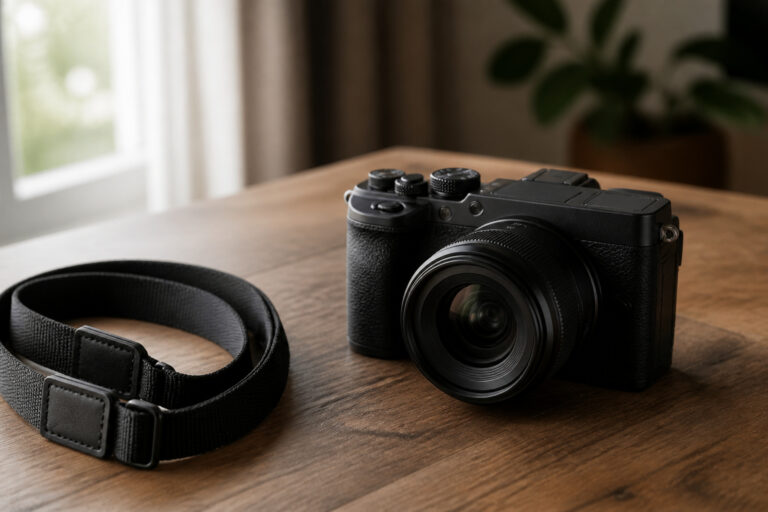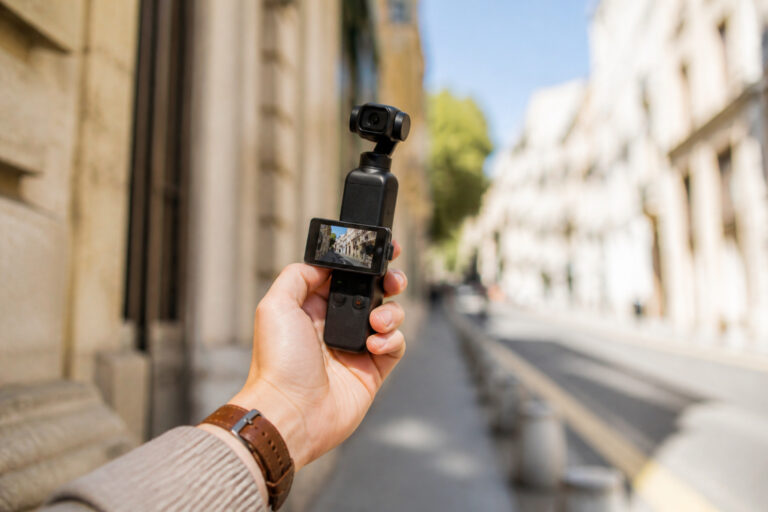
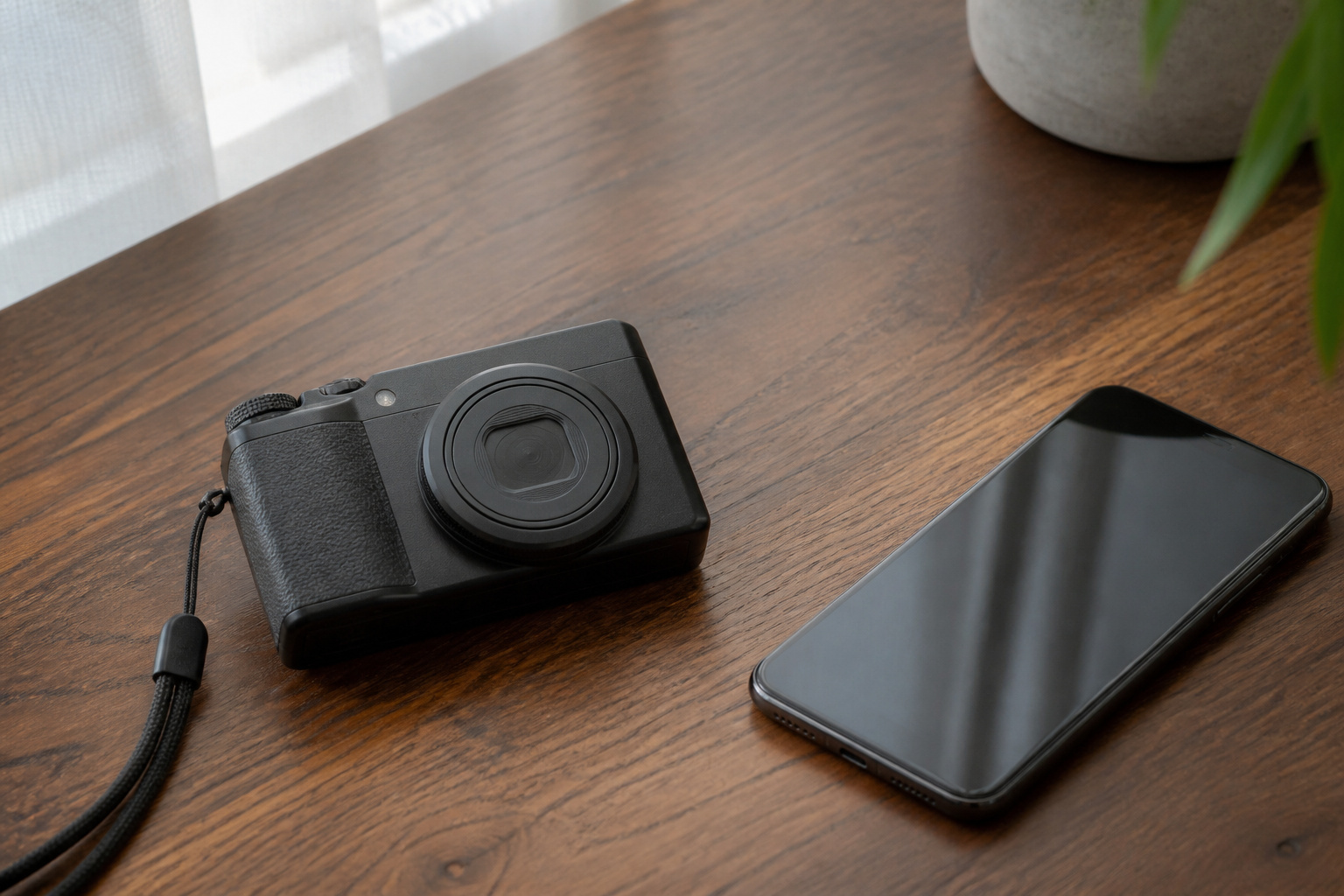
A pocket-size camera used to be the obvious choice for anyone who wanted better photos than a phone could take. Today, most people carry a phone with several lenses and strong image processing, so a dedicated compact camera has to earn its place. Some still do, but the reasons are specific, and the cheapest models are the hardest to justify.
This guide explains what compact cameras are now, how they compare with smartphones, and which features matter: sensor size, zoom, viewfinder, stabilization, video, and battery. It also covers what to check on older or budget compacts. Background comes from 2026 buying guides by Digital Camera World and Fstoppers, and model availability changes often, so check current stock before you buy.
What a Compact Camera Is Today
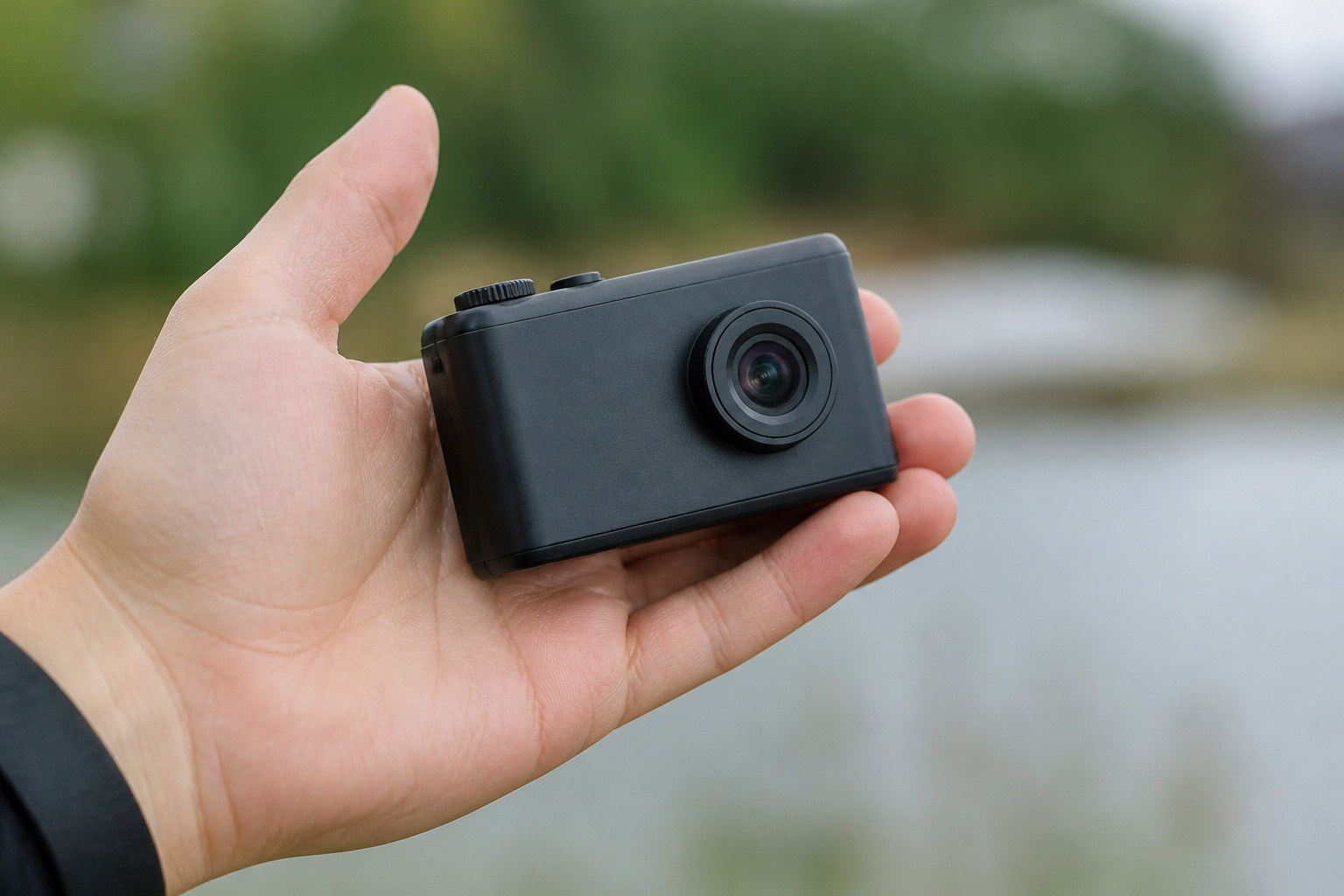
A compact camera has a fixed lens, a sensor, a screen, and a body small enough to carry in a jacket pocket or small bag. Unlike mirrorless cameras with interchangeable lenses, you buy the lens and sensor as one package. That keeps size and cost down, and you make your lens choice when you pick the camera.
The category has split into two groups. Basic point-and-shoot cameras with small sensors and long zoom lenses are the older style, and they compete directly with phones. Premium compacts use much larger sensors aimed at enthusiasts who want better quality than a phone in a body that is still easy to carry.
Compact Cameras Versus Smartphones
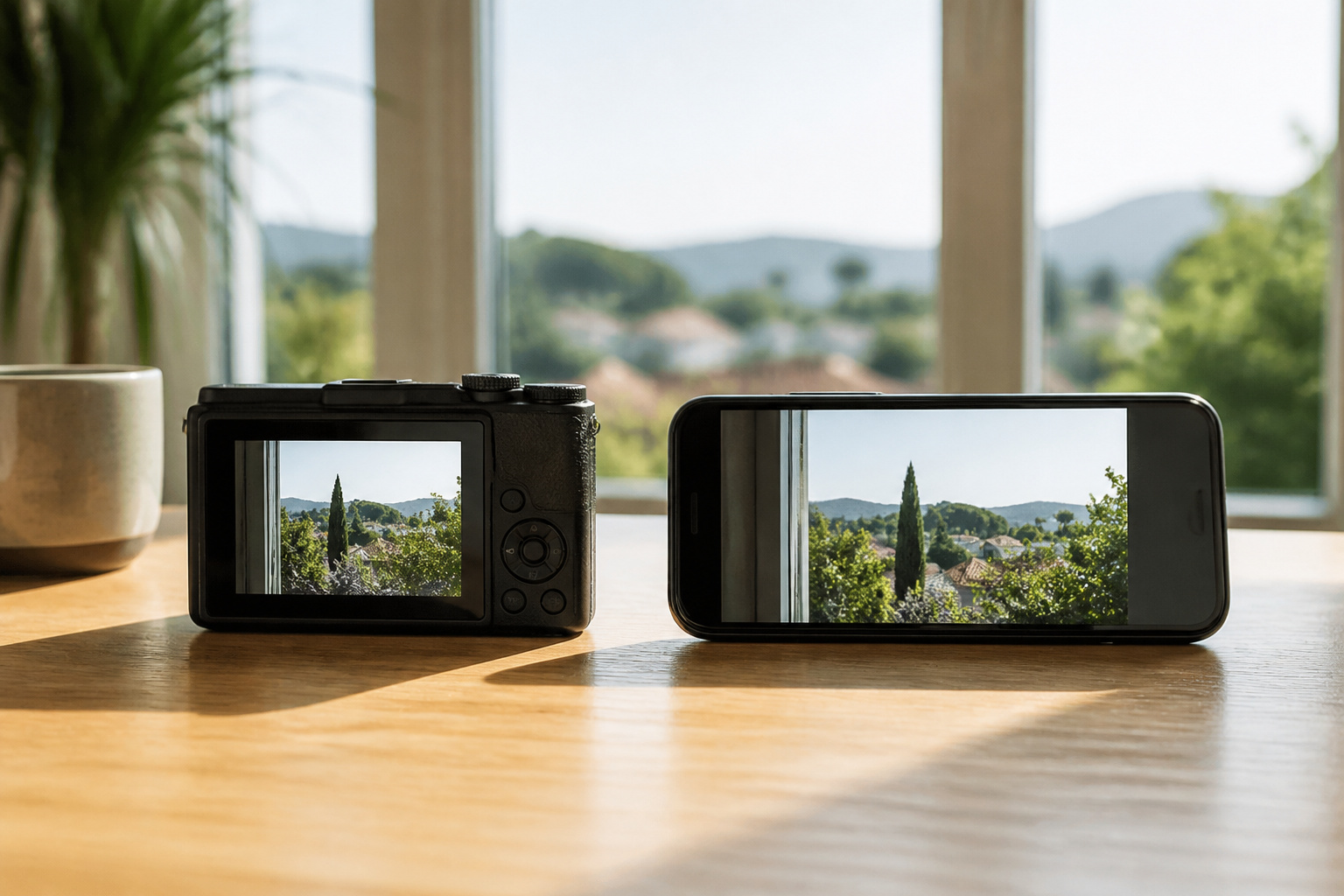
Digital Camera World argued in April 2026 that a flagship phone is a better choice than a cheap compact for most people. The reasons were versatility, since a phone offers several focal lengths in one thin device, and software, since phones combine multiple exposures for HDR and night photos and simulate background blur automatically. Phones also share photos instantly and are already in your pocket.
A small-sensor compact generally cannot match that processing, and its zoom lens trades away brightness at long focal lengths. Where a dedicated camera still helps is optical quality, physical controls, a real zoom lens, and a larger sensor. Those advantages grow with sensor size, which is why the strongest case for a compact today is at the premium end.
| Area | Typical phone | Basic compact | Premium compact |
|---|---|---|---|
| Sensor | Small, helped by software | Small | Larger, up to full frame |
| Zoom | Several fixed lenses plus digital crop | Single optical zoom | Zoom or fixed lens |
| Image processing | Strong HDR and night modes | Basic | Varies by model |
| Controls | Touchscreen | Basic buttons | Dials, rings, sometimes a viewfinder |
| Sharing | Instant | Wi-Fi or cable transfer | Wi-Fi or cable transfer |
Recommended Products

16MP Sensor: Captures detailed photos with a CMOS sensor for everyday shooting

【4K UHD Video & 48MP Photo Capture, Record Every Special Moment】 This compact digital camera features the latest CMOS sensor system, supporting 4K video recording and 48MP high-resolution photos. Whether you're exploring the beauty of nature or capturing the joy of a family gathering, this camera ensures you can clearly document every important moment in stunning detail.
Sensor Size: Small, 1-Inch, and Larger
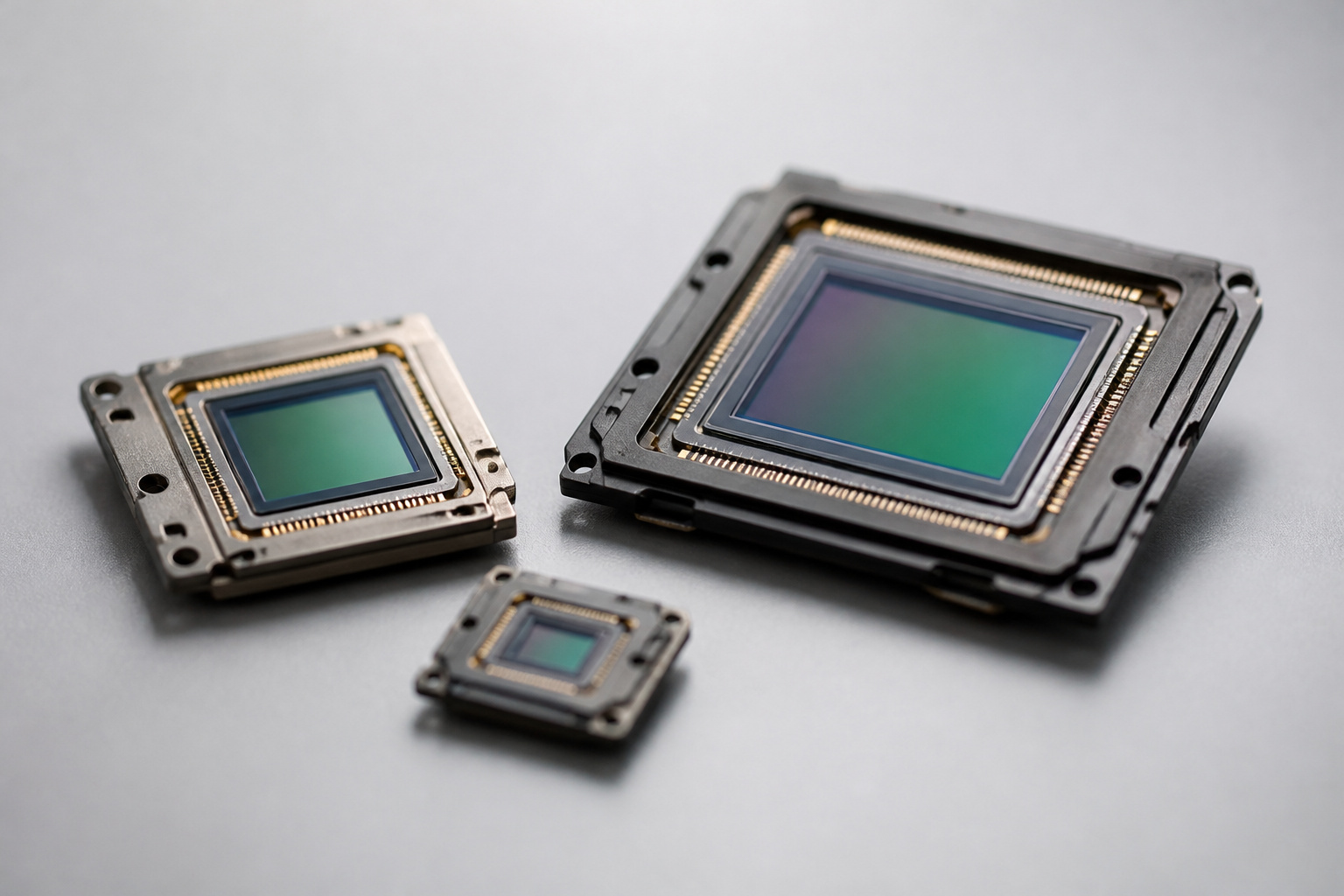
Sensor size is the biggest quality factor in a compact. Fstoppers notes that larger sensors improve low-light performance first and then background blur, but they raise cost and reduce pocketability. A 1-inch sensor suits daylight and social sharing, while APS-C is described as a balance point and full frame is for large prints, low light, or a specific look.
Basic compacts from the budget range use much smaller sensors than a 1-inch type. Megapixels matter less than sensor size, and Fstoppers suggests around 20 to 26 megapixels is enough for most uses. For a wider explanation of sensor formats, see our guide to mirrorless cameras.
Zoom Lenses and Fixed Lenses
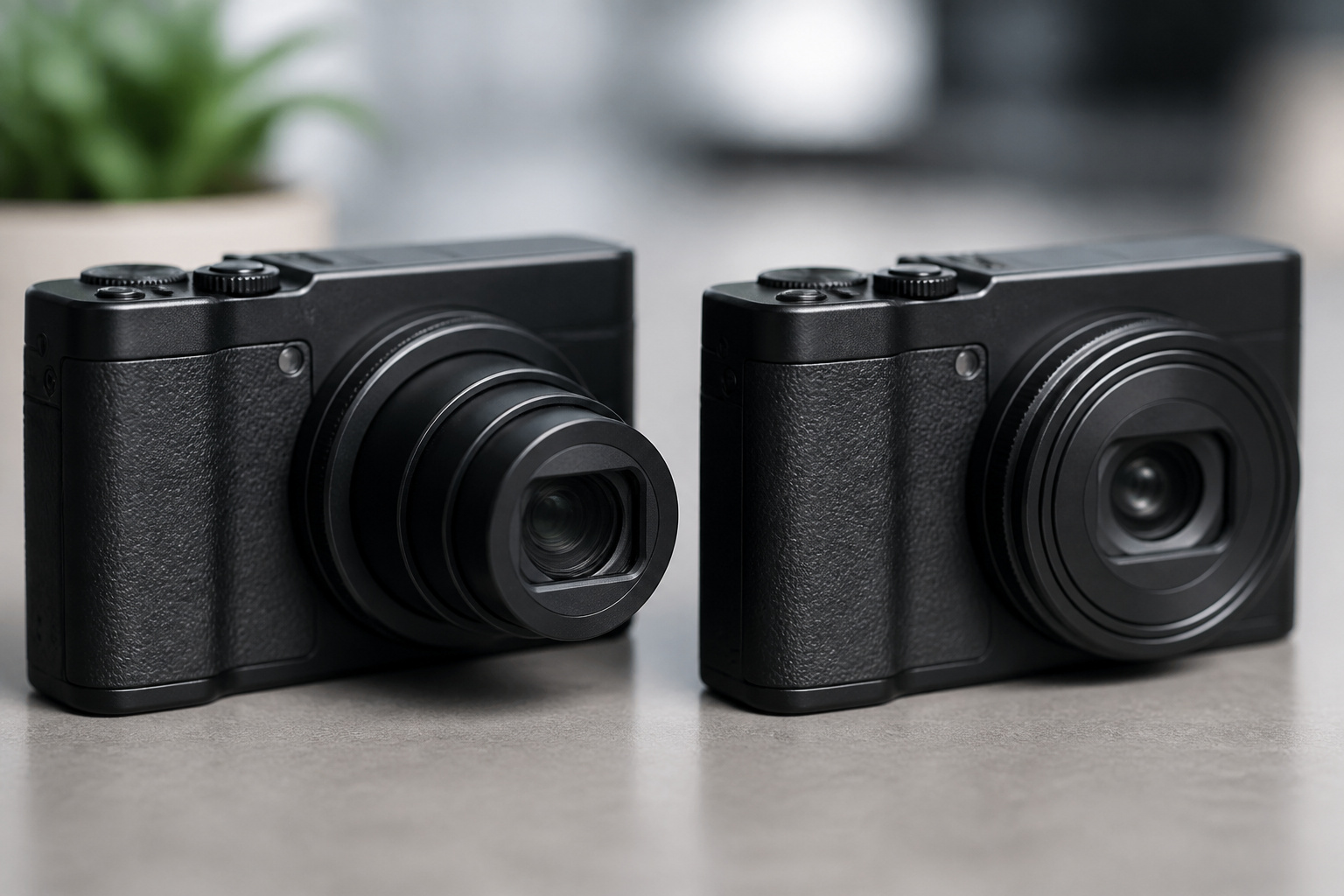
A zoom lens gives reach and flexibility, which suits travel and family events. A fixed lens, often a wide or standard focal length, is simpler and pushes you to move closer or frame carefully. Fstoppers describes a fixed lens as building discipline and consistent composition, while a zoom is better for versatility.
Zoom ranges are quoted as full-frame equivalents, such as 24 to 200 mm, so compare equivalents rather than the optical zoom multiplier. Long zoom ranges on small sensors often lose brightness at the long end, so check the maximum aperture across the range. Digital zoom is only a crop, and a phone can often match it.
Recommended Products

16MP Sensor: Captures detailed photos with a CMOS sensor for everyday shooting

✔ COMPATIBLE WITH ALL SMARTPHONES, TABLETS, and LAPTOPS including ALL iPhone models, Samsung Galaxy and Note, Google Pixel, Huawei and more. CONTENTS INCLUDE: TruView 0.45x Wide Angle Lens, Clarus 15x Macro Lens, TruGrip Lens Clip, GlowClip Mini Rechargeable LED Light + Charging Cable, Quick-Release Lanyard, DuraCase, EasyClip, and Cleaning Cloth.

Viewfinders, Stabilization, and Controls
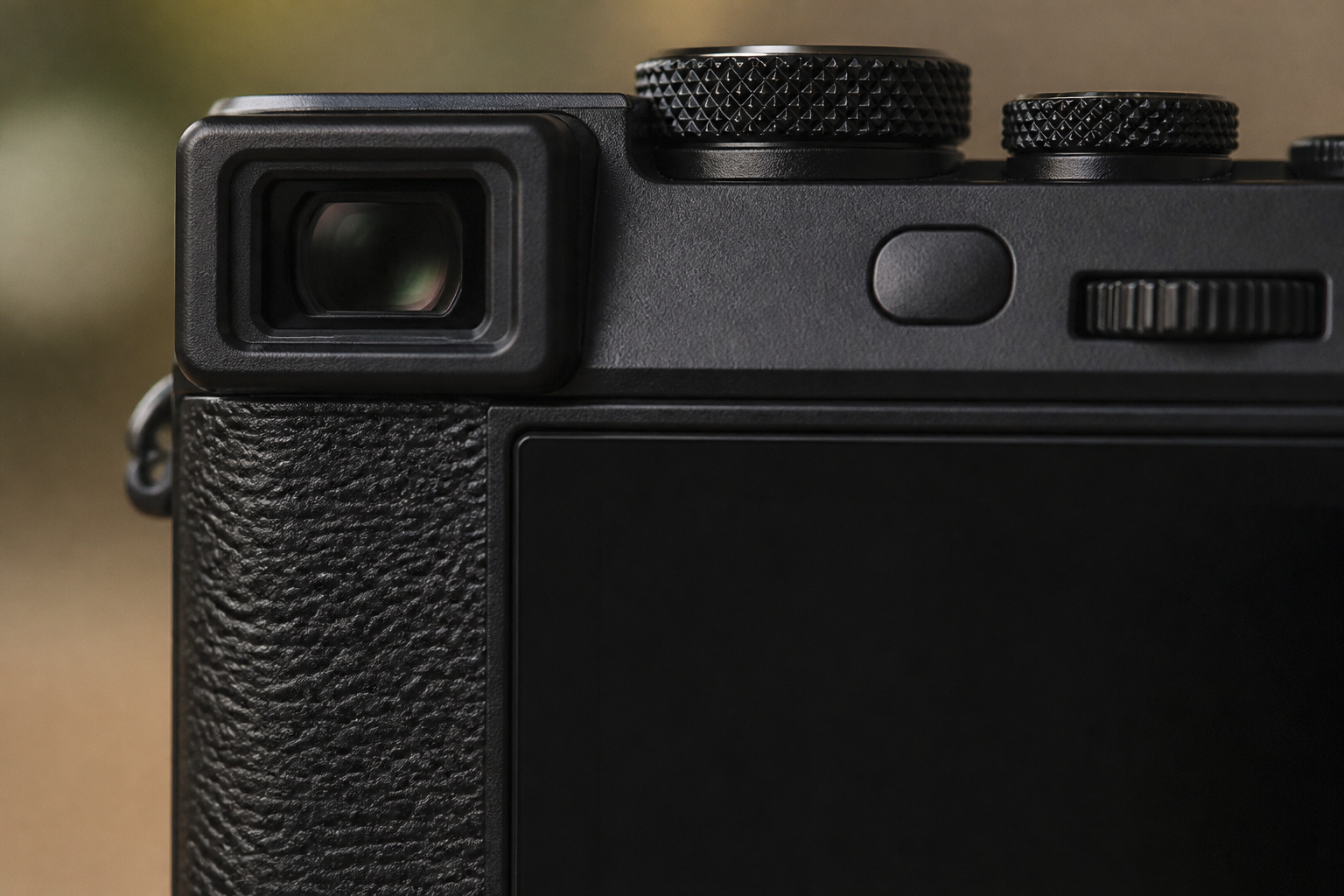
Fstoppers treats a missing viewfinder and missing stabilization as major drawbacks in daily shooting. A viewfinder helps in bright sun and gives a steadier hold, and stabilization helps with handheld shots in low light and at long zoom. If you often shoot outdoors, a built-in viewfinder is worth looking for.
Physical controls are a real reason to choose a compact over a phone. Dials for exposure, a lens ring, and a dedicated shutter button make shooting faster once you learn them. Also check the maximum shutter speed, since a low ceiling can make a bright lens hard to use in sunlight without a neutral density filter.
Recommended Products

An Always-Clear View, Even in Bright Sunlight: This Panasonic camera's 2,360K-dot Large LVF 0.74x (35mm camera equivalent) ensures you'll see your screen without glare

Clear Image Zoom ZEISS Lens. Panorama (Recording): Intelligent Sweep Panorama (supports 360 format)

52x Optical Zoom Camera: Reach distant subjects with a 24mm wide angle lens spanning sweeping landscapes to tight telephoto shots of birds, wildlife, and athletes; genuine optical sharpness, not a digital crop
Video, Battery, and Storage
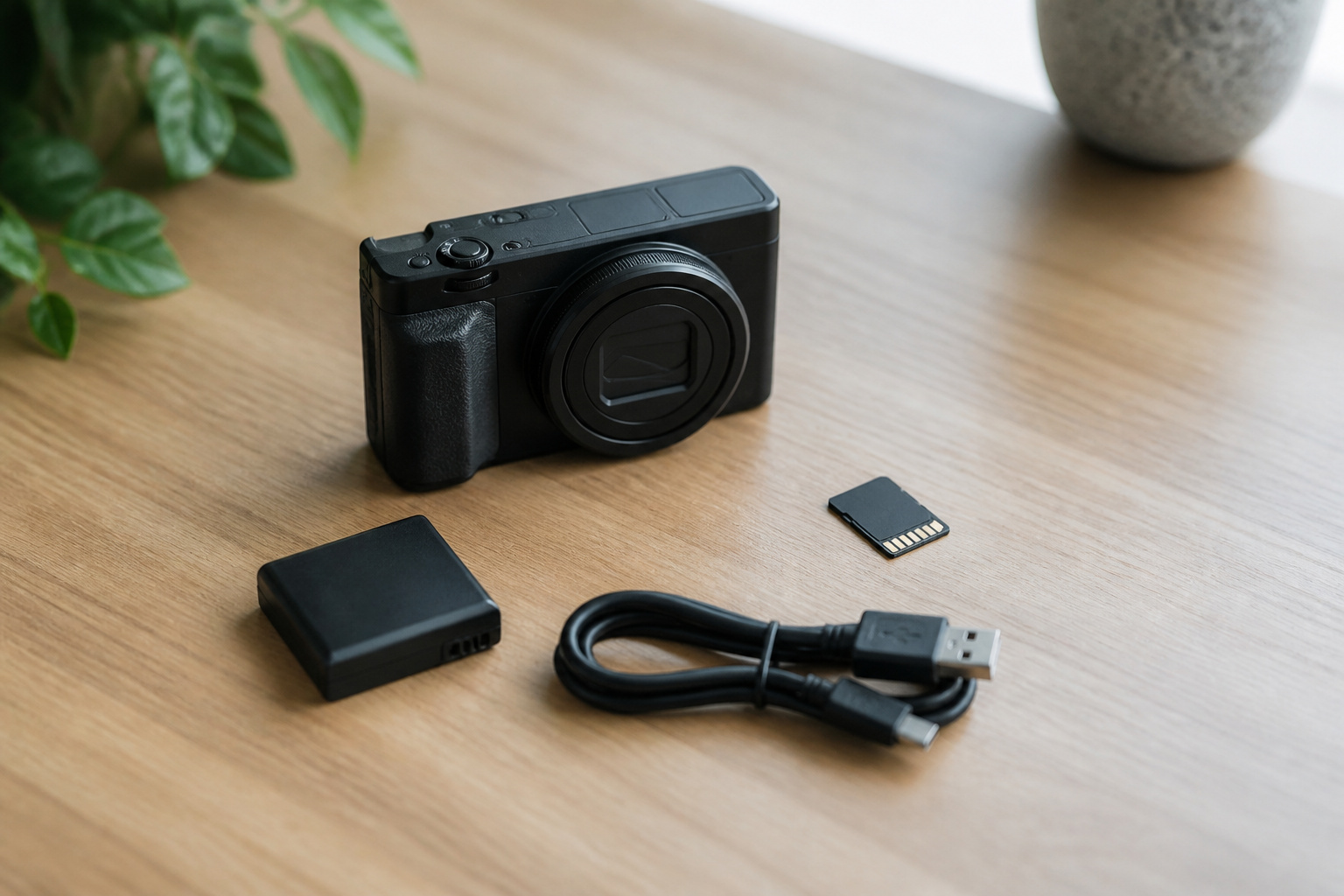
Compacts range from basic 1080p recording to 4K video and vlogging-focused models with flip screens and microphone inputs. If video matters, check the resolution and frame rate, how long the camera records before it overheats or stops, and what audio inputs it has. For a small camera built around stabilized video, see our guide to pocket gimbal cameras.
Battery life and charging vary a great deal. Many compacts use a proprietary battery, which Digital Camera World lists among the extra accessories a compact adds compared with a phone. Check whether the camera charges over USB, plan for a spare battery, and make sure you have a memory card of the right type.
Recommended Products

Instant PDAF Autofocus — Stay sharp with Phase Detection Auto Focus. This computer camera locks onto subjects instantly, eliminating the focus "hunting" found in a standard webcam for a crisp, stable streaming experience.

【🎬 4K Video & 75MP Clear Imaging】Shoot in 4K at 30fps with a powerful 75MP CMOS sensor, paired with 18x digital zoom and 31 creative filters for vivid, detailed results. This easy-to-use camera is perfect for creating YouTube videos, TikTok clips, travel vlogs, and everyday recording — capturing life's best moments with ease.
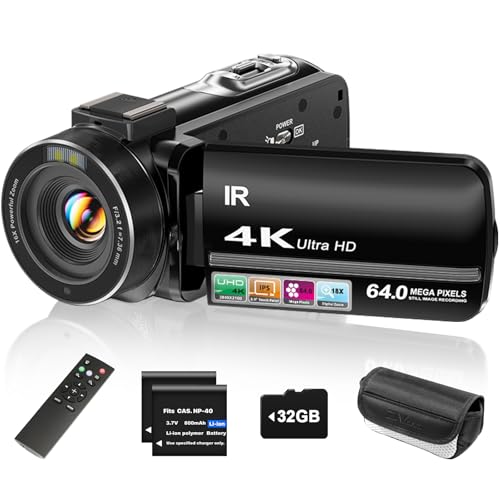
4K & 64MP Video Camera Camcorder: Capture life in breathtaking detail with 4K Ultra HD recording and vibrant 64MP photos, powered by an advanced high-sensitivity CMOS sensor. Equipped for exploring the beautiful world, this video camera is your perfect companion! Ideal for video recording, travel vlogs, family activities, interviews, studying, and cherishing precious moments
Older and Budget Compacts: What to Check
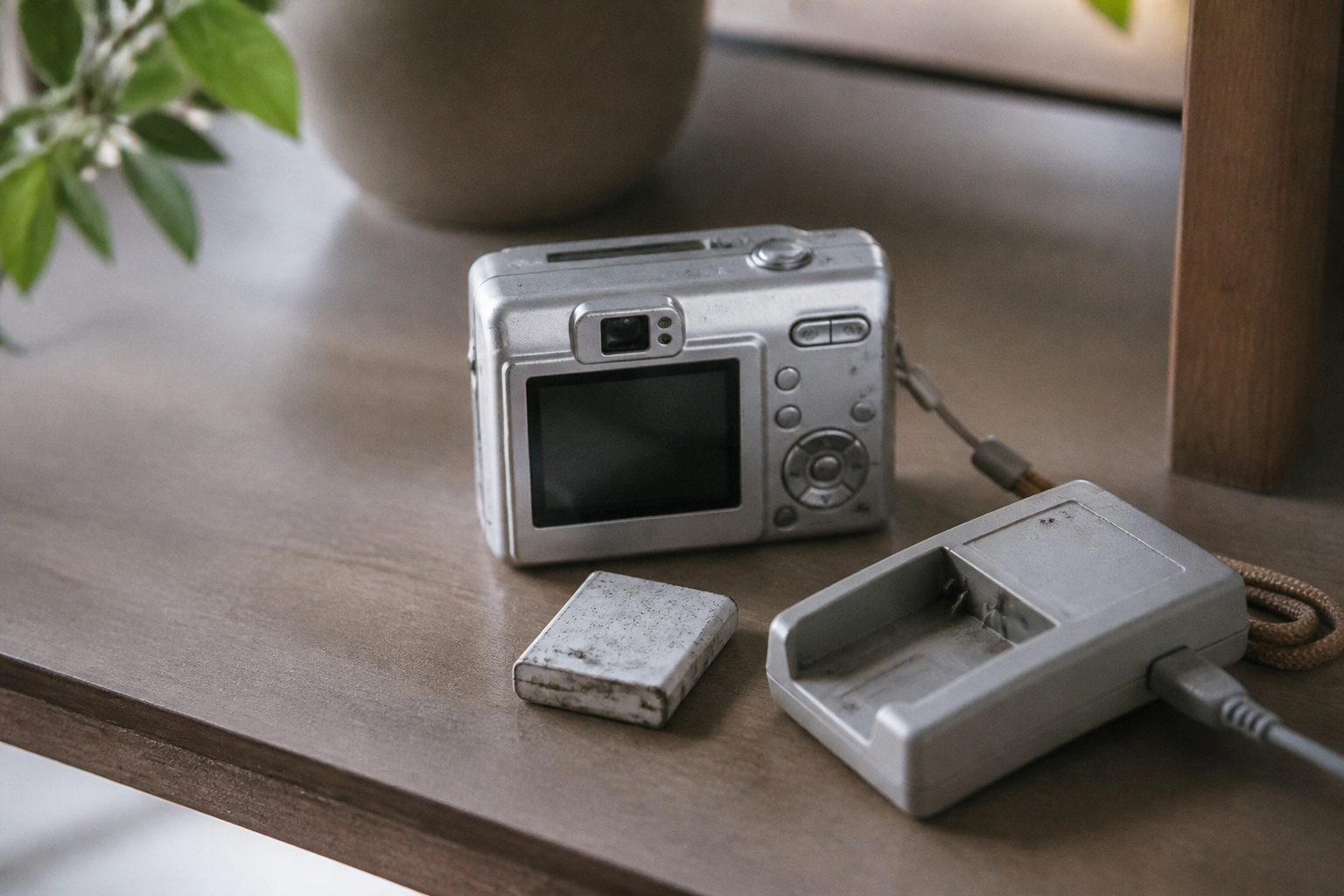
Budget compacts from the early 2010s were common when phone cameras were weak, and many are still sold used or as old stock. If you consider one, verify the sensor resolution and age, whether the battery is still available, and whether the memory card type is still easy to buy. Used cameras may also have worn batteries or lens problems.
Treat a very cheap compact with caution. A modern flagship phone will usually beat it for everyday photos, and the compact only makes sense if you want a simple second camera for a child, a trip where your phone could be damaged, or a specific zoom range. Digital Camera World’s view is that a cheap compact is hard to justify against a phone.
Compact Camera Categories and Examples
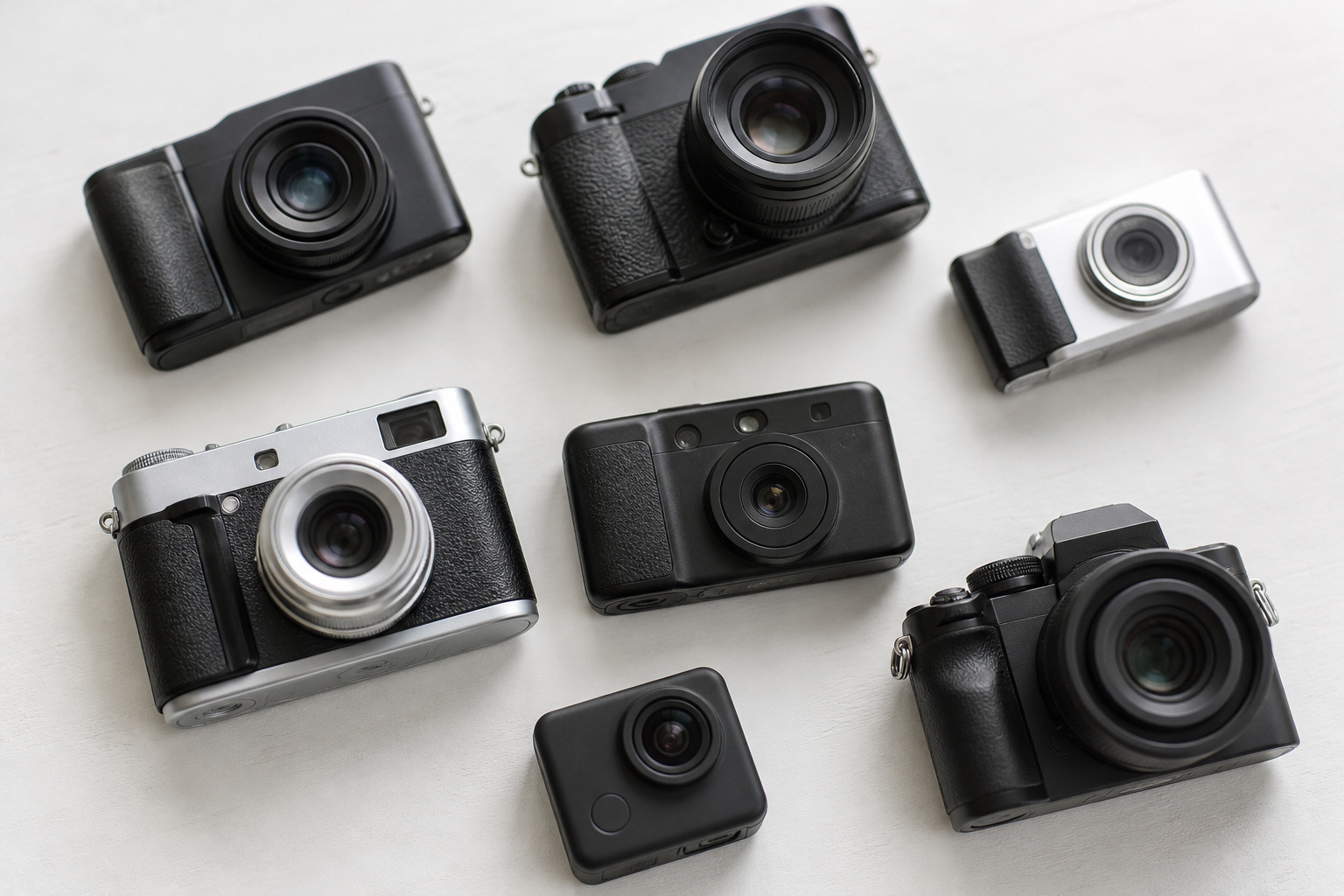
Fstoppers sorts its 2026 compact picks by use. These models are examples of each category, not a ranking, and Fstoppers warns that several are hard to buy or have been removed from official stores, so confirm availability and price before planning around any of them.
| Category | Sensor | Examples listed by Fstoppers | Best for |
|---|---|---|---|
| All-round fixed lens | APS-C | Fujifilm X100VI | Travel and street photography with a viewfinder |
| Pocket street camera | APS-C | Ricoh GR IV | Carrying everywhere |
| Pocket zoom | 1-inch | Sony RX100 VII | Daylight shooting with a 24 to 200 mm equivalent zoom |
| Travel zoom | Four Thirds | Panasonic Lumix L10 | Flexible travel photography |
| Vlogging | 1.4-type | Canon PowerShot V1 | Creators who want a wide, stabilized video camera |
| Premium fixed lens | Full frame | Leica Q3, Sony RX1R III | Enthusiasts and professionals |
Recommended Products

Specially Designed: This rope camera neck strap is specially designed for carrying your cameras, it fits for most mirrorless compact cameras with small round strap lugs. (Note: Only fits cameras with small round strap lugs.)


Ultra-Compact Camera Sling Bag: Measures 9.5 x 3.9 x 5.5 in and weighs 0.5 lb; fits DSLR, SLR, mirrorless and digital cameras with a lens or flash; suitable for travel, daily photography, vlogging and content creation; detach lens before storage
Who Should Buy a Compact

- You want better quality than a phone in a small body: Look at a premium compact with a 1-inch or larger sensor.
- You travel and want one camera with zoom: A travel zoom compact can replace a bag of lenses.
- You enjoy dials and a viewfinder: A compact with physical controls changes how you shoot.
- You want a simple camera for a child or for rough conditions: A basic or rugged camera may suit, and an action camera is another option; see our guide to action cameras.
- You want fun prints: An instant camera is a different category with different strengths.
- You only need good everyday photos: A recent phone is probably enough.
Frequently Asked Questions
Are Compact Cameras Still Worth Buying?
They can be, but mostly at the premium end. A large-sensor compact with a good lens, physical controls, and a viewfinder offers things a phone cannot. A basic small-sensor compact is hard to justify against a modern flagship phone.
Is a Compact Camera Better Than a Smartphone?
It depends on what you value. Phones win on convenience, processing, and sharing. Compacts win on optical quality, zoom, and controls, and the gap grows as the sensor gets larger.
What Sensor Size Should I Look For?
A 1-inch sensor is a good starting point for daylight and social sharing. APS-C offers a better balance of low light and background blur, while full frame is for specific uses. Larger sensors cost more and make the camera bigger.
Should I Buy an Older or Used Compact?
Only with care. Check the battery, memory card type, and age of the sensor, and compare the pictures to your phone. A cheap old compact is often a poor value against a current phone.
What Is the Difference Between a Compact and a Mirrorless Camera?
A compact has a fixed lens, while a mirrorless camera lets you change lenses. Mirrorless gives more flexibility and larger sensors, but it is bigger and costs more once you add lenses. Our mirrorless camera guide covers that choice in detail.
Closing Thoughts
A compact camera makes sense when you want something a phone cannot give you, such as a bigger sensor, a real zoom, or physical controls. Decide what you want to do with the camera, choose a sensor size and lens type to match, and check availability before you buy. For everyday snapshots, the phone in your pocket may already be enough.