
Not every car audio setup needs an amplifier; factory head units and budget stereos already push a small amount of power to your speakers.
But if you’re hearing distortion at higher volumes, flat-sounding bass, or you’ve upgraded your speakers or added a subwoofer, an amp is usually the fix.
Here’s how to tell whether you actually need one and what to look for if you do.
Why Factory Power Falls Short
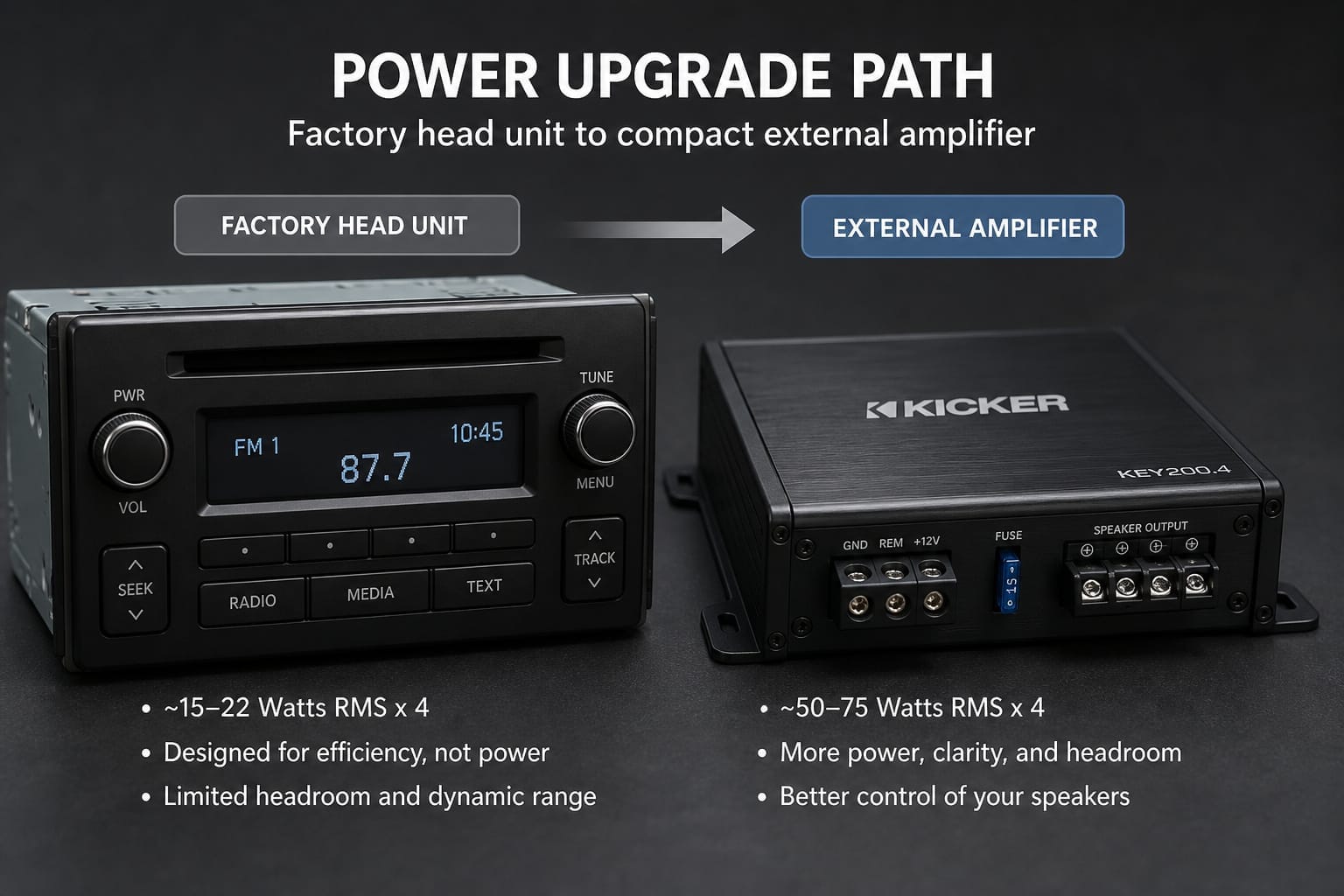
Most factory head units put out around 15-20 watts RMS per channel, enough to drive stock speakers at moderate volume, but not enough to control aftermarket speakers or a subwoofer cleanly.
When you push a weak source unit past its limit, it starts clipping: the amplifier (or head unit) can’t supply enough clean voltage, so the waveform gets chopped off and turns into distortion.
That distortion damages speakers over time, not high volume itself, and it’s also a common source of amp overheating, covered in our guide on preventing amp overheating and clipping.
An external amp gives your speakers a clean, adequate power supply instead of forcing the head unit to strain.
Recommended Products
![4 Channel Bluetooth Amplifier, 50W x 4 Audio Power Amp, Hi-Fi Home Stereo Speaker Receiver [Douk Audio M4]](https://m.media-amazon.com/images/I/316ikBMc9uL._SL500_.jpg)
One group of stereo RCA (CH3 and CH4) can be used as audio input or output by switching the selector, to acheive different demands

50 watts x 4 channels at 4Ω stereo, delivering 200 watts total power
Matching RMS Power, Not Peak Numbers
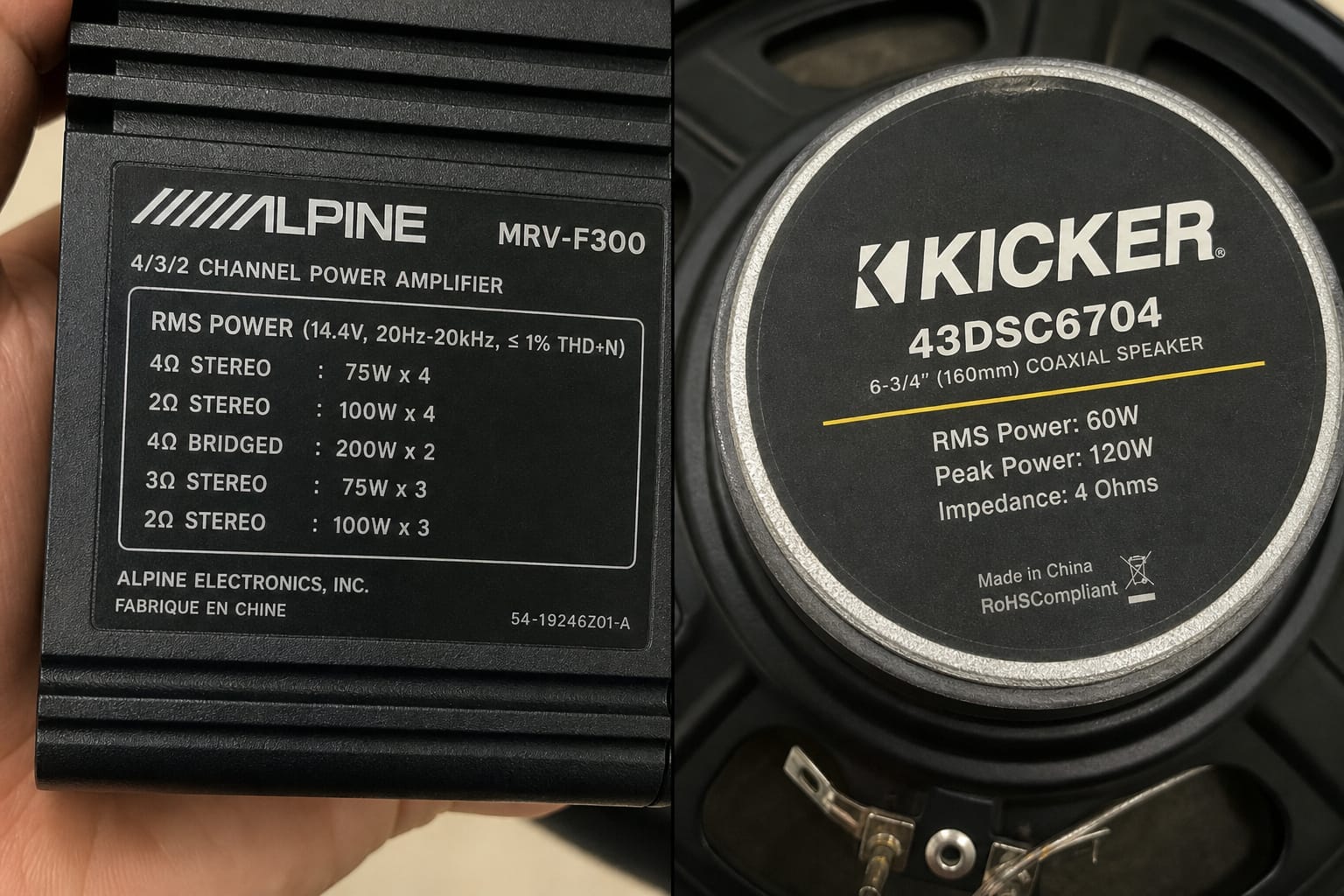
Amplifier and speaker power ratings are usually listed two ways: peak power (a short burst the component can survive) and RMS power (the continuous power it’s actually built to handle). RMS is the number that matters for matching gear.
As a rule of thumb, look for an amplifier whose RMS output per channel is close to, or slightly above, your speakers’ RMS rating. Underpowering is actually more likely to damage speakers than modest overpowering, since a struggling amp clips and sends a distorted signal into the voice coil.
For more detail on how these numbers are measured and why they matter, see our guide on RMS vs. peak power in car audio.
Amplifier Classes: Class D vs. Class A/B
Amplifier class describes how the internal circuitry converts power, and it affects size, heat, and efficiency:
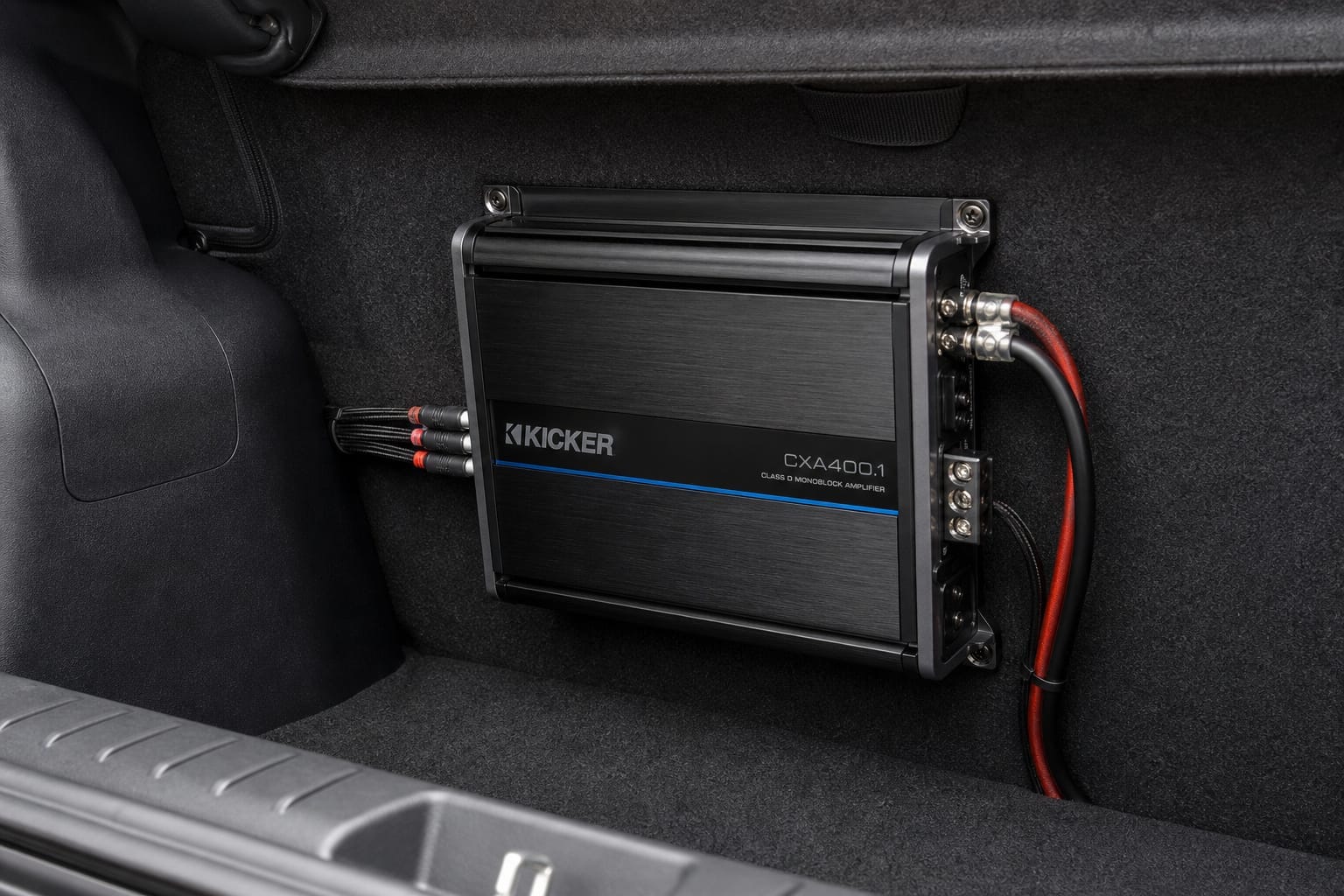
Class D amps are the standard choice for subwoofers and full-system builds today. They run highly efficiently (often 85-95%), stay cooler, and pack more power into a smaller chassis, which is why nearly every dedicated subwoofer amp on the market is Class D.
Class A/B amps run less efficiently and generate more heat, but many audio enthusiasts still prefer them for front-stage speakers and tweeters, where their sound is sometimes described as slightly smoother. They’re bulkier and need better ventilation for the same power output.
For most daily-driver builds, a Class D amp for the subwoofer and either class for the front speakers is a reasonable starting point.
Recommended Products

HIGH PERFORMANCE - The built-in low-pass filter removes high-frequency noise, resulting in a purer and clearer signal. The frequency response range is 20 Hz - 250kHz, with THD ≤ 0.04%, SNR ≥ 98dB, and an input sensitivity of 775mV. It delivers the warm tone and powerful bass you desire

300W PER CHANNEL POWER: With the high-performance TPA3255 chip, the TB10D 2 channel amplifier delivers 600W of power. It can drive bookshelf speakers with 2-8 ohms effortlessly, ensuring clean, dynamic sound

High-Performance Mono Amplifier:The Fosi Audio M04 is a mono amplifier designed for driving passive subwoofers or speakers. It features the Texas Instruments TPA3116 chip and NE5532 op-amp, providing an output power of 100 watts for a 2-ohm subwoofer or speaker.
Channel Configuration: How Many Channels Do You Need
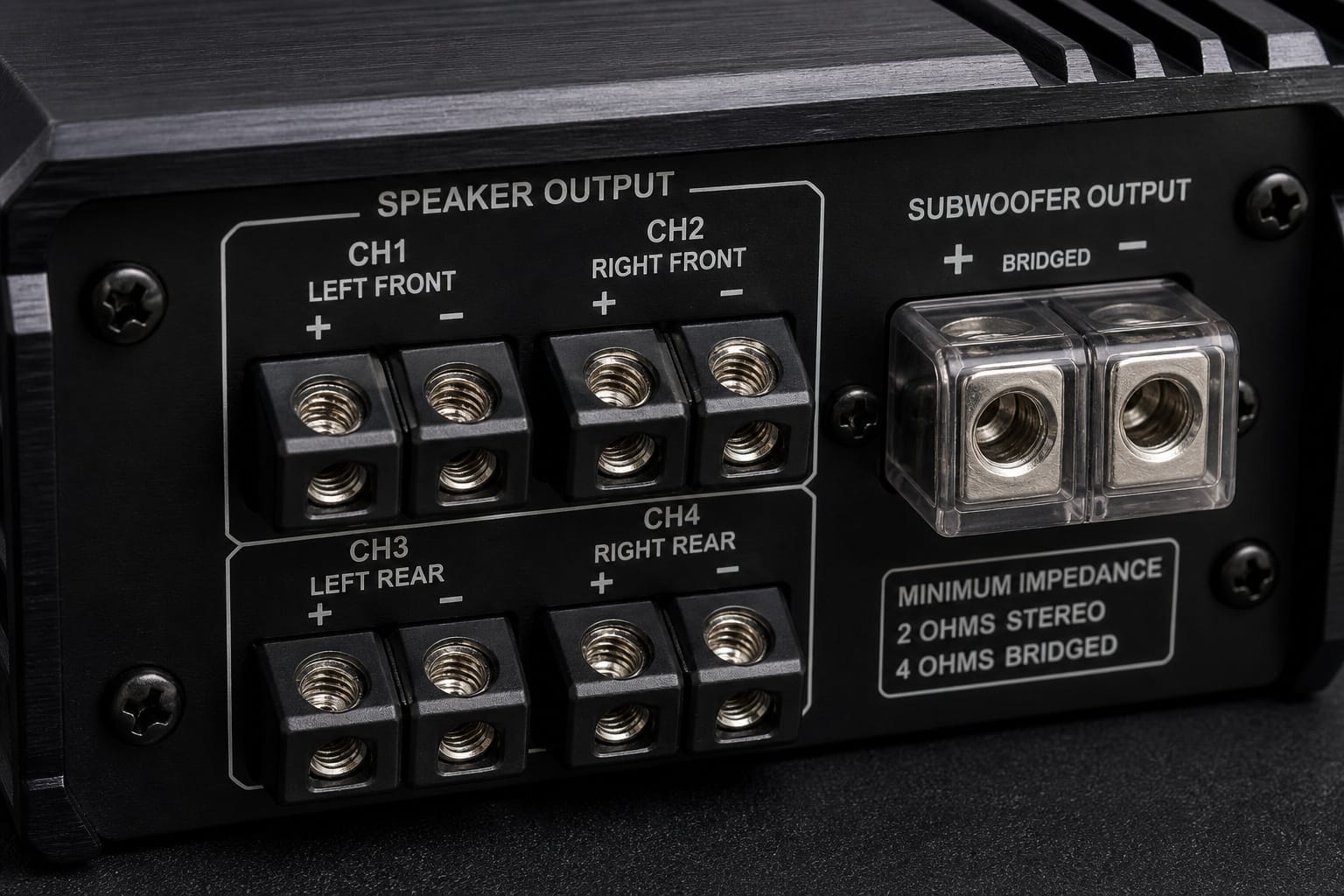
Amplifiers come in a few standard configurations, and picking the right one depends on what you’re powering:
Monoblock (1-channel) amps are built specifically for subwoofers. They’re optimized for low-frequency output and typically support low-impedance loads (down to 1 ohm) for maximum power to a sub or pair of subs.
2-channel amps power a stereo pair, front speakers, rear speakers, or a single subwoofer bridged to mono. Bridging combines both channels into one higher-power mono output, which is how many 2-channel amps double as budget subwoofer amps.
4-channel amps are the most common choice for a full front-and-rear speaker upgrade, since one amp powers all four speaker locations. Many can also be bridged down to 2 channels to free up power for a pair of front speakers while running the rears off the head unit.
If you’re only adding a subwoofer, a monoblock or 2-channel amp is usually simpler and cheaper than paying for channels you won’t use.
Recommended Products

400W RMS POWER Class D amplifier. Delivers 4 x 100W at 2 Ohms or 2 x 200W bridged at 4 Ohms for powerful flexible performance

Power - 100 Max x 4 @2 Ohms, 50 Max x 4 @4 Ohms

4-Channel Class A/B Amp - Upgrade your car audio with a 4-channel amp for clearer sound. Customize your sound by connecting various speakers, balance audio between front and rear, and even add a subwoofer for extra bass.
Impedance Matching and Wiring
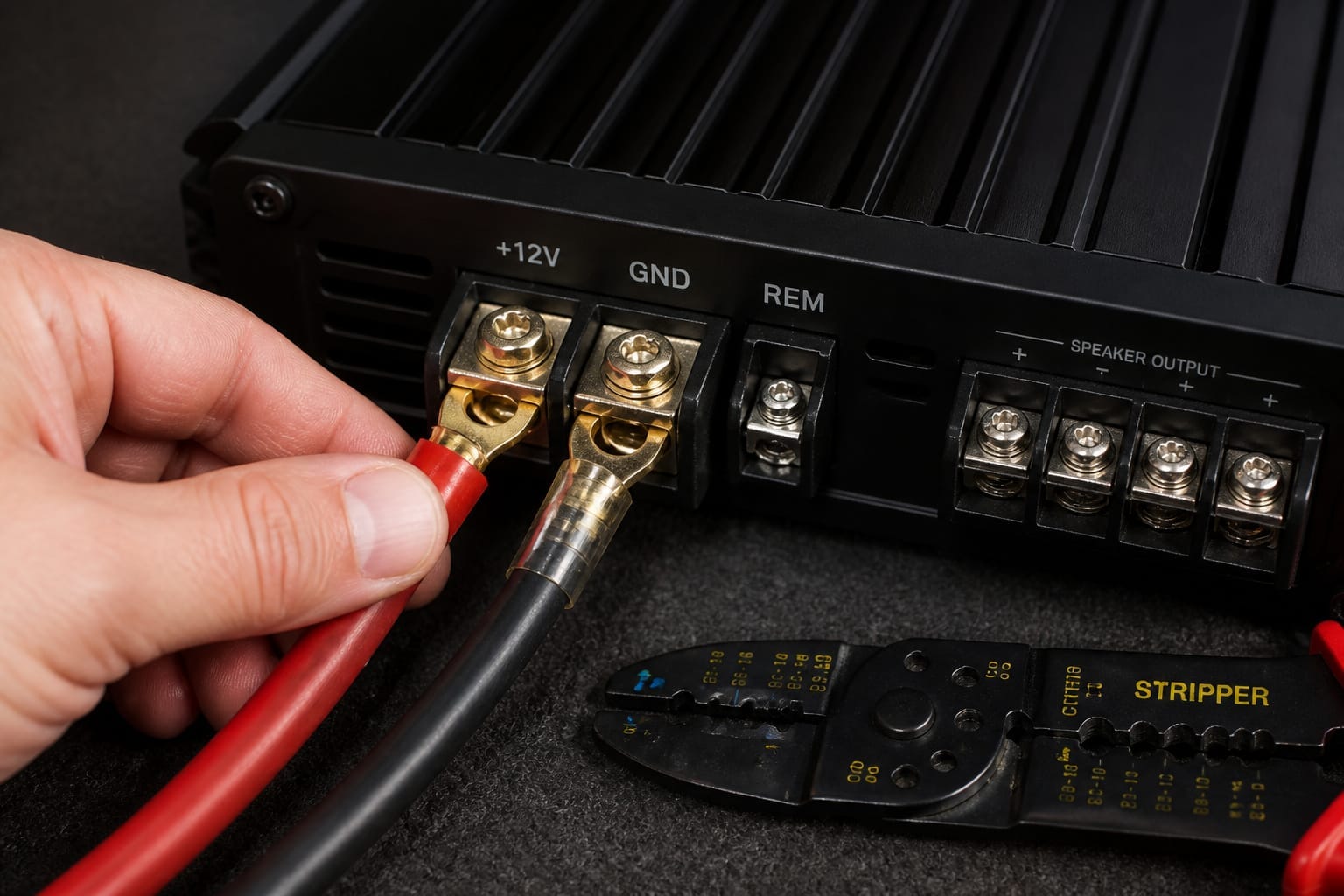
Every amplifier has a minimum impedance rating (measured in ohms). Wiring speakers or subwoofers below that rating can overheat and damage the amp, so check both the amp’s rated impedance range and how your speakers or subs are wired (series vs. parallel) before connecting anything.
Wire gauge matters here; undersized power and ground wiring is a common source of voltage drop and underperformance in amp installs. Our amp wire gauge guide covers how to size the wiring correctly for your amp’s power draw.
Inputs: RCA vs. Speaker-Level
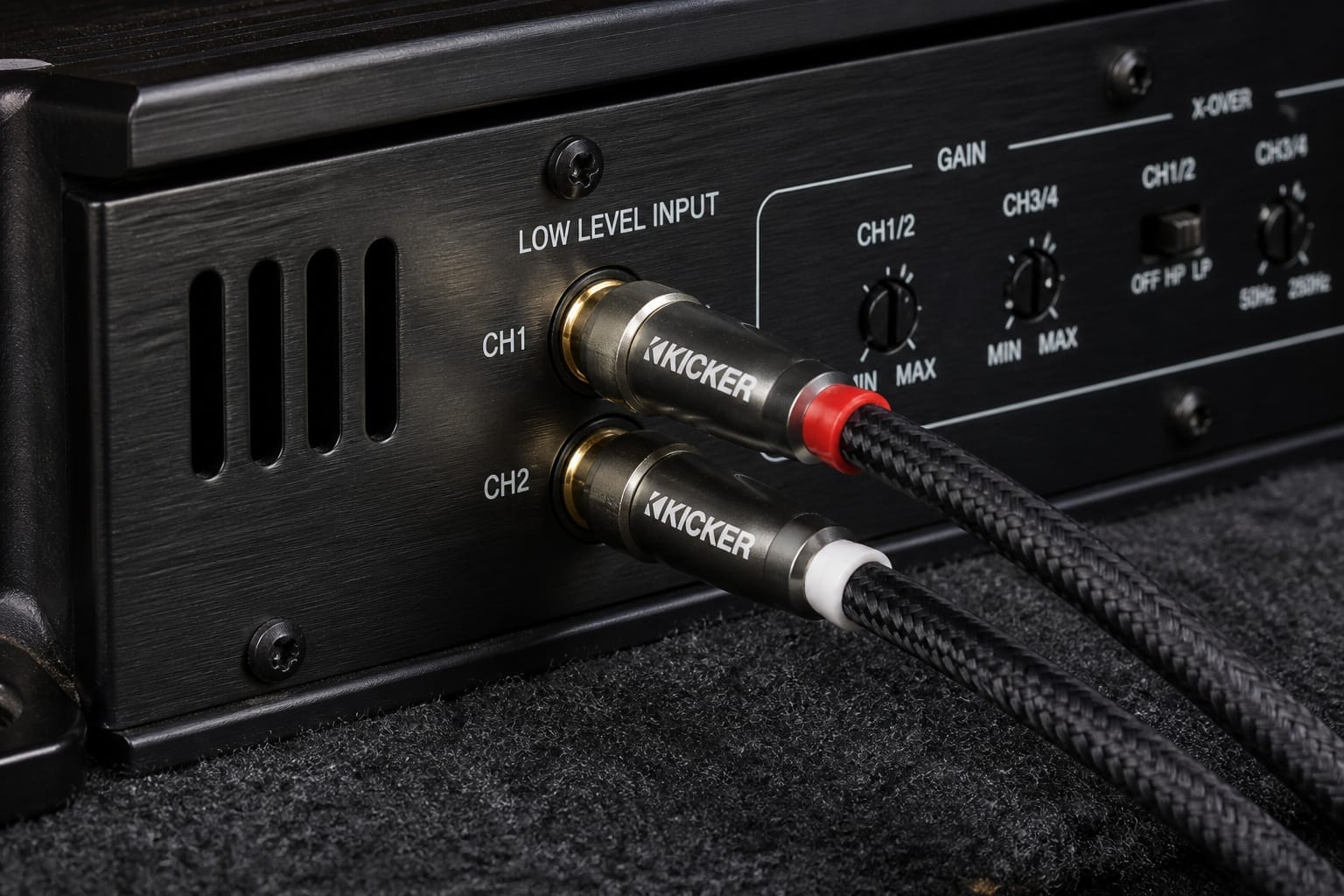
Amps accept signal from the head unit two ways. RCA (low-level) inputs are the cleaner option and are standard on aftermarket stereos with dedicated RCA preamp outputs.
Speaker-level (high-level) inputs let you tap an amp from a factory head unit that has no RCA outputs, using a line-output converter to step the signal down to line level.
If your factory stereo doesn’t have RCA outputs, check our guide on preamp output voltage for more on getting a clean signal into an aftermarket amp.
So, Do You Need One?

An amplifier makes the most sense if any of these apply: you’ve upgraded to aftermarket speakers rated for more power than your head unit provides, you’re adding a subwoofer (which virtually always needs a dedicated amp), you’re hearing distortion at higher volumes with your current setup, or you just want cleaner, louder sound with more headroom before things start to break up.
If your current setup sounds fine at the volumes you actually listen at, there’s no urgency, but any of the upgrades above will benefit noticeably from adding one.
Frequently Asked Questions
Will an amp drain my car battery?
A properly installed amp draws power only while the system is on and playing, through a fused wire run directly to the battery. It won’t drain your battery when the car is off, as long as the head unit itself powers down properly. A large system may call for an upgraded alternator or a second battery, but a single amp for speakers or one subwoofer is well within a stock charging system’s capacity.
Can I install a car amplifier myself?
Yes, if you’re comfortable running wire through the cabin, connecting to the battery safely, and grounding the amp to bare metal. The main steps are running power, ground, remote turn-on, and RCA (or speaker-level) wiring, then setting the gain properly to avoid clipping. If any of that sounds unfamiliar, a car audio shop can install it in an hour or two.
Does adding an amp void my factory warranty?
Adding an amplifier by itself typically doesn’t affect your vehicle’s factory warranty, since it’s an aftermarket addition rather than a modification to factory electronics. Cutting into factory wiring harnesses is the more common source of warranty concerns, using a proper wiring harness adapter avoids that.