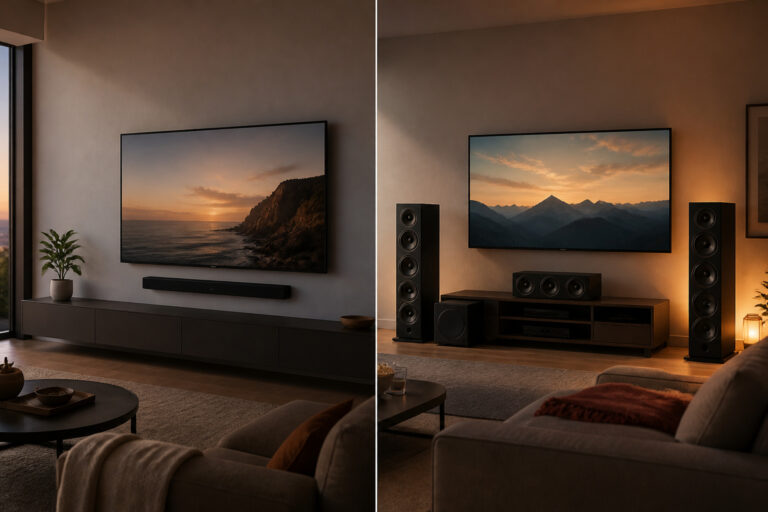
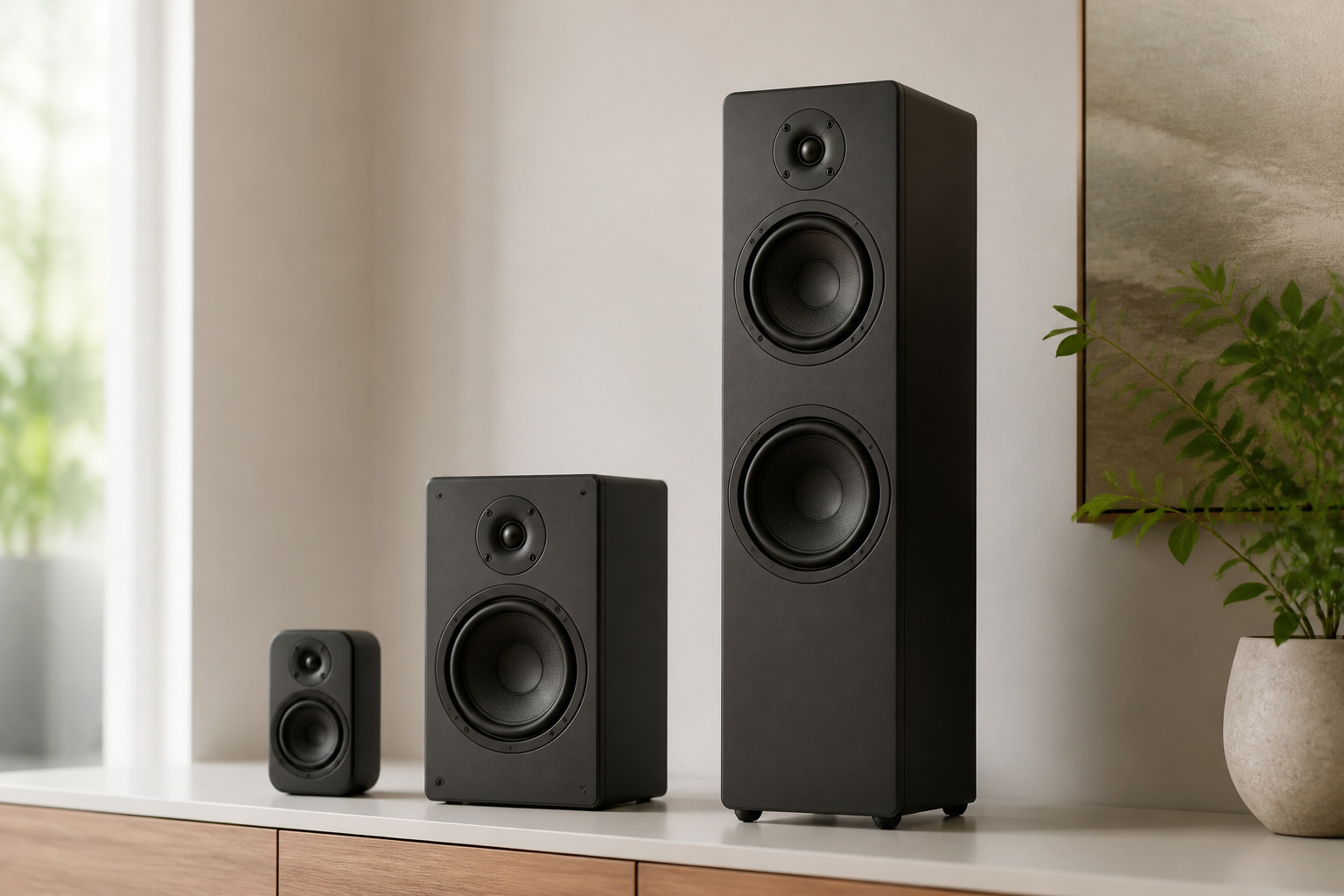
Speaker size affects sound mainly through bass. Bigger speakers can move more air, which lets them play lower notes with more weight. Size is not everything, though, since design and room fit matter just as much. Here is how size changes what you hear.
Size and Bass
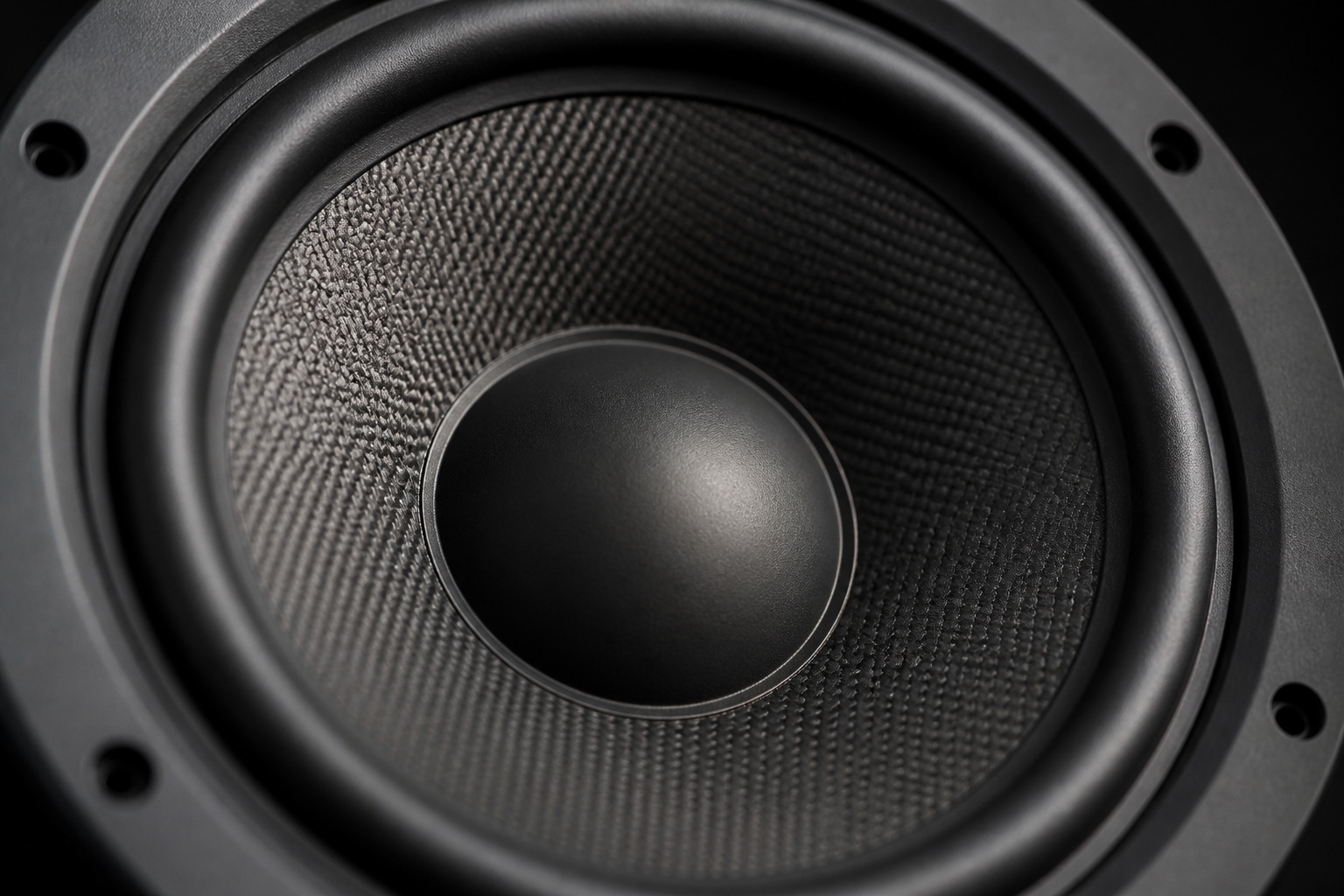
Low notes are long sound waves that need a lot of air movement. A small speaker cone cannot move enough air, so bass sounds thin or disappears, as on a phone speaker.
A large woofer moves more air and plays low notes with weight. That is why floor-standing speakers and subwoofers have larger drivers.
Multiple Drivers
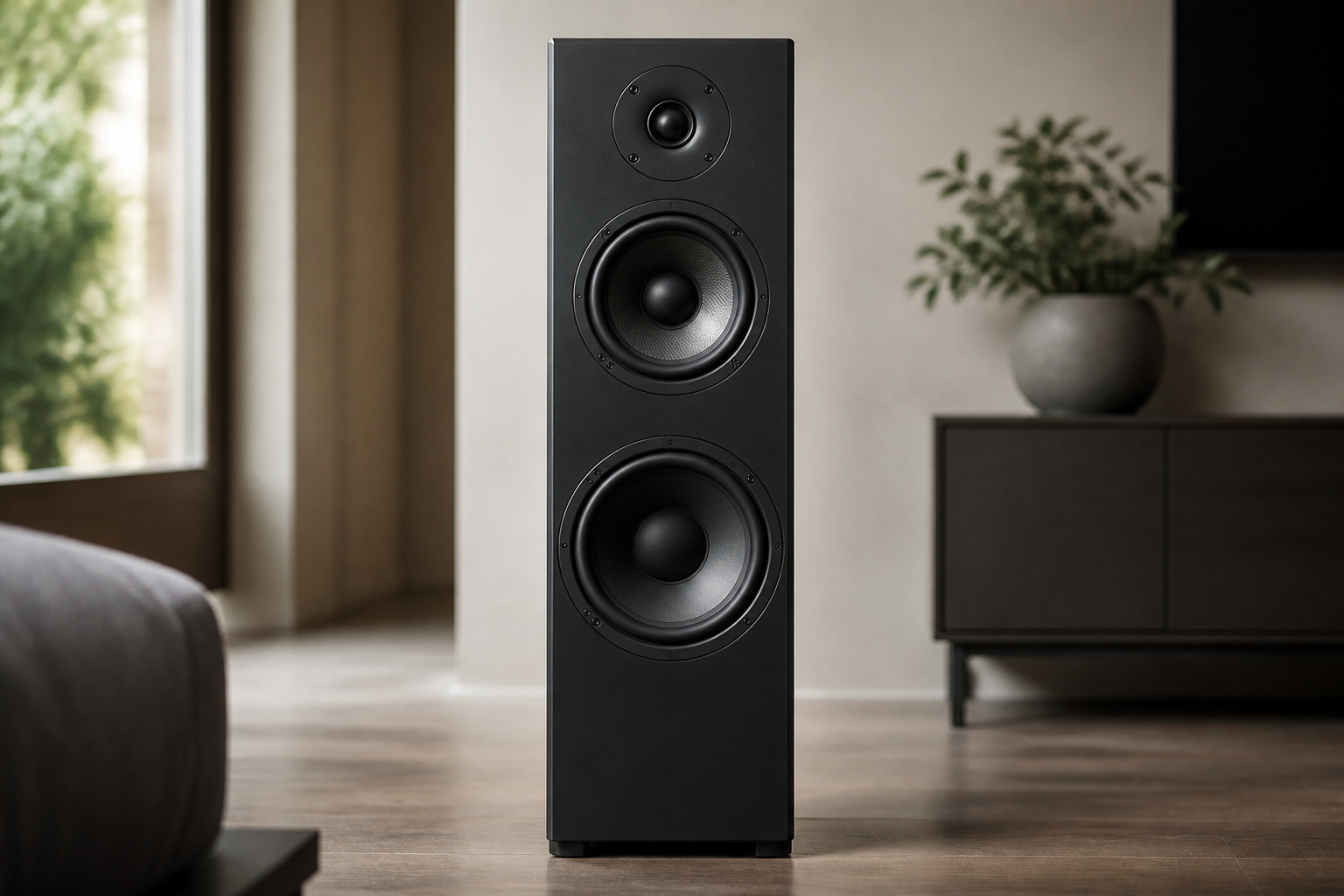
Bigger cabinets leave room for several drivers, such as a woofer for bass, a midrange driver for voices, and a tweeter for treble. Each handles the range it does best, which lowers distortion and improves detail.
Smaller speakers often use one or two drivers and make compromises. Our guide on what makes a speaker sound good covers the other design factors.
Bigger Is Not Always Better

A speaker that is too large for the room can sound boomy and overwhelming, especially in a small space. A compact speaker in a small room can sound balanced and clear.
Match speaker size to room size and listening needs. See bookshelf vs floor-standing speakers for an easy comparison, and how to choose an audio setup for your room.
Recommended Products
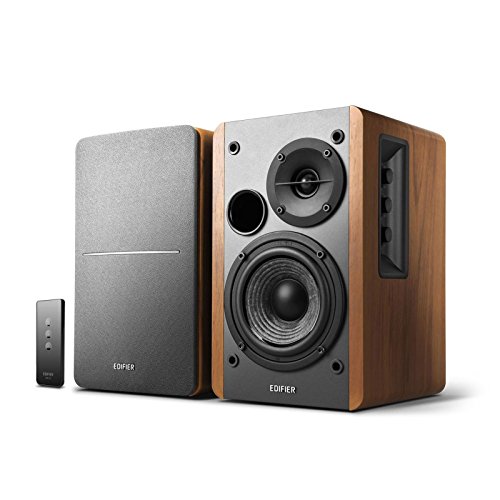
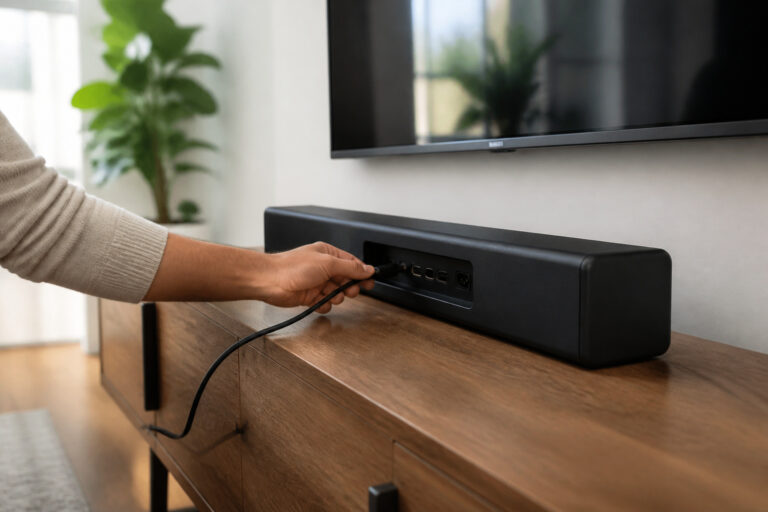
2 x AUX INPUT - Convenient connection to any device that has a 3.5mm headphone output or dual RCA output. Connect to two devices via AUX at the same time, no plugging and switching needed.
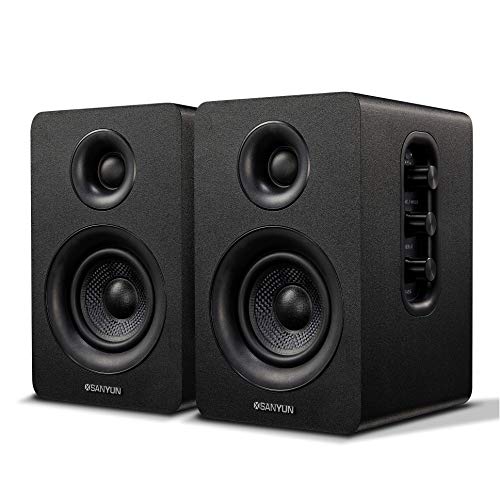
【SMALL HIFI BOOKSHELF SPEAKERS】SW-208 is a small bookshelf speaker with HiFi sound quality. It adopts standard bookshelf speaker system design, i.e. direct/reflective speaker system. Can be placed at will, can easily create a rich stereo sense and strong sound pressure.
Power and Amplifiers

Larger speakers often handle more power and can play louder without distorting, though they may also need a more capable amplifier to perform well. Small speakers reach their limits sooner and can sound strained when pushed.
Match the amplifier and speaker ratings. Read active vs passive speakers for the basics.
Recommended Products
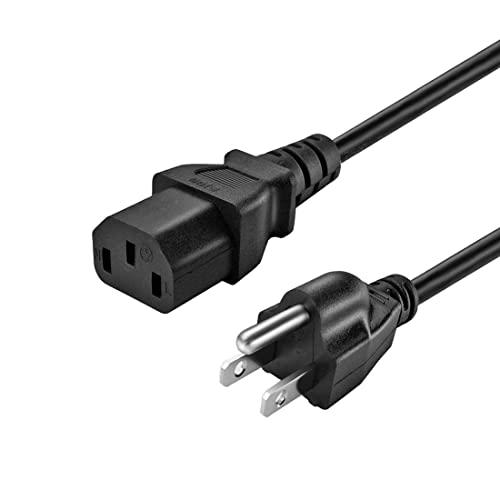
UL Listed Non Polarized 3 Prong 18 AWG Power Cord Made of PVC Material, with Fire Protection

Compatible with: Ion Explorer Outback Wireless Speaker, ION Tailgater Bluetooth Speaker IPA57 Mains Cable, ION iPA76C iPA76A iPA77 iPA76S IPA23 Block Rocker/Party/Live, Job Rock.
Design Matters Too

Cabinet materials, driver quality, and tuning can matter more than size. A well-designed small speaker can beat a poorly built large one.
Size sets limits, and design decides how well a speaker works within them.
Frequently Asked Questions
Can Speaker Size Affect Power Consumption?
Indirectly. Larger speakers often need more amplifier power to reach the same loudness, but power use depends on how loud you play, the amplifier, and the speaker’s sensitivity. A sensitive speaker can play loudly on little power.
Do Larger Speakers Require Bigger Amplifiers?
Often, but not always. Check each speaker’s recommended power range and sensitivity, and choose an amplifier that meets it. Underpowered amplifiers can distort when pushed, which can damage speakers.
Are Smaller Speakers Better for High Frequencies?
Small drivers can reproduce high frequencies well, which is why tweeters are tiny. Many speakers combine a small driver for treble with larger ones for bass, and that combination is better than any single size.
Does Speaker Size Impact Room Placement Options?
Yes. Small speakers fit shelves and tight spaces, but they sound best on stands. Large speakers need open space and some distance from walls. See speaker placement for guidance.
Can I Mix Different Speaker Sizes in a Setup?
In a surround system, yes. The front speakers can be larger and the rear speakers smaller. For the front left and right pair, use two matching speakers so the sound stays balanced.