Muddy, boomy bass rarely comes from the music itself. It comes from a mismatched subwoofer setup. It could be because it’s the wrong size for the space, underpowered or overpowered, or tuned wrong.
Get those pieces right and bass comes out tight, deep, and controlled instead of a wall of rumble.
Choosing the Right Size
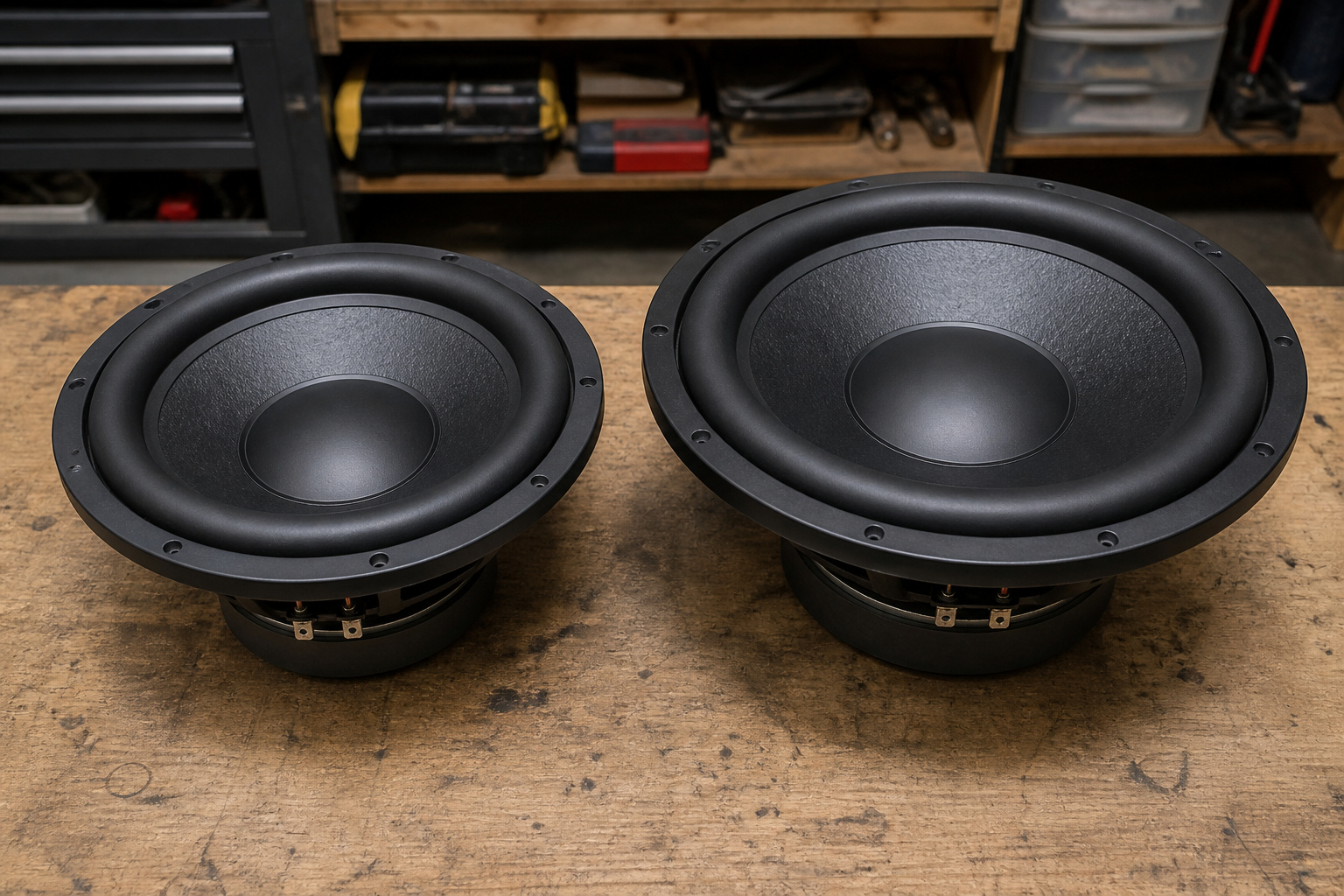
A 10-inch subwoofer tends to hit tight and fast, which suits hip-hop, rock, and most everyday music. A 12-inch digs deeper and moves more air, which fits genres built around sustained low end like reggae or dubstep, but bigger isn’t automatically better.
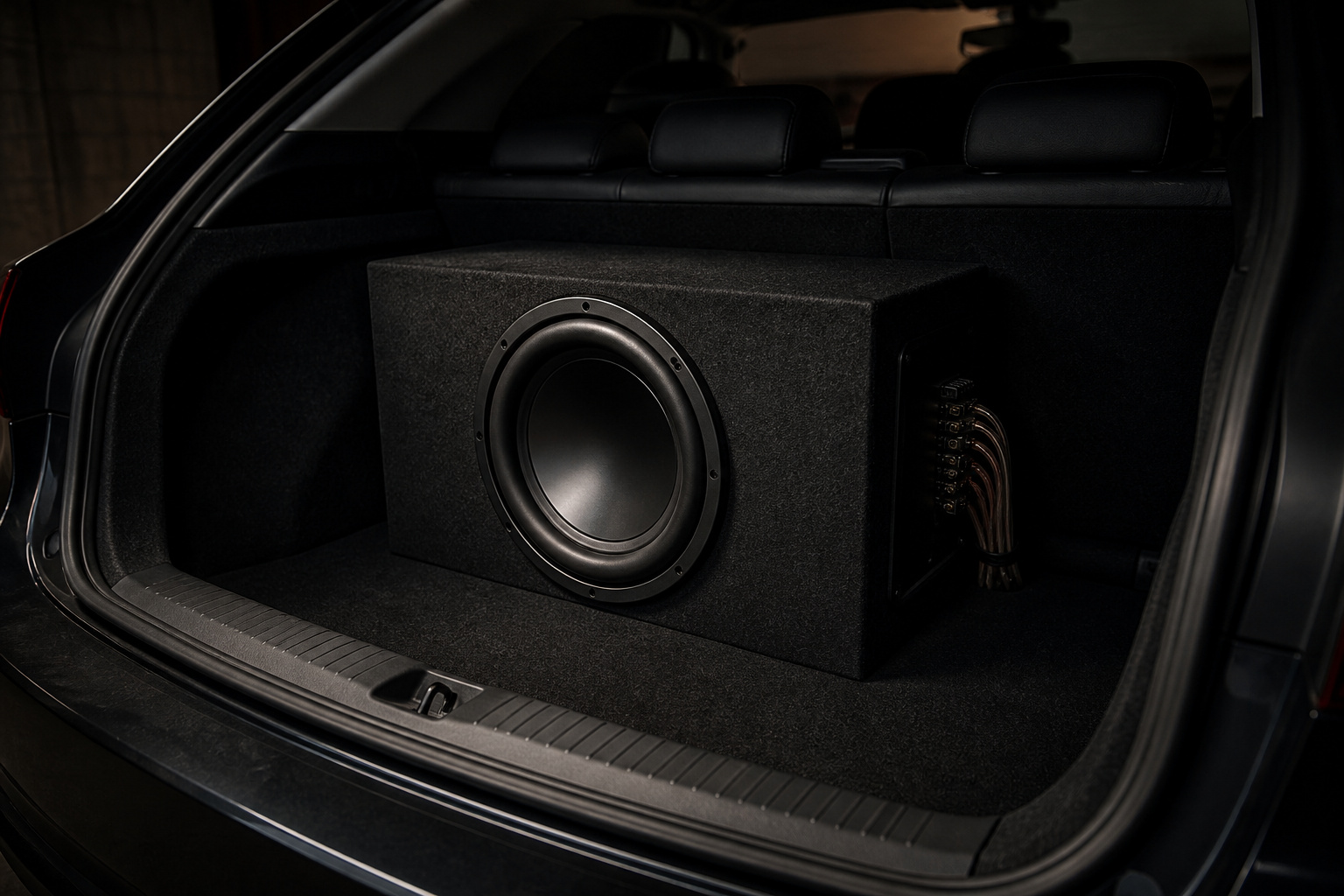
A large sub crammed into a small trunk is one of the most common causes of muddy bass. Match the sub to your space. A compact hatchback usually is best with a 10- or 12-inch sub, while a full-size SUV has the room to go bigger if the enclosure supports it.
For help sizing the enclosure itself once you’ve picked a driver, see our guide on sealed vs. ported subwoofer boxes.
Recommended Products

10” Dual 2-Ohm Car Subwoofer

Powerful Bass – 10-inch powerful pre-loaded subwoofer with sealed enclosure produces a dynamic bass response that enhances the audio experience, adding depth and richness to bring your music to life!

Seventour 10 inch Ultra Slim Under Seat Active Powered Car/Truck Subwoofer with Built-In Amplifier, Enclosure made of cast aluminum for excellent heat dissipation and reliable performance.
Matching Power and Impedance
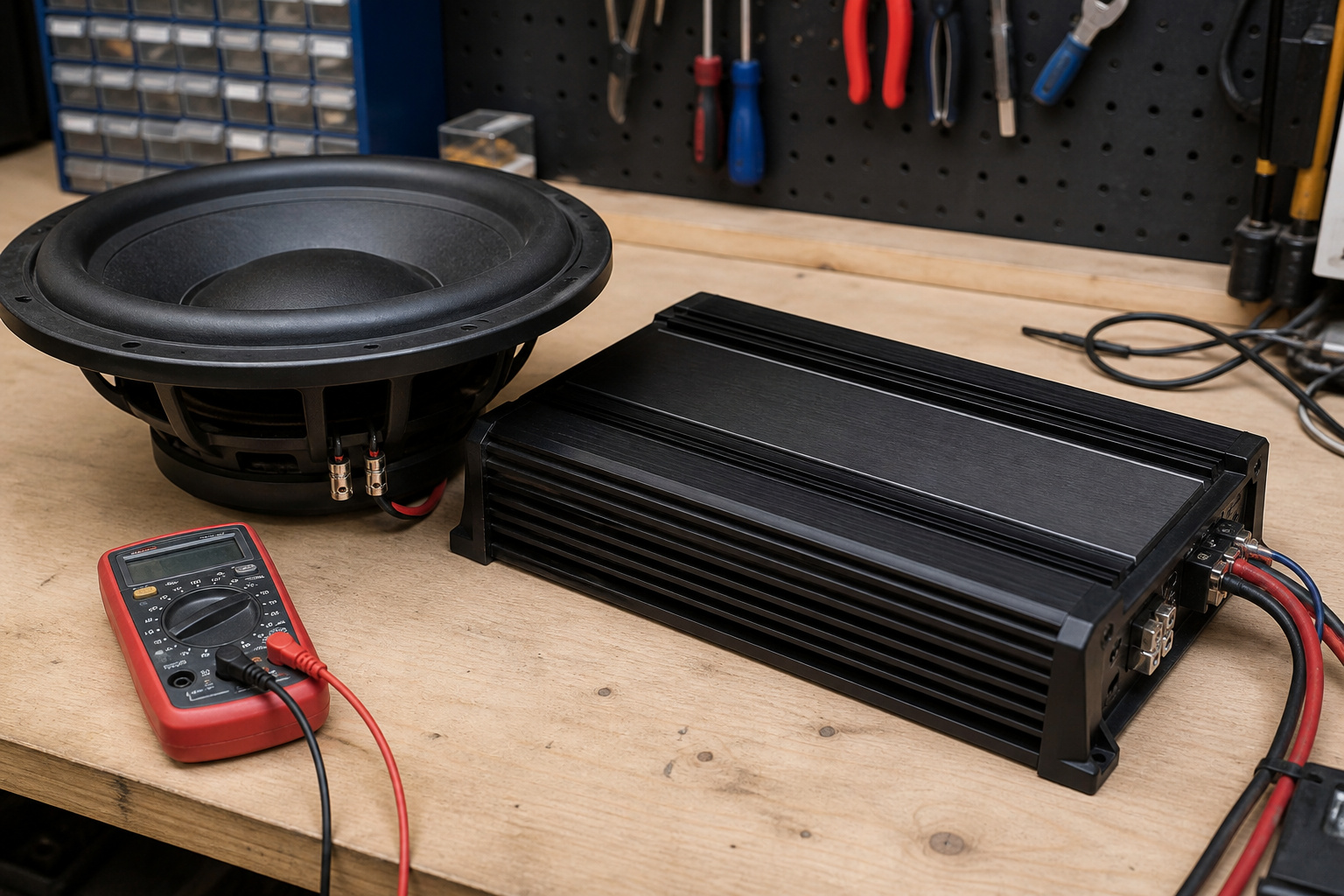
Power your sub with an amp that closely matches its RMS rating, not the inflated peak number printed on the box. If your sub is rated for 300 watts RMS, the target is an amp that delivers 250-300 clean watts.
Underpowering causes an amp to clip, sending distorted signal into the sub and is more likely to damage it than modest overpowering. Impedance matters as much. Make sure your amp supports your sub’s rated impedance (commonly 2-ohm or 4-ohm), since a mismatch leads to sloppy, uncontrolled bass even with otherwise good gear.
Our guide on choosing a car amplifier covers RMS matching and amp classes in more depth.
Sealed vs. Ported Enclosures
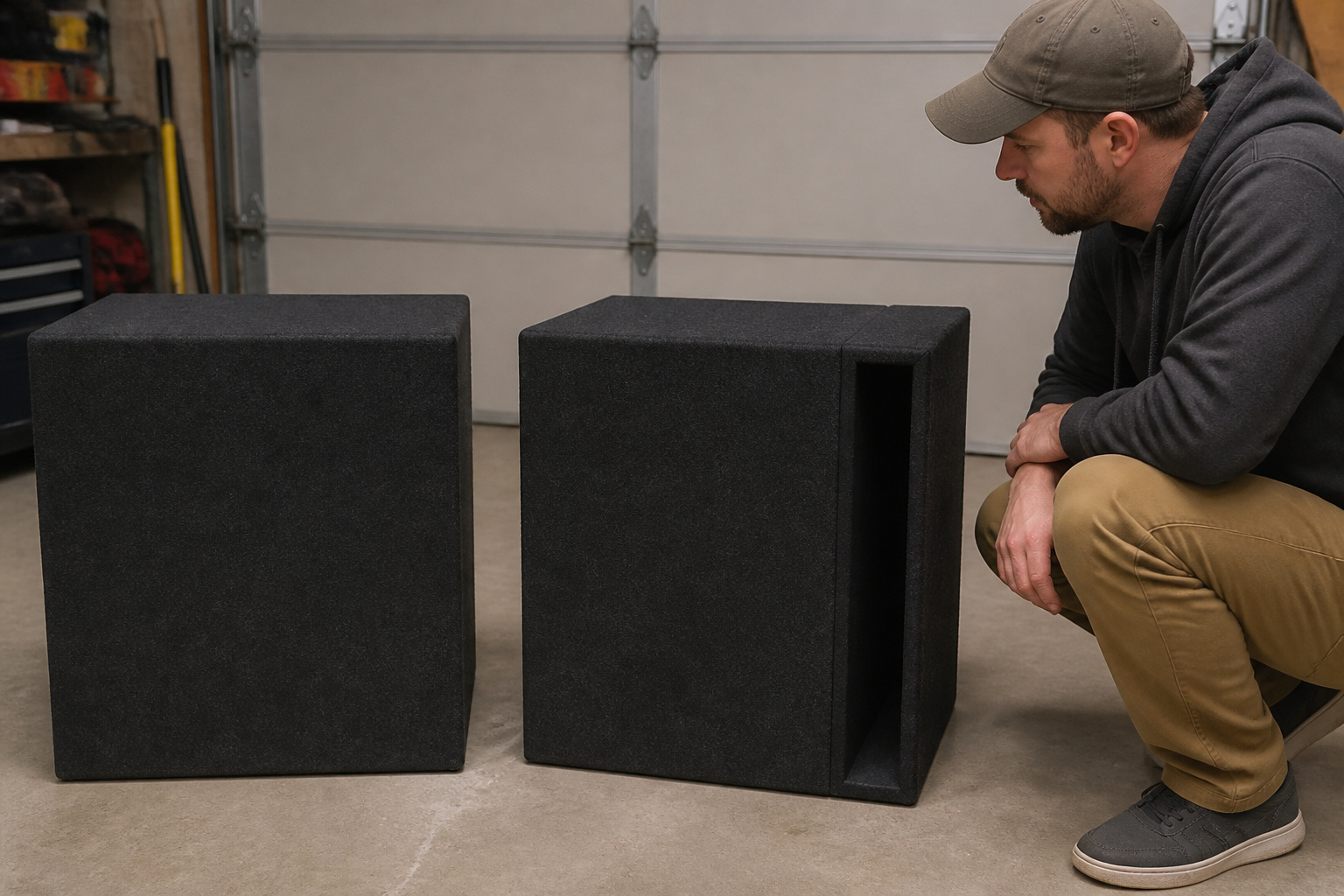
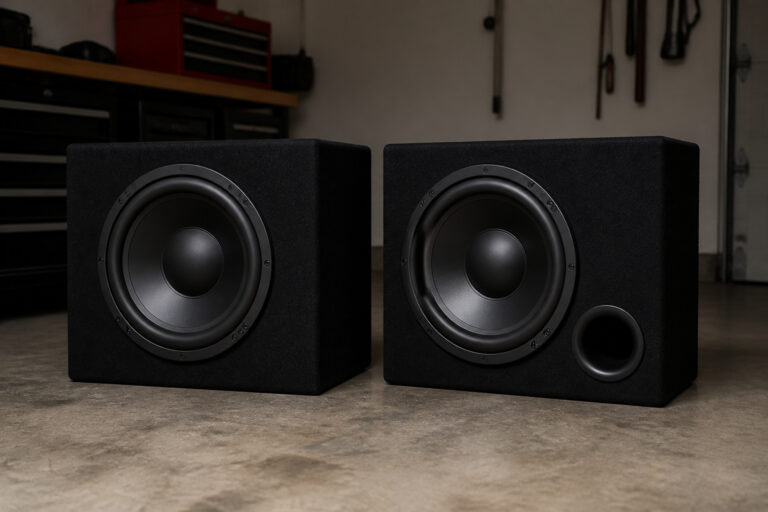
Sealed enclosures are smaller, easier to fit in tight trunks, and deliver accurate, tightly controlled bass, a good starting point if clarity matters more than raw volume.
Ported enclosures play louder and dig a bit deeper for the same input power, but if they’re not tuned correctly for the specific driver, notes can bleed together and turn muddy fast.
If you’re building your own box, use ¾-inch MDF instead of particleboard, screw the joints rather than glue them, and seal every seam. Even small air leaks blur bass response.
Recommended Products

Fits 2014 - 2018 Chevy Silverado Crew Cab Kicker Comp C10 Dual 10" Sub Box Final 2 Ohm

10" SINGLE SEALED SUBWOOFER ENCLOSURE: Pro Tuned 10” Single sealed shallow mount subwoofer enclosure designed for optimum bass response and low frequency reproduction which is ideal for lower profile sound quality home audio subwoofers. Our subwoofer's unique design and construction quality offer a precision fit for your car subwoofer boxes & enclosures, which ensures a rattle and noise-free environment..Power source type:Corded Electric.Speaker size:10 inches

Dual 12-inch 1600 Watt Max Power Sealed Up-firing Loaded Subwoofer Enclosure
Placement and Tuning
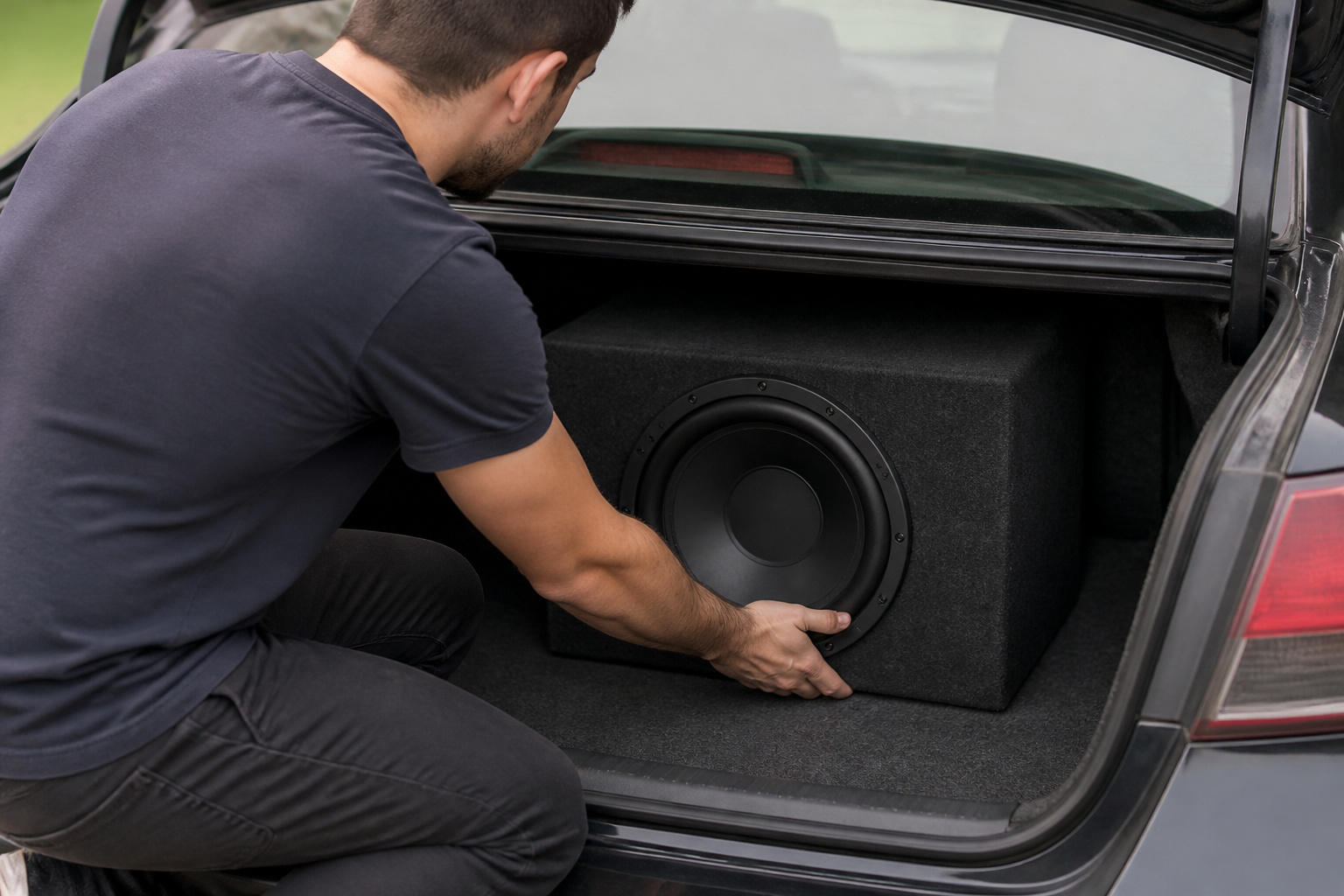
Mount the sub facing forward toward the cabin rather than sideways or into a wheel well, and test a couple of positions before locking it in: corners can amplify bass but sometimes exaggerate the lowest lows into mud.
On the amp, set gain properly rather than maxing it out, leave bass boost off, and use a low-pass filter (commonly cut around 80 Hz) so the sub only handles true low frequencies with no overlap into your regular speakers.
Recommended Products

3000W RMS Power: Ultimate Bass. The Class D monoblock car amplifier delivers 3000W RMS at 1Ω, designed for competition-level sound pressure and extreme impact. It provides a tsunami of bass while maintaining ultra-low distortion at maximum volume

【2000W MAX POWER – STRONGER, DEEPER BASS IMPACT】Upgrade your drive with a 2000W peak powered subwoofer car audio system that delivers deeper, tighter bass than standard 1200W models. This car subwoofer and amp package enhances every beat with rich low-frequency performance, perfect for daily driving or bass-heavy music lovers.

All components are featured with brand-new first-class products. The potentiometer is fully sealed and the input and output terminals are pure copper terminals. The wiring is very convenient
Protecting Your Electrical System
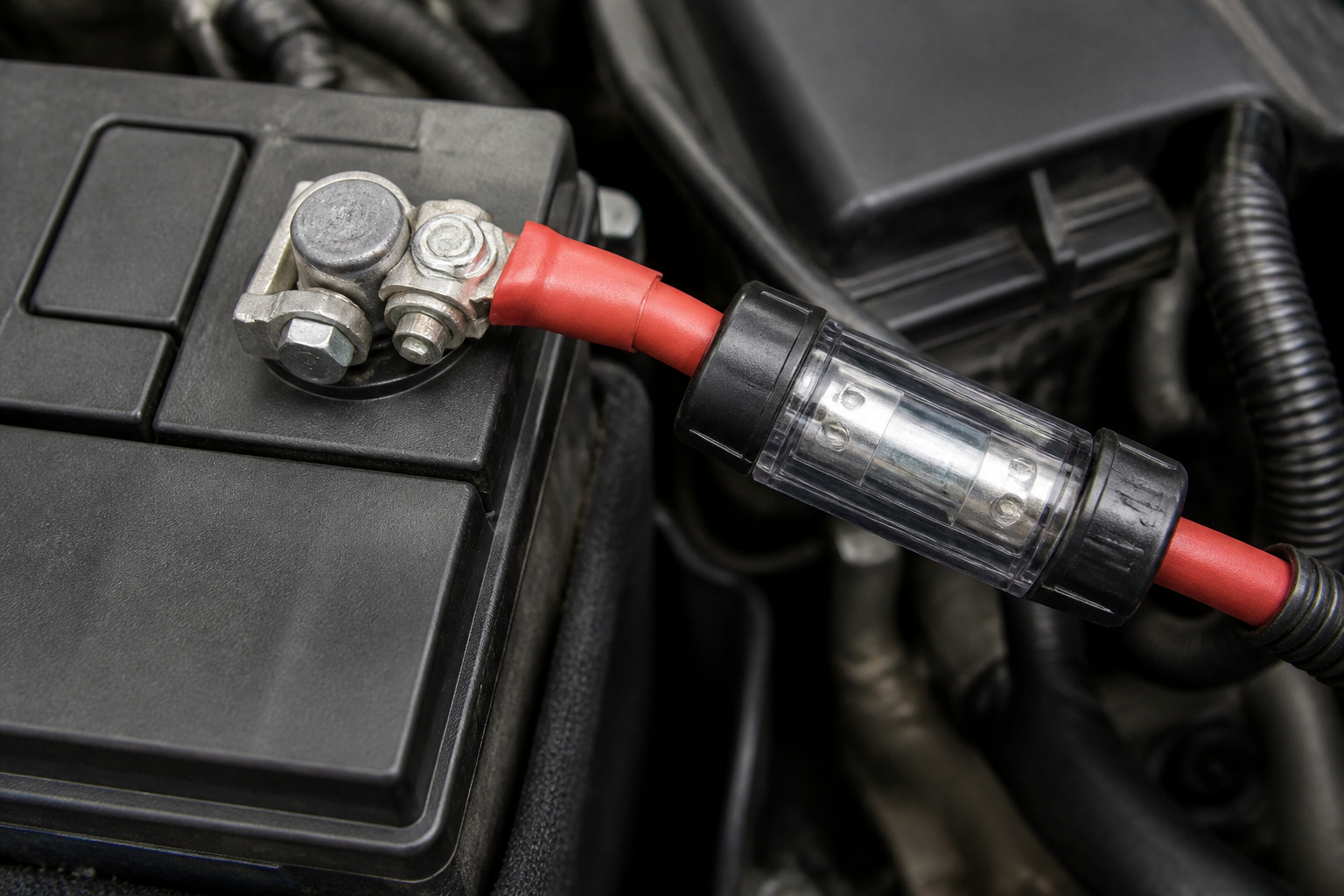
A subwoofer and amp draw real current, and an underbuilt electrical system shows it: dimming headlights, slow cranking, or a battery that drains faster than expected when the engine’s off.
Use properly sized power wire and a solid ground connection (see our amp wire gauge guide), and consider adding a capacitor or upgrading your alternator if you’re running a larger system and noticing your lights dim with the bass.
Frequently Asked Questions
Do I need an enclosure for my subwoofer?
Yes, a subwoofer without a proper enclosure sounds weak and uncontrolled. Sealed boxes deliver tighter, more accurate bass, while ported boxes play louder but must be tuned correctly for the specific driver to avoid muddy sound.
Can a subwoofer damage my car’s electrical system?
It can, if the system draws more power than your alternator and battery can supply. Watch for dimming lights or slow cranking as early warning signs, and add a capacitor or upgraded alternator for larger systems.
How do I prevent my subwoofer from overheating?
Give it a properly ventilated enclosure instead of a sealed, cramped space, match your amp’s power output to the sub’s actual rating, and avoid running the system at full volume for extended stretches.
Will a subwoofer drain my car battery?
It can, if you play music with the engine off for long periods. A capacitor helps buffer short-term power demand. Dimming lights are a good cue to stop or start the car.