Your car’s computer has been tracking engine speed, fuel mix, and sensor data since you turned the key. An OBD2 scanner lets you ask the car’s computer what it knows.
Plugging In and Powering On
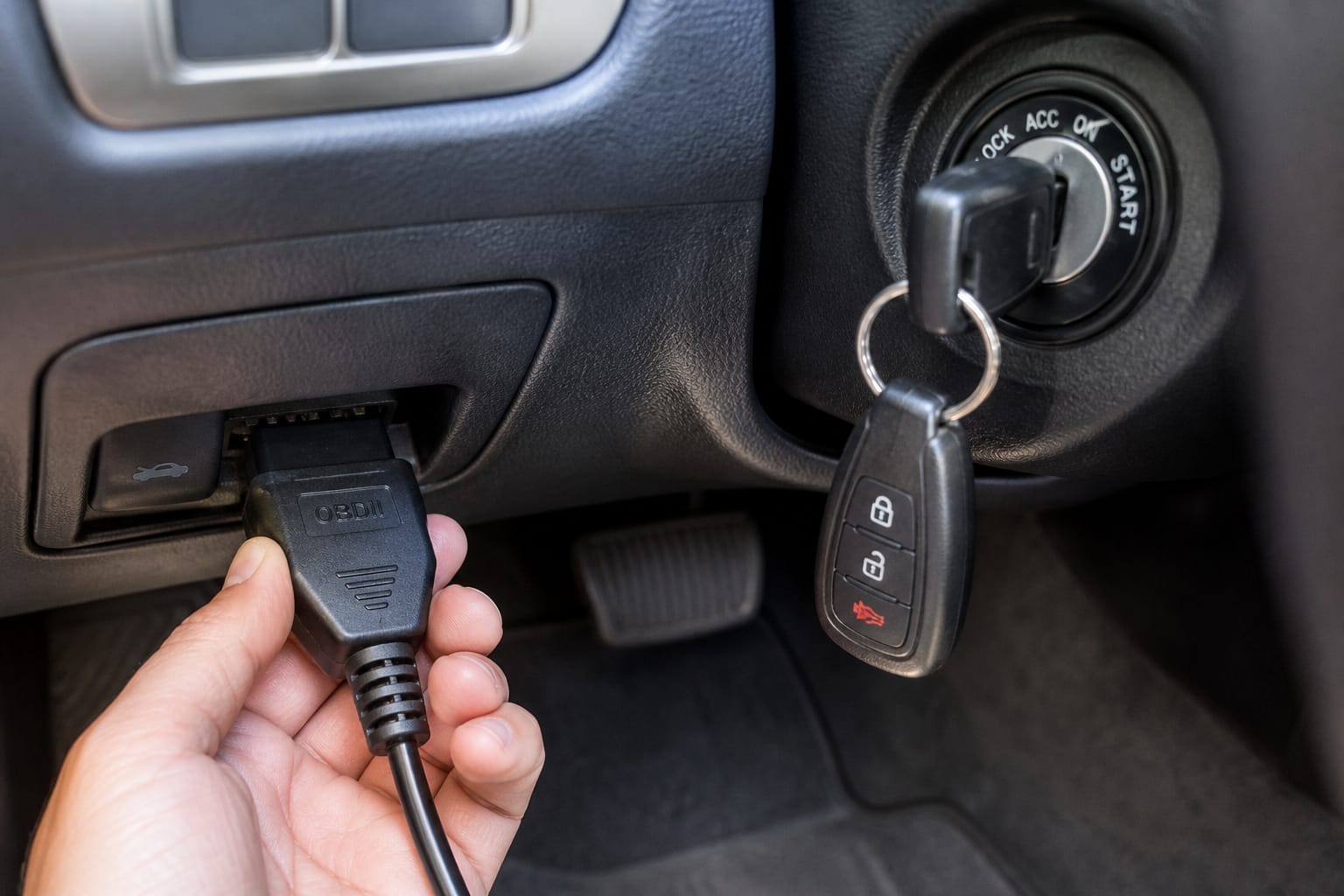
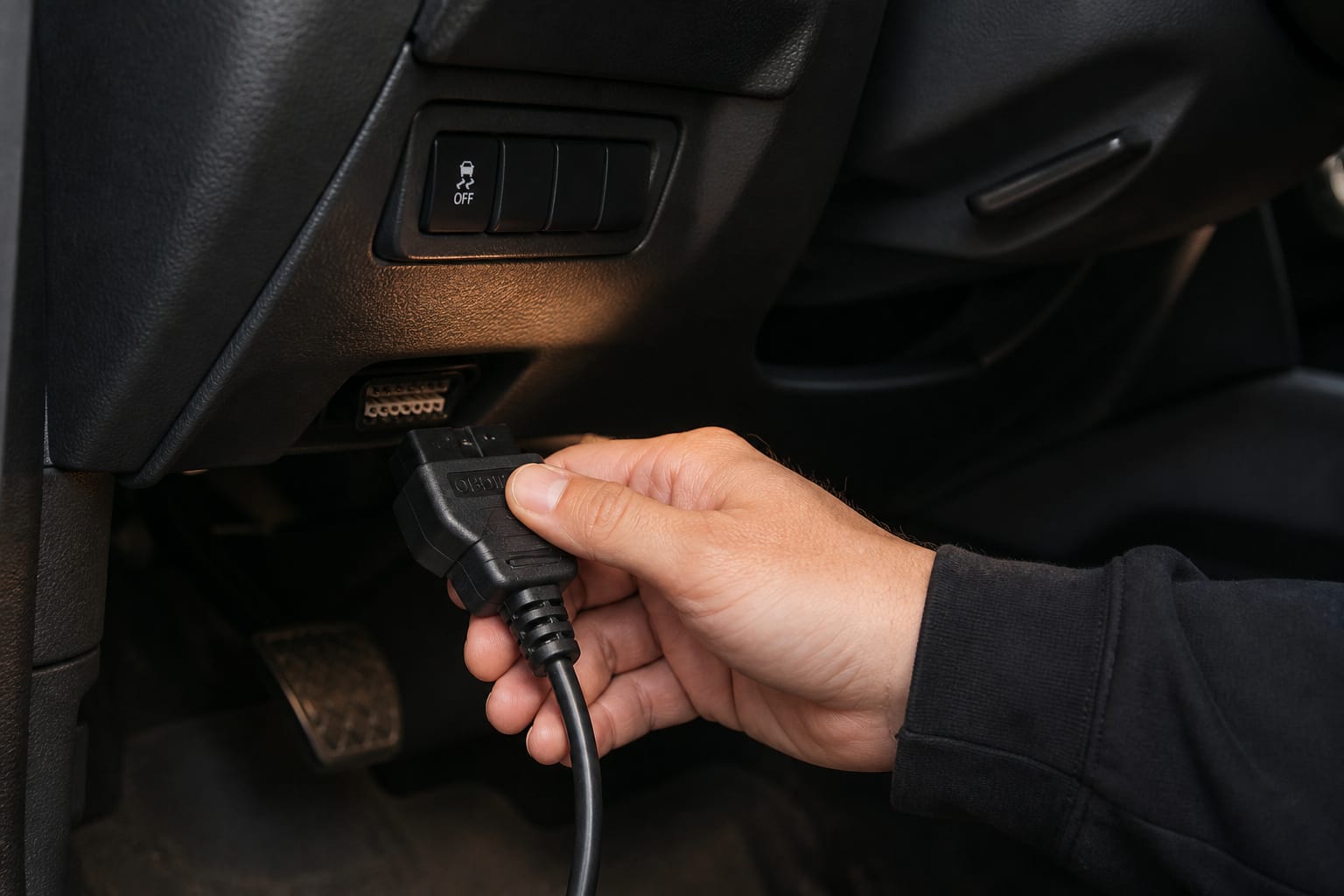
Find the OBD2 port, usually under the dashboard near the steering column. It’s keyed to fit only one way, so don’t force it.
Plug the scanner in, then turn the key to the “on” position without starting the engine. Press the scan button and wait a few seconds while the scanner talks to your car’s computer and pulls any stored codes.
Recommended Products

Beautiful: By using the OBD interface of the car to connect with the computer(OBD interface cannot be directly connected to the computer), you can view the car data in real time and detect the car problem.

【Professional Accessories】Our OBD1 scanner connector is a male-to-female extension cable specifically designed to connect the scanner and vehicle, a utility tool specifically designed for GM vehicles, but this item is just a cable, not a scanner or diagnostic tool.
Understanding the Code Format
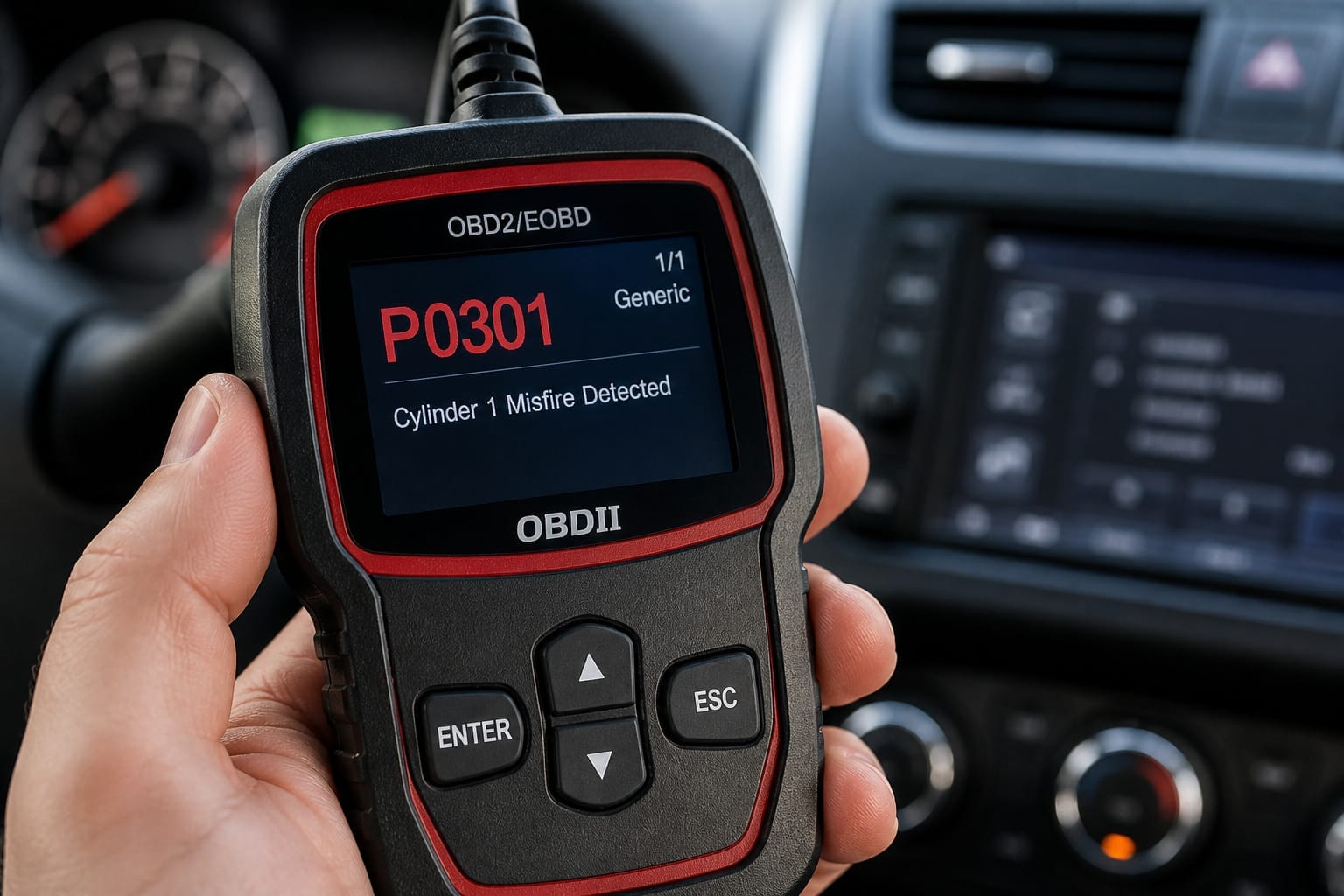
Codes follow a simple pattern once you know the letters. P-codes start with P and cover the powertrain: engine and transmission, where most check-engine-light issues come from.
U-codes cover network and wiring communication between modules. C-codes cover chassis systems like brakes and stability control. B-codes cover body systems like lights, doors, and climate control.
A code like P0171 breaks down as “system too lean, bank one,” meaning the engine is getting too much air or not enough fuel relative to what it expects.
The code tells you the system involved, not the exact part responsible, so treat it as a starting point rather than a diagnosis.
Looking Up What a Code Actually Means
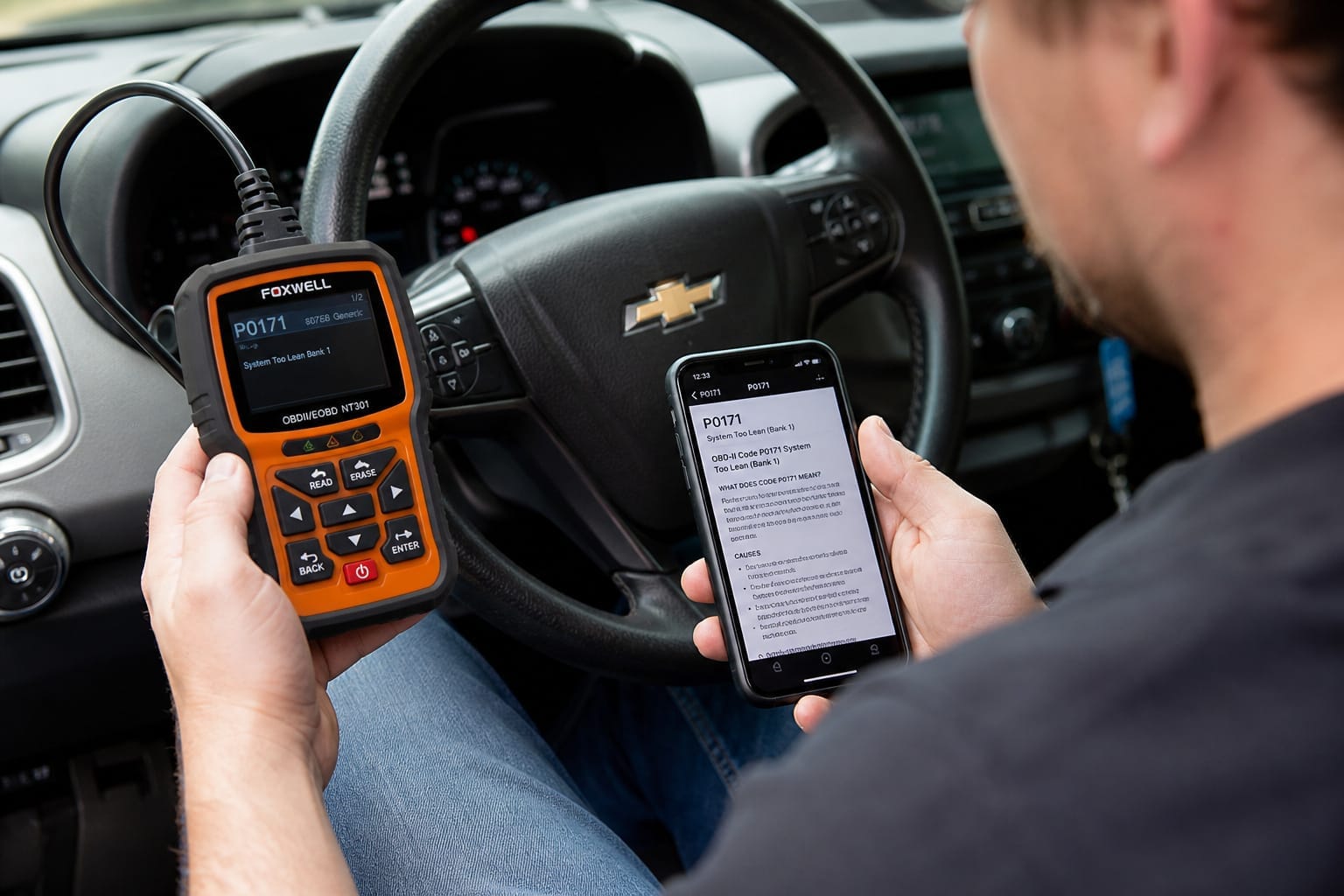
Before clearing anything, write down the code and look it up using a reliable source. Some codes point to minor, self-correcting issues, while others, like P0300 (random cylinder misfires), signal something that can damage the catalytic converter if you keep driving on it.
Others, like P0507 (idle control, engine revving too high at idle), often trace back to something as simple as a vacuum leak. Knowing which category a code falls into determines how urgently you need to act.
Recommended Products

【Diagnose Check Engine Light in Seconds – No Mechanic Needed】The FOXWELL NT301 OBD2 scanner instantly reads & clears engine fault codes (DTCs) with one click. Simply plug into the 16-pin DLC port, turn ignition on, and get accurate results within seconds—No prior car knowledge required. Save hundreds on dealership fees by knowing exactly what’s wrong before you visit a shop. The #1 choice car scanner for DIYers and car owners who want to take control of their vehicle’s health

Understand Your Check Engine Light – The ANCEL AD410 OBD2 scanner helps everyday drivers quickly read and clear engine-related fault codes, view code definitions, and understand why the check engine light is on before visiting a repair shop. With 42,000+ built-in DTC lookups, this car code reader helps reduce guesswork and makes basic vehicle diagnostics easier for beginners and DIY users

Multi-Functions - Practical Multi-Functions OBD2 code reader features built-in OBD2 DTC lookup library, which help you to determine the cause of the engine light, read code, erase code, view freeze frame, I/M ready, vehicle information, data flow, real-time curve, get vehicle speed information, calculate load value, engine coolant temperature, get engine speed.
Using Live Data Alongside the Code
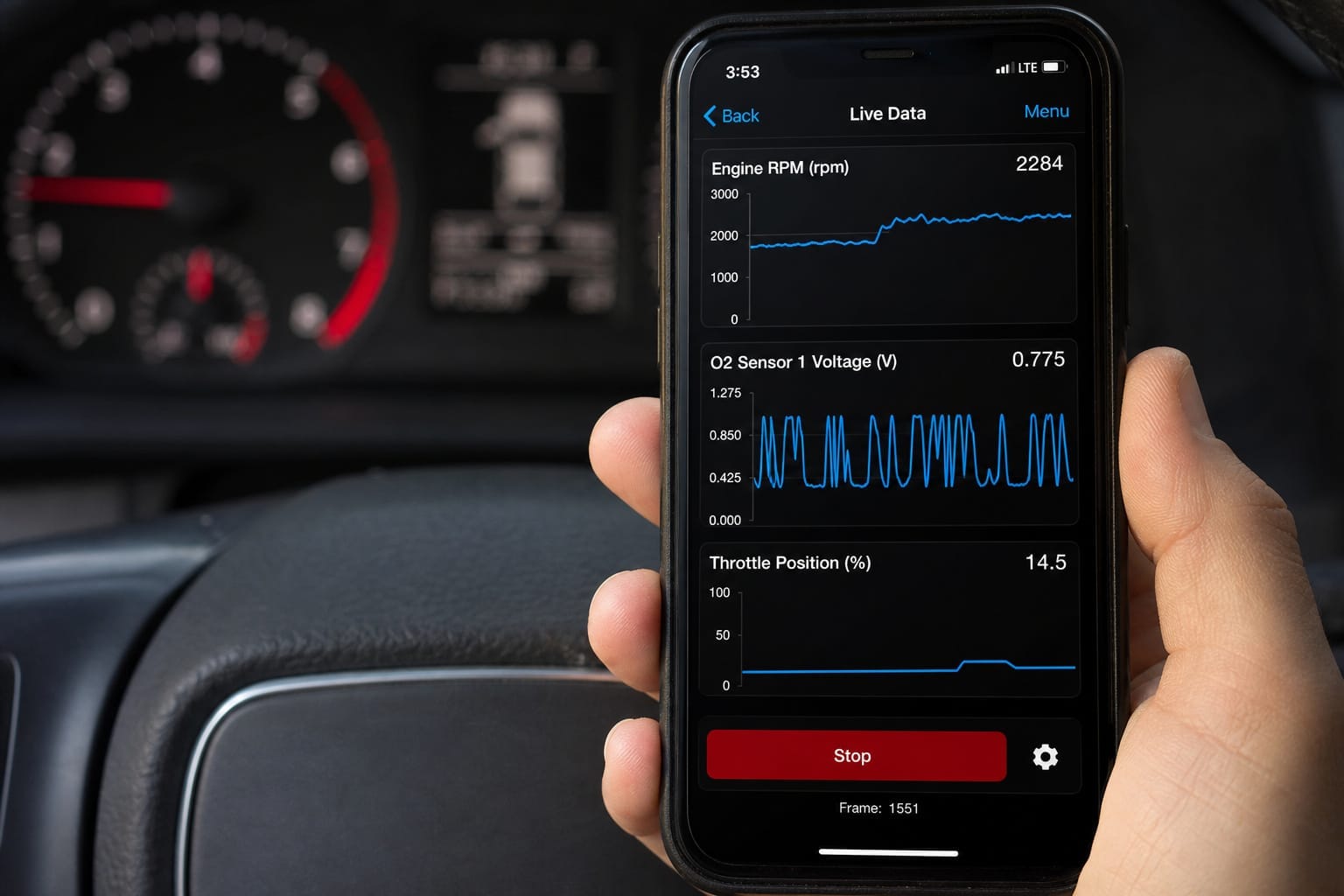
Beyond stored codes, most scanners can stream live data: fuel trims, oxygen sensor voltage, throttle position, and RPM, all updating as you idle or rev the engine.
Watching how these numbers move together often narrows down a vague code faster than the code alone. For a fuller picture of what a scanner can and can’t tell you from that data, see how OBD2 scanners actually work.
Live data is useful, but it isn’t infallible. Sensors can fail or drift, so cross-check the scanner against what you can see, hear, and smell before assuming the reading is accurate.
Recommended Products

CEL Doctor: The ANCEL AD310 is one of the best-selling OBD II scanners on the market and is recommended by Scotty Kilmer, a YouTuber and auto mechanic. It can easily determine the cause of the check engine light coming on. After repairing the vehicle's problems, it can quickly read and clear diagnostic trouble codes of emission system, read live data & hard memory data, view freeze frame, I/M monitor readiness and collect vehicle information
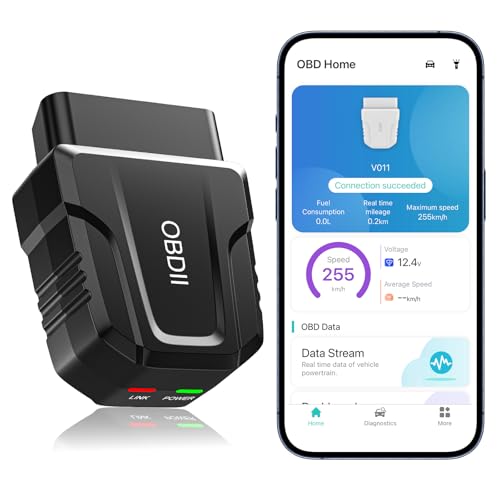
【Comprehensive Performance Testing】V011 OBD2 Scanner provides a complete diagnostic solution, giving you a thorough understanding of your vehicle's condition. It supports a variety of performance tests, support 9 protocols,👍automotive fault clearing,including fast reading of DTCs, access to electronic emission readiness, turning off CEL or MIL, resetting monitors, reading live data and retrieving the vehicle's VIN, freeze frame, sensor data, data streaming, diagnostic reports, onboard monitoring, live data streaming, and more. With these features, you can monitor your car's performance in real time and discover potential problems before they become major issues.

Your Car's Personal Doctor: Say Goodbye to Check Engine Light Troubles! The YM319 OBD2 scanner swiftly reads and clears engine fault codes, pinpointing the root cause of issues. Monitor your engine's every "breath" like a pro—view freeze frame data, check I/M readiness status, run oxygen sensor tests, and more. With a built-in database of over 63,000 fault codes, it delivers precise and reliable diagnostics, making it your trusted partner for vehicle maintenance and repair.
When to Clear a Code vs. Investigate Further
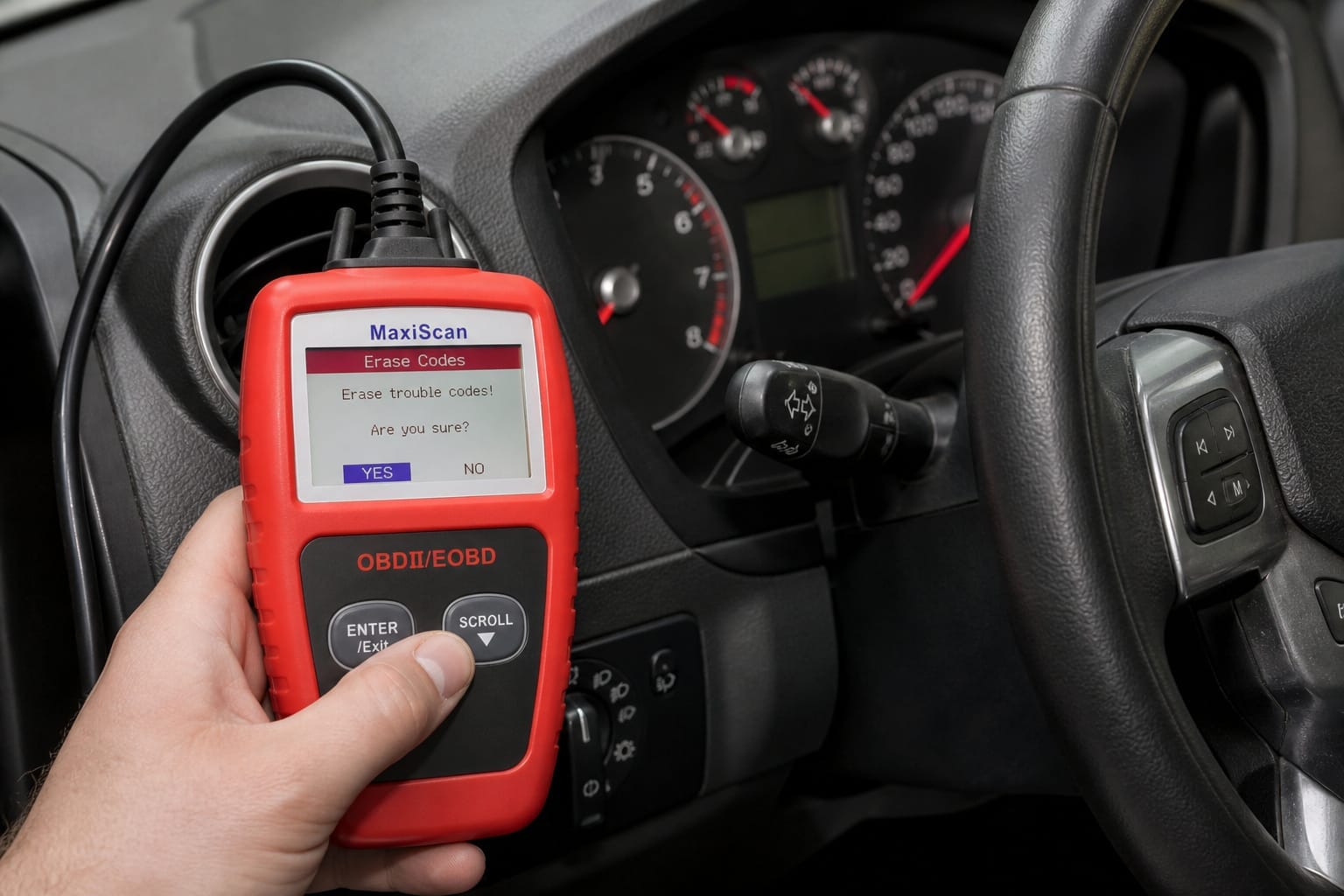
Clearing a code turns the check engine light off, but it doesn’t fix whatever triggered it. Only clear a code after you’ve addressed the underlying cause, whether that’s tightening a gas cap or replacing a part, so you can confirm the light stays off during normal driving.
If a code keeps returning after a fix, it signals that the actual cause is something else, or that the repair didn’t fully resolve it.
Frequently Asked Questions
What Does OBD2 Stand For?
OBD2 stands for On-Board Diagnostics, second generation. It’s the standardized system that lets a scanner communicate with your car’s computer to pull trouble codes and live sensor data.
Can I Read OBD2 Codes Without a Scanner?
No. You need a scanner or code reader to communicate with the car’s computer through the OBD2 port. Options range from basic $20-30 code readers to full-featured Bluetooth scanners and handheld units, but some device is required.
Are OBD2 Scanners Universal for All Cars?
Basic trouble codes are close to universal on gas vehicles built from 1996 onward, since OBD2 was mandated industry-wide that year. Manufacturer-specific codes and deeper systems like ABS or SRS aren’t guaranteed on every scanner, so check a specific model’s coverage if you need more than basic engine diagnostics.
Do I Need to Clear Codes After Fixing the Issue?
You can, using your scanner’s clear or erase function, but only after confirming the repair worked. Drive the car for a bit first and let the computer recheck the system on its own; if the problem is genuinely resolved, many codes clear themselves without you doing anything.
Can OBD2 Codes Tell Me What Part to Replace?
No. A code points to a system or a general area, not a specific part. For example, a P0301 code means a misfire in cylinder one, but the cause could be a spark plug, a fuel injector, a wiring issue, or a compression problem. Testing is needed to narrow it down before you start replacing parts.