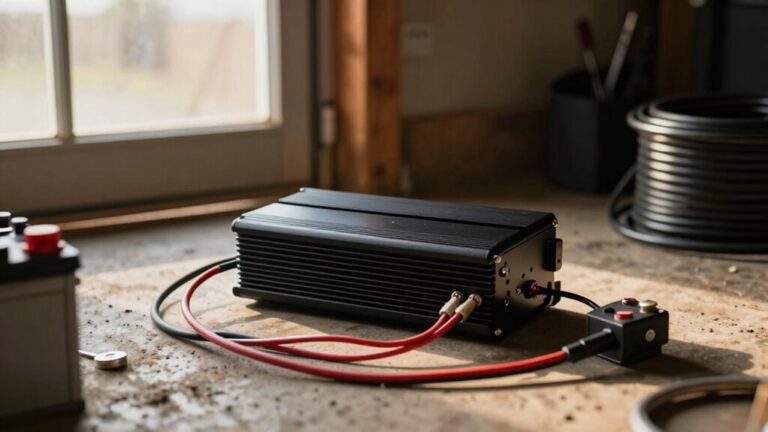
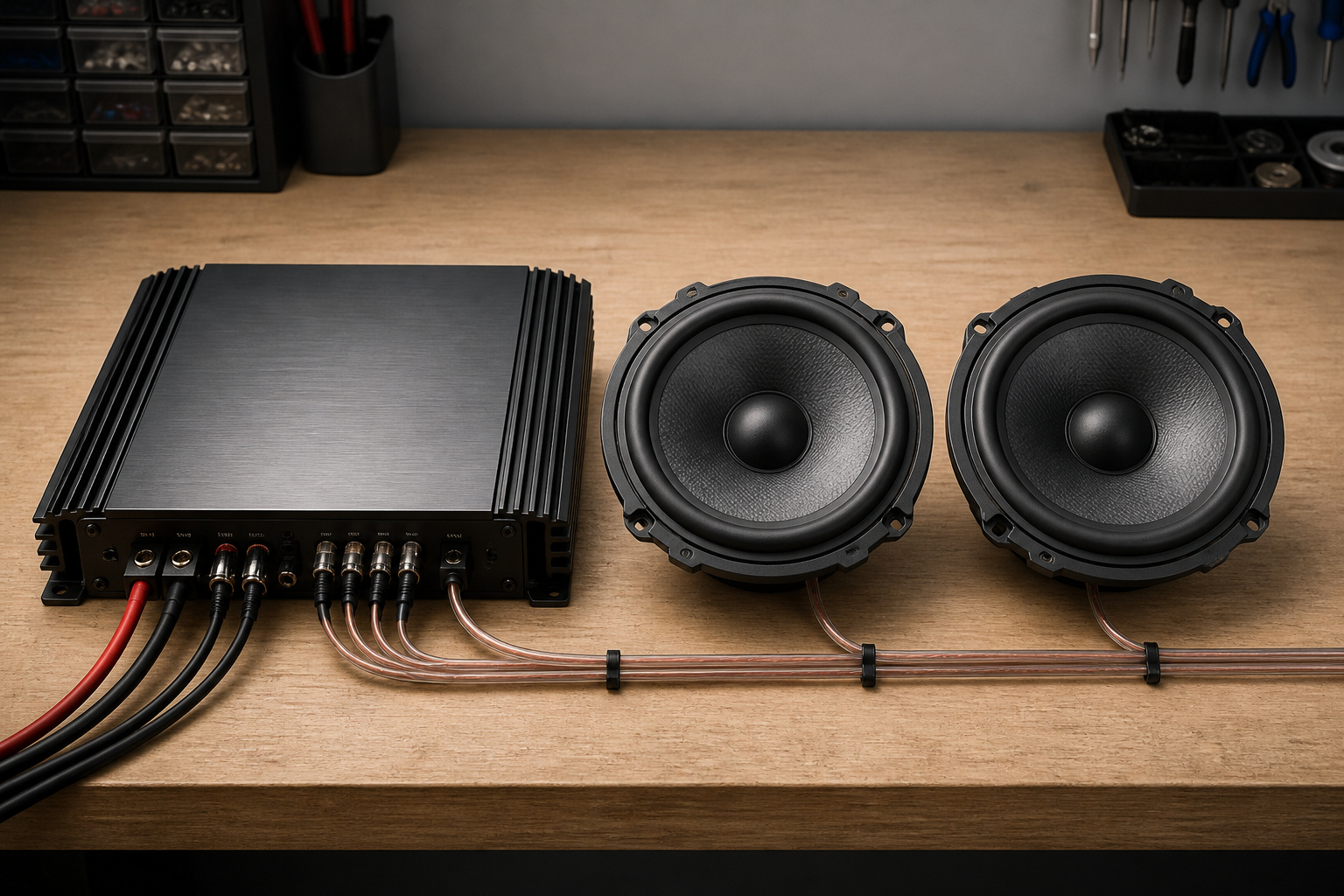
Every speaker and amplifier carries two very different power ratings: RMS and peak.
Confusing them is one of the easiest ways to blow a speaker or end up with a distorted, underpowered system.
Here’s how to read those numbers correctly and match your car audio gear the right way.
RMS vs. Peak Power
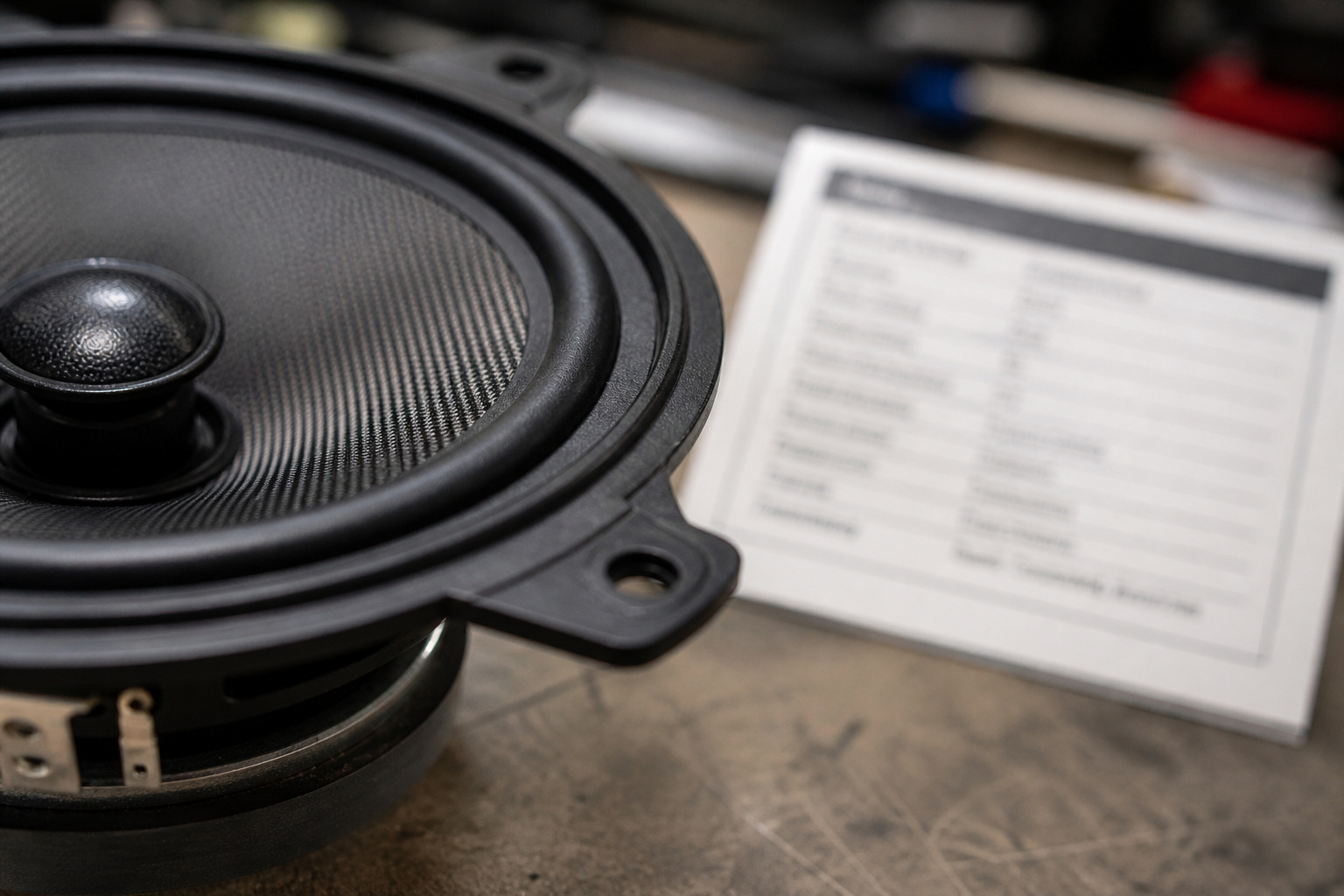
RMS power is the continuous, real-world power a speaker or amplifier is built to handle, the number that actually matters for matching gear.
Peak power is a short burst rating, often double or triple the RMS figure, representing what a component can briefly survive rather than what it’s designed to run continuously.
Manufacturers print the peak number prominently because it looks more impressive, but it’s not a reliable number to shop or match by. A speaker rated “200 watts peak” might only be a 100-watt RMS speaker underneath.
Recommended Products

This Class D Monoblock Amplifier exhibits quality frequency response rates and crossover network which places this amp at a prominent place. Durable design and highly efficient performance makes this mono sub amp stand out amongst the others.

1200W RMS POWER. Delivers 4 x 300W RMS at 2 Ohms or 2 x 600W bridged at 4 Ohms for demanding audio systems.

4 x 500 watts at 2 Ohm TRUE RMS certified at full range output Digital Class D Brazilian Technology, gives you the benefit of wiring multiple speakers and dividing the power per channel
Matching Speakers and Amps by RMS
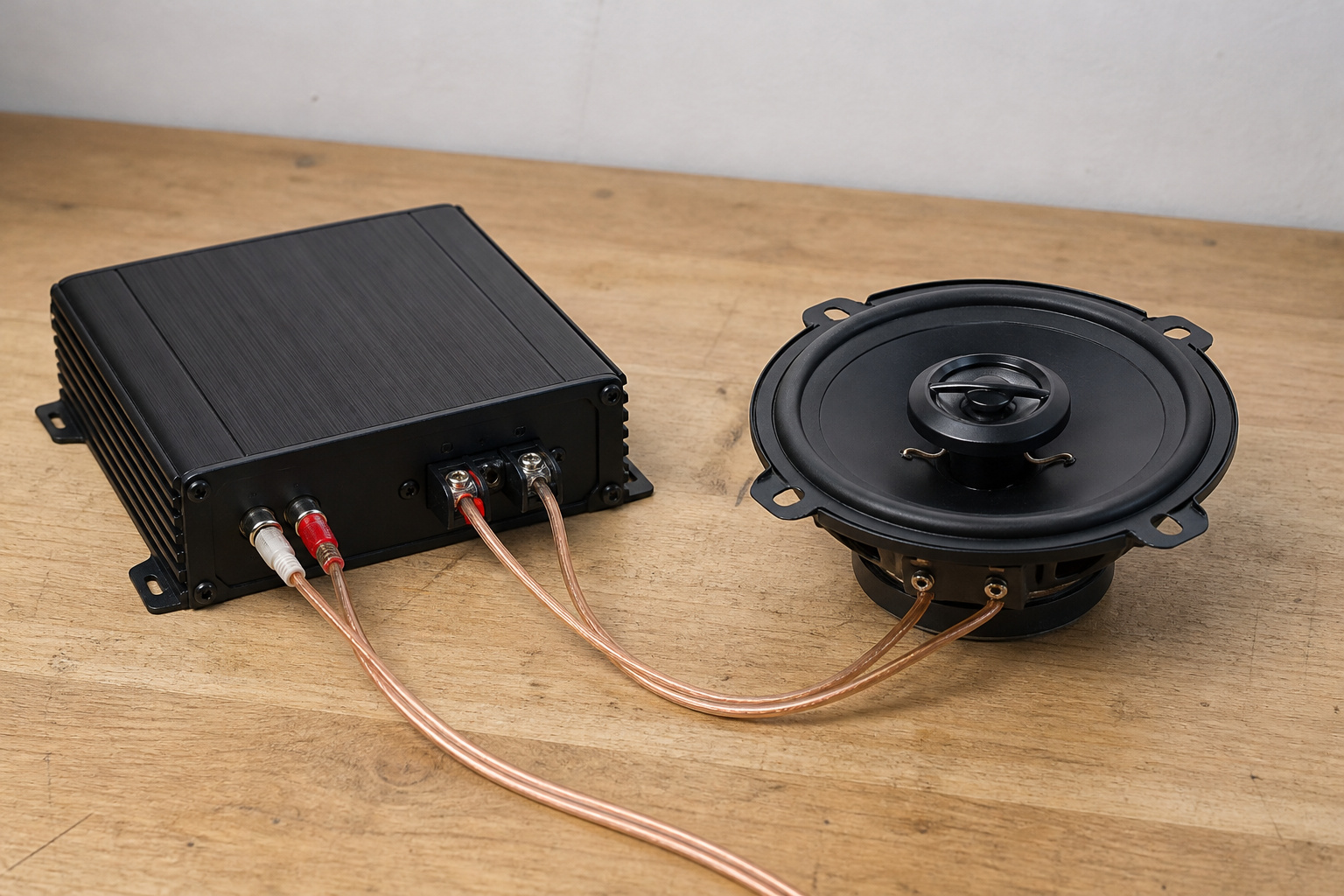
Always match gear using RMS, not peak. If a speaker is rated for 50 watts RMS, the target amp delivers roughly 40-60 watts RMS per channel. Generally, staying within about 75% to 125% of the speaker’s RMS rating keeps you in a safe range.
Underpowering causes real problems too: a weak amp straining to hit volume clips the signal, and that distorted, clipped signal is actually more likely to damage a speaker’s voice coil than a well-matched, adequately powered amp running at the same volume.
That same clipping is also one of the main causes of amp overheating; see our guide on preventing amp overheating and clipping for how to spot and fix it.
Overpowering by a wide margin risks blowing the speaker outright, even at volumes that don’t sound unreasonably loud.
Recommended Products
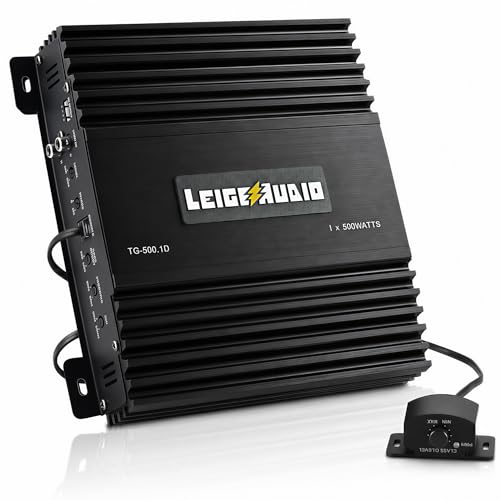
POWER - MAX Power 1Ω:1x2200w @ 1ohm,MAX Power 2Ω:1x1400w @ 2ohm;RMS Power:1x900w @ 1ohm, RMS Power:1x600w @ 2ohm. This amplifier is designed to run your subwoofer(s) giving them the power that they need to perform as they were meant to.

ORION COBALT ELITE 4-CHANNEL AMPLIFIER: The Orion CEA400.4D is a Class-D full-range 4-channel amplifier designed to power mids, highs, or full-range speaker systems with clean and efficient RMS output. Delivering up to 400 watts RMS, it’s ideal for daily driver and custom car audio builds.

Marine Bluetooth Amplifier 3-color(red/aux;blue/Bluetooth;white/usb),With wired Waterproof controller
Speaker Wire Gauge
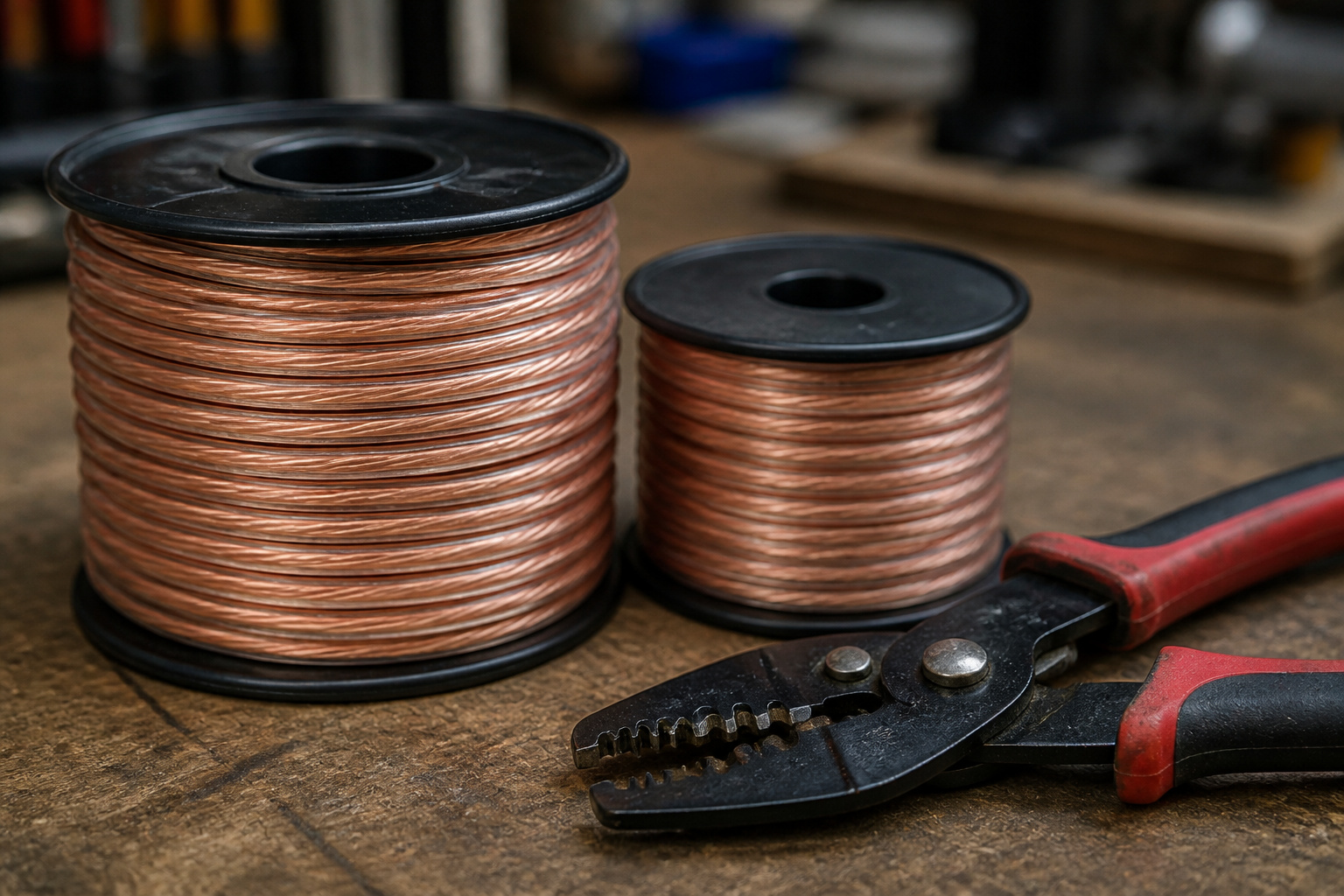
Speaker wire gauge matters too, especially for longer runs to rear speakers or a trunk-mounted subwoofer.
For most car audio runs under about 15 feet, 16-gauge wire is adequate for typical door and rear speakers; longer runs or higher-power setups do better with 14-gauge to minimize resistance and voltage loss over distance.
This is separate from, and much lighter than, the heavier power wire gauge a car amplifier needs to draw current from the battery, covered in our amp wire gauge guide.
Recommended Products

Low Voltage Wire : 16/2 gauge black and red speaker wire is ideal for low voltage applications such as 12V/24V DC circuit connections, home or car speakers, home appliances, single color LED light strip, lamps, automotive, boat etc

PREMIUM SPEAKER WIRE [ Red/Black | 100-feet (30.5m) | 16 Gauge ] - Featuring 2 conductor, this stranded wire is constructed from high-grade copper and aluminum. The electric wire is widely used for various DC electrical hookups, low voltage cables, 12V DC, 24V DC, low-loss in-home. For all single color LED strip light, low voltage single color led strip, light bulb, lamp, electronic, electrical appliance and equipment, transformer, lamps,CB Radios and motor led wire connection and other low voltage products connection.

IN THE BOX: 16 gauge speaker wire cable (100 feet)
Efficiency and Impedance Also Matter
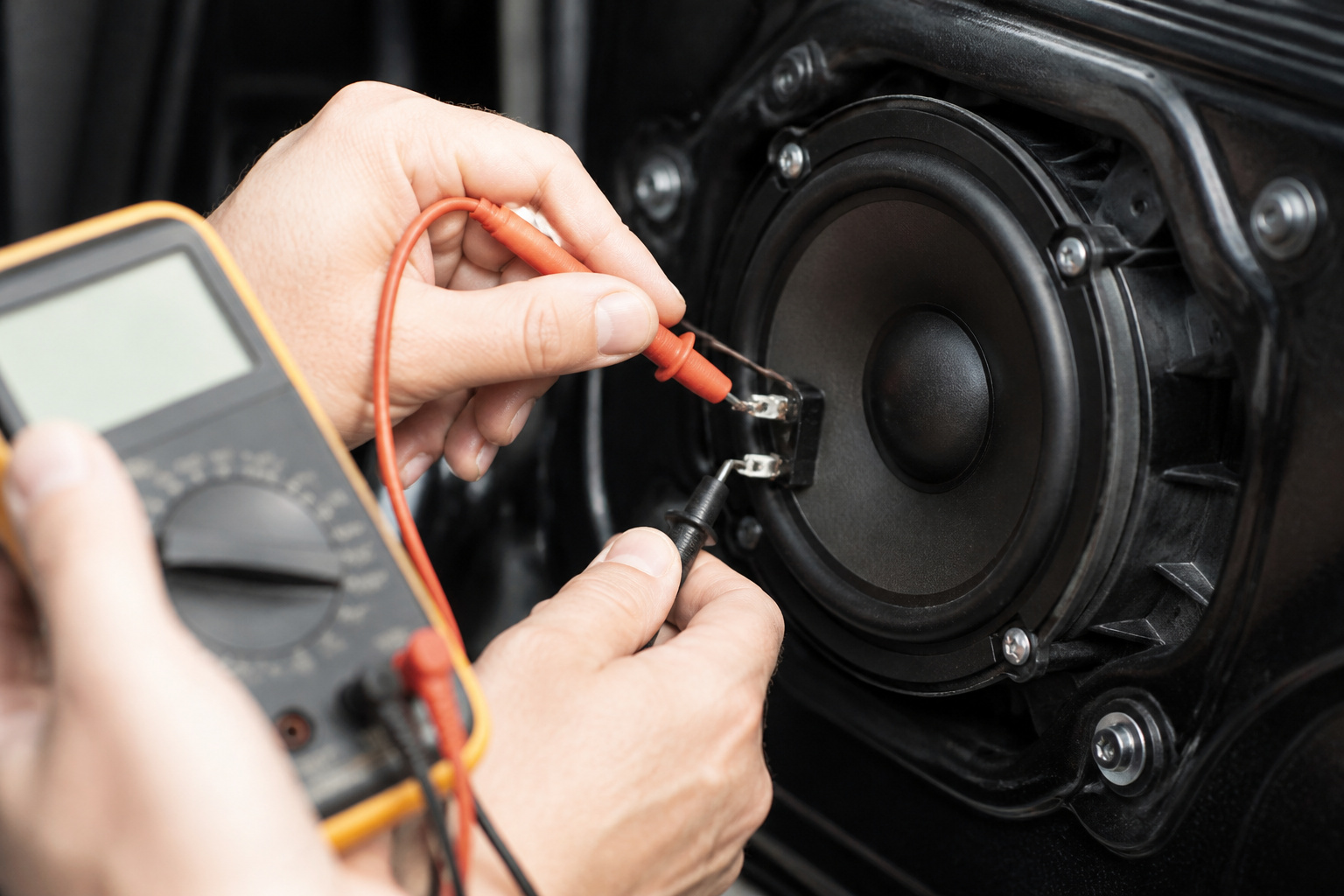
Two speakers with identical RMS ratings won’t necessarily sound equally loud; sensitivity (measured in dB) determines how efficiently a speaker converts power into volume, so a 90 dB speaker plays noticeably louder than an 85 dB speaker at the same wattage.
Impedance matters too: make sure your amp is rated for your speakers’ impedance (commonly 4 ohms in car audio), since mismatched impedance strains the amp and can degrade sound quality even when the RMS numbers look fine on paper.
Recommended Products

Power Handling - Delivering 200W (25W nominal) with 4-ohm impedance, these car door speakers combine style and high-quality sound for a dynamic audio experience

Power Handling: Delivering 230W (30W nominal) with 4-ohm impedance, these vehicle speakers combine style and high-quality sound for a dynamic audio experience.

UPGRADE YOUR CAR AUDIO: Replace your OEM speakers with JVC CSJ620 6.5" 2-way speakers for car. With 300W Peak/30W RMS Power, each car speaker features a 6 1/2" mica cone and a 1" PEI tweeter for pristine audio quality
Frequently Asked Questions
Can I mix speakers with different impedance ratings on the same amp?
Generally yes, as long as your amp is rated for the lowest impedance in the mix. Keep volume levels reasonable and watch for signs of strain, since an amp working outside its rated range is more prone to overheating or clipping.
Do I need a separate amplifier for a subwoofer?
In most systems, yes. Subwoofers demand more sustained power than door or rear speakers, and a dedicated amp, sized and wired specifically for the sub, delivers cleaner, more controlled bass than sharing power from a general-purpose amp.
Will overpowering a speaker always damage it?
Not necessarily at moderate volumes, but sustained high power beyond a speaker’s RMS rating risks overheating the voice coil. Underpowering and clipping the signal is actually a more common cause of speaker damage than modest overpowering.
How do I find a speaker’s actual RMS rating if the packaging only lists peak power?
Check the manufacturer’s spec sheet or product page rather than the box art; RMS is usually listed there even when peak power gets the bigger, more prominent number on the packaging.