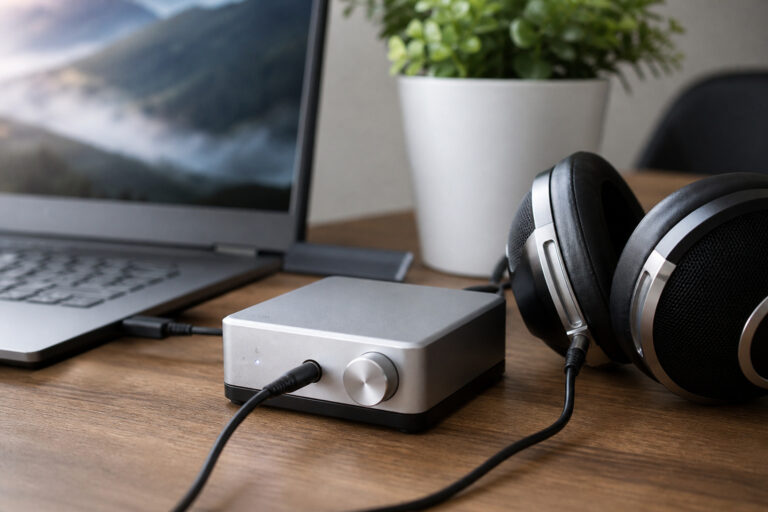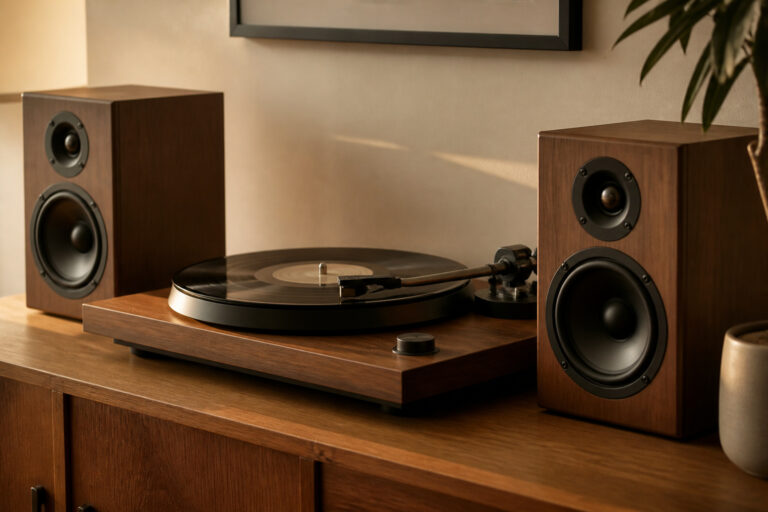
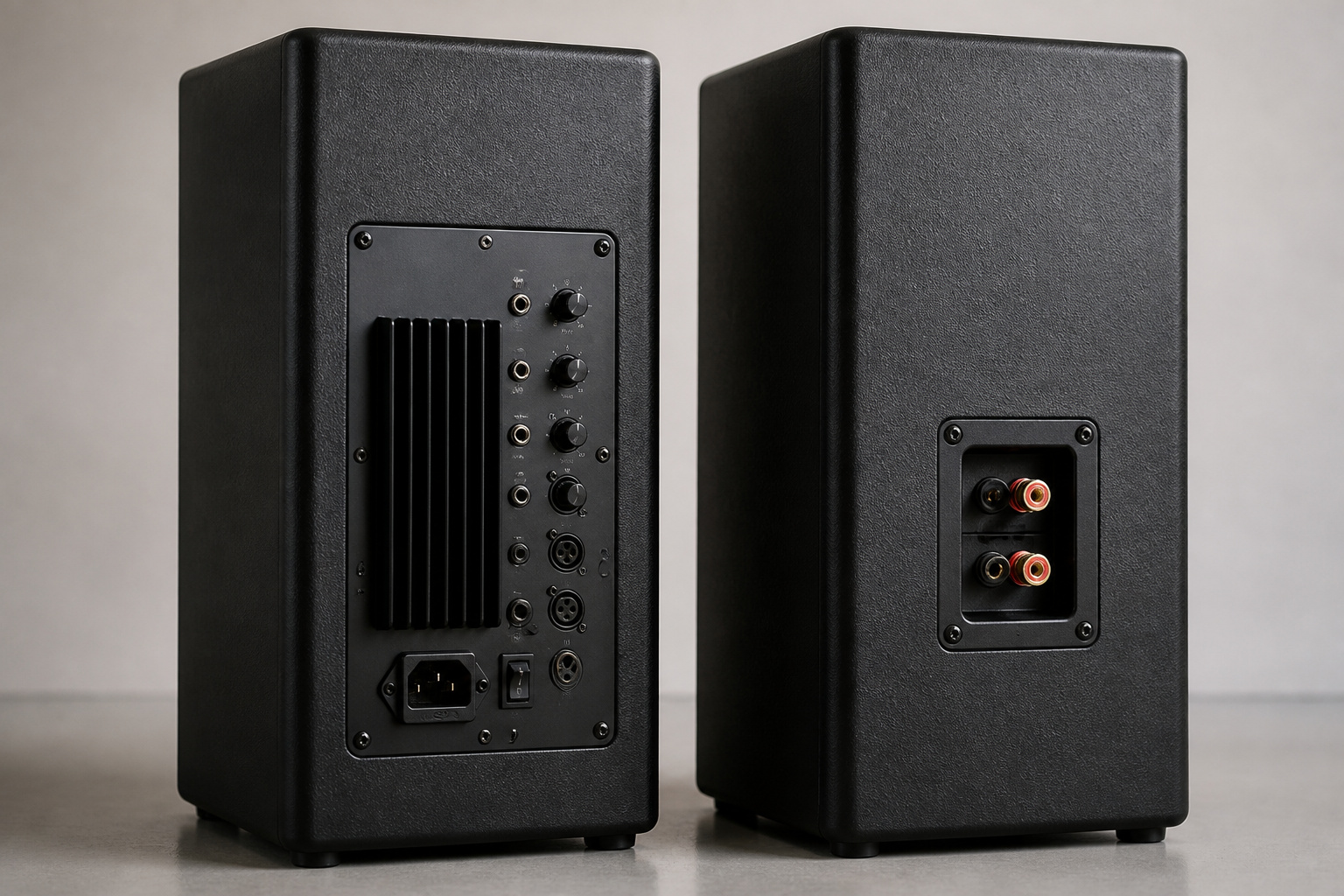
The difference between active and passive speakers comes down to where the amplifier lives. Active speakers have one built in, so you only need power and a source. Passive speakers have none, so they need a separate amplifier or receiver. That one difference affects setup, wiring, cost, and how easy it is to upgrade later.
What Active Speakers Are
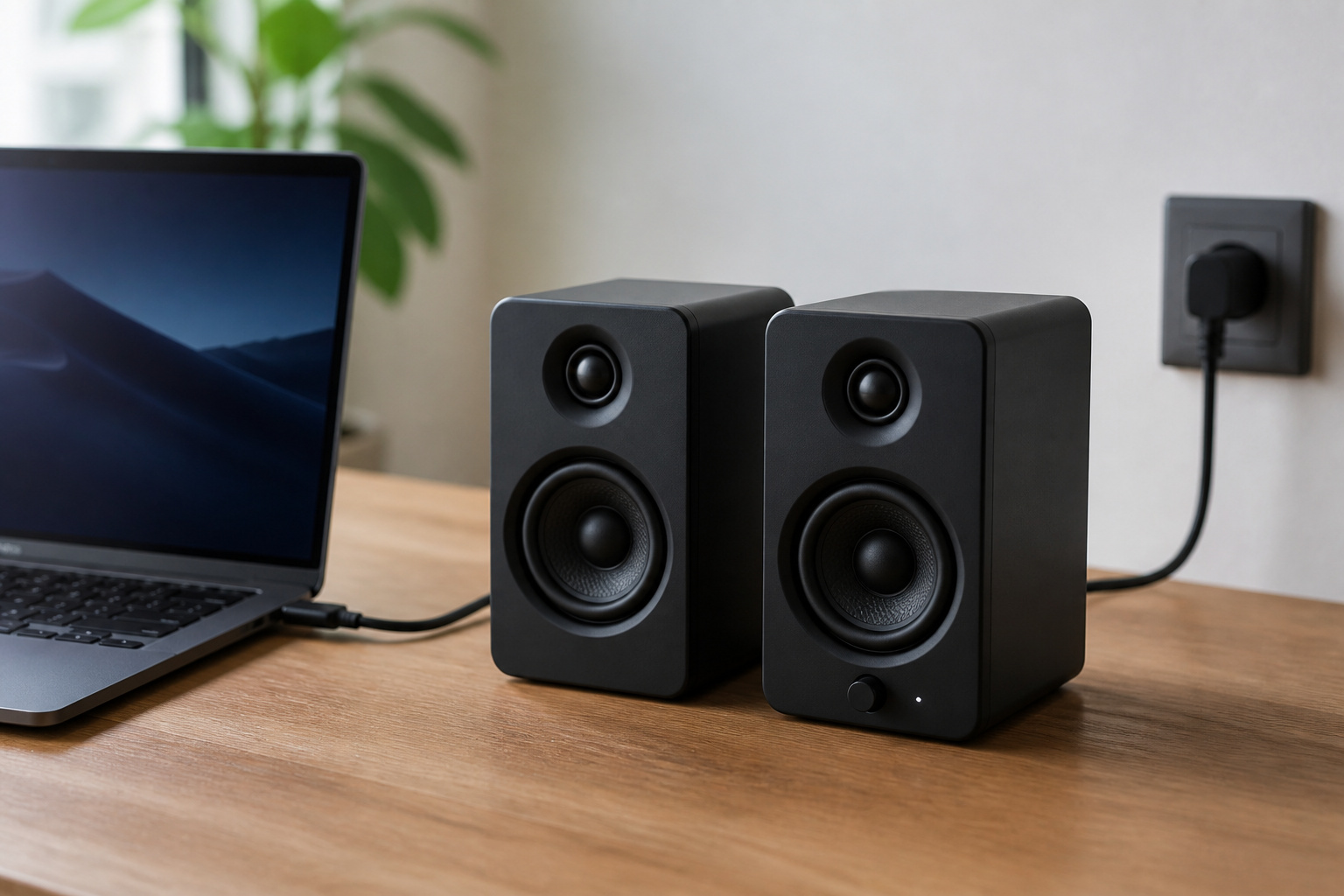
An active (or powered) speaker contains its own amplifier. You plug it into the wall, connect a source such as a phone, computer, or turntable preamp, and it plays. In a stereo pair, usually one speaker holds the electronics and sends the signal to the other by a cable, though some models are fully wireless between speakers. Bluetooth speakers, studio monitors, and many desktop speakers are active.
The amplifier is matched to the drivers inside, so the designer controls how they work together. That means fewer compatibility questions and a simpler setup with less clutter.
Recommended Products
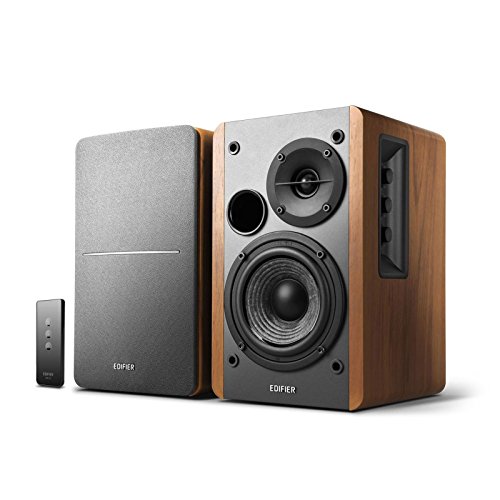
2 x AUX INPUT - Convenient connection to any device that has a 3.5mm headphone output or dual RCA output. Connect to two devices via AUX at the same time, no plugging and switching needed.
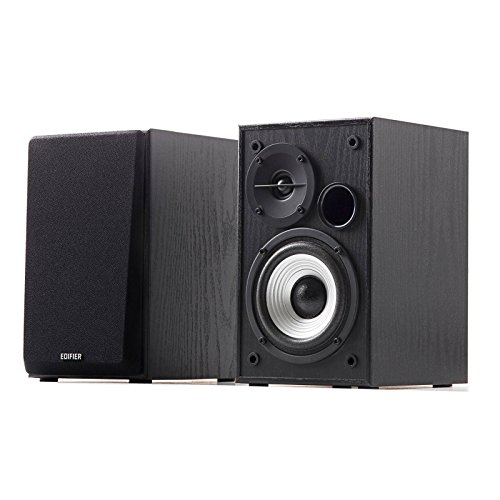
24 WATTS RMS POWER OUTPUT - Active bookshelf speaker system with 24W total power output with calibrated, flared bass reflex port in front.

BLUETOOTH WIRELESS - Popular classic bookshelf speakers now can be enjoyed without the hassle of wires. Simply connection to an iPhone, Android, Tablet, PC or Mac.
What Passive Speakers Are
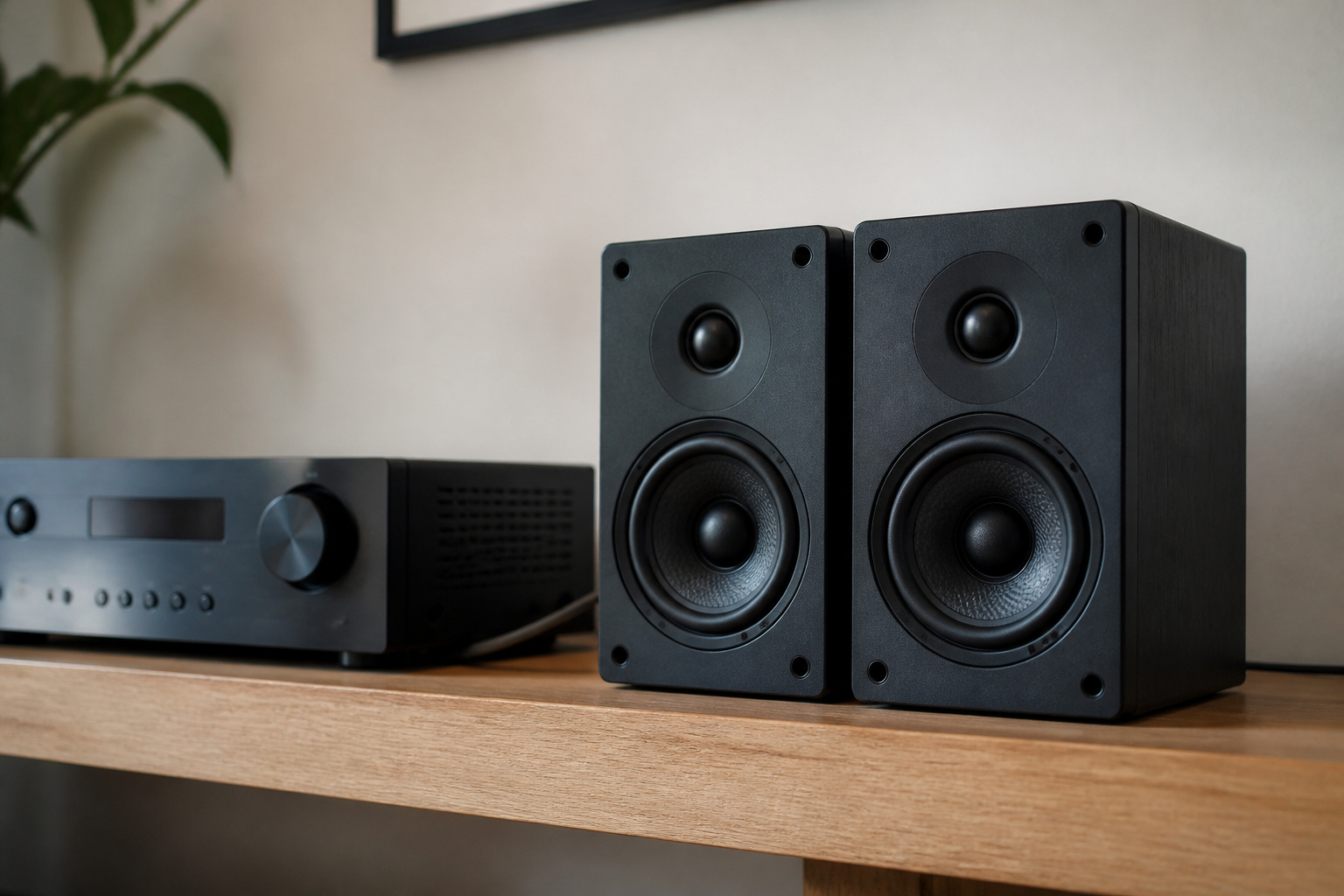
A passive speaker has no amplifier and no power supply. It needs an external amplifier or an AV receiver to drive it, connected with speaker wire. Most traditional hi-fi and home theater speakers are passive.
The advantage is flexibility. You choose the amplifier, and you can upgrade the amp or the speakers separately. The disadvantage is that you need more gear, more cables, and some knowledge of how to match the two.
Wiring and Setup

Active speakers need power and a signal cable, and a stereo pair needs a link between the two speakers. Passive speakers connect to the amplifier with speaker wire, and the amplifier needs its own power and source connections.
Passive setups take more planning, but they are not difficult once the pieces are chosen. Our guide to connecting audio devices to a TV shows common connection types.
Recommended Products

PREMIUM SPEAKER WIRE [ Frosted Red/Black | 100-feet (30.5m) | 16 Gauge ] - Featuring a double conductor, this stranded wire is constructed from high-grade copper and aluminum. It is perfect for achieving outstanding audio performance, exceptional flexibility, easy stripping and great polarity identification.

PREMIUM SPEAKER WIRE [ Frosted Red/Black | 100-feet (30.5m) | 14 Gauge ] - Featuring a double conductor, this stranded wire is constructed from high-grade copper and aluminum. It is perfect for achieving outstanding audio performance, exceptional flexibility, easy stripping and great polarity identification.

PREMIUM SPEAKER WIRE [ Frosted Red/Black | 30-feet (9.1m) | 12 Gauge ] - Featuring a double conductor, this stranded wire is constructed from high-grade copper and aluminum. It is perfect for achieving outstanding audio performance, exceptional flexibility, easy stripping and great polarity identification.
Cost and Upgrading

Entry-level active speakers are often cheaper and simpler overall, because you do not need a separate amplifier. Passive systems let you start with modest speakers and upgrade the amplifier later, or the reverse.
At the high end, both types can be expensive, so the better question is which fits the way you plan to build your system. Our guide to upgrading your audio setup in stages explains one sensible path.
Recommended Products

700-WATT MAX POWER OUTPUT: Portable high-powered 2-way full range audio projection loudspeaker PA karaoke machine for tv system has a MAX power output of 700 watt for the system, from the active speaker's built-in Class D amplifier

1000 WATT POWER: This portable high powered 2 way full range audio projection loudspeaker PA system has a maximum power output of 1000 watt peak power / 500 watt RMS so you can play your favorite tracks as loud as you want and with style

Turn every gathering into a performance with the Bowens 8-inch 200W PA system. This complete kit includes an active + passive powered PA speakers pair, dual stands, remote control, and a wireless microphone karaoke system designed for crystal-clear vocals. Perfect for DJs, karaoke, bands, and presenters, it’s your all-in-one solution.
Which to Choose

Choose active speakers for convenience, small spaces, desktop use, and anywhere you want a simple, tidy setup. Choose passive speakers if you want to build a flexible system, already own a receiver or amplifier, or expect to upgrade parts over time.
If you are choosing between speaker sizes first, read bookshelf vs floor-standing speakers.
Frequently Asked Questions
Can I Mix Active and Passive Speakers in the Same Setup?
You should not mix them in the same stereo pair, because the two speakers will sound different and be driven differently. You can use active speakers in one room or zone and passive speakers in another, or use an active subwoofer with passive main speakers, which is very common.
Do Passive Speakers Work With Bluetooth Audio Sources?
Not directly. Passive speakers need an amplifier, so you need an amplifier or receiver with built-in Bluetooth, or a separate Bluetooth receiver connected to an amplifier. Your phone sends audio to the Bluetooth receiver, and the amplifier powers the speakers.
Are Active Speakers Better for Outdoor Events?
Often, because they are self-contained and easy to set up. For outdoor use, look for a model designed for it, with a water-resistance rating if weather is a concern, and a battery or a way to run power safely. Indoor speakers are not built to handle rain or dust.
How Do I Power Passive Speakers Without an Amplifier?
You cannot. Passive speakers need amplification. Options include an AV receiver, a stereo amplifier, a compact digital amplifier, or a powered mixer. Match the amplifier’s output to your speakers’ power and impedance ratings, and read the speaker manual for the recommended range.
Can I Daisy-Chain Multiple Active Speakers Together?
Only if the speakers are designed for it. Some active speakers have a link or thru output that passes the signal to the next unit. Check the manual for supported connections and limits, since signal quality and level can change when you chain several speakers.