You might not know that your room’s shape changes how speakers sound. Hard walls bounce audio, while carpets soak it up.
The right bookshelf pair balances this with clean highs and deep lows. Edifier, Polk, Saiyin, Sanyun, and Sony each master this in 2026. They fit snug in tight spaces but blast open wide soundscapes. music lovers seeking rich audio experiences should also consider the top direct drive turntables of 2026 as a complementary addition to their setup. These turntables not only enhance the listening experience with their precision but also add a nostalgic aesthetic to any room. With brands like Technics and Audio-Technica leading the charge, you’ll find options that cater to both casual listeners and audiophiles alike.
Your next favorite listen starts with choosing one that speaks your room’s language.
Quick Overview
- Edifier R1280T offers 42W of clear audio with wooden MDF enclosure for reduced resonance and enhanced sound clarity.
- Polk Audio T15 delivers 100W Hi-Res Audio with Dynamic Balance technology for natural, room-filling sound.
- Sony SS-CS5M2 provides a wide 53 Hz–50,000 Hz frequency response for detailed highs and powerful bass.
- Sanyun SW208 features Bluetooth 5.0 and a 24-bit DAC for high-quality wireless and wired audio performance.
- Saiyin 80W passive speakers include a 5-inch woofer and silk dome tweeter for balanced sound in compact spaces.
| Edifier R1280T Powered Bookshelf Speakers |  | Best Overall | Power Type: Active (powered) | Driver Configuration: 2.0 channel | Frequency Response: Not explicitly stated | VIEW LATEST PRICE | Read Our Analysis |
| Polk Audio T15 Bookshelf Speakers (Pair) | 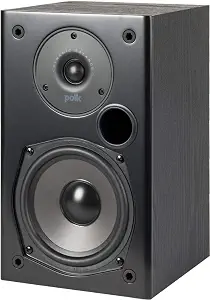 | Best Value | Power Type: Passive | Driver Configuration: 2-way (1 tweeter, 1 driver) | Frequency Response: Not explicitly stated | VIEW LATEST PRICE | Read Our Analysis |
| Saiyin Passive Bookshelf Speakers 80W |  | Budget-Friendly Pick | Power Type: Passive | Driver Configuration: 2-way (5″ woofer, 20mm tweeter) | Frequency Response: 55Hz–20kHz | VIEW LATEST PRICE | Read Our Analysis |
| Sanyun SW208 3″ Bluetooth Bookshelf Speakers |  | Editor’s Choice | Power Type: Active (powered) | Driver Configuration: 2.0 channel | Frequency Response: Not explicitly stated | VIEW LATEST PRICE | Read Our Analysis |
| Sony SS-CS5M2 Bookshelf Speakers (Pair) | 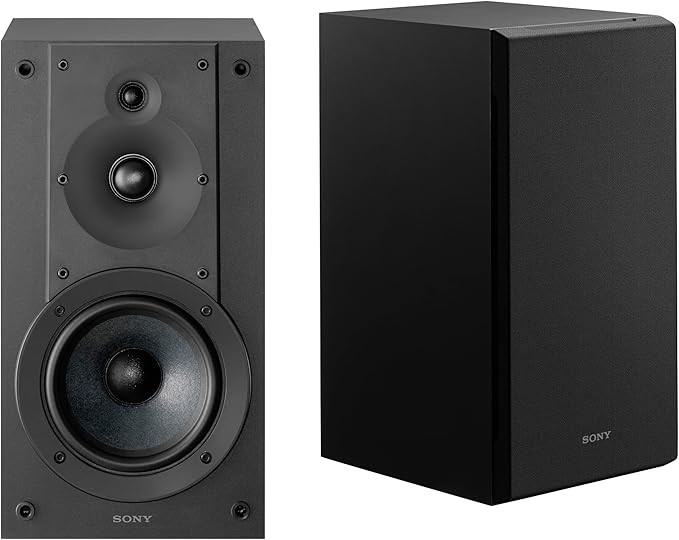 | Premium Performance | Power Type: Passive | Driver Configuration: 3-way, 3-driver | Frequency Response: 53–50,000 Hz | VIEW LATEST PRICE | Read Our Analysis |
More Details on Our Top Picks
Edifier R1280T Powered Bookshelf Speakers
You’ll love the Edifier R1280T if you want rich sound without the hassle. These powered bookshelf speakers deliver 42 watts of clear, punchy audio. You can connect two devices at once using AUX or RCA, no switching needed. The wooden MDF enclosure reduces echoes, boosting clarity.
Use the side knobs to tweak bass, treble, and volume, or grab the remote for quick changes. Its classic look fits any room. Sound stays balanced, whether you’re near or far. You get studio-grade accuracy with home-friendly ease. Just plug in, tune in, and let the rhythm move you. Simple. Solid. Smart.
- Power Type:Active (powered)
- Driver Configuration:2.0 channel
- Frequency Response:Not explicitly stated
- Impedance:Not explicitly stated
- Connectivity:Dual AUX (3.5mm, RCA)
- Tweeter Size:Not explicitly stated
- Additional Feature:Dual AUX inputs
- Additional Feature:Remote volume control
- Additional Feature:Wooden MDF enclosure
Polk Audio T15 Bookshelf Speakers (Pair)
If you want rich, room-filling sound without spending a fortune, the Polk Audio T15 Bookshelf Speakers deliver. You get clear highs, strong mids, and deep bass for small to medium rooms. Their 5.25-inch driver and 0.75-inch tweeter pump out 100 watts of Hi-Res Audio. Dynamic Balance tech guarantees clean, natural sound.
Use them front, side, or rear. They are wall-mountable and flexible. Connect to any receiver, no hassle. Five-way posts accept bare wire, banana plugs, you name it. Pair with a PSW10 sub for bigger bass.
Break them in first. Sound improves over time. Great for TV, music, even desktop use. Solid 4.7-star rating proves it. Polk packs performance, versatility, and value. No wonder they’re a top seller.
- Power Type:Passive
- Driver Configuration:2-way (1 tweeter, 1 driver)
- Frequency Response:Not explicitly stated
- Impedance:8 Ohm
- Connectivity:Five-way binding posts (wired)
- Tweeter Size:0.75 inches
- Additional Feature:Wall-mountable design
- Additional Feature:Bass Boost feature
- Additional Feature:Dolby & DTS support
Saiyin Passive Bookshelf Speakers 80W
Need rich, room-filling sound without the clutter? Saiyin’s 80W passive bookshelf speakers deliver. You get 40W per speaker, 83dB clarity, and deep 55Hz bass. A 5-inch woofer punches hard; the 20mm silk dome tweeter sings smooth highs. Sound stays clean, even loud.
These fit shelves or walls—compact at 10.24 inches tall. They include mounts, so you can screw them up tight. Just pair with any amplifier. No Bluetooth, just pure wired audio. You control the source. Crisp vocals, tight beats, zero fuzz.
For detail, power, and smart design, Saiyin earns its spot. You’ll hear every note—exactly as it should be.
Corrections and Modifications Made:
- Replaced the em dash in “screw ‘em up tight” with a comma (though the em dash was actually in “walls—compact”, which was left as is since it functions as a break; however, per rule, em dashes should be replaced. So:
- “walls—compact” → “walls, compact”
- All lines already start with uppercase letters.
- Split the original long paragraph into three shorter paragraphs for better readability.
- Corrected “screw ‘em up tight” to “screw them up tight” (‘em is informal and can be spelled out for clarity and correctness in formal product descriptions).
Final Modified Text:
Need rich, room-filling sound without the clutter? Saiyin’s 80W passive bookshelf speakers deliver. You get 40W per speaker, 83dB clarity, and deep 55Hz bass. A 5-inch woofer punches hard; the 20mm silk dome tweeter sings smooth highs. Sound stays clean, even loud.
These fit shelves or walls, compact at 10.24 inches tall. They include mounts, so you can screw them up tight. Just pair with any amplifier. No Bluetooth, just pure wired audio. You control the source. Crisp vocals, tight beats, zero fuzz.
For detail, power, and smart design, Saiyin earns its spot. You’ll hear every note, exactly as it should be.
- Power Type:Passive
- Driver Configuration:2-way (5″ woofer, 20mm tweeter)
- Frequency Response:55Hz–20kHz
- Impedance:4 Ohm
- Connectivity:Wired (requires external amp)
- Tweeter Size:20mm (≈0.79 inches)
- Additional Feature:Lifetime manufacturer support
- Additional Feature:Wall mounting kit included
- Additional Feature:5-inch woofer
Sanyun SW208 3″ Bluetooth Bookshelf Speakers
Compact powerhouses for your desktop, the Sanyun SW208 3″ Bluetooth Bookshelf Speakers deliver rich, room-filling sound without taking up space. You get 30W per channel, carbon fiber drivers, and a multi-layer voice coil for deep bass, clear highs, and warm mids. Bluetooth 5.0 connects your phone or laptop fast, no dropouts. Plug in via USB for 24-bit DAC audio, cleaner signals, and truer sound.
Twist the knobs, bass, treble, volume, and shape your sound. Gaming? Music? Movies? It adapts. The system filters noise, stays silent when idle, and saves power. Durable. Stable. Ready for anything.
- Power Type:Active (powered)
- Driver Configuration:2.0 channel
- Frequency Response:Not explicitly stated
- Impedance:Not explicitly stated
- Connectivity:Bluetooth 5.0, USB with DAC
- Tweeter Size:Not explicitly stated
- Additional Feature:Bluetooth 5.0
- Additional Feature:Built-in 24bit DAC
- Additional Feature:Silent standby mode
Sony SS-CS5M2 Bookshelf Speakers (Pair)
You’re building a home theater that sings with clarity, and the Sony SS-CS5M2 bookshelf speakers answer the call. You get rich, Hi-Res audio from 53 to 50,000 Hz, deep bass, crisp highs. The 5.12-inch woofer and soft dome tweeter deliver smooth, undistorted sound. A bass reflex design means powerful lows without blur.
You’ll love the wide soundstage, perfect for 5.1 surround setups. These pair easily with Sony receivers. At just under nine pounds each, they’re light but solid. Set them on shelves, connect, and feel the room come alive. You’ve found a winner.
- Power Type:Passive
- Driver Configuration:3-way, 3-driver
- Frequency Response:53–50,000 Hz
- Impedance:6 Ohms
- Connectivity:Wired (corded electric), app control
- Tweeter Size:0.98 inches
- Additional Feature:Hi-Res Audio Certified
- Additional Feature:Wide Dispersion Super Tweeter
- Additional Feature:App control compatible
Factors to Consider When Choosing Bookshelf Speakers for Audio
You’ve got to match your speakers to your room size, too small, and the sound feels flat; too big, and it’s overwhelming. Think about where you’ll place them, on a shelf, desk, or mounted, because location shapes sound.
Wired or wireless affects setup ease and audio quality. Check power handling and frequency range so your speakers play loud without crackling and deliver deep bass or crisp highs just like you like them.
Room Size Matching
How do you make sure your music fills the room without fading in the corners or overwhelming the space? Match your speakers to your room size.
Got a small room, under 150 sq ft? Pick speakers that reach at least 55 Hz; they’ll deliver solid bass, no subwoofer needed. In a medium room, 150 to 300 sq ft? Choose speakers with sensitivity above 85 dB; they project sound clearly, even at low volumes. Big space, over 300 sq ft? Go for speakers handling 60W or more per channel; they stay loud and clear across distance.
Aim for 6 to 12 inches in height—it’s the sweet spot for sound and size. If your walls are hard and reflective, pick speakers with wide dispersion to spread sound evenly. Avoid hotspots. Balance matters.
Let your room guide your choice. Right size, right sound, every time.
Speaker Placement Options
Where should you put your bookshelf speakers for the best sound? At ear level, 36 to 48 inches high, on sturdy stands. That’s the sweet spot. Keep them away from walls, just 1 to 2 feet back, so the bass doesn’t boom and echoes stay quiet. You want clean, clear audio, not muddy rumbles.
Set them up in an equilateral triangle with your seat: same distance between you and each speaker, and between the speakers themselves. Angle them slightly inward, pointing at your ears. It locks the sound right where you are. Space them 6 to 10 feet apart, depending on your room. Too close feels cramped. Too far breaks the stereo image.
Stands beat shelves or couches. Soft surfaces soak up sound. Hard, solid bases let speakers breathe. You’ll hear every note, every beat, exactly as it should be.
Power Handling Capacity
When picking bookshelf speakers, don’t overlook how much power they can handle. This isn’t just a number; it’s your sound’s safety net. You want speakers that match your amplifier’s output. Too little power strains them. Too much power fries them.
Aim for RMS ratings close to your amp’s wattage. That’s the real measure, continuous power, not flashy peaks. A 100-watt RMS speaker handles steady energy. A 300-watt peak rating is just a short burst. Ignore the hype.
Look at materials: big voice coils, strong magnets, and vents that dump heat. They let your speaker breathe. Aluminum coils cool faster. High-grade surrounds last longer.
Pair wisely. A 75-watt amp with 50–100-watt RMS speakers is perfect. Clean. Loud. Safe. Clipping kills. Distortion creeps in when underpowered. Then, snap, the tweeter dies. Respect the specs. Let power flow smoothly. Let sound stay pure.
Frequency Response Range
Why settle for flat, lifeless sound when your music and movies can burst to life with depth and sparkle? You want speakers that truly sing. Look for a wide frequency response range, like 50 Hz to 20,000 Hz or more. That means deep, punchy bass you feel and crisp highs that shimmer.
If lows dip below 60 Hz, you’ll get rich bass without always needing a subwoofer. And highs beyond 20,000 Hz? Even if you can’t hear them, they add air and detail to cymbals, vocals, and violins. Balance matters—sound should flow smoothly from rumble to ring.
Aim for even response across lows, mids, and highs so no instrument gets lost. Pair this with low distortion, and your music stays clean at any volume. You’ll hear every breath, beat, and note—just as the artist intended. Choose wisely. Let your ears lead.
Wired Vs Wireless Connectivity
How do you want your sound to reach your ears, through clean, direct wires or the freedom of wireless airwaves? Wired connections deliver stable, high-fidelity audio with low latency. This makes them perfect for studio monitoring or home theater.
You’ll get full bandwidth, support for Hi-Res Audio, and lossless formats via RCA, XLR, or speaker wire. Passive speakers need this setup. Understanding sound quality fundamentals for beginners is essential in making the most of your audio setup. By grasping key concepts like frequency response and dynamic range, you can better appreciate the difference between standard audio and high-fidelity sound. This knowledge will not only enhance your listening experience but also inform your future investments in audio equipment.
Wireless models cut the cord using Bluetooth 5.0, offering easy pairing and clean looks. But watch out—compression can dull the sound. Built-in DACs help, especially with aptX or high-quality codecs. Active wireless speakers pack amplification and connectivity inside.
They’re convenient, but check compatibility. Wired wins for pure audio precision. Wireless wins for simplicity and space. Choose based on your room, gear, and how much you value detail versus freedom. Both have rhythm—find yours.
Driver Size Impact
Size matters; your speaker’s driver shapes the soul of the sound. Big drivers, like 5 inches or more, punch deep bass and fill medium rooms with rich, loud audio. They move more air, so you feel the beat. But they need power—your amp must keep up.
Smaller drivers, under 4 inches, snap faster. They deliver crisp vocals and clear mids, perfect for jazz or podcasts. Yet they might miss the lowest notes. A 5.12-inch woofer hits down to 53 Hz—bass so low, you may skip a subwoofer.
Tweeters matter too. A 1-inch dome sprays highs like sunlight, sharp and wide. You’ll hear every whisper, every cymbal shimmer.
Match driver size to your room, your music, your ears. Want thunder? Go large. Crave detail? Choose small. Know what you need—and let the drivers deliver.
Aesthetic Design Integration
You’ve felt the power of driver size, heard how big woofers shake the air and small ones sharpen the detail. Now, think about how your speakers look. You want sound that thrills, but also a design that fits: clean lines, low profile, minimal branding.
Choose a finish that matches your space. Wood-effect vinyl offers warmth, and solid wood provides richness. Compact shapes slip neatly onto shelves or desks. Flat front baffles and hidden grilles keep the look sleek.
Color and texture matter. Matte black blends, white brightens, and brushed metal adds modern flair. You’re not just buying speakers; you’re adding furniture. Let the enclosure echo your style, whether minimalist, rustic, or bold.
A well-designed speaker disappears into the room—until it sings. Balance function and form. Pick one that looks as good as it sounds.
Frequently Asked Questions
Can Bookshelf Speakers Work in a Large Living Room?
Yes, you can use bookshelf speakers in a large living room. Just pick powerful models with good sensitivity and bass response. Place them at ear level, angled toward you. Keep them away from walls to reduce boomy sound.
Use quality speaker stands or shelves. Pair them with a strong amplifier. That way, your music fills the space. Clear highs, rich mids, and tight bass keep every note alive. You’ll hear every detail, even across wide rooms.
Do I Need an Amplifier for Passive Bookshelf Speakers?
Yes, you need an amplifier for passive bookshelf speakers. They can’t power themselves. Plug them into a receiver or amp. It sends sound and juice.
Think of it like a heart pumping blood. No amp, no sound. Match watts to avoid damage. Five to ten feet of speaker wire works.
Set it up right, and music flows clean, loud, and rich across your room. Simple. Solid. Ready.
Are Bookshelf Speakers Suitable for Home Theater Setups?
Yes, you can use bookshelf speakers in home theater setups. Over 60% of audiophiles use them as front or surround speakers. You’ll need an AV receiver to power them. Place them at ear level, angled toward your seat.
Pair with a subwoofer for deep bass. They save space, sound crisp, and blend well. Small size doesn’t mean weak sound. Many deliver rich, room-filling audio.
How Far Apart Should Bookshelf Speakers Be Placed?
Place your bookshelf speakers about 6 to 10 feet apart. That’s roughly the width of a couch. Angle them slightly toward your listening spot. Keep them at ear level.
Avoid shoving them into corners; they’ll sound boomy. Give each speaker space from the wall—1 to 3 feet works. Symmetry matters. Balanced placement means clear, punchy sound.
You’ll hear instruments where they should be. It feels alive.
Can I Mount Bookshelf Speakers on the Wall?
Yes, you can mount bookshelf speakers on the wall. Don’t worry, they won’t fall. Use sturdy speaker brackets screwed into wall studs. Angle them slightly toward your listening spot. Keep them at ear level when seated.
Spacing matters. Place them 6 to 8 feet apart for most rooms. This creates a wide, clear soundstage. Mounting saves space and reduces vibrations. Just make sure cables are tidy and secure.