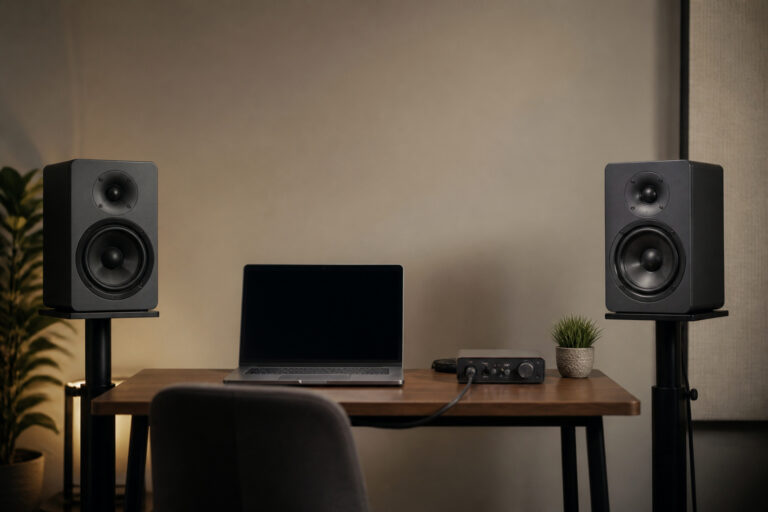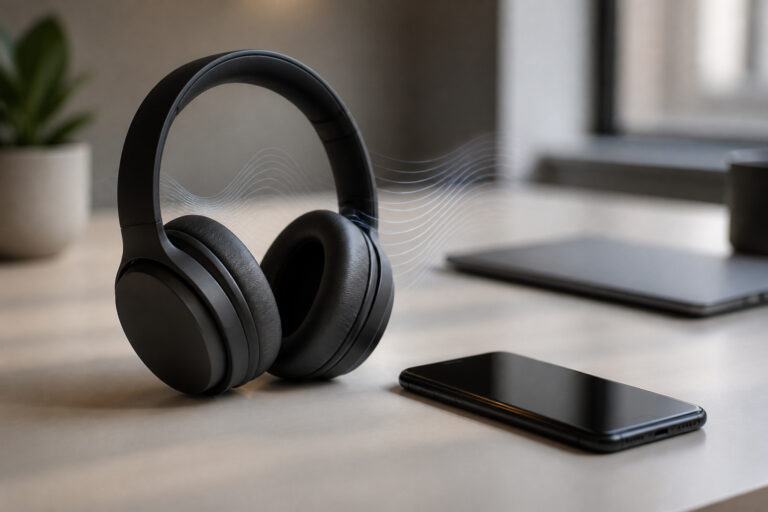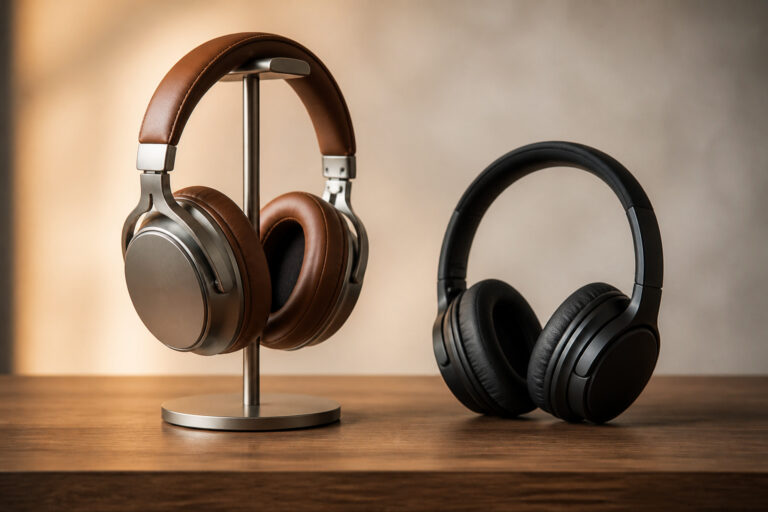
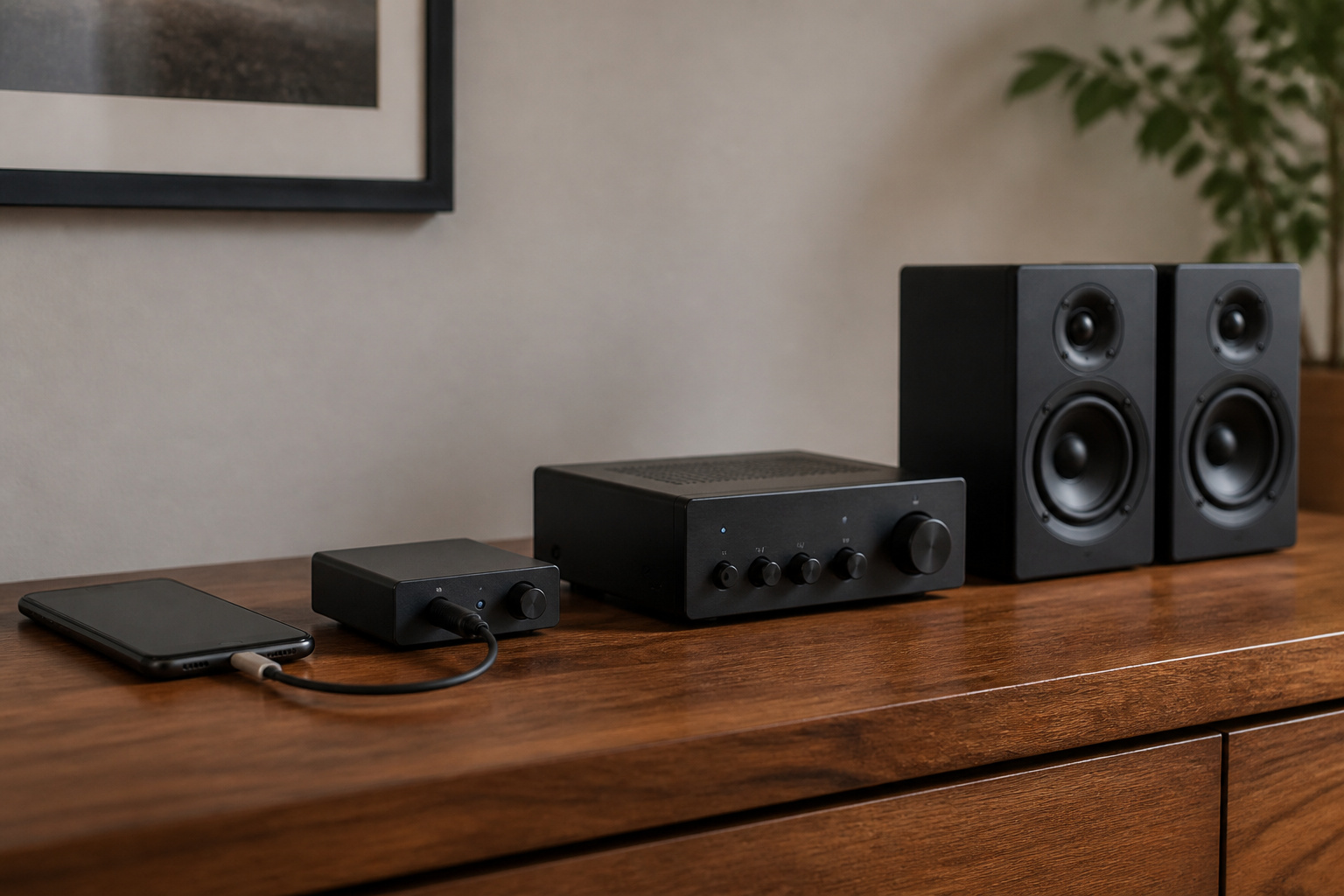
Good sound comes from a chain: the recording, the file or stream, the gear, the amplifier, and the room. The weakest link limits the rest. This guide explains what matters at each step, so you know where to spend time and money and where to ignore marketing.
Start With the Source

A poor recording or a heavily compressed file cannot be fixed later. Choose lossless formats such as FLAC or ALAC, or a streaming service’s highest quality setting, when you can.
Low-bitrate MP3s discard detail, and the loss is easiest to hear on good equipment. Our guide on hi-res audio explains how far file quality is worth chasing.
Recommended Products

The ALL-IN-ONE solution for your video conversion needs: With this software you can convert files to any video format of your choice - the ideal complement for editing, converting or cutting videos

【Multifunction 192khz DAC Converter】Built-in high-performance DAC chip, supports 192K/24bit sampling rate; Help users solve the problem of connecting different audio interfaces to analog amplifiers,DAC converter converts coaxial or slink digital audio signals to analog L/R RCA and 3.5mm Jack audio simultaneously.

Upgraded Version: A new generation USB-C portable headphone DAC and amplifier, supporting up to DSD256 and PCM 32bit/384kHz decoding for a high-resolution sound reproduction. It delivers a powerful drive of up to 170mW@32Ω each channel, effortlessly powering high or low-impedance headphones with 3.5mm single-ended or 4.4mm balanced connections, immersing you in the exquisite world of music
Balanced Speakers and Headphones
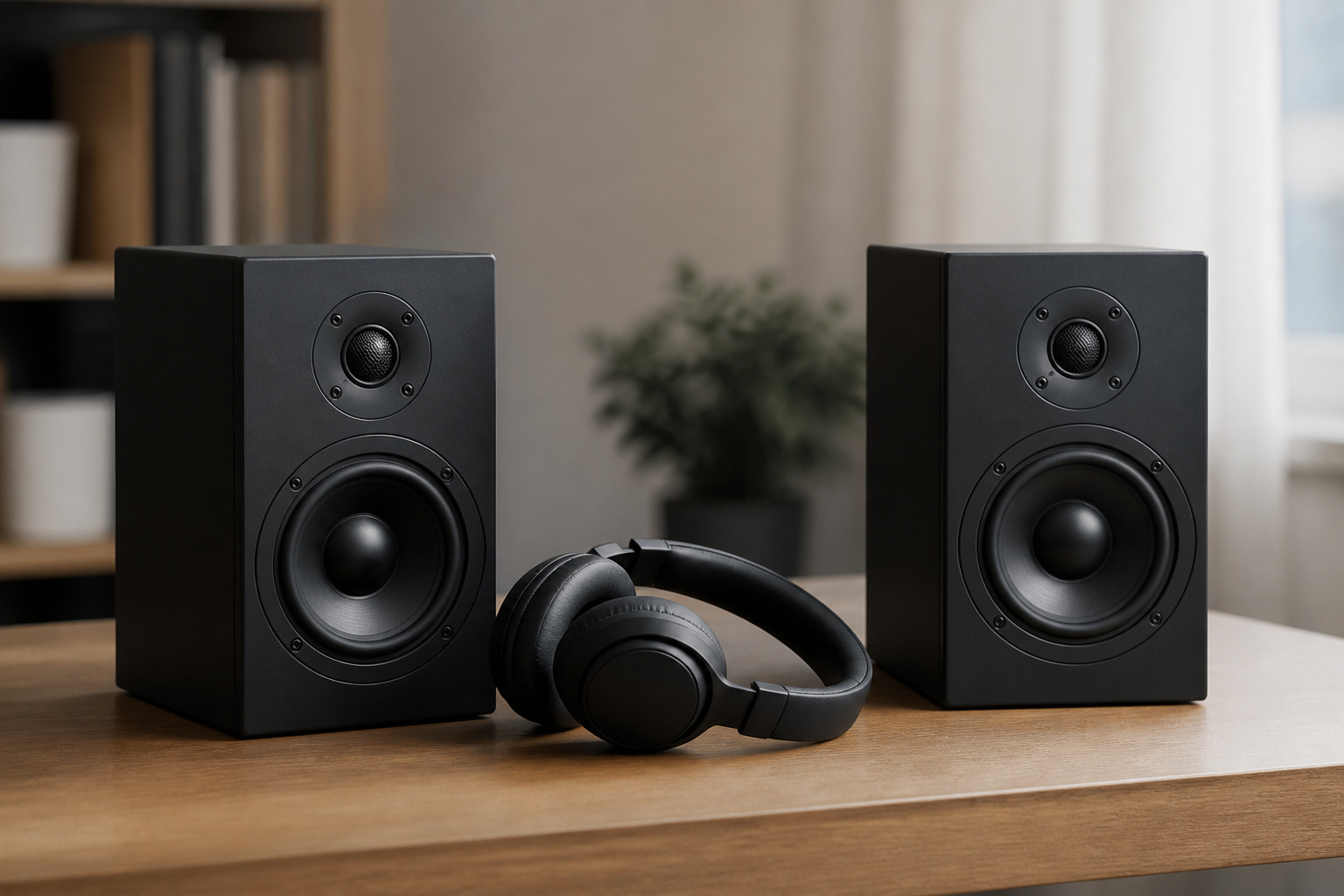
Price is a weak guide to sound. What matters is balance: clear midrange so voices sound natural, smooth highs that do not sting, and bass that is deep but controlled.
Speakers with boosted bass hide voices, and headphones with sharp highs get tiring. Test gear with songs you know well. See what makes a speaker sound good and how to choose headphones for more.
Recommended Products
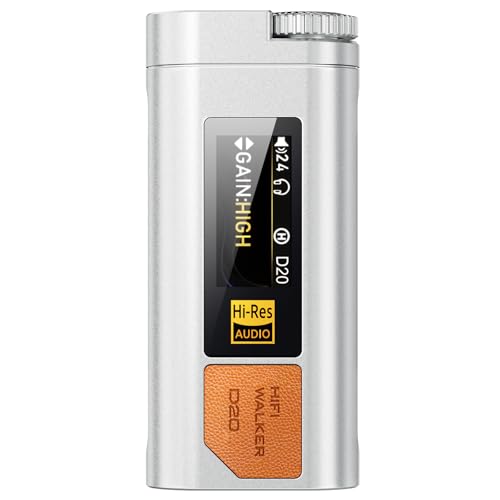
【Flagship DAC + USB Chipset Combo】Equipped with the ESS ES9038Q2M DAC and CT7601PR USB decoder, DAC512DE delivers studio-grade audio with up to PCM 768kHz / 32bit and DSD512 support. Experience ultra-low distortion and high dynamic range in every track.

Class A and fully-balanced at an unheard of price The Gremlin Class A Tube Headphone Amplifier is a little monster with a ferocious bite. With 1250mW of output power, it has the muscle to drive most headphones that cross its path. It may be ugly, naked, and small, but don't judge a beast by its cover. For just $135, you're getting a Class A, fully-balanced headphone tube amplifier with matched tubes—something unheard of at this price. It delivers sound that’s sumptuous and lush, with musical tonality and heart-melting mids. Once it gets its claws in you, you won't want it to let go.

Extra Long Battery Life -- With a built-in 1,000mAh lithium polymer battery, Muitune i35-JPO earbuds feature 120 hours of playback time at 80% volume. With Type-C charging port, it can be fully charged to three hours, or charge it from empty power for ten minutes to achieve 10 hours playback
Amplification
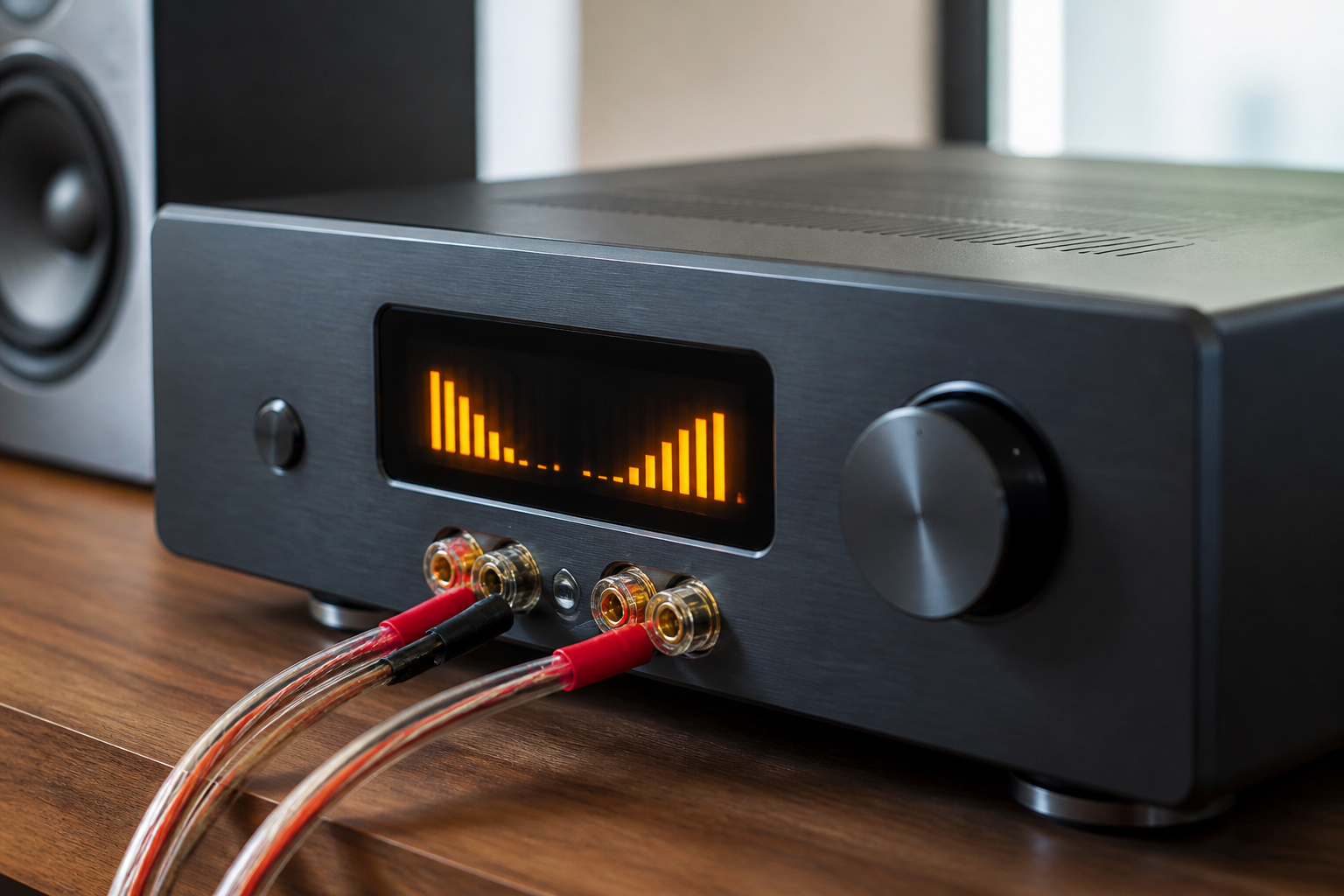
An amplifier gives speakers clean power. Underpowered amplifiers can distort at higher volume, and mismatched equipment can damage speakers.
Match the amplifier’s output and impedance to the speakers, or choose powered speakers where the manufacturer has done the matching for you. Read active vs passive speakers for the difference.
Recommended Products
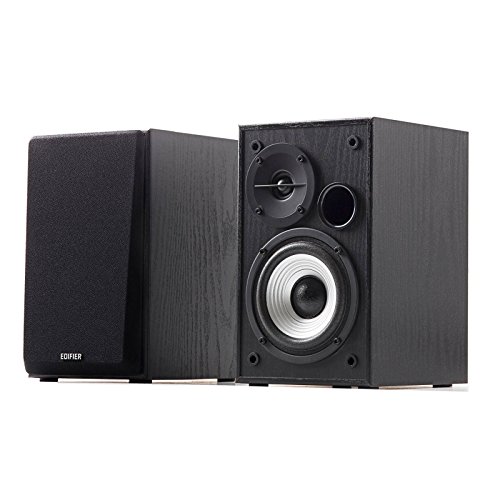
24 WATTS RMS POWER OUTPUT - Active bookshelf speaker system with 24W total power output with calibrated, flared bass reflex port in front.
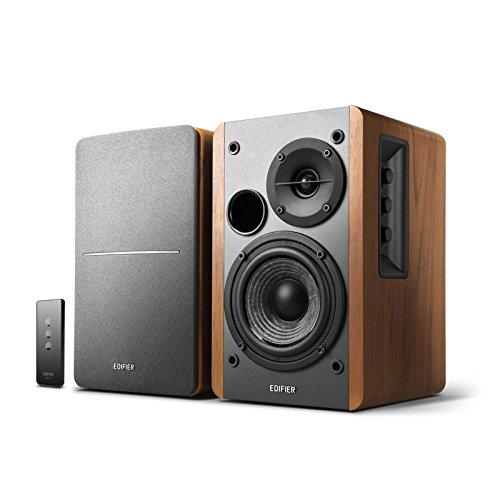
2 x AUX INPUT - Convenient connection to any device that has a 3.5mm headphone output or dual RCA output. Connect to two devices via AUX at the same time, no plugging and switching needed.

100W RMS HiFi Sound & 4" Aluminum Woofer: Built-in Class D amplifier with 50 Wx2 RMS clear power, combines a 4-inch Aluminum cone woofer and a 1-inch silk dome tweeter to deliver crisp, clear dialogue and full, vibrant sound. Place the LP42M along a wall or near a corner of the room for best results
Room Acoustics
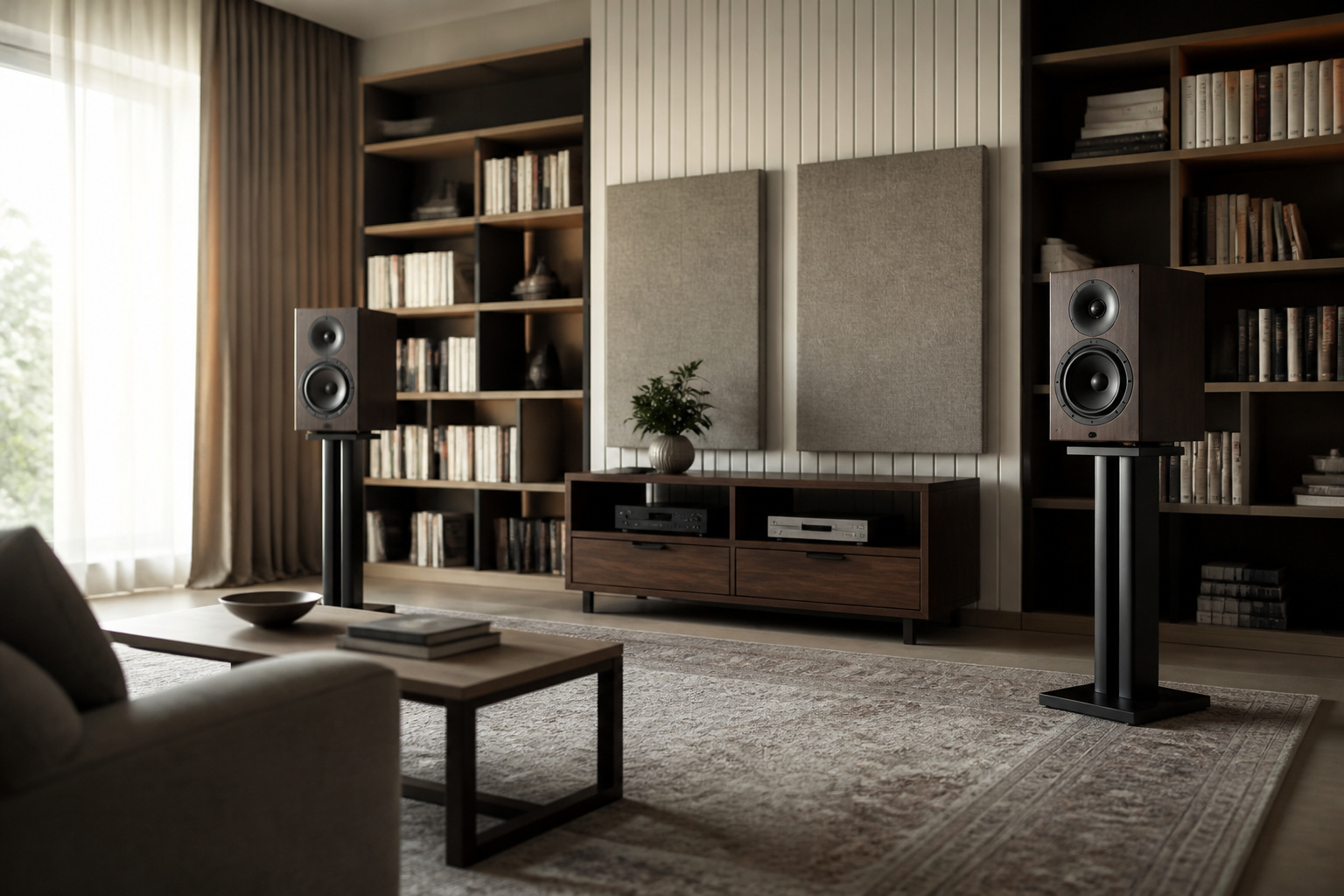
The room shapes sound as much as the gear. Hard walls and floors reflect sound and cause echo, while carpets, curtains, and furniture absorb it.
Keep speakers away from corners, aim them at your listening position, and sit at the center. Our guides on speaker placement, small rooms, and reducing echo cover practical fixes.
Recommended Products

Exceptional Sound Absorption:These pyramid acoustic panels are engineered to effectively absorb sound waves, reducing echo and reverberation. With a high NRC (Noise Reduction Coefficient), they create a quieter, more acoustically balanced environment, ideal for recording studios, home theaters, and offices.

Soundproofing - Acoustic foam panels triangular grooves structure for better noise absorption, helps to reduce and absorb unwanted echoes, waves, reverb and flutter echoes for better recording effect.

Unique Design: Our decorative acoustic panels feature a designer leaf textured line, effortlessly blending modern minimalism with organic nature. Immediately enhances the sense of art atmosphere by sticking it on the wall.
Cables and Connections
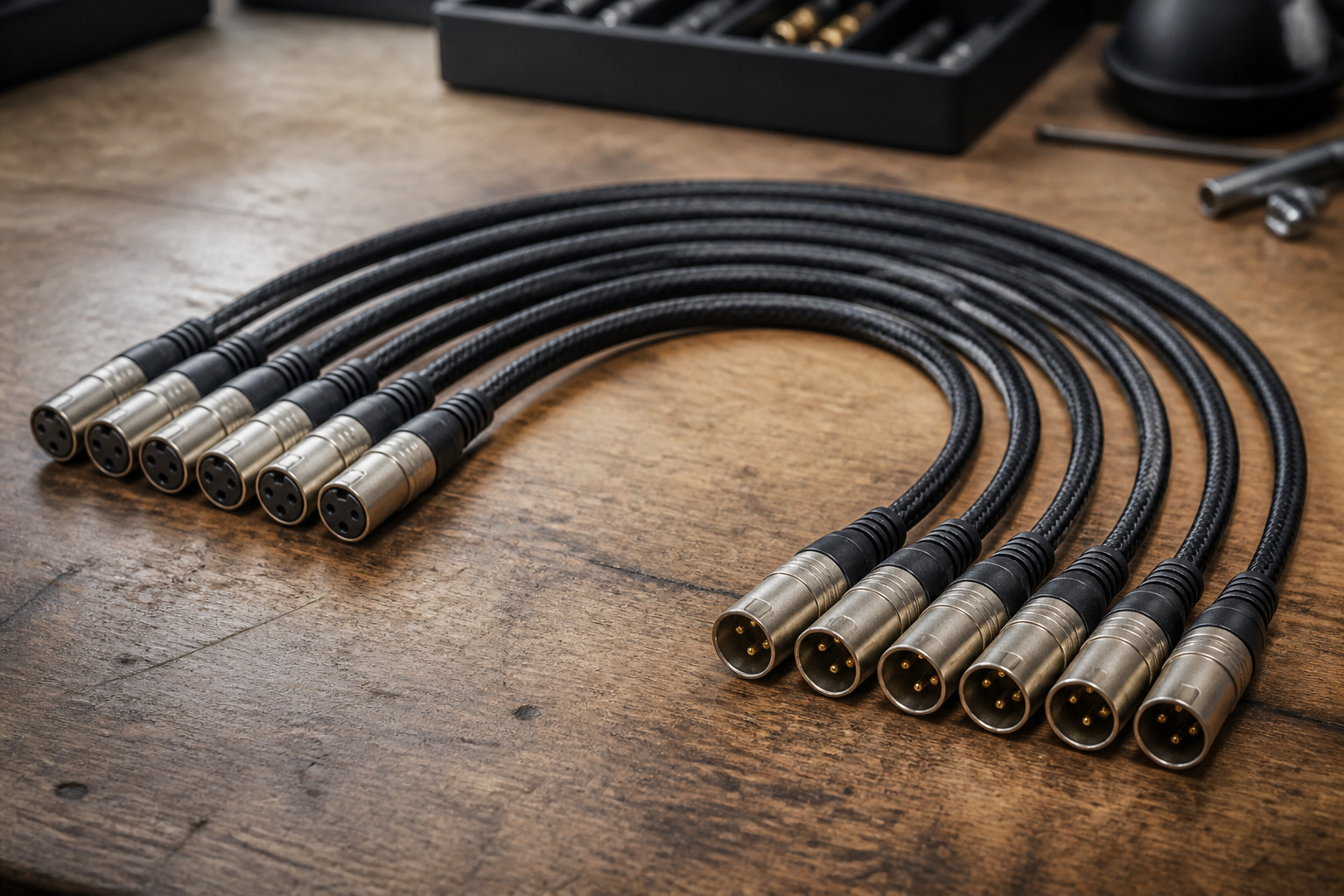
Cables only need to carry the signal cleanly. Use well-made, shielded cables of the right type and length, and keep power cords away from audio cables to avoid hum.
Gold plating and exotic designs do not make music sound better. A wired connection is more stable than wireless for fixed setups, and our guide on wired vs wireless audio explains the trade-offs.
Recommended Products

IN THE BOX: (1) 15 foot 2-Male to 2-Male RCA audio stereo subwoofer cable

* Low Noise Premium 2 channels RCA audio patch cable

Standard Audiophile Grade: This is a pair of 0.5m/1.64ft entry-level audiophile shielded RCA cables, which are constructed with 99.99% OFC cores and high-quality manufacturing, ensuring signal integrity with noticeable improvements in clarity, dynamic range, and noise reduction. Whether for beginner or mid-range systems, this shielded RCA phono cable is a reliable choice. NOTE: Choosing the right length is essential, add 20% extra length for routing flexibility. We offer custom length services
Listen Critically

Train your ears with familiar tracks. Listen for cymbals that shimmer instead of hiss, voices that sit clearly in the mix, and space between instruments. Change one thing at a time and compare.
To understand the numbers on spec sheets, read audio specs explained, and for a sensible order to improve a system, see upgrading your audio setup in stages.
Frequently Asked Questions
What Causes Audio Delay in Wireless Headphones?
Bluetooth has to compress, send, and decode audio, which takes time. Basic codecs add more delay than newer ones, and interference from other wireless devices can make it worse. Low-latency modes, headphones with a dedicated USB dongle, or a wired connection reduce it. See Bluetooth codecs explained.
Can Room Temperature Affect Sound Quality?
Technically, sound travels slightly faster in warmer air, but the effect in a normal room is far too small to hear. Room layout, furnishings, and speaker placement matter much more.
Do Expensive Cables Really Improve Audio?
Not in any way that careful listening tests have reliably shown. A well-made cable of the right type and length is enough. Spend on speakers, room treatment, and sources instead.
Why Does Audio Crackle at High Volumes?
Crackling usually means distortion from pushing an amplifier or speaker too hard, or a poor connection. Turn down the volume, check that cables are seated firmly, and clean dusty jacks. If it continues at normal volume, a speaker or cable may be damaged. See why speakers sound distorted.
Is There a Limit to Human Hearing Range?
Yes. Healthy young people can hear roughly 20 Hz to 20,000 Hz, and the upper limit drops with age and noise exposure. Protect your hearing by keeping volume moderate and taking breaks.