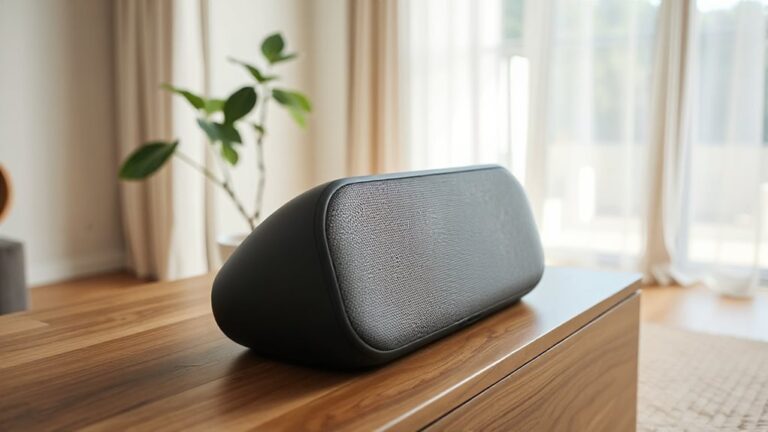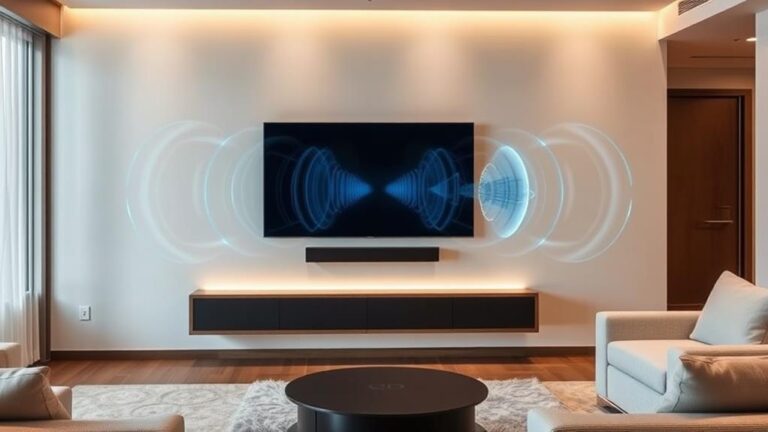
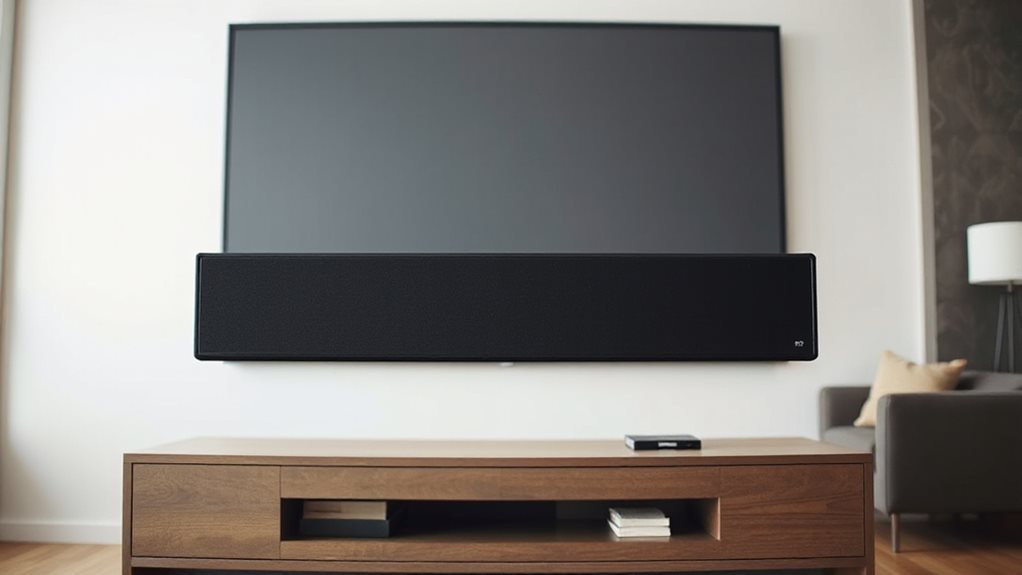
Sound is the heartbeat of your home theater, and the center channel is its voice. You need clear dialogue, rich tones, and a seamless blend with your speakers.
Models like the Polk Audio TL1 and Klipsch RP-500C II deliver punch and precision. Horn-loaded tweeters, Tractrix ports, and smart designs shape how sound fills your room.
Get it right, and every scene comes alive: voices sharp, music full, action real. Choose wrong, and the magic breaks. Your next move decides the experience.
Quick Overview
Top center channel speakers for 2026 deliver immersive sound with clear dialogue and balanced audio for movies and music. Dual woofers and dedicated tweeters enhance vocal clarity and high-frequency detail in immersive home theater setups.
Horn-loaded tweeters and Tractrix ports in models like Klipsch and RP-504C II improve sound projection and reduce distortion. Timbre-matched speakers from Polk and Klipsch ensure seamless audio blending across surround sound systems.
Slim, low-profile designs fit under TVs while maintaining acoustic performance and remote signal compatibility.
Factors to Consider When Choosing Center Channel Speakers
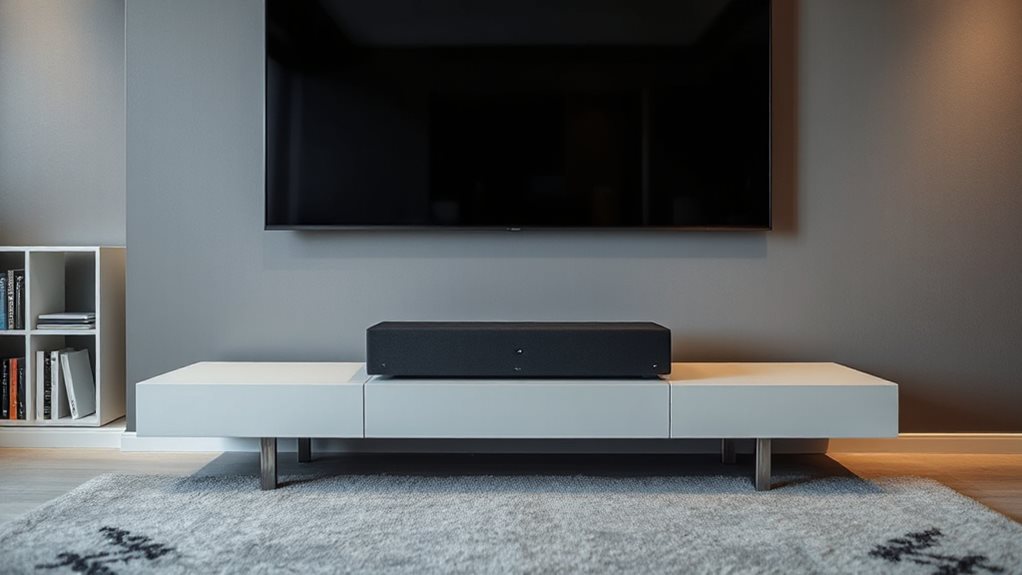
You want clear voices and tight sound, so check the driver configuration first. Two woofers and a tweeter often do the job best.
Place your speaker above or below the TV, but make sure its design fits your room and matches your other speakers for seamless sound. Whether it’s size, finish, or connection type, pick a center channel that works with your setup and stays flexible if you rearrange later.
Driver Configuration
When matching voices to your home theater, driver configuration shapes how clearly dialogue cuts through the mix. You’ll often see tweeters between 0.75 and 1 inch, usually silk dome for smooth highs. Larger 2.5 to 5.25-inch mid/woofers handle vocals and mid-bass with ease.
For richer, fuller dialogue, some center channels use dual woofers, boosting clarity without needing a sub. A 2-way design splits duties: tweeters shine on highs, while mid/woofers focus on speech. That separation keeps voices crisp.
Silk domes deliver soft, even highs; titanium or aluminum ones add punch and detail. More drivers mean better sensitivity—often 86 to over 90 dB—and stronger power handling, up to 200 watts. Size and layout affect sound spread, too. Choose wisely. Let your center channel speak clearly, naturally, right where it matters: front and center.
Sound Clarity
While every speaker in your setup plays a part, the center channel carries the weight of the story, every word, whisper, and shout. You need crisp, clear dialogue, and that starts with smart design.
Look for a dedicated tweeter, silk or titanium dome, because it lifts high notes with ease. Horn-loaded tweeters focus sound right at you, boosting clarity. Dual midrange drivers balance vocals, so voices sound natural, never muddy.
A well-built cabinet, with porting or passive radiators, cuts distortion and keeps sound tight. Fast response means every syllable lands cleanly. Aim for frequency response from 70Hz to 15kHz, it covers most human speech.
You’ll hear every emotion, every punchline, every tense pause. Clarity isn’t a luxury; it’s a necessity. Choose speakers that deliver every word as it matters, because it does.
Design Aesthetics
A slim, low-profile speaker slips under your TV as it belongs there, because it does. You want clean lines, no clutter. High-gloss finishes catch the light just right. Wood veneers warm up your space.
Textured surfaces hide fingerprints and look sharp. Curved cabinets don’t just sound better, they flow, like modern art in motion. Angled backs fit tight shelves. Magnetic grilles snap off fast, giving you a smooth front baffle or full coverage, your choice.
You value both look and performance. Compact sizes fit snug on stands. Wall mounts keep wires tidy and sound clear. Nothing blocks your remote sensor. Every detail serves a purpose.
Design isn’t just skin deep. It guides how sound moves and how your room feels. You see it, touch it, live with it. Great speakers blend in until they speak. Then, they stand out.
Placement Flexibility
Where does your speaker go when space fights back? You adapt. You choose a speaker that bends to your room, not the other way around.
Compact designs slide neatly under flat-panel TVs, no blocking sensors, no awkward gaps. Wall-mountable models free up shelf space and aim sound right at your ears.
Look for keyhole slots or brackets: they make hanging quick, solid, and secure. Some speakers stand tall, others lie flat. Dual orientation means one speaker pulls double duty: maybe center channel today, surround or bookshelf tomorrow.
Slender cabinets fit tight spots, shallow shelves, cramped corners. You want lightweight but tough, small but mighty. Flexibility isn’t a bonus—it’s the plan. You install once, get it right, and let the sound do the talking.
Smart design meets real life. You win.
System Compatibility
When your center channel doesn’t play well with others, the whole system falters, so match the impedance first. Aim for 4-ohm or 8-ohm, depending on your receiver. Mismatched impedance strains the amp. It’s risky. Keep it safe.
Match sensitivity too, say, 88dB or 90dB at 1W/1M, so all speakers sing at the same volume. No sudden jumps. Smooth. Check power handling. If your receiver pushes 100 watts, pick a center that can take it. Avoid crackling. Prevent damage.
Set crossover points close to your front speakers, maybe 80Hz, so tones blend. No harsh breaks. Choose timbre-matched speakers. Same voice. Same character. Dialogue stays clear. Music flows.
Everything locks in. Your system works as one. Balanced. Cohesive. Immersive.
Frequently Asked Questions
What Is the Ideal Placement for a Center Channel Speaker?
Place it centered, level with your ears, and aimed straight at you. Keep it close to your TV, aligned with the screen’s middle. Don’t hide it. Clear sound needs clear space.
Angle it slightly toward your listening spot. Avoid shelves, cabinets, or thick glass. Mount it, shelf it, or stand it. Just keep it stable.
Sound stays sharp, clear, and locked to the action when you position it right.
Can Center Channel Speakers Be Wall-Mounted?
Yes, you can wall-mount center channel speakers. Just make sure they’re level with your ears when you’re seated. Aim them straight at you, not tilted up or down.
Use sturdy brackets made for your model. Tighten all screws, safety first. Wall-mounting saves space and can improve sound clarity.
Bigger rooms? Wall placement helps project dialogue clearly. Keep cables tidy. You’ve got this.
Do Center Speakers Need a Separate Amplifier?
No, you don’t need a separate amplifier for your center speaker. Your AV receiver powers it directly. Just connect it with speaker wire.
Most center channels are passive, so they rely on your receiver’s built-in amp. Match impedance and sensitivity to avoid issues. If you go active, which is rare for center speakers, you would need power. But 99% of setups use the receiver.
Plug into the receiver. Simple. Clean. Ready to deliver clear dialogue and front-stage punch.
Are Wireless Center Channel Speakers Available?
Oh, sure, wireless center channel speakers exist, just like silent rock concerts. But skip the irony; you still need wires for power and stability.
Go ahead, buy wireless, then plug it in anyway. Connect your center speaker directly to the receiver. It anchors dialogue, so keep it wired, tight, and clear.
Let your subwoofer go wireless. Save the freedom for what truly works. Keep the center grounded. Trust the signal.
How Do I Calibrate My Center Channel Speaker?
You calibrate your center channel speaker using your AV receiver’s auto-setup. Grab the included mic. Place it at your main seat. Run Audyssey or YPAO. It measures volume, distance, and tone.
Then, tweak by ear. Match the speaker’s volume to others. Make sure dialogue sounds clear and natural. Adjust the angle, point it at your ears. Re-test with movie scenes. Fine-tune until voices feel real, like they’re on-screen, not beside it.