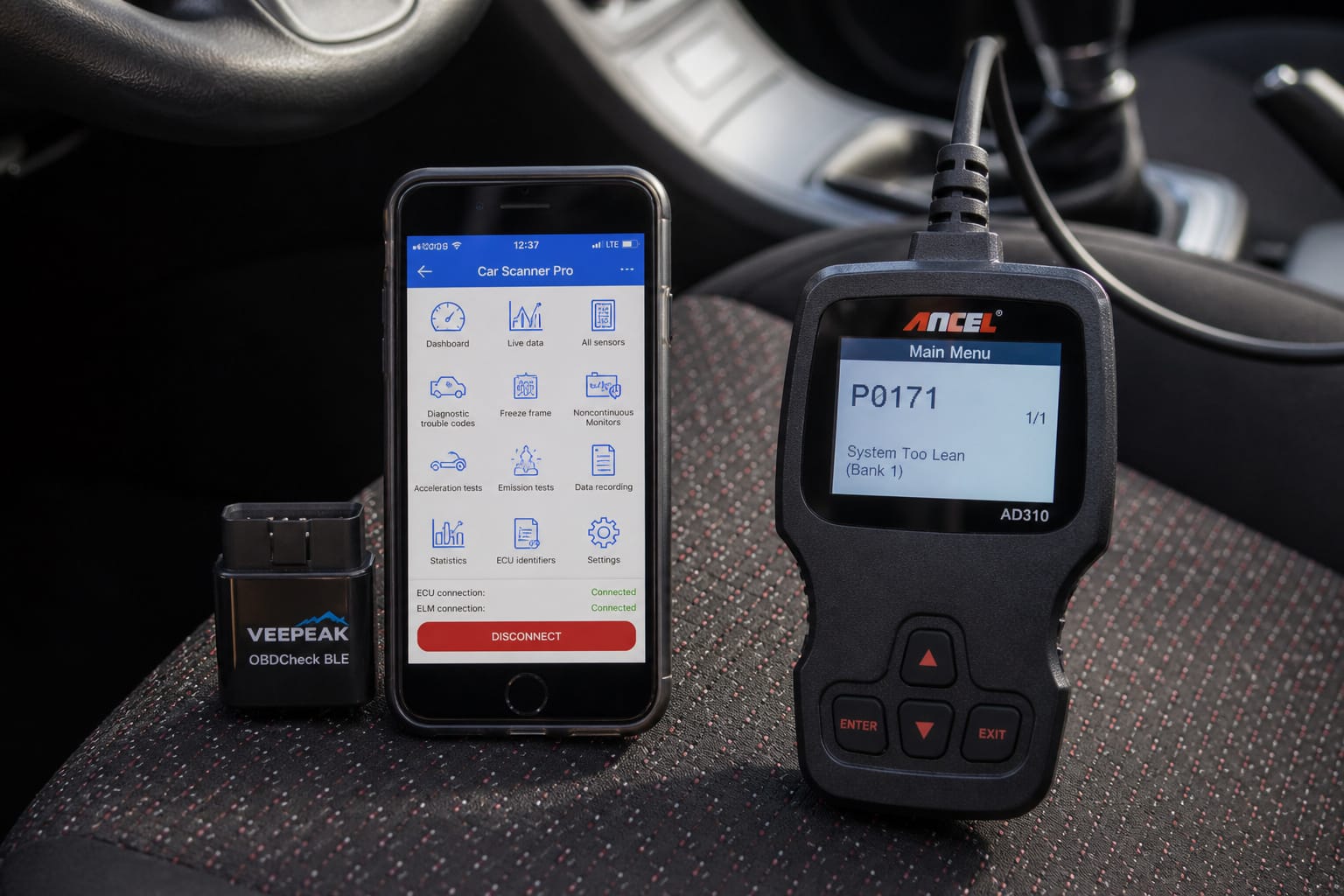
Something’s wrong with your car. You feel the engine shudder and see it in the glow of the check engine light. You’ve heard about OBD2 scanners, but now you’re stuck choosing between a Bluetooth model and a handheld one.
Both plug into the same port, usually under the dash near your knees. Both read trouble codes. But they work differently, and the one that fits you depends more on where and how you’ll use it than on which is “better.”
How Bluetooth Scanners Work
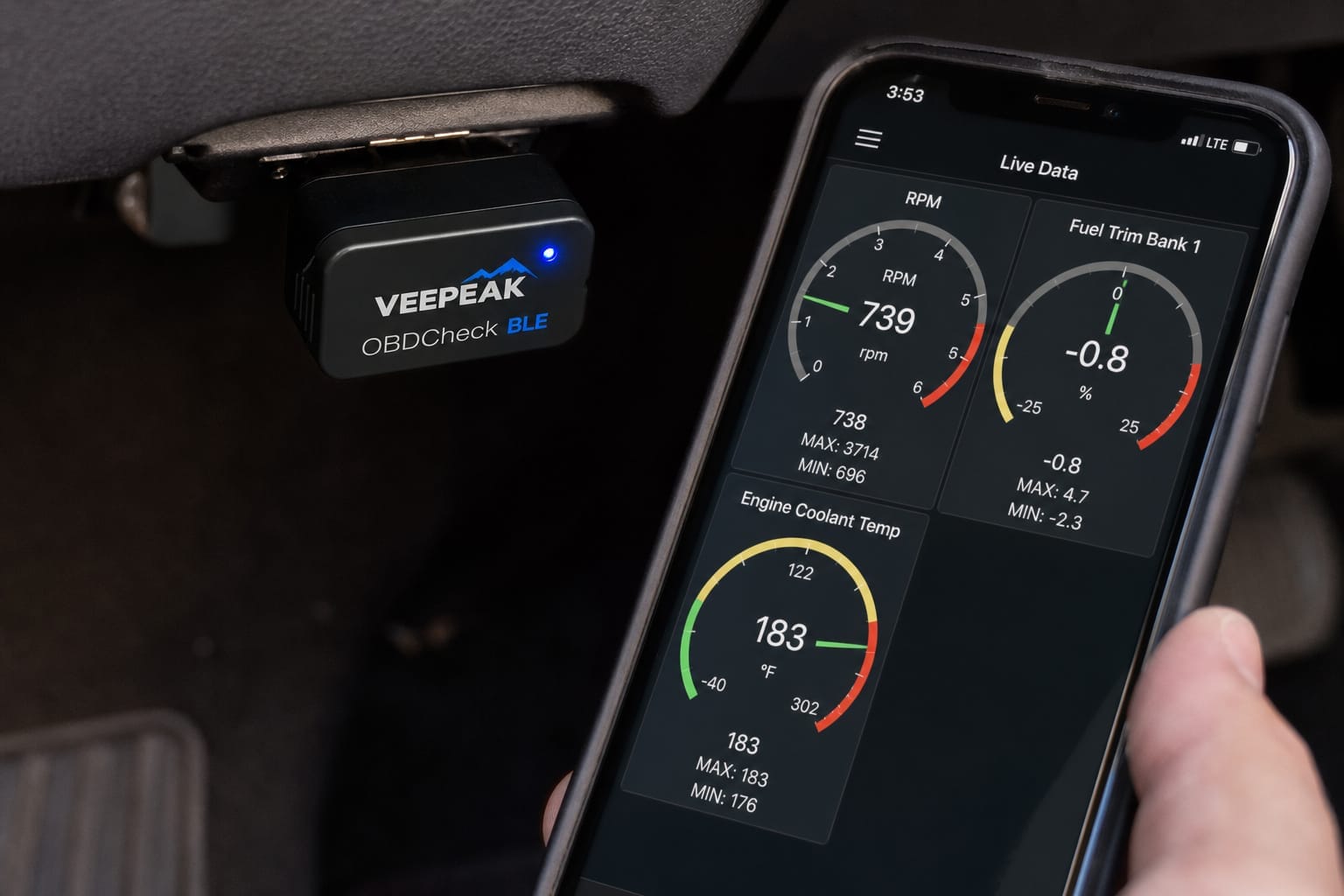
A Bluetooth scanner is a small dongle that plugs into the OBD2 port and talks wirelessly to your phone. You open a companion app, often Torque or OBD Fusion, and your phone becomes the display. Sensors feed live data: engine temperature, fuel trim, RPMs. You watch voltage climb and fall in graphs that update in real time.
It’s compact and cheap; most cost under fifty dollars, and you can leave it plugged in permanently since it draws very little power while the car is running. There’s no separate screen or buttons to learn, just a tiny dongle and whatever app you choose to pair it with.
The tradeoff is that it depends entirely on your phone. If the battery dies, the app crashes, or you’re in a dead zone with no signal, the scanner is just a plastic nub with nothing to show you.
Recommended Products

NOTE: It requires a compatible third-party app and is designed primarily for standard OBD-II diagnostics. It is not a full-system scanner. Advanced or vehicle-specific functions depend on your vehicle and the app. Please check compatible apps and supported functions before purchase.

Wide Compatibility: Enhanced Bluetooth OBD2 Scanner works on most of 1996 and Newer Cars which are OBDII Compliant Vehicles. Whether your vehicle is gas, diesel, new or old, our OBD2 reader will work with it. Compatible with BMW AUDI VW GM Chrysler Ford Honda Toyota Mazda Nissan & More. Please note: motorcycles, 24V diesel vehicles, new energy, hybrid and do not meet the OBDll agreement models are not supported.

【Read & Clear Check Engine Codes】This Bluetooth OBD2 scanner adapter helps read and clear standard OBD-II engine fault codes, check engine light codes, freeze frame data, and basic vehicle diagnostic information. A practical tool for quick home diagnostics, emissions readiness checks, and everyday vehicle monitoring.
How Handheld Scanners Work
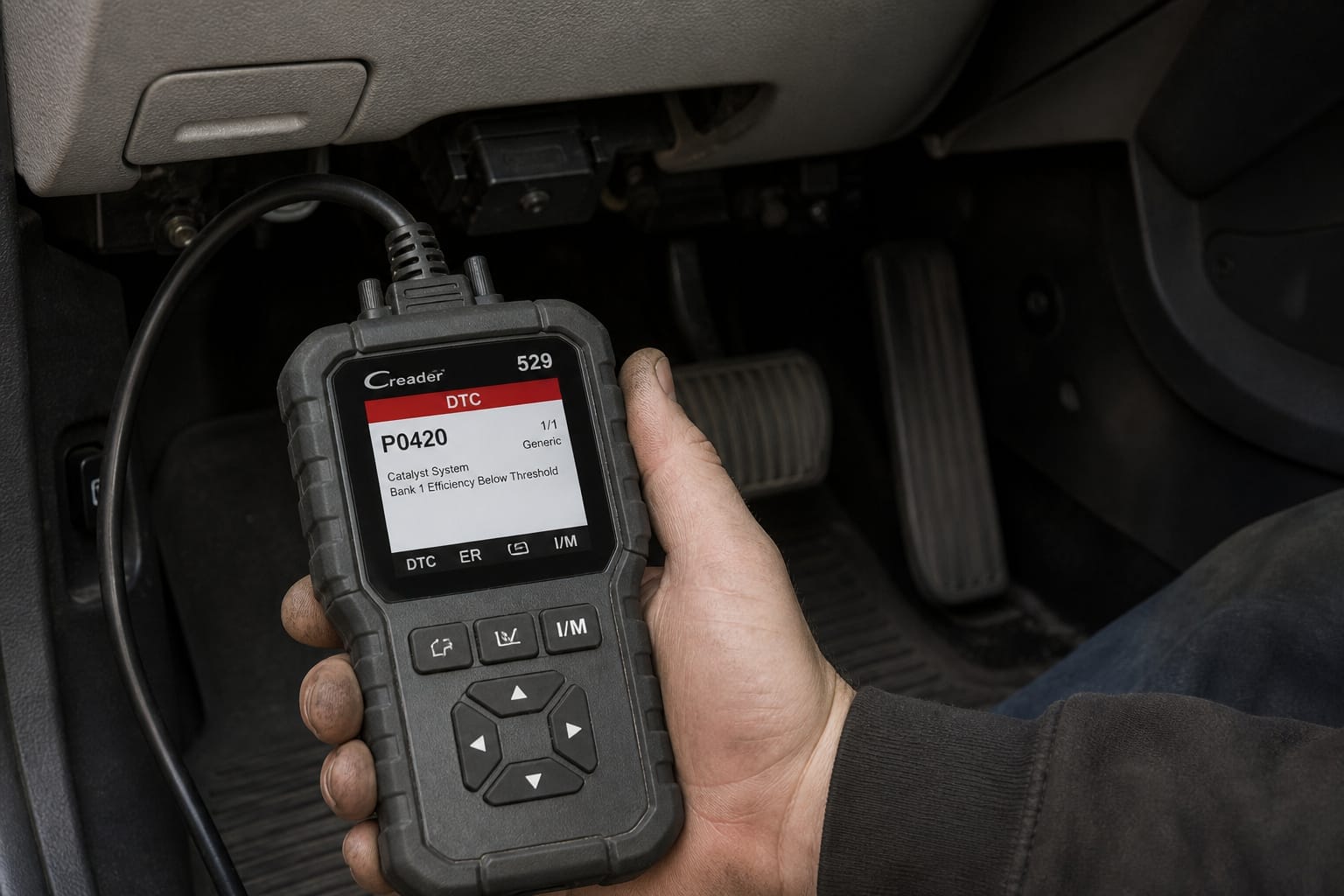
A handheld scanner is a self-contained unit with its own screen and buttons. You plug it in, power it on, and it works without a phone, an app, or a download. It reads codes and clears them on its own, and many mid-range models walk you through basic troubleshooting steps directly on the screen.
That independence matters most in the situations where a phone-dependent tool falls short: standing in the rain with a hot engine, working in a shop with no signal, or troubleshooting a trailer-towing rig far from cell coverage. Mechanics and serious DIYers tend to prefer handhelds for exactly this reason.
Recommended Products
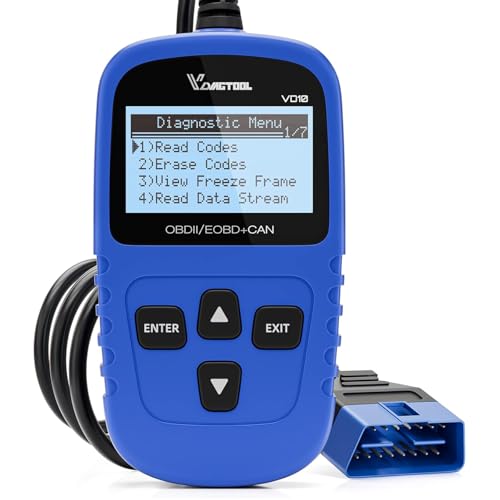
【A MUST-HAVE SCANNER TOOL FOR DIYERS】 - VDIAGTOOL VD10 car code reader is an incredibly useful, handheld obd2 scanner for each car owner or hobbyist, even for those with little to no experience when it comes to vehicle mechanics! Similar to a fixd car diagnostic tool, using this car diagnostic scanner is extremely easy. All you have to do is attach it to your car OBDII port and you can diagnose car problems in seconds! Read Codes (DTCs); Clear Codes; Live Data; View Freeze Frame; I/M Readiness; Vehicle Information.
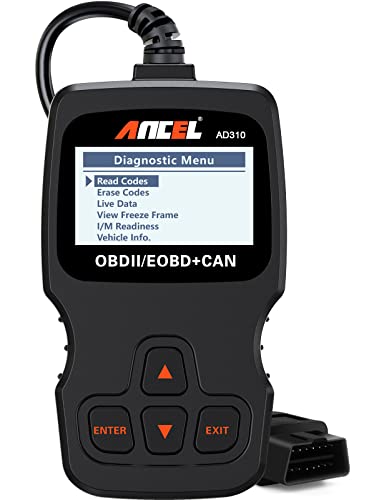
CEL Doctor: The ANCEL AD310 is one of the best-selling OBD II scanners on the market and is recommended by Scotty Kilmer, a YouTuber and auto mechanic. It can easily determine the cause of the check engine light coming on. After repairing the vehicle's problems, it can quickly read and clear diagnostic trouble codes of emission system, read live data & hard memory data, view freeze frame, I/M monitor readiness and collect vehicle information

【Diagnose Check Engine Light in Seconds – No Mechanic Needed】The FOXWELL NT301 OBD2 scanner instantly reads & clears engine fault codes (DTCs) with one click. Simply plug into the 16-pin DLC port, turn ignition on, and get accurate results within seconds—No prior car knowledge required. Save hundreds on dealership fees by knowing exactly what’s wrong before you visit a shop. The #1 choice car scanner for DIYers and car owners who want to take control of their vehicle’s health
Which One Fits Your Situation
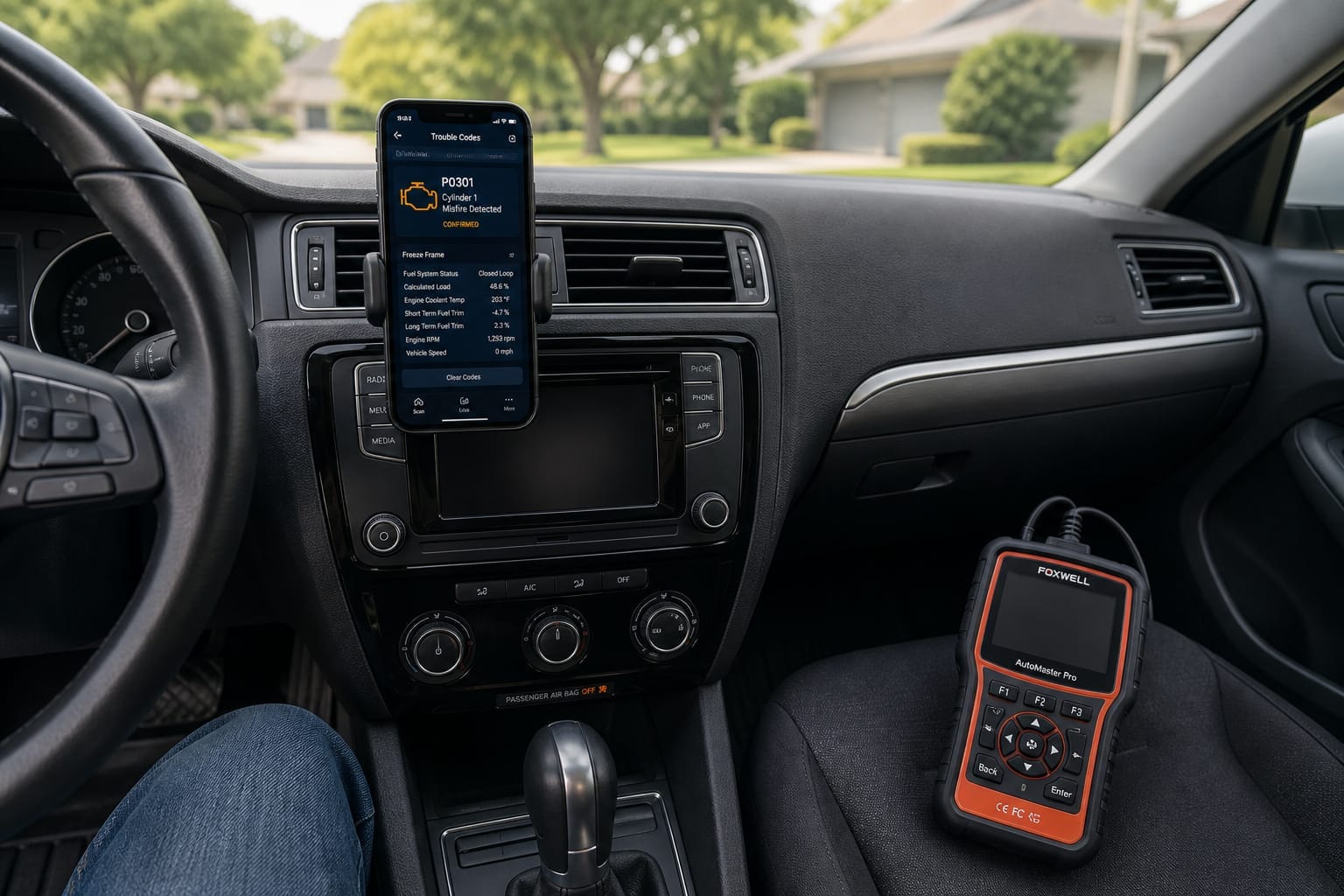
If you mostly want to keep an eye on a daily driver, catch a misfire before it damages a catalytic converter, or avoid overreacting to a loose gas cap, a Bluetooth scanner gives you more insight for less money. You can read what an OBD2 scanner can and can’t tell you to see what that live data is actually useful for.
If you work on cars regularly, travel to places without reliable signal, or just want a tool that works the same way every time without depending on your phone, a handheld is worth the extra cost. Either way, once you’ve got a code in hand, learning how to read what it actually means is the next step, and if the light is already on, it helps to know the most common reasons it turns on in the first place.
Recommended Products
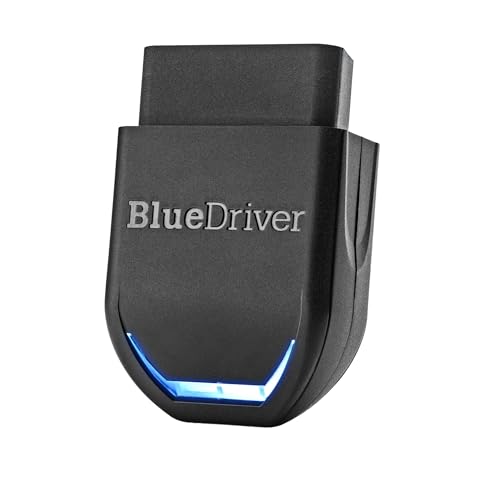
[Diagnose Like a Pro] BlueDriver Pro is a professional OBD2 scanner and diagnostic tool that helps you scan, understand, and clear vehicle trouble codes with confidence. Turn your phone into a powerful car diagnostic scanner—no guesswork, no unnecessary repairs.
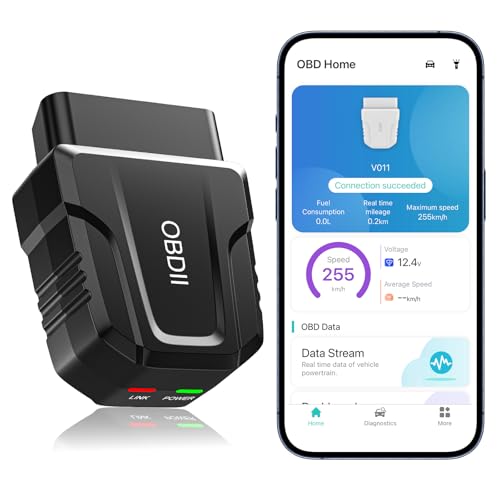
【Comprehensive Performance Testing】V011 OBD2 Scanner provides a complete diagnostic solution, giving you a thorough understanding of your vehicle's condition. It supports a variety of performance tests, support 9 protocols,👍automotive fault clearing,including fast reading of DTCs, access to electronic emission readiness, turning off CEL or MIL, resetting monitors, reading live data and retrieving the vehicle's VIN, freeze frame, sensor data, data streaming, diagnostic reports, onboard monitoring, live data streaming, and more. With these features, you can monitor your car's performance in real time and discover potential problems before they become major issues.

[Diagnose Like a Pro] BlueDriver Pro is a professional OBD2 scanner and diagnostic tool that helps you scan, understand, and clear vehicle trouble codes with confidence. Turn your phone into a powerful car diagnostic scanner—no guesswork, no unnecessary repairs.
Frequently Asked Questions
Can I Use These Scanners on Multiple Vehicles?
Yes. A Bluetooth scanner pairs with your phone, not with a specific car, so you can move it between vehicles as long as each one has an OBD2 port (standard on gas vehicles from 1996 onward). A handheld works the same way: unplug it from one car and plug it into the next.
Do I Need an Internet Connection to Use Them?
No. Reading codes and live sensor data happens locally between the scanner and your car’s computer, no internet required. You’d only need a connection afterward to look up what a specific code means if the app or scanner doesn’t already explain it in plain language.
Are There Subscription Fees for Scanner Software Updates?
Most consumer scanners don’t charge subscription fees. Firmware and app updates are typically free downloads from the manufacturer. It’s still worth checking a specific model’s update policy before buying, since a few professional-grade tools do charge for extended code databases or manufacturer-specific data.
Can Beginners Easily Understand the Diagnostic Codes?
Yes, for the most part. Most scanners and apps pair the raw code (like P0301) with a plain-language description such as “cylinder 1 misfire.” The code points you to a system, not necessarily the exact part, so some codes still require a bit of follow-up research or testing to pin down the actual cause.
Do Scanners Drain the Car Battery When Connected?
They can, if left plugged in with the engine off for an extended period. Most scanners draw very little current, but that draw adds up over hours or days. It’s good practice to unplug a scanner when you’re done with a diagnostic session rather than leaving it in permanently, especially on older batteries.