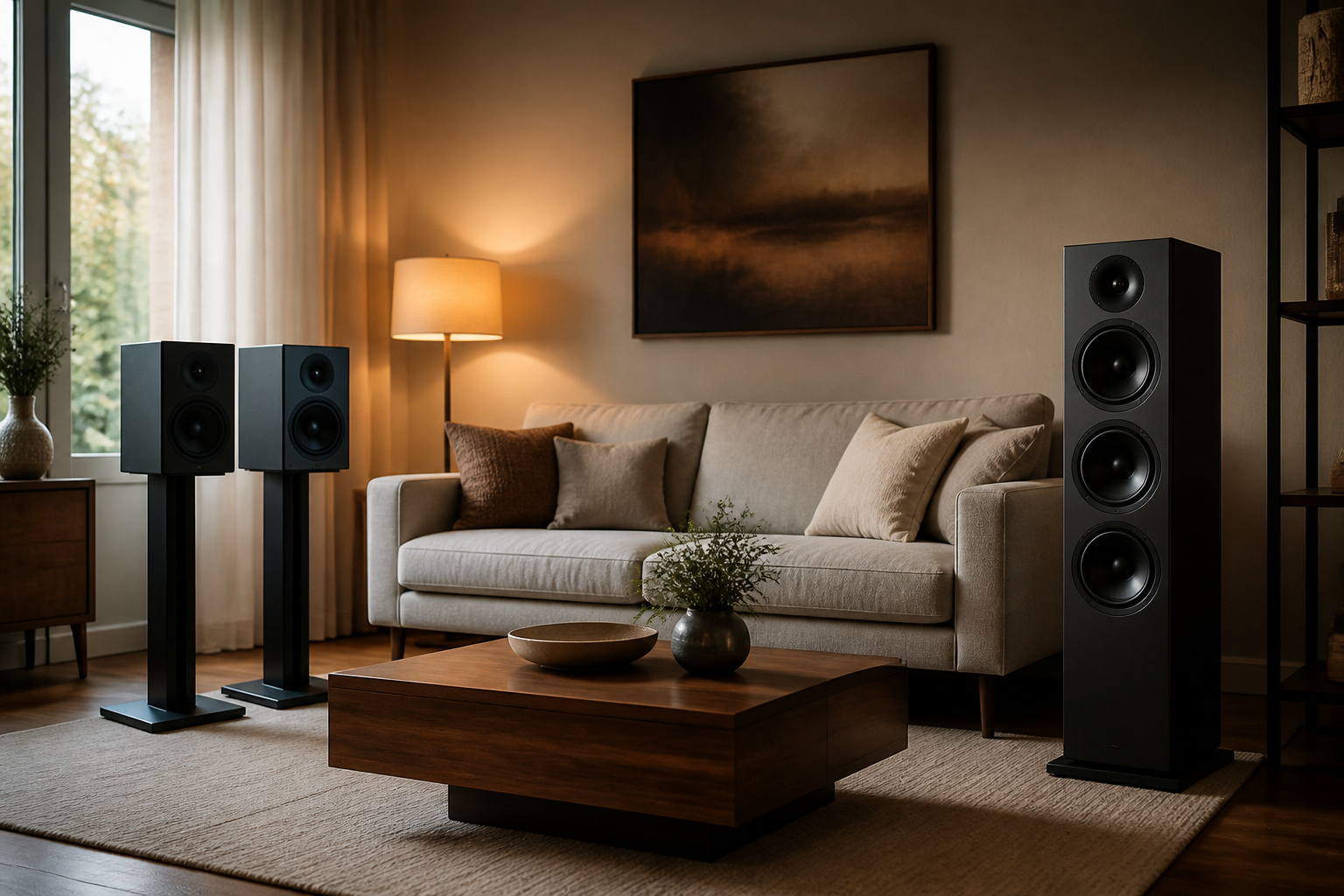
Bookshelf and floor-standing speakers can both sound excellent. The real differences are bass, room size, placement, and cost. This guide compares them so you can pick the type that suits your room, your music, and your budget.
Size and Bass
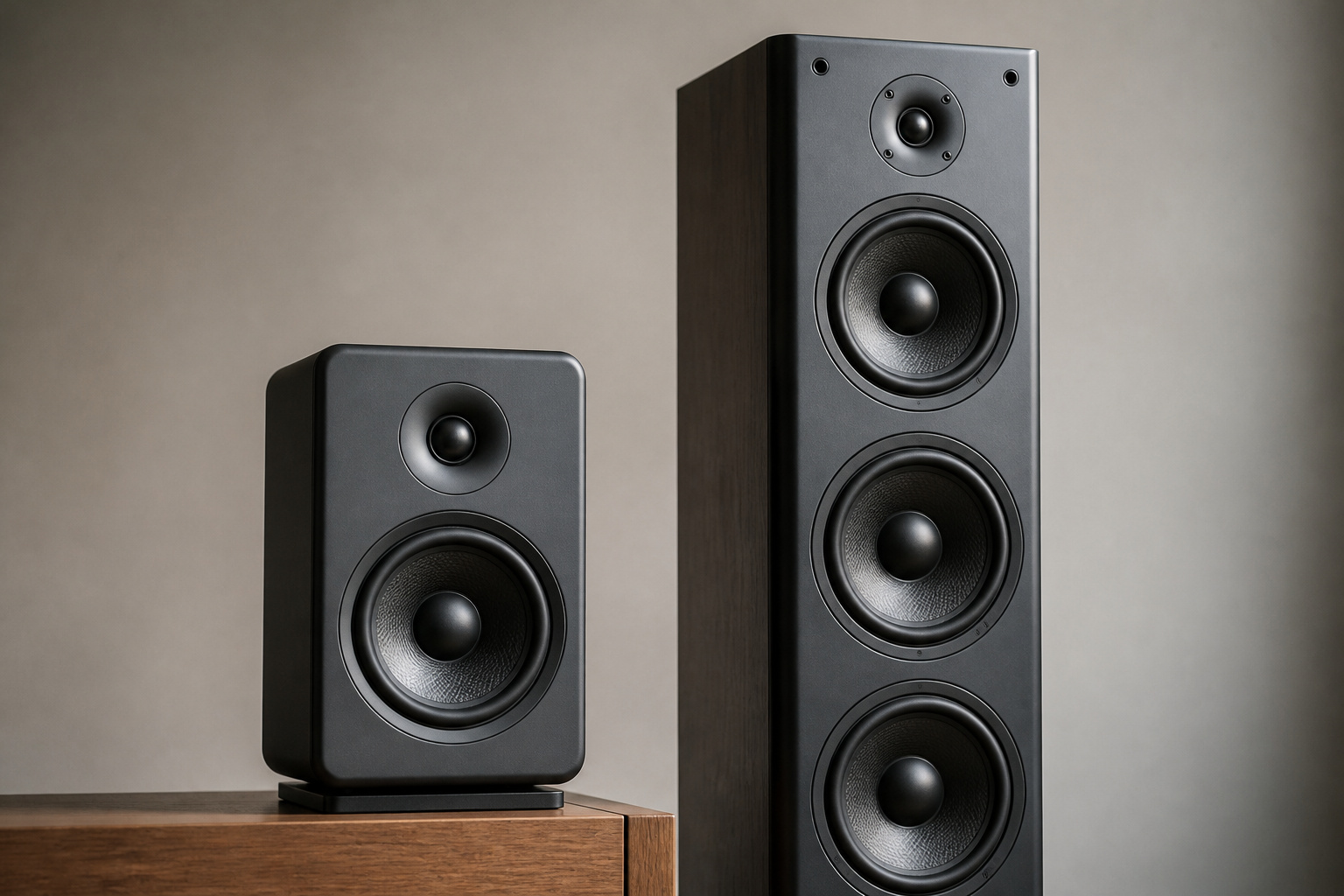
Bookshelf speakers are compact and light. Their small cabinets and drivers handle midrange and treble well, so vocals, acoustic guitar, and piano often sound clear and detailed.
The trade-off is bass. A small cabinet cannot move as much air, so kick drums and movie effects sound thinner and the lowest notes roll off.
Floor-standing speakers have tall cabinets that hold larger woofers, and sometimes several drivers. They reach lower, play louder with less strain, and fill a room with fuller sound.
Many people find floor-standers satisfying without a subwoofer, while bookshelf speakers usually benefit from one if you want deep bass. Our guide on whether you really need a subwoofer helps you decide.
Recommended Products
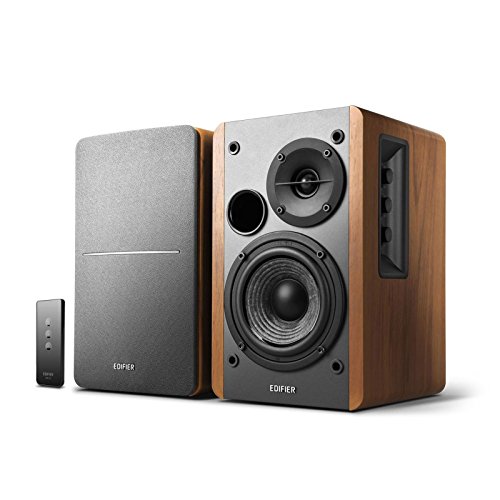
2 x AUX INPUT - Convenient connection to any device that has a 3.5mm headphone output or dual RCA output. Connect to two devices via AUX at the same time, no plugging and switching needed.

Bookshelf speakers (pair), compact bookshelf design for small spaces

[ Room-Filling 150w Audio ] : Experience high-quality sound with this 2.1 home theatre sound system. The powered speakers feature 3.5" aluminum cone mid-bass drivers and 1.5" titanium dome tweeters, delivering crystal-clear stereo sound for your TV, desk, or gaming setup.
Room Size
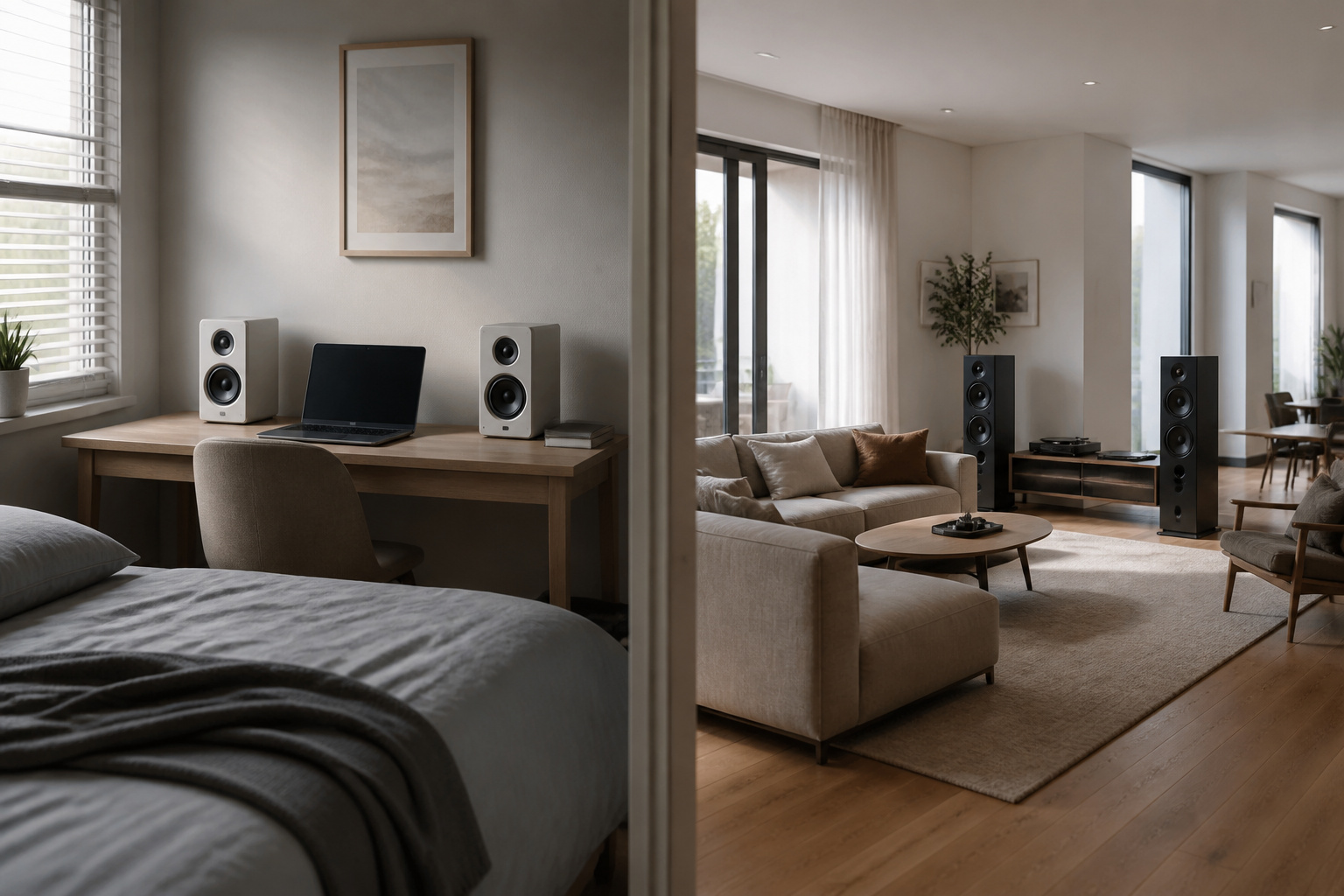
Match the speaker to the room. In a bedroom, office, or small living room, bookshelf speakers are usually the better fit, since large speakers can overwhelm a small space and make bass sound boomy.
In a large or open room, floor-standers can fill the space more easily and keep their sound clear at higher volumes.
Room shape and furnishings also matter, which is why our guides on improving sound in a small room and choosing an audio setup for your room are useful companions.
Amplification and Power
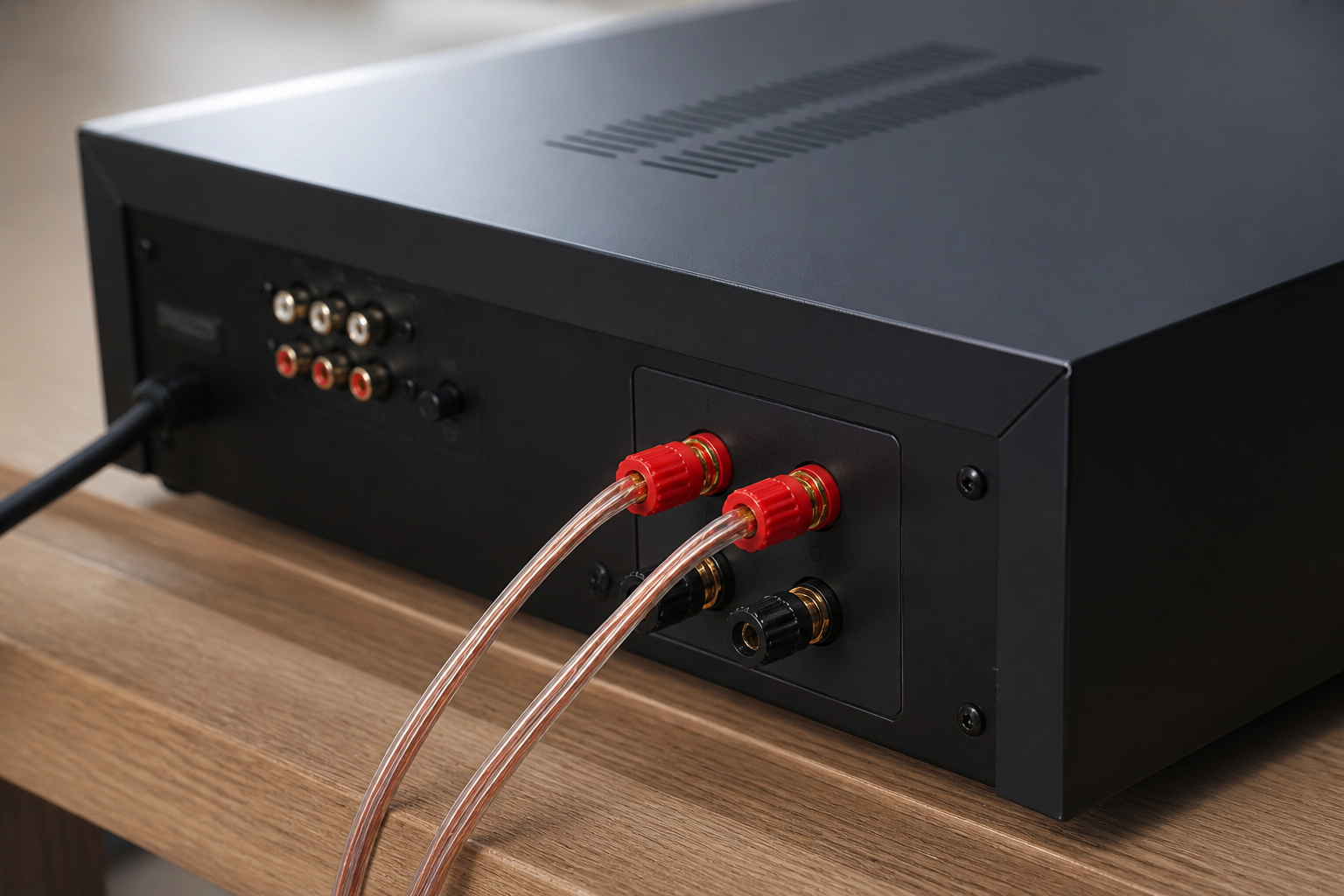
Most traditional bookshelf and floor-standing speakers are passive, which means they need an external amplifier or receiver. Larger floor-standers often need more power to perform their best, so check the speaker’s sensitivity and impedance against your amplifier.
Some bookshelf models are active, with built-in amplifiers, and only need power and a source. Our explainer on active vs passive speakers covers the difference in detail.
Recommended Products

WARM AND NATURAL SOUND - Immerse yourself in the full-bodied audio playback of these compact powered bookshelf speakers that produce well balanced sound

DIGITAL / ANALOG INPUTS – RCA/Aux for PC, turntables, etc; Optical/Coaxial for lossless connection; Bluetooth for convenience
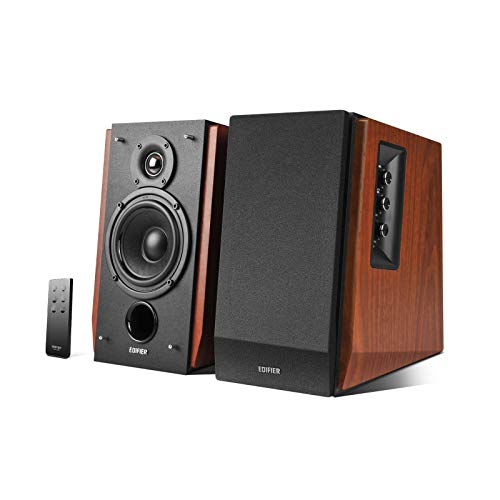
Built-in amplifier (33 watts x 2 speakers) so there is no need for outside amplifier or receiver—just plug into source and play
Budget
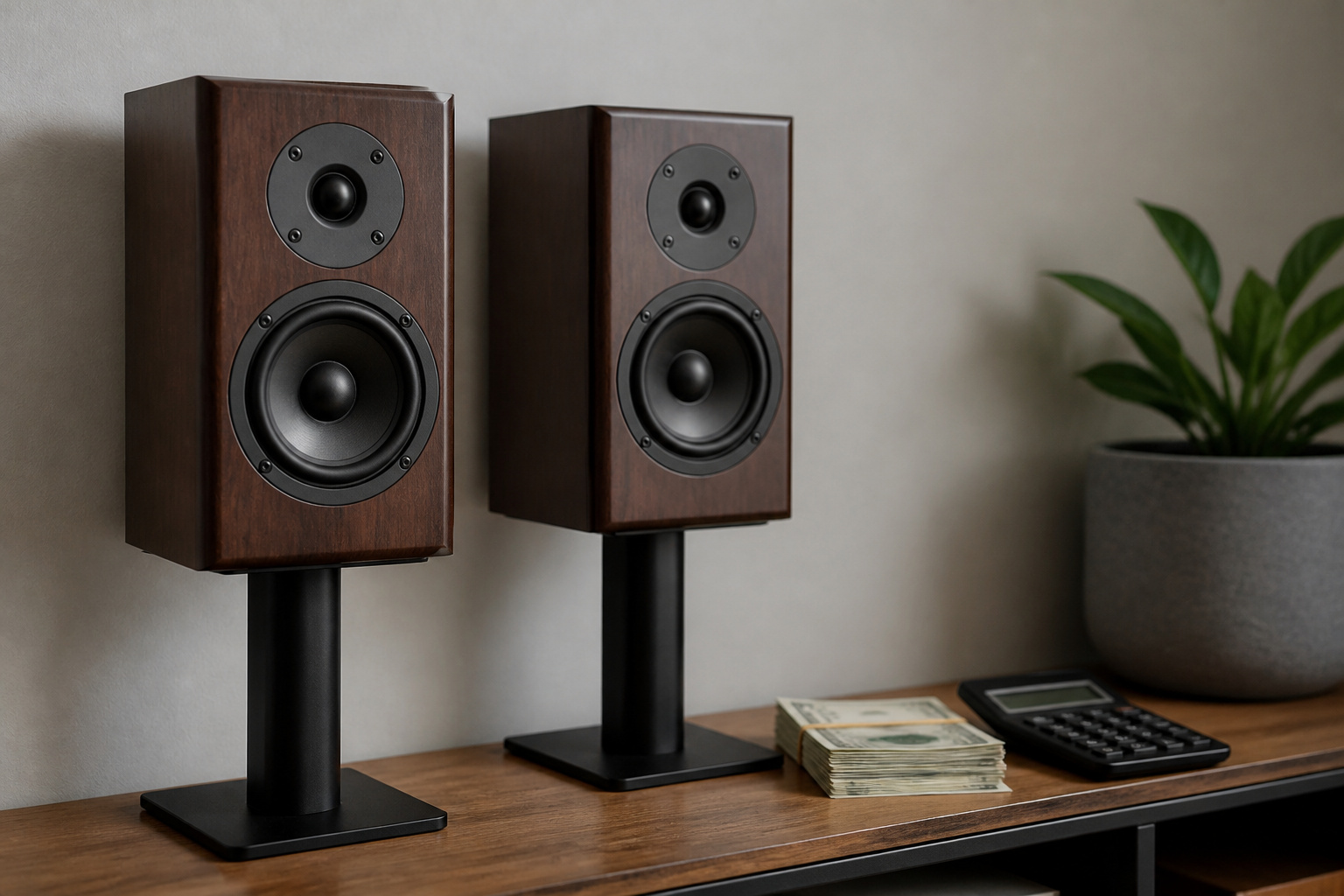
Bookshelf speakers usually cost less, and a good pair on proper stands often sounds better than a cheap floor-standing pair. Floor-standers cost more and may need a stronger amplifier, but they can also remove the need for a separate subwoofer.
If your budget is tight, put your money into a good pair of bookshelf speakers first and add a subwoofer later. See how to upgrade your audio setup in stages for a sensible order.
Recommended Products

Wide Compatibility: The PERLESMITH speaker stands feature an adjustable width of 4.5" to 9", making it compatible with most small bookshelf and satellite speakers up to 11 lbs. These speaker stands are compatible with Bose, Harman Kardon, Polk, JBL, Sony, and more. Please note: it is not suitable for round or irregularly shaped speakers.

Height Adjustable Speaker Stands:This speaker stands use the collar to adjust height from 30.0" to 39.1" to get your sound speakers the desired height and enjoy stereo or surround sound. Placing the bookshelf speakers stands on the appropriate height can also reduce reflections to give you a purer and more clear sound.
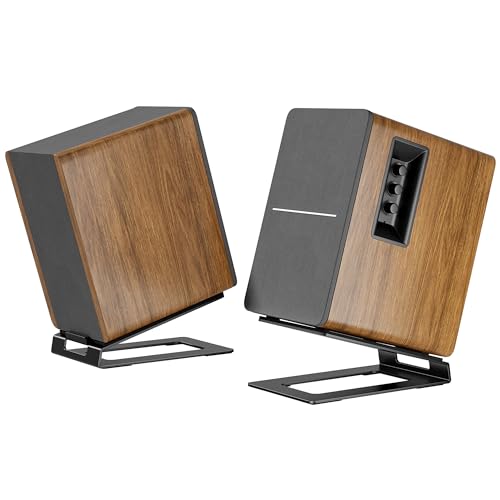
Wide Compatibility and Strong Metal Support - This desktop speaker stand features a sturdy metal base measuring 7.1" x 4.8", designed to fit most bookshelf speakers. With a weight capacity of up to 22 lbs, it provides reliable support and stability for a wide range of speaker models, making it an ideal choice for enhancing your audio setup.
Placement Tips
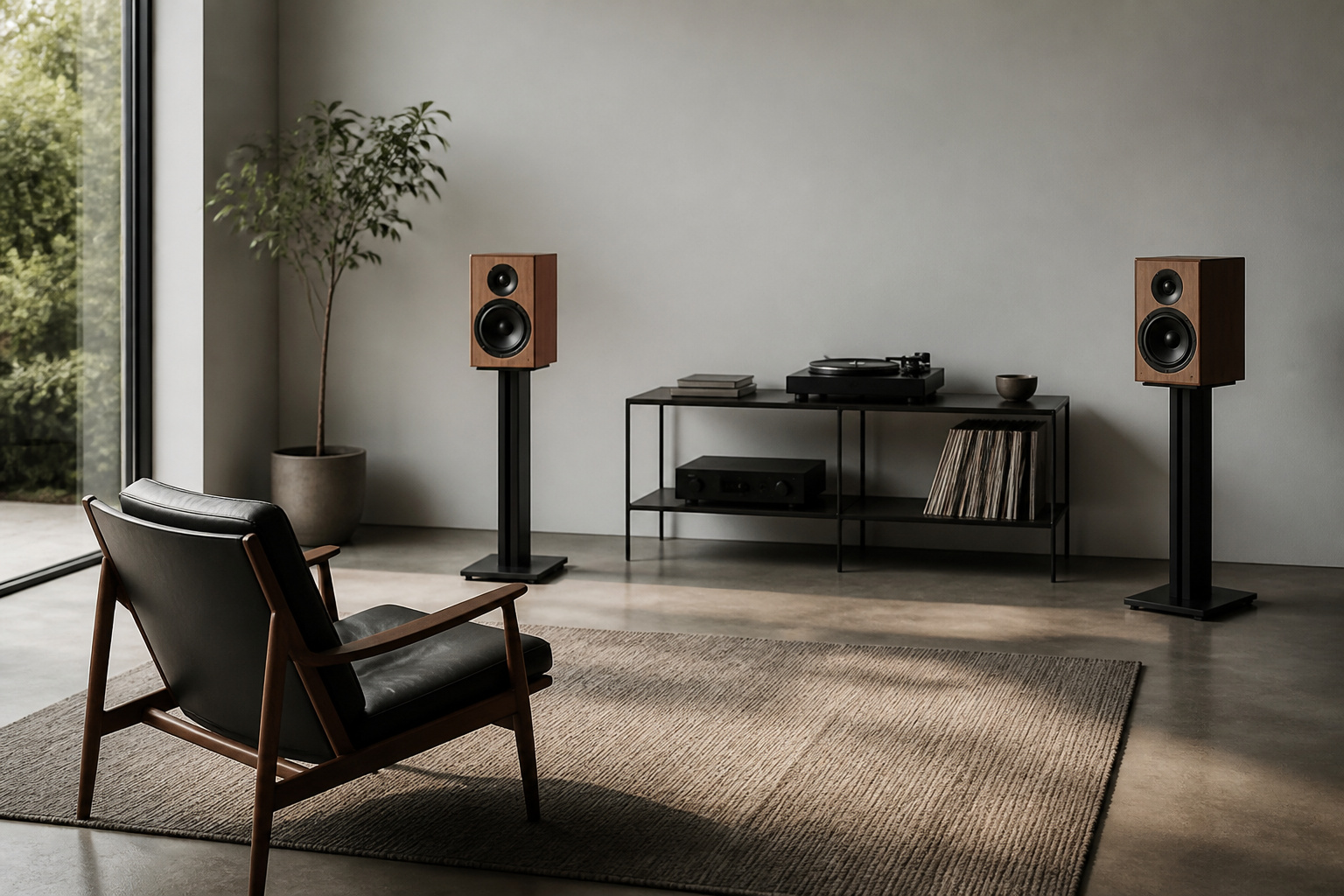
Bookshelf speakers sound best on stands at ear level and angled toward you, a little away from the wall. Floor-standers need space, often a foot or more from the back wall, and usually sound best angled slightly toward the listening position.
Both types work best when they form a rough triangle with your seat. Read best speaker placement for more detail.
Frequently Asked Questions
Can Bookshelf Speakers Work in a Large Room?
Yes, but with limits. Good bookshelf speakers can fill a large room at moderate volume, especially with a subwoofer for bass. They may strain at high volume in a very large space, and bass will be lighter than with floor-standers. Choose a model with good sensitivity and pair it with an amplifier that has enough power.
Do Floor-Standing Speakers Need a Subwoofer?
Not always. Many floor-standers produce satisfying bass on their own, especially for music. A subwoofer still helps for movies and electronic music, where deep effects and low notes matter more, and it can take the load off your main speakers.
Are Bookshelf Speakers Better for Music Than Movies?
They suit music well, especially vocals and acoustic instruments, thanks to their clear midrange. For movies, the lack of deep bass is more noticeable, so most people add a subwoofer. In a small room, a bookshelf pair with a subwoofer works well for both.
Can I Mix Bookshelf and Floor-Standing Speakers?
You can, especially in a surround system where the rear speakers can be smaller than the fronts. For the front left and right pair, use two matching speakers. Try to stay within the same brand or series so the tone matches, and use your receiver’s setup tools to balance volume levels.
Do Speaker Spikes Make a Difference?
Spikes can help floor-standing speakers stay stable on carpet by anchoring them to the floor beneath it, which reduces wobble and vibration. On hard floors, use spike pads or discs to protect the surface. The effect on sound is usually modest, and a stable speaker in the right position matters more.