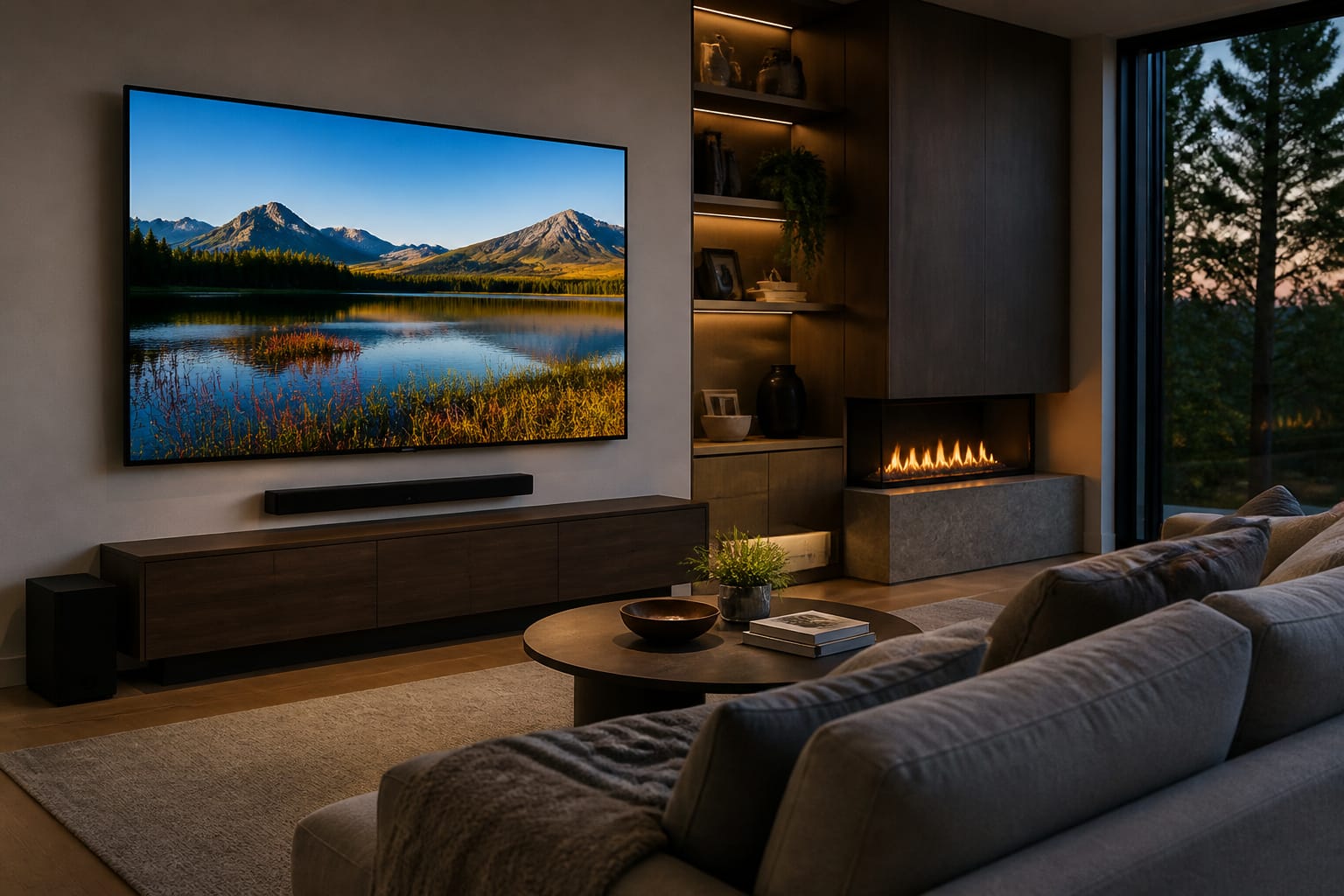
OLED, QLED, and LED are labels for how a TV makes light, not grades of picture quality. A well-made LED set can beat a cheap OLED in a bright room, and a QLED with a weak backlight can look gray next to either. Knowing what each label actually means makes shopping much easier.
This guide covers how each technology works, where each one wins, and which fits a dark room, a bright room, or a mix of both.
How LED and QLED TVs Make a Picture

An LED TV is an LCD panel lit from behind by LEDs. The liquid crystal layer blocks or passes light to form the image, but the backlight is always on. That is why black scenes on a basic LED TV look dark gray instead of truly black, especially in a dim room.
QLED is a marketing name for an LED TV with a quantum dot layer added. Samsung created the label, and brands such as TCL use it too. The quantum dots convert the backlight into purer red, green, and blue, which gives richer color at high brightness. The panel is still backlit, so black level depends mostly on local dimming, which means how many separate zones the backlight can dim independently.
Mini-LED is a backlight upgrade you will see on many QLED models. It uses far more, far smaller LEDs, which allows many more dimming zones. More zones mean less glow around bright objects on dark backgrounds and better contrast.
Recommended Products
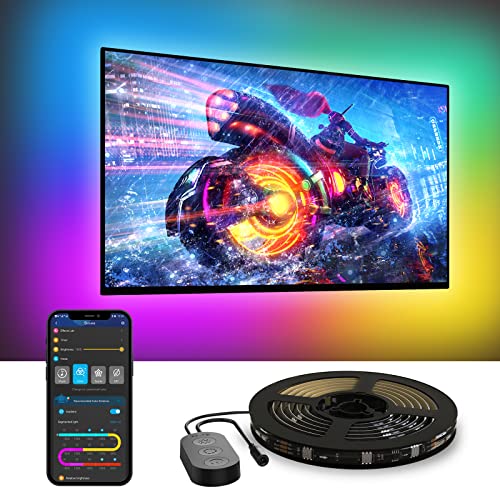
A Symphony of RGBIC Lighting: Govee RGBIC technology realizes the color segmentation display of the TV lights behind, creating more dynamic and gorgeous lighting effects. Experience more vibrant colors in your TV lights and upgrade your visuals.

Premium LED Lights for TV Enhancement: Elevate your viewing experience with this advanced TV LED Backlight, featuring vibrant 5V LED strips and a 3-button USB Bluetooth controller for seamless brightness, color, and mode adjustments.

Unique RGBIC Lighting Effects: Govee TV LED Backlight allows to customize each strip segment and display multiple colors at the same time. More vibrant colors in your TV backlight can upgrade your visuals and bring you a better viewing experience.
How OLED TVs Work
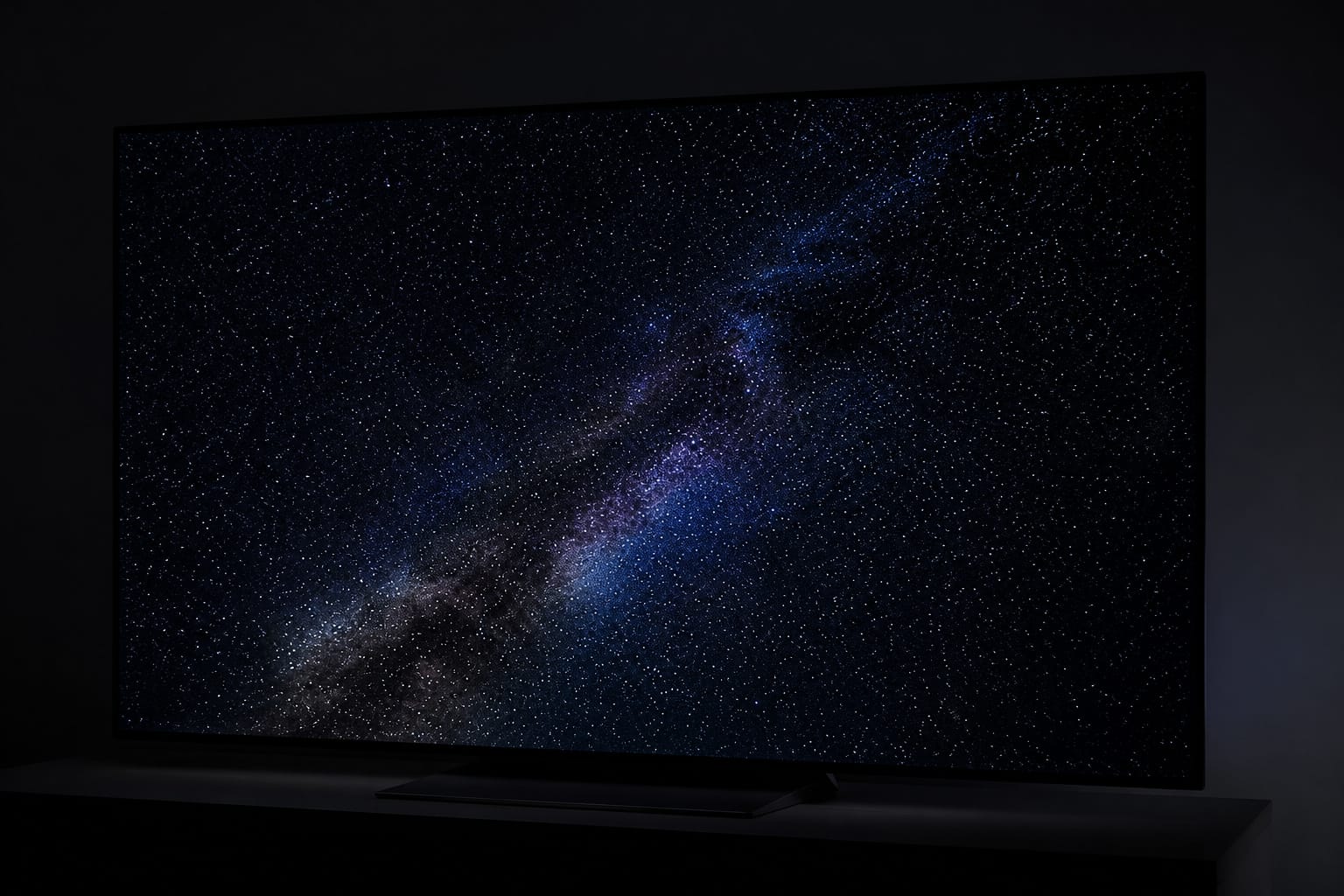
On an OLED, each pixel produces its own light. When a pixel needs to show black, it switches off completely. That gives OLED effectively perfect black, excellent contrast, and clean detail in dark scenes such as night skies or candlelit rooms.
OLED also has very fast pixel response, which keeps fast motion crisp, and it holds its picture well from off-angle seats. The trade-offs are lower peak brightness than the best mini-LED sets, a higher price at equal sizes, and a small risk of burn-in covered below.
Which Is Best for a Dark Room?

For movie nights with the lights down, OLED is the safest pick because black is truly black. A mini-LED set with a high number of dimming zones comes close and costs less at larger sizes. A basic LED set with no local dimming is the weakest choice for a dark room, since the backlight glow is easy to see.
Panel type matters on LCD sets. VA panels have stronger native contrast, while IPS panels have wider viewing angles but weaker blacks. If you sit directly in front of the screen, a VA panel is usually the better pick for dark-room viewing.
Recommended Products

OLED Technology: Celebrating 12 years of perfecting award-winning OLED TV technology

COMPATIBILITY - The TV Stands hold most 20" – 65" TVs and support weight up to 50kgs. Compatible with VESA from 75x75mmmm up to 800x500mm.

OLED HDR+ WITH GLARE FREE*: Experience incredible brightness and deep contrast. Advanced AI enhances details, while Glare Free technology eliminates distracting reflections.*
Which Is Best for a Bright Room?
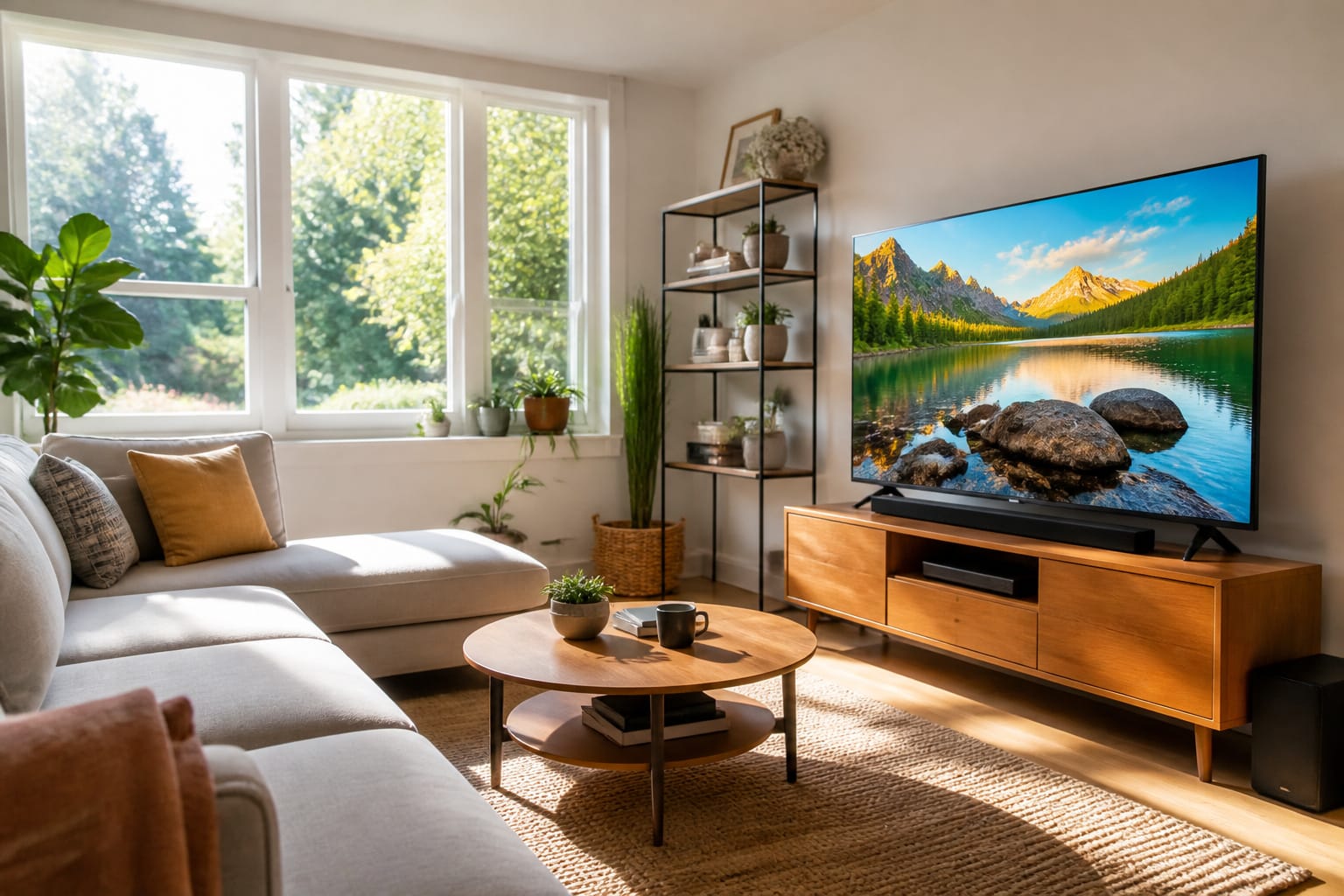
Bright rooms favor brightness and glare control. A QLED or mini-LED TV can push much more light than most OLEDs, helping the picture stay vivid against sunlit windows. Look for a TV with an anti-reflective or matte-style screen coating, and check the peak brightness spec rather than relying on the label.
OLED can still work in a bright room, particularly newer brighter models, but glossy panels reflect lamps and windows more noticeably. If your room is bright during the day and dark at night, a bright mini-LED set or a high-brightness OLED are both reasonable. Our guide to why a TV looks too dark covers the settings side of this.
Recommended Products
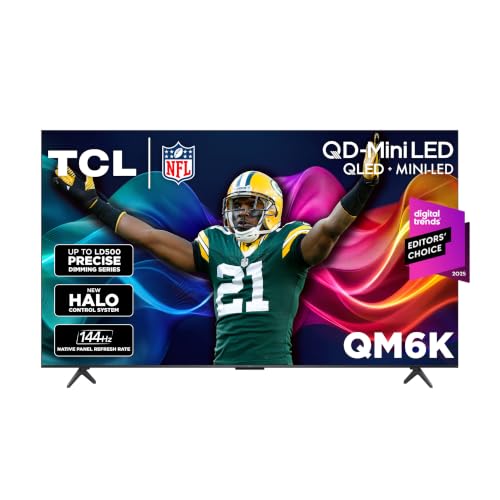
TCL QM6K QD-MINI LED TV SERIES - AFFORDABLE PREMIUM PERFORMANCE FOR SPORTS, GAMING & STREAMING. Experience superior contrast, rich color, and ultra-smooth motion with TCL’s QD-Mini LED technology. Designed to outperform traditional QLED and OLED TVs, the QM6K is the best TV for every moment—whether you're streaming, gaming, or watching the big game.

QD-Mini LED: This premium level of Mini LED TV, now with the New TCL Halo Control System, ensures a high-quality viewing experience.
TCL QM6K QD-MINI LED TV SERIES - AFFORDABLE PREMIUM PERFORMANCE FOR SPORTS, GAMING & STREAMING. Experience superior contrast, rich color, and ultra-smooth motion with TCL’s QD-Mini LED technology. Designed to outperform traditional QLED and OLED TVs, the QM6K is the best TV for every moment—whether you're streaming, gaming, or watching the big game.
Burn-In and Lifespan

Burn-in is permanent ghosting caused by uneven wear on OLED pixels. It is a real risk, but it mostly affects people who leave the same static image on screen for many hours every day, such as a news ticker, a channel logo, or a game HUD. Modern OLEDs use pixel shifting and periodic compensation to reduce the risk, and mixed viewing makes it very unlikely.
QLED and LED sets are LCD panels, so they do not suffer OLED-style burn-in. Temporary image retention can happen but usually fades. For overall durability across all types, see how long modern TVs last.
Recommended Products
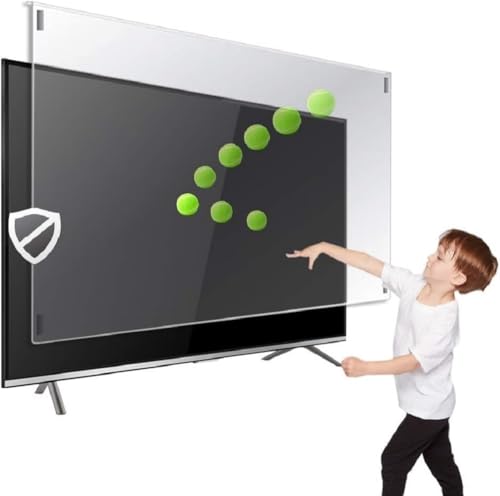
Prevents damage, scratches, fingerprints. Heavy Duty. Must have for Families with Children and Nintendo Wii owners

TV SCREEN PROTECTOR - Your TV needs to be protected when you want to move it or when the home is being renovated. This Foam Flat Screen TV Cover can provide protection for your TV.

Primary RGB Tandem with ThermalFlow: The new OLED panel with Aaerodynamic ThermaFlow Cooling System significantly Increases brightness and color gamut, delivering stunning brilliant visuals.
How to Choose
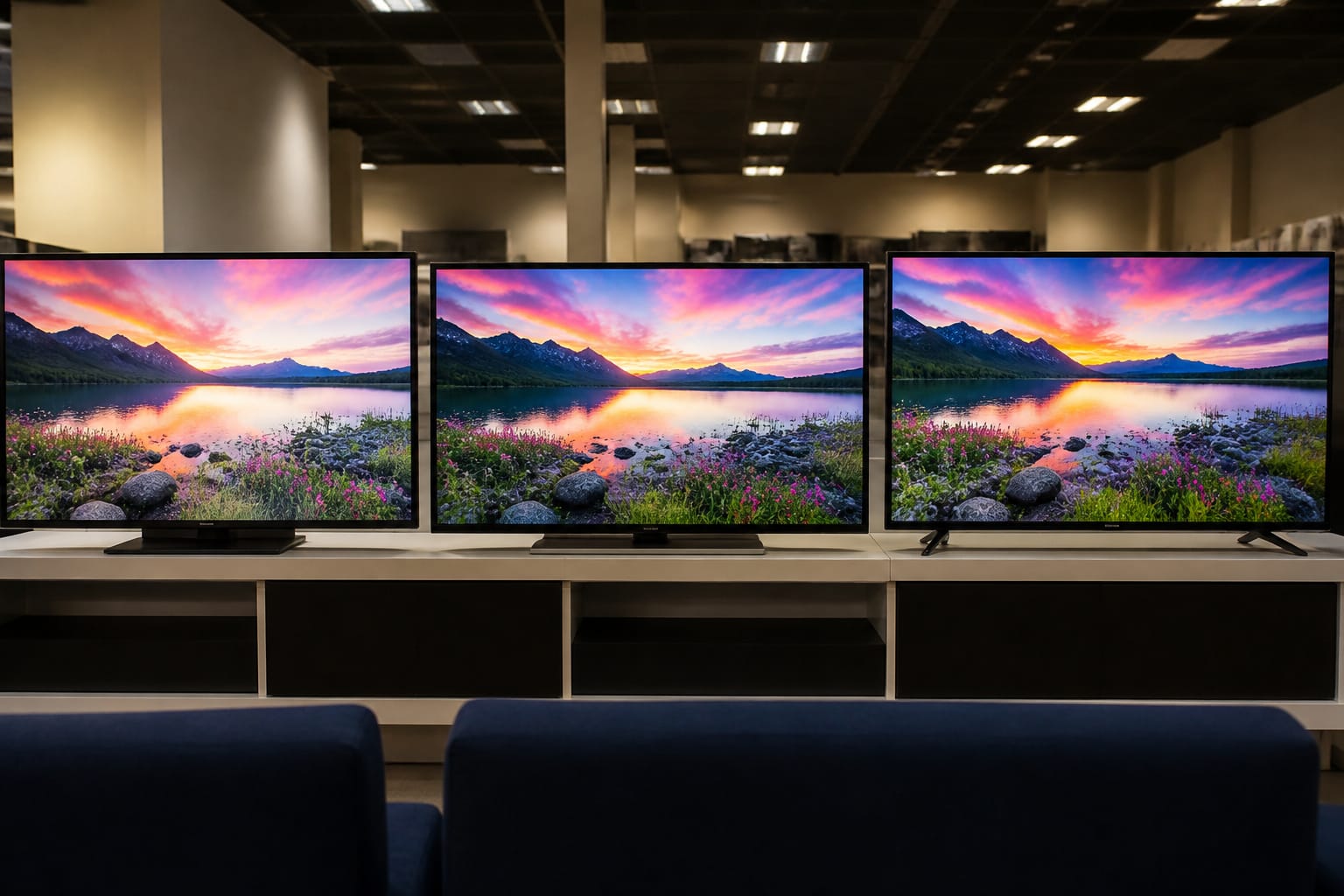
Pick OLED if you watch mostly in a dim room and want the best contrast. Pick a QLED or mini-LED set if your room is bright, you want a big screen at a lower price, or you leave the TV on for long stretches.
Pick a basic LED set when budget matters most; our look at whether cheap TVs are worth it explains what you give up. Once you know the panel type, size and refresh rate are the next decisions: see what TV size to buy and 60Hz vs 120Hz.
Frequently Asked Questions
Is QLED the same as OLED?
No. QLED is an LCD TV with a quantum dot layer and a backlight. OLED has no backlight because each pixel makes its own light. The names are similar, but the technology and picture characteristics are different.
Do QLED TVs get burn-in?
Not in the permanent OLED sense. QLED sets use a backlit LCD panel, so heavy static content does not wear individual pixels the same way. Temporary image retention is possible but generally fades.
Are LED TVs good for gaming?
Yes, many are. For gaming, look at input lag, a 120Hz panel, HDMI 2.1 support, and variable refresh rate rather than the panel label. Our TV settings guide covers game mode.
Which TV type uses less power?
It depends on what you watch. OLED can draw less power on dark content because black pixels are off, but it draws more on bright content. LED and QLED power use is driven mostly by backlight brightness, so lowering that setting saves the most energy.
Can a damaged OLED screen be repaired?
A cracked panel usually means a full panel replacement, which often costs close to a new TV. Power boards, cables, or port problems are cheaper to fix. Dead pixels and burn-in are generally not repairable.