Sound fills your car, wraps around you, moves through you. You want it crisp, clear, powerful.
But first, you need the right size speaker, and that starts with knowing what fits your car.
Measure Your Old Speaker First
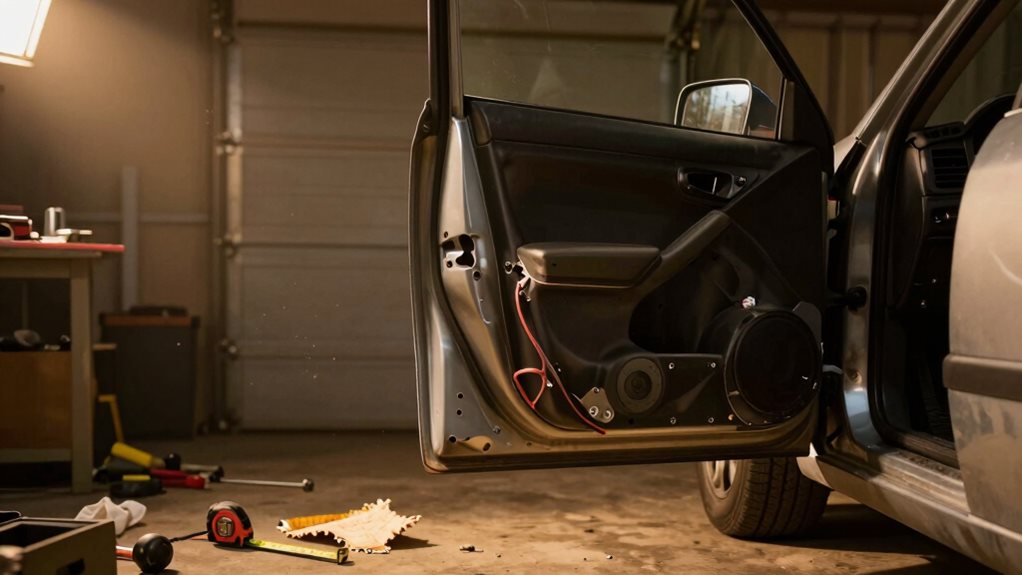
You can’t just grab any speaker and hope it works. You’ve got to measure, check, and match. Pull the old speaker out, remove the grille or panel, unscrew the speaker, and gently disconnect the wires. Now you’ve got it in your hands.
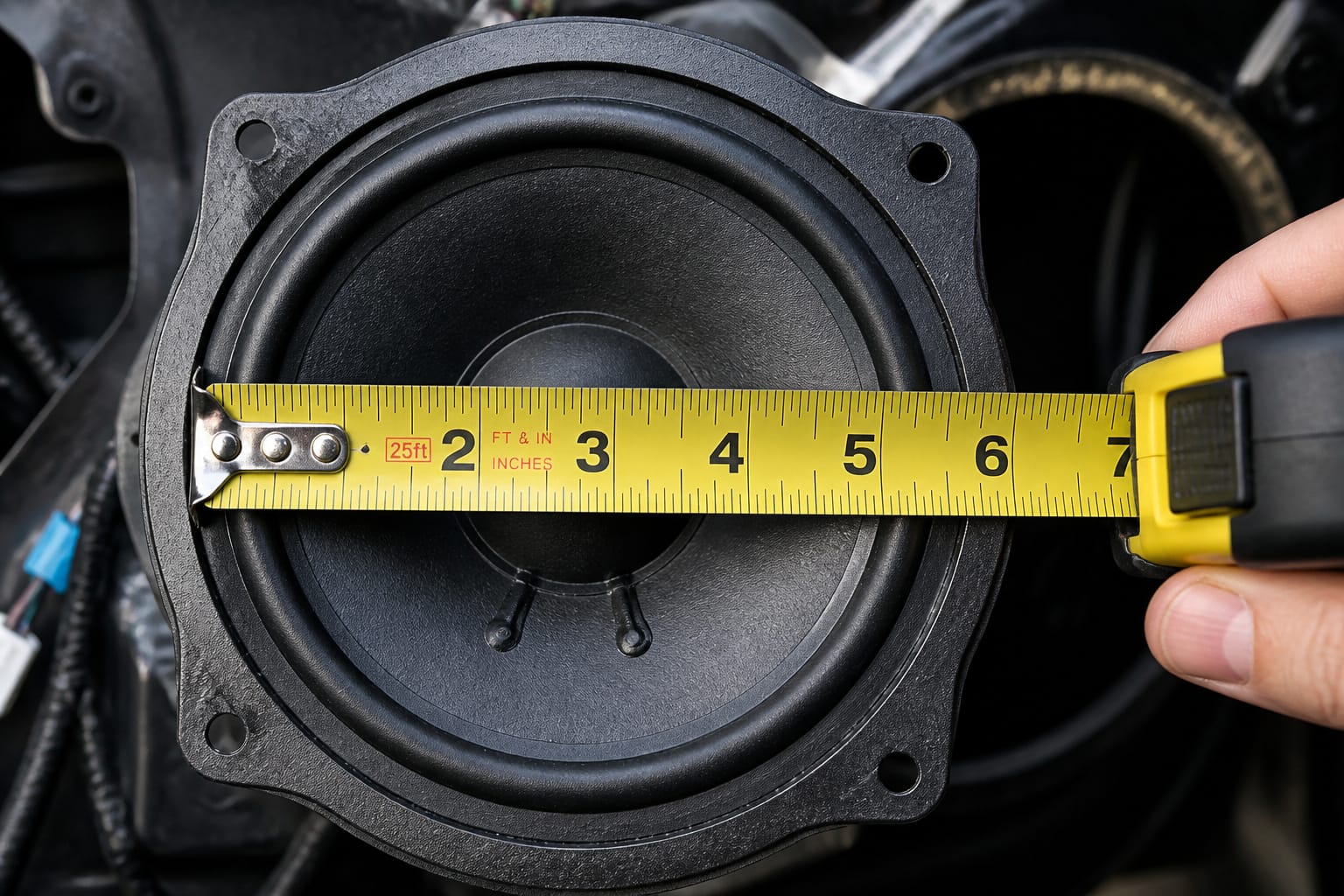
Look at the mounting diameter, the widest part of the metal frame. That’s your starting point. Most car speakers come in standard sizes: 3.5 inch, 4×6 inch, 5.25 inch, 6×8 inch, 6.5 inch, or 6×9 inch. These numbers aren’t random; they tell you exactly what space the speaker needs.
Grab a tape measure and measure from screw hole to screw hole across the widest part. If it’s about 5 inches, you’re likely looking at a 5.25-inch speaker. If it’s closer to 6.5, that’s your size. You might also run into odd sizes like oval 4×10-inch speakers, less common now, but replacements exist. Just match the shape and dimensions exactly.
Don’t stop at diameter, though; check the depth too. Some speakers are deep, others shallow, and your door or dashboard might not have room for a bulky one. Hold the speaker up to the opening. Does it fit without pressing against wires or metal? If not, you’ll need a shallower model or a mounting ring.
Recommended Products

Product Name: Car Speaker Gasket-4 Inch

Seamless Integration for GM Vehicles - Scosche SAGMHR634 speaker adapter rings fit perfectly in select 2005-20 GM vehicles, ensuring a snug and secure installation of your aftermarket speakers. See Fit Guide and Notes in images for Vehicle Compatibility

Compatible Models: This product is for 6.5-inch speaker ring adapters. Compatible with Honda Fit/Accord/Crider/Civic/Chengfan/CRV/Vinzhi and other models. Please confirm product compatibility with your vehicle before purchasing to avoid inconvenience.
Standard Sizes and What They Fit
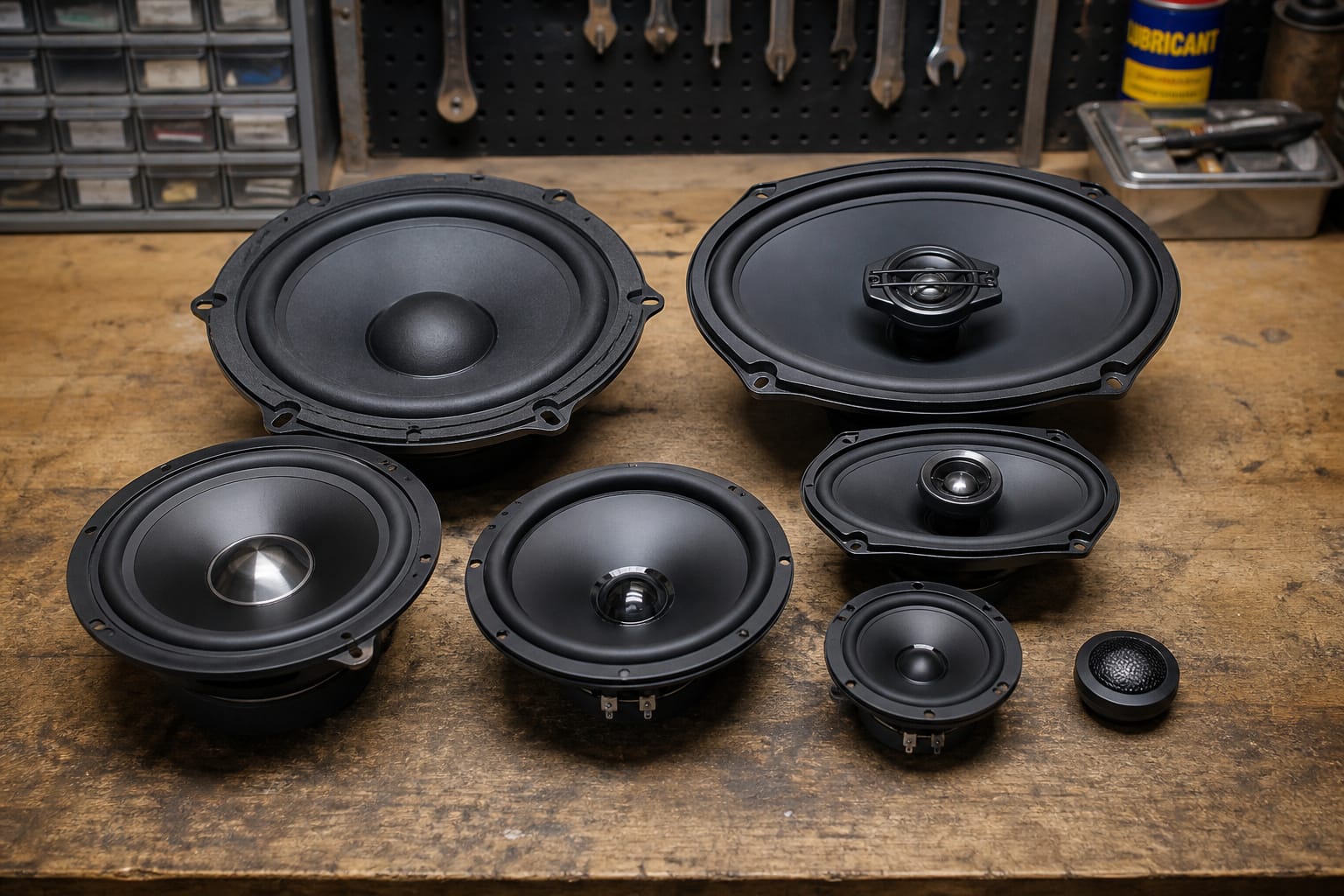
A 6.5-inch speaker fits most factory door openings and is the most common upgrade size. 6×9-inch speakers are typically found in rear decks and package shelves. Most fronts are 6.5 inches, while rears might be smaller, like 5×7 or 6×9; don’t assume front and rear speakers in the same car are the same size. Check your car’s manual or measure both ends yourself.
Bigger isn’t always better. A 6.5-inch speaker can deliver deeper bass than a 5.25-inch, sure, but if your car wasn’t built for it, you’ll fight fitment, gapping, rattling, or losing power. Stick to what fits unless you’re ready to modify the panel or add a custom adapter.
Recommended Products

Power Handling - Delivering 200W (25W nominal) with 4-ohm impedance, these car door speakers combine style and high-quality sound for a dynamic audio experience

Dimensions: 6.6 x 6.6 x 2.4 inches
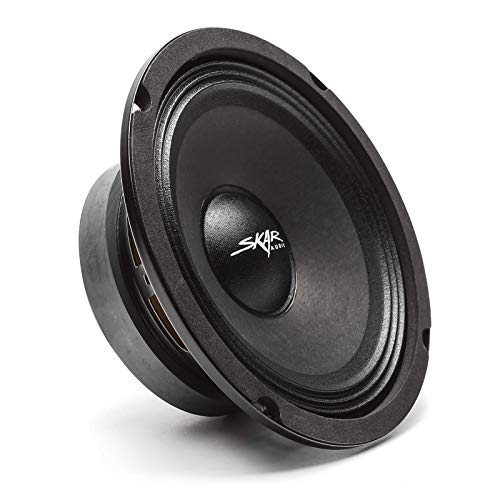
Skar Audio FSX65-4 6.5" 4 Ohm mid-range speaker
Power Handling and Sensitivity
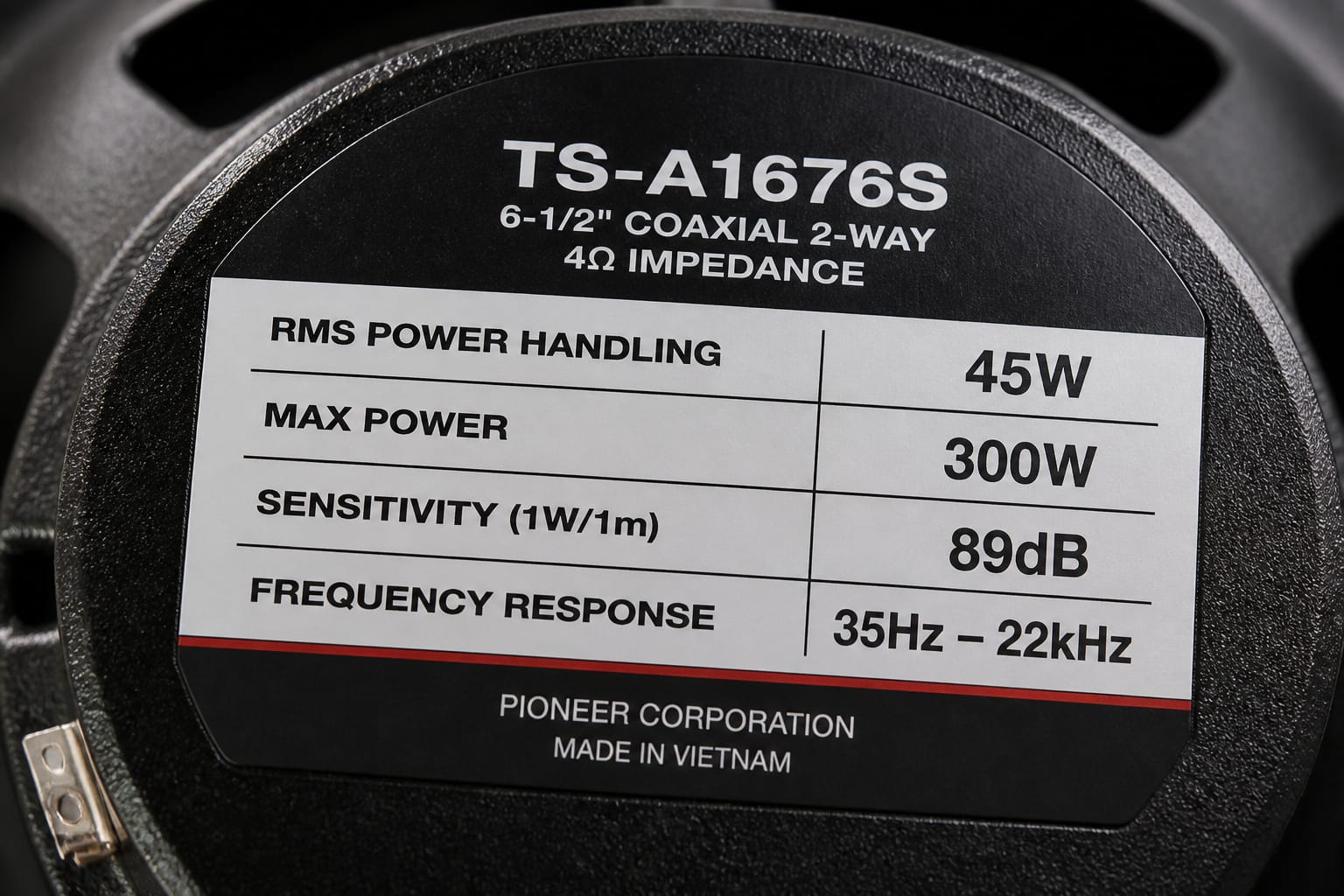
Match your speakers to your amplifier’s output. Think of it like pairing the right engine with the right car. A speaker rated for higher continuous (RMS) power handles sustained volume better than one rated lower, so it plays louder, longer, without strain. Peak power shows the short-burst limit, but RMS is the real test: push too much power, and you’ll fry the voice coil or hear ugly distortion; too little and your music sounds weak and thin.
Pair power handling with sensitivity, ideally 88 dB or higher, and you get more volume from less wattage. A 3 dB boost is roughly like doubling your amp’s power. In factory systems with limited power, sensitivity isn’t just helpful; it’s essential. Higher-sensitivity speakers turn a weak factory signal into rich, full audio even at highway speeds.
Also check impedance, usually 4 ohms. It needs to match your car’s system unless you’re running an outboard amplifier; wrong impedance can strain your stereo. For more on how amps and speaker power ratings actually interact, see our RMS vs. peak power guide.
Recommended Products

Power Handling: Delivering 230W (30W nominal) with 4-ohm impedance, these vehicle speakers combine style and high-quality sound for a dynamic audio experience.

UPGRADE YOUR CAR AUDIO: Replace your OEM speakers with JVC CSJ620 6.5" 2-way speakers for car. With 300W Peak/30W RMS Power, each car speaker features a 6 1/2" mica cone and a 1" PEI tweeter for pristine audio quality
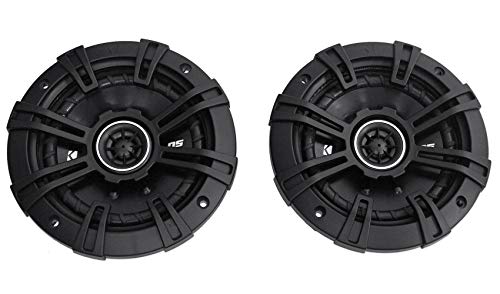
200 Watts Max Each, 50 Watts RMS Each
Build Quality and Frequency Response
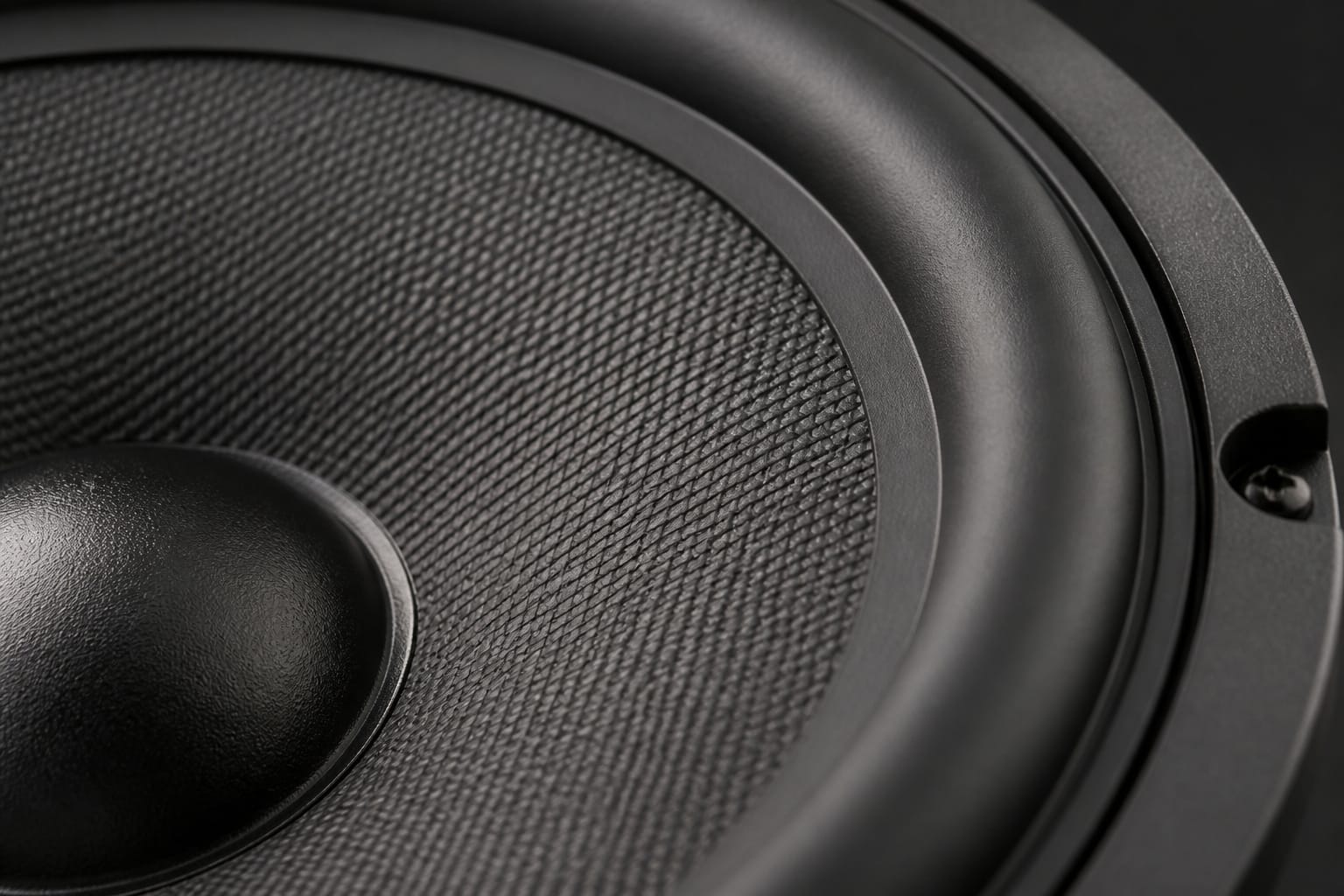
Good speakers start with smart design. Look for 2-way or 3-way coaxial systems, or a component setup with a separate tweeter, woofer, and crossover; see our component vs. coaxial guide for the difference. Each driver handles its own range, so music stays clear and full.
The speaker cone material matters: polypropylene, paper, or poly-injection plastic each affect durability and tone, and rigid materials cut distortion at high volumes. Rubber or treated-cloth surrounds keep the cone moving smoothly in heat or cold, meaning longer life and steady performance. A high-temperature voice coil resists burnout under sustained power, and a strong steel or cast basket holds everything tight, reducing wobble and resonance.
Frequency response range also shapes how full the sound feels. Aim for speakers that reach roughly 40 Hz to 20 kHz or wider; human hearing runs from about 20 Hz to 20 kHz, so the closer your speakers get to that range, the more real the music feels. A narrower range, like 100 Hz to 15 kHz, misses low rumble and bright highs, and you’ll notice the gap.
If you’re in a wet environment, whether that’s a convertible, a Jeep, or a motorcycle, look for water-resistant construction: rubber surrounds, sealed baskets, and an IP rating or “marine-grade” label.
Putting It Back Together
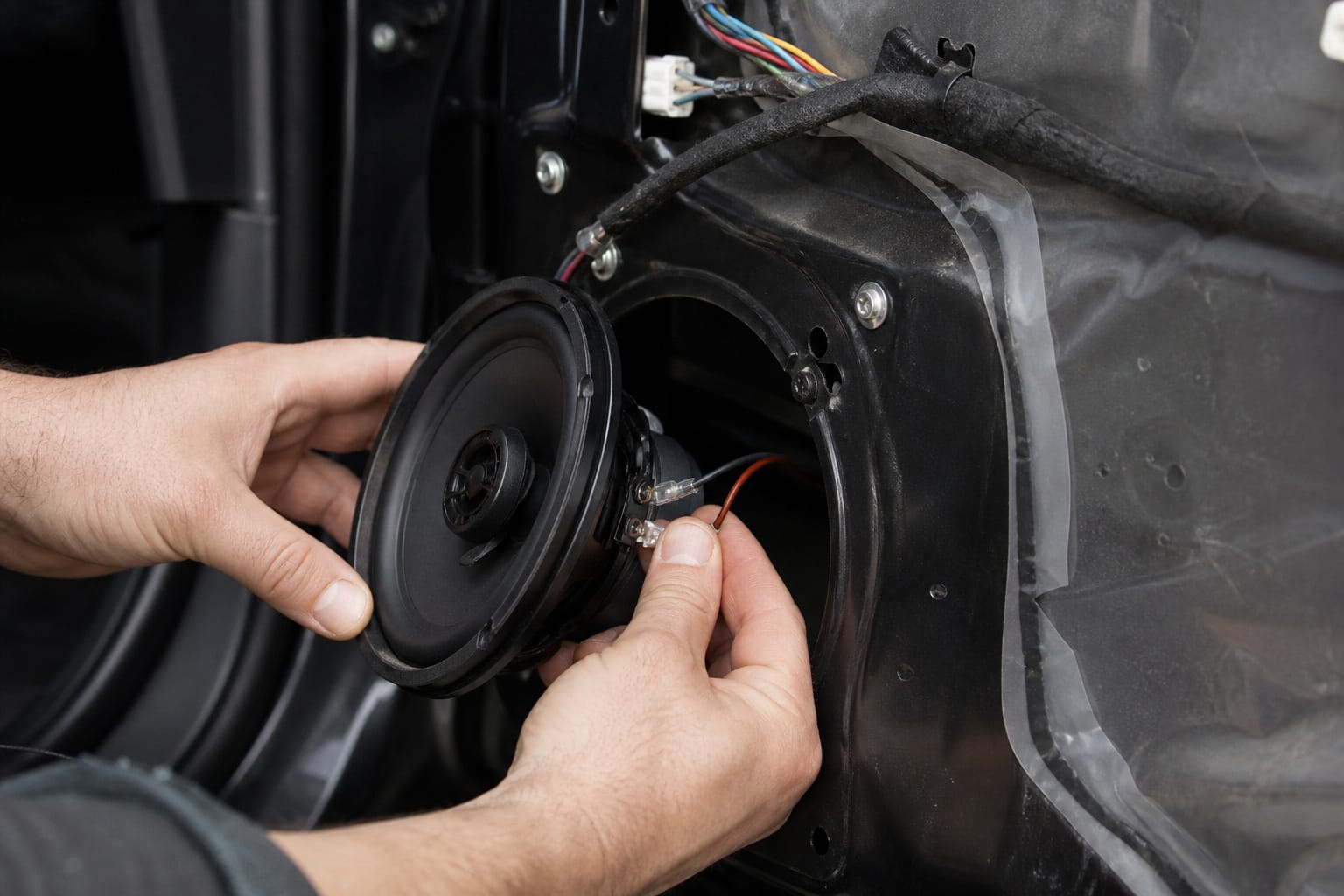
You’ve measured and compared; now shop smart. Read reviews, check sensitivity ratings, and look at materials. Then test the fit before you connect: slide it in, line up the holes, screw it in halfway, make sure it sits flush, then finish tightening. Do this for each speaker.
Reconnect the wires, positive to positive, negative to negative. Power on, play a song you know well, listen, adjust, tune. Clean sound. Tight fit. Your car, your rhythm.
Frequently Asked Questions
What Tools Do I Need to Remove My Car Speakers?
You’ll need a trim removal tool, a screwdriver, and maybe a socket wrench. Slide the trim tool around the panel edge, gently prying it loose. Unscrew the speaker mounting bolts, unplug the wire connector.
Swap in your new speaker, reassemble in reverse. Just take your time, and don’t force anything.
Can I Install Larger Speakers Without Modifications?
No, you can’t install larger speakers without modifying your car. Your factory speaker openings only fit specific sizes.
If you try to force in a bigger speaker, it won’t mount right; you’d need to reshape the panel or add custom adapters. Stick to the size your car was made for, like 6.5″ or 6×9″, unless you’re ready to cut, fit, and adapt.
Do I Need an Amplifier for Aftermarket Car Speakers?
You can run aftermarket speakers without an amp, but with one, they’ll sing louder and clearer. Your factory stereo gives just enough power.
Add an amplifier, and suddenly bass dives deeper and highs sparkle. Think of it like turning a flashlight into a spotlight. You don’t need it, but once you hear it, you’ll wonder how you lived without it.
Are Front and Rear Car Speakers the Same Size?
No, front and rear car speakers aren’t always the same size. Check your car’s manual or remove the speaker covers to measure. Most fronts are 6.5 inches; rears might be smaller, like 5×7 or 6×9.
Match sizes exactly. Use a tape measure. Confirm fit before buying.
How Do I Know if My Speakers Are Blown?
You’ll know your speakers are blown if they crackle, distort, or stay silent. Turn the volume up. Do you hear fuzzy highs or weak bass? That’s a red flag.
Tap the speaker cone gently. If it makes a flapping sound, it’s damaged. Play a familiar song. If one side lacks punch or hisses like static, it’s likely blown. Replace it soon.