Most people buy a TV that is smaller than their room can handle. A good rule of thumb prevents both a screen that feels tiny and one that overwhelms the wall, and it takes about a minute to apply.
Start With Your Seating Distance
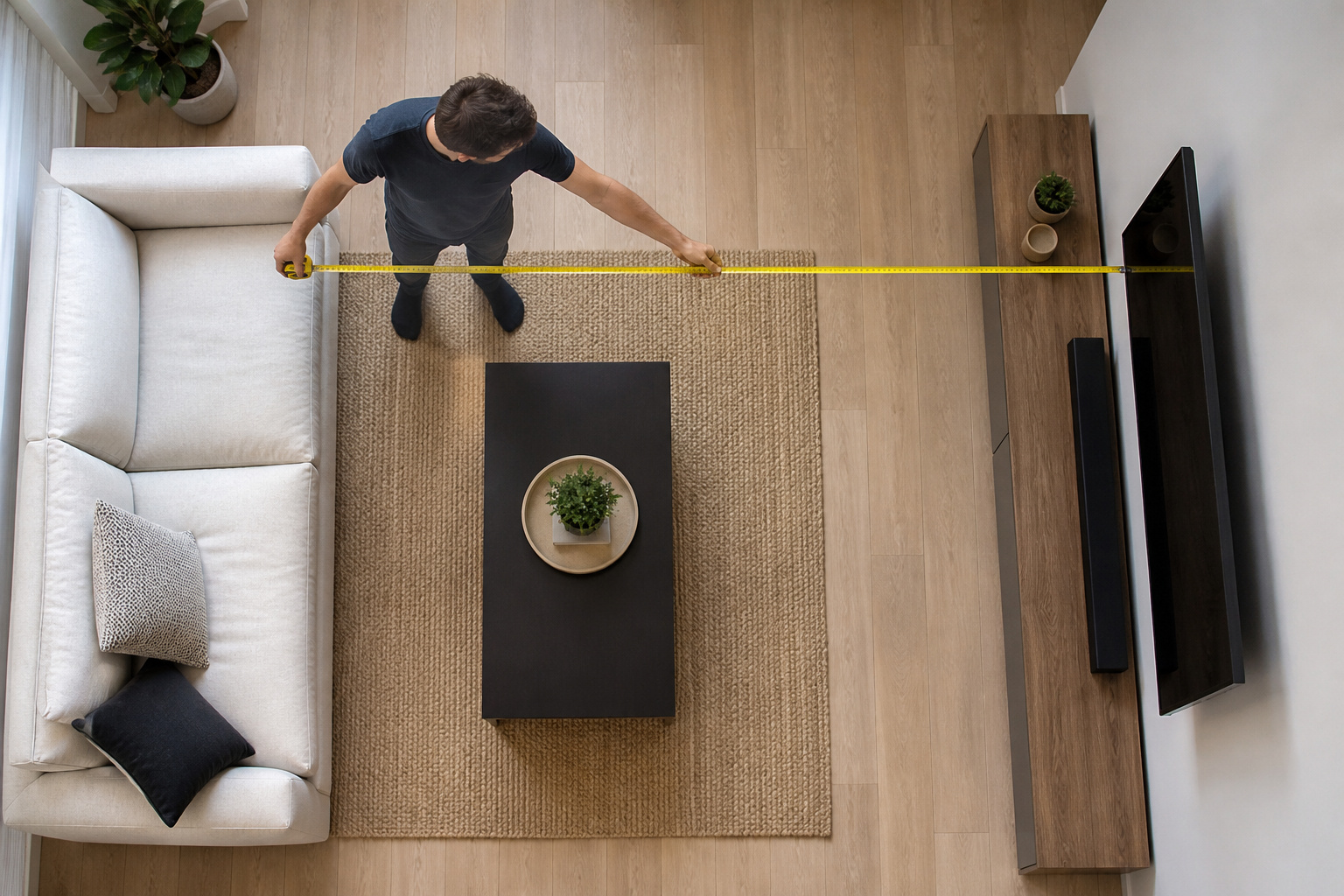
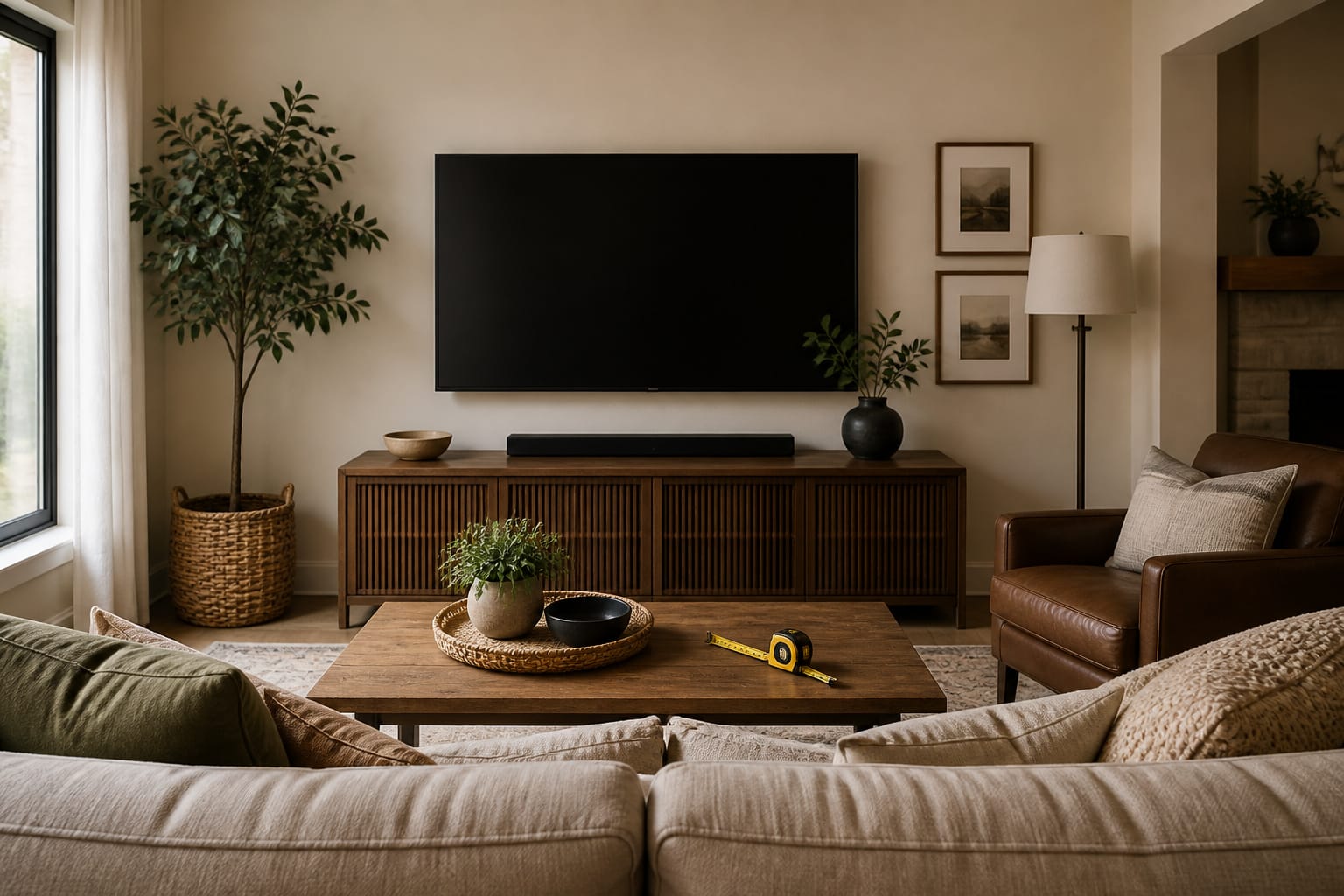
Measure from where you sit to where the TV will go. For a strongly immersive, cinema-style view, multiply that distance in inches by 0.84 to get the largest diagonal size worth considering. For a more relaxed fit, multiply by 0.6. If you sit 8 feet (96 inches) away, that gives a range of roughly 58 to 80 inches.
Treat the larger number as a ceiling, not a requirement. Wider screens pull your eyes around more, which some people love for movies and others find tiring for news and sports. Sitting 6 feet away suggests about 43 to 60 inches, and sitting 10 feet away suggests about 72 to 100 inches.
Match the Size to the Room

In a small bedroom or office, 32 to 43 inches is usually plenty, and up to 55 inches works if the bed or desk is a few feet away. A typical living room with a couch 8 to 10 feet from the wall comfortably fits 55 to 75 inches. Larger family rooms and dedicated viewing rooms are where 75 inches and above make sense.
Think about the wall, too. A big TV needs clear space, and stands that look fine under a 55-inch set can be too narrow for 75 inches. Our home theater room layout guide shows how placement changes what size feels right.
Recommended Products

Universal Design: This full motion TV mount fits for most of 42-90 inch TVs up to 132lbs with VESA size 200*100mm to 600*400mm available and max 16" Wood Stud space. Not perfect fit your TV? Please contact us and we'll do our best to solve the problem for you! If you need the screw M8*50, please message us to get it which be sent from USA.

Universal TV Mount:65 inch TV Wall Mount VESA patterns from 200x100mm to 600x400mm and holds up to 120 lbs and 16" wood studs spacing. Just make sure to measure the VESA distance and TV weight, this 75inch Wall Mount TV Bracket can support your TV

[Sturdy and Safe] You can relax knowing your TV is securely mounted to the wall with this UL-certified TV wall mount, which holds up to 132 lbs without a hitch. Its solid design keeps your TV steady, no wobbling or slipping here! Plus, we’ve got you covered with 10 years of support for this product.
Resolution Affects How Close You Can Sit

Higher resolution lets you sit closer or go larger without seeing individual pixels. A 4K TV looks clean from short distances even at 65 inches, while a 1080p set of the same size can look soft up close.
If you are shopping for a big screen, 4K is the practical standard. For a look at going beyond that, see 4K vs 8K.
Recommended Products

MINI LED PROCESSOR 4K: Our advanced processor delivers brighter highlights and deeper blacks,* bringing every detail to life with stunning clarity

Breathtaking picture: Sharp 4K brings out rich detail on our 65" flat screen TV, while the QLED screen and HDR10 create bright, accurate colors. Roku Smart Picture cleans up incoming TV signals, optimizes them, and chooses the right picture mode.

Breathtaking picture: Mini-LED backlighting brings out the rich detail on this 65" flat screen 4K TV, while the QLED screen and Dolby Vision technology create striking color and vivid highlights.
Lighting and Brightness
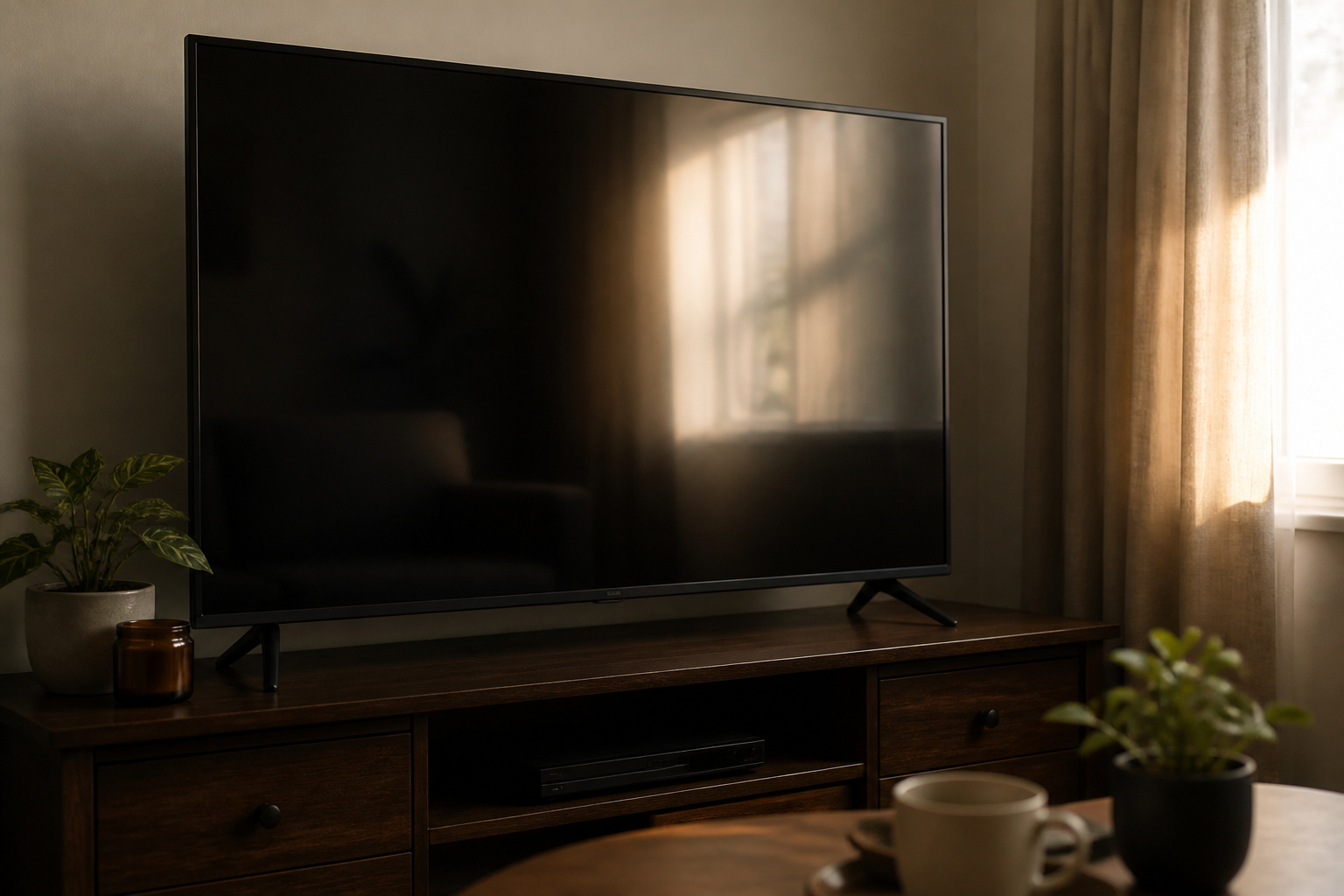
Bright rooms favor a larger, brighter TV, because high peak brightness keeps the picture vivid against glare. Dim rooms forgive smaller or less bright sets, since contrast carries the image. If your room gets strong sun, panel type matters as much as size; our OLED vs QLED vs LED comparison covers which suits which room.
Going Big: 75 Inches and Up

Large TVs bring practical issues that smaller ones do not. They are heavy, so check that your wall studs and mount are rated for the weight; our guide to TV wall mounting mistakes and the best mounting height covers the basics. Measure doorways and stairs before you buy.
Be careful with the cheapest large models. For low prices at big sizes, some manufacturers use weaker backlights or fewer dimming zones, so the picture can look flat for its price. In many cases, stepping down a size and choosing a better panel gives a nicer picture than the largest budget TV. Our notes on common TV buying mistakes explain what to watch for.
Recommended Products

UNIVERSAL DESIGN: Tilt TV wall mount is for 37" - 85" TVs weight up to 132lbs / 60 kg. our tilt TV mount has a compatible faceplate that fits VESA 200X100mm (8"x4") 200X200mm (8"x8") 300X200mm (12"x8") 300X300mm (12"x12") 400X300mm (16"x12") 400X400mm (16"x16") 600 x 400 mm (23.6"x16"). Please check VESA (Mounting hole pattern on the back of TV and please be advised that it can't fit 100x100mm), TV weight, wall stud location and possible blocked cable/input.

STRONG TV WALL MOUNT BRACKET: Our TV mount is constructed of high-quality steel materials, fits most 37 to 84 inch TVs weighing up to 132lbs, compatible with VESA mounting holes 200x100mm to 600x400mm. Please check the screen size, weight and VESA pattern of your TV before purchase.

STURDY TV WALL MOUNT: Fits for universal 37-85" TVs, support TV up to 120 lbs, fit wood stud spacing 8", 12", 16"; Compatible with wood stud, solid brick or concrete wall
Frequently Asked Questions
What is the best TV size for a living room?
For most living rooms with seating 8 to 10 feet away, 65 to 75 inches is a comfortable range. Use the distance formula above and consider how much wall space you have.
Can a TV be too big for a room?
Yes. If you can see the whole picture only by turning your head, or the screen feels overwhelming up close, it is too large for your distance. Content also looks softer when it is stretched across a very large screen.
Do bigger TVs use much more electricity?
Larger screens use more power, but panel type and brightness settings often matter as much as size. Lowering backlight brightness and using an eco or auto-brightness mode reduces consumption on any size.
Can I mount a large TV on drywall?
Yes, if you anchor the mount to wall studs and use a mount rated for the TV’s weight and VESA pattern. Drywall anchors alone are not enough for a heavy set.
Does a small room need a 4K TV?
Not strictly, but 4K is now standard even in smaller sizes and at little or no cost. It also keeps the picture sharp if you sit close.