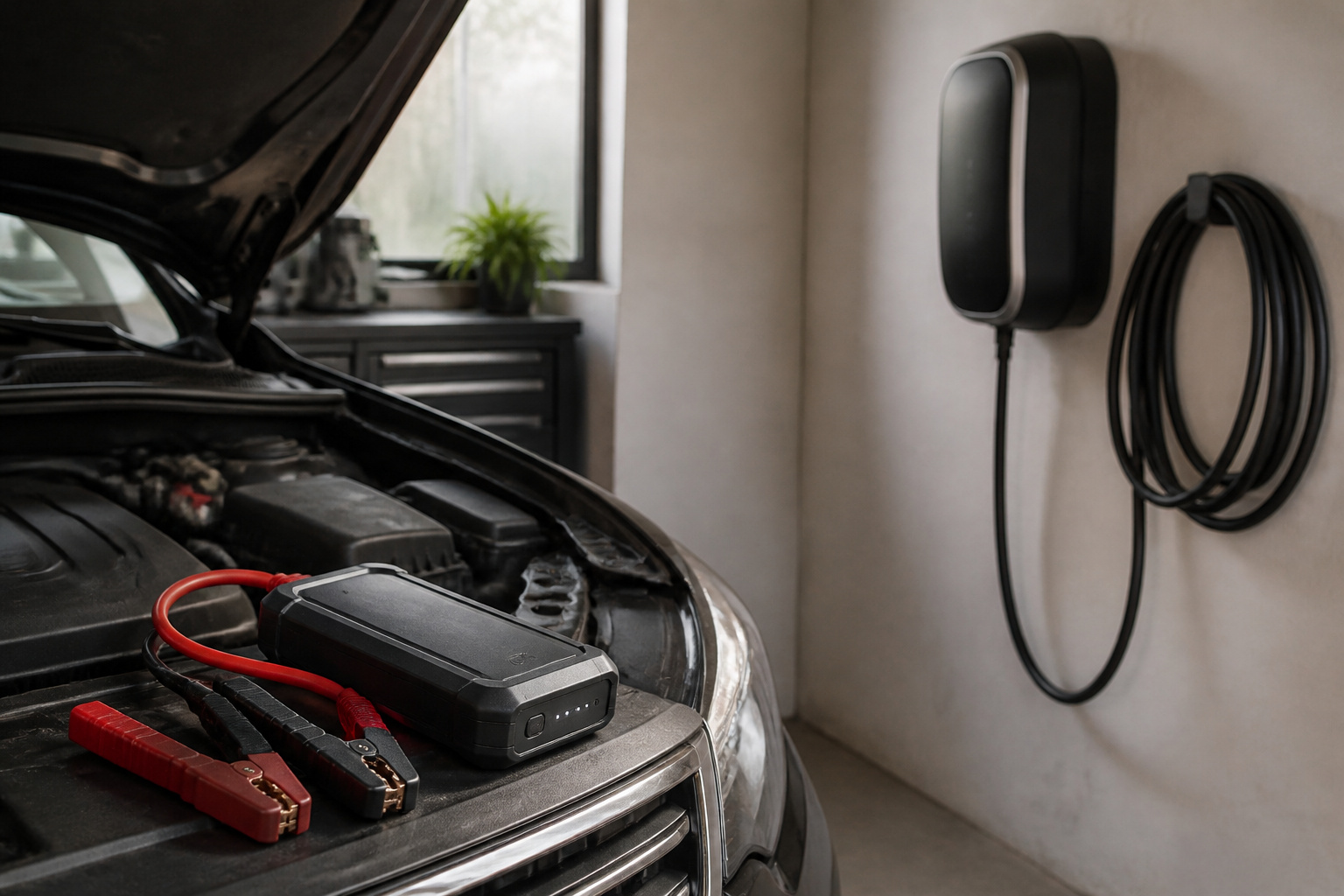
A dead battery has a way of showing up at the worst moment: the morning of a big meeting, the far corner of a parking lot, the first cold snap of the year. Two tools can get you out of that spot, a jump starter and a battery charger, and they look more alike than they act.
A jump starter delivers a short, strong burst of power so you can start the engine right now. A battery charger works slowly, over hours, to refill the battery and keep it healthy. This guide explains which option fits the way you drive and park, so you can buy the right one the first time.
What a Jump Starter Does
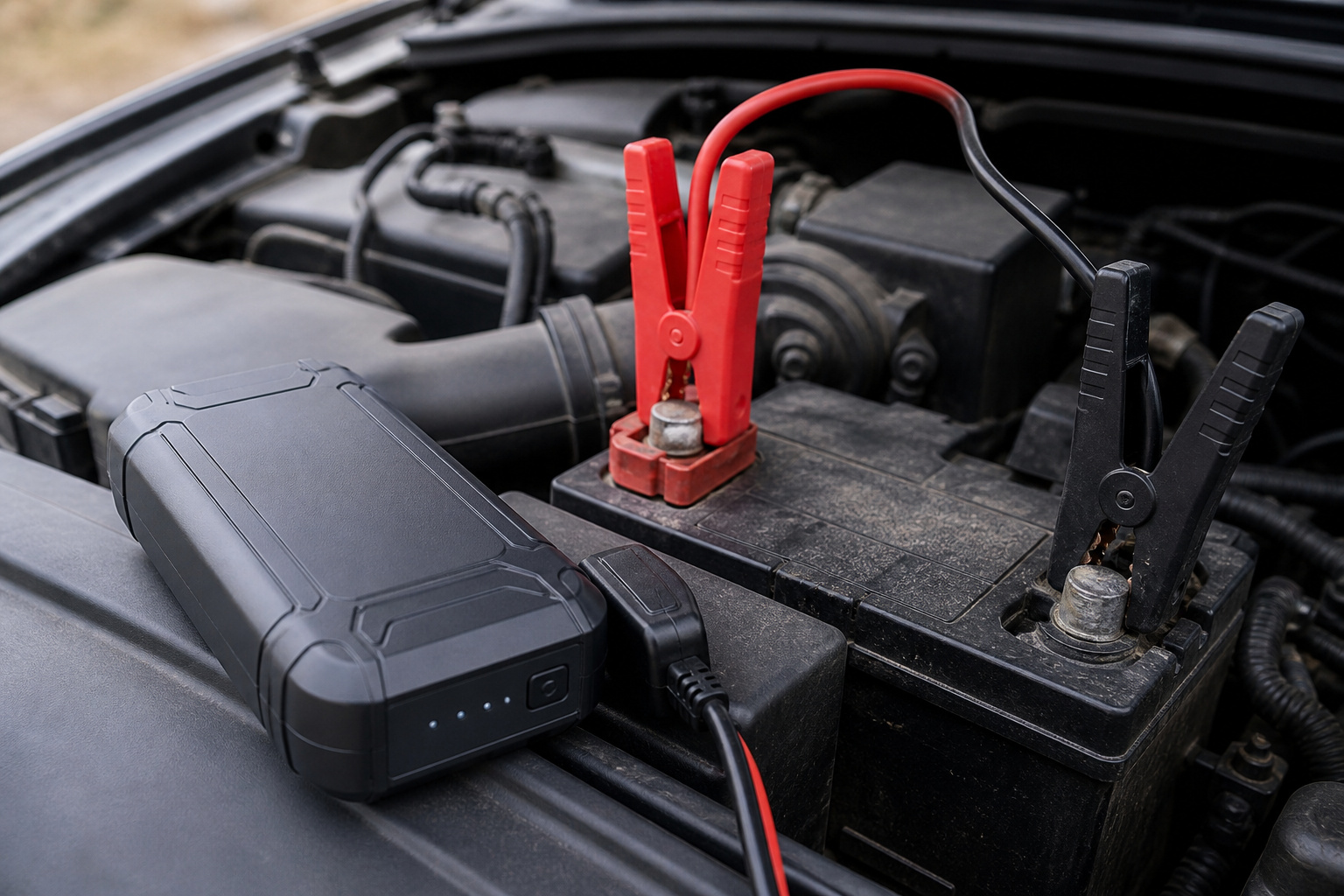
A portable jump starter is a compact lithium battery pack with clamps, built to give your car’s battery a quick, strong boost. Clip it on, start the engine, and unclip. No second car and no waiting around. AAA points out that regular jumper cables need a second vehicle, while a portable jump starter lets you restart the car yourself.
What a jump starter does not do is repair or fully recharge the battery. It gets the engine turning, and your car’s alternator takes over from there. AAA recommends driving for at least 30 minutes after a jump so the alternator can recharge the battery.
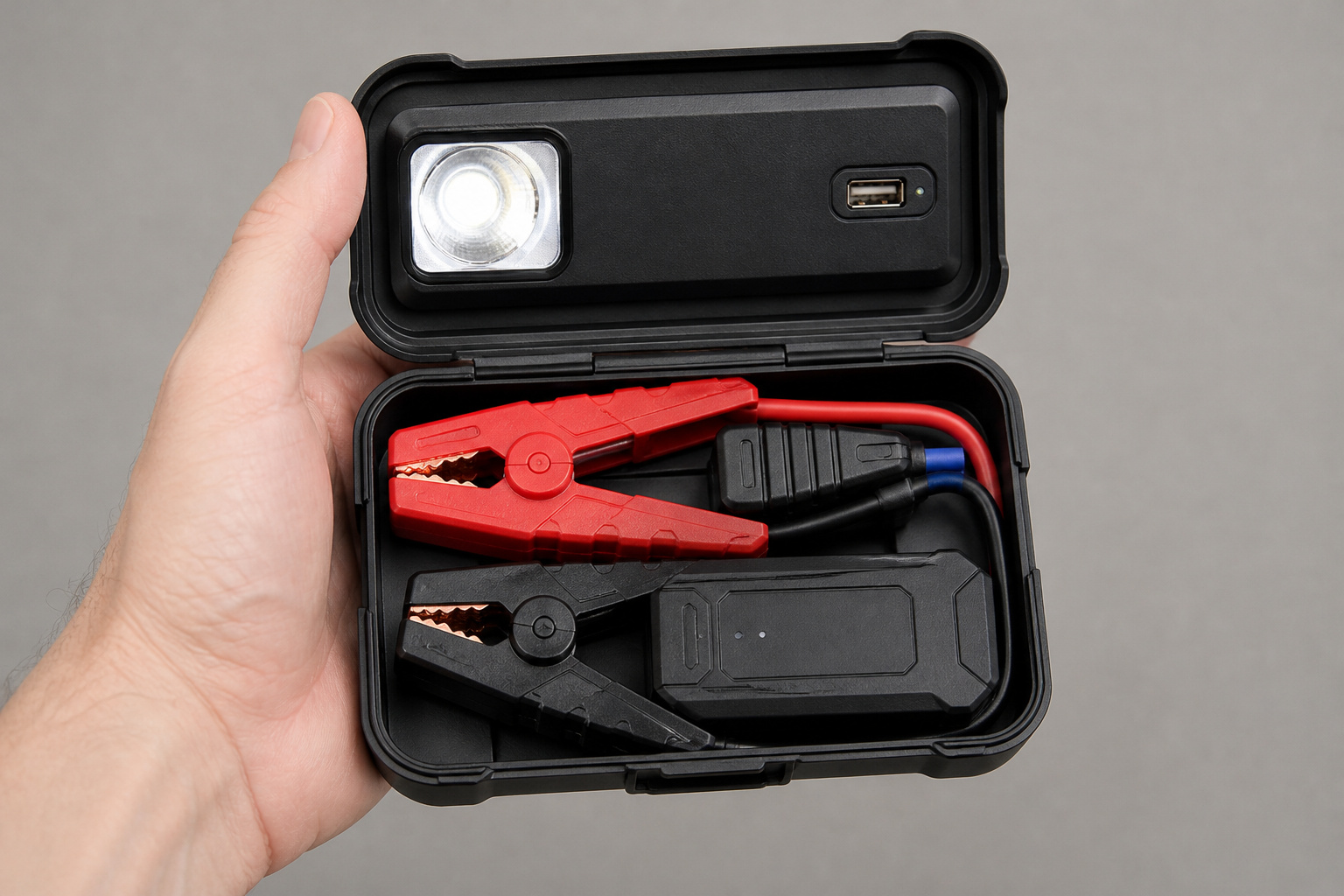
Many models add extras that earn their space in the glove box: a USB port to charge a phone, a flashlight, and on some units an air compressor for a soft tire. If you want to run a laptop or a small appliance in the car, a power inverter is the better tool, and our guide on how to choose a car power inverter explains how.
What a Battery Charger Does
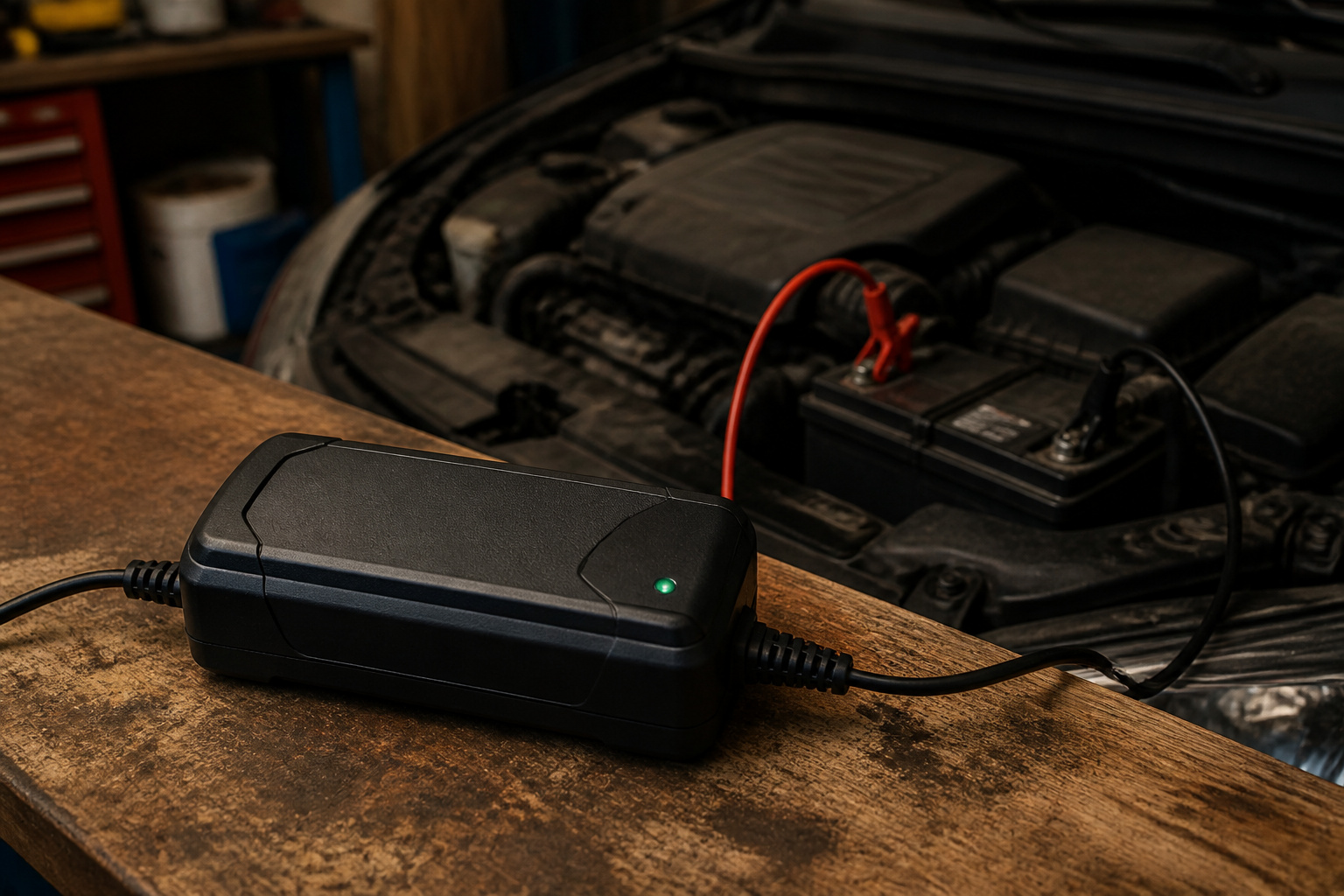
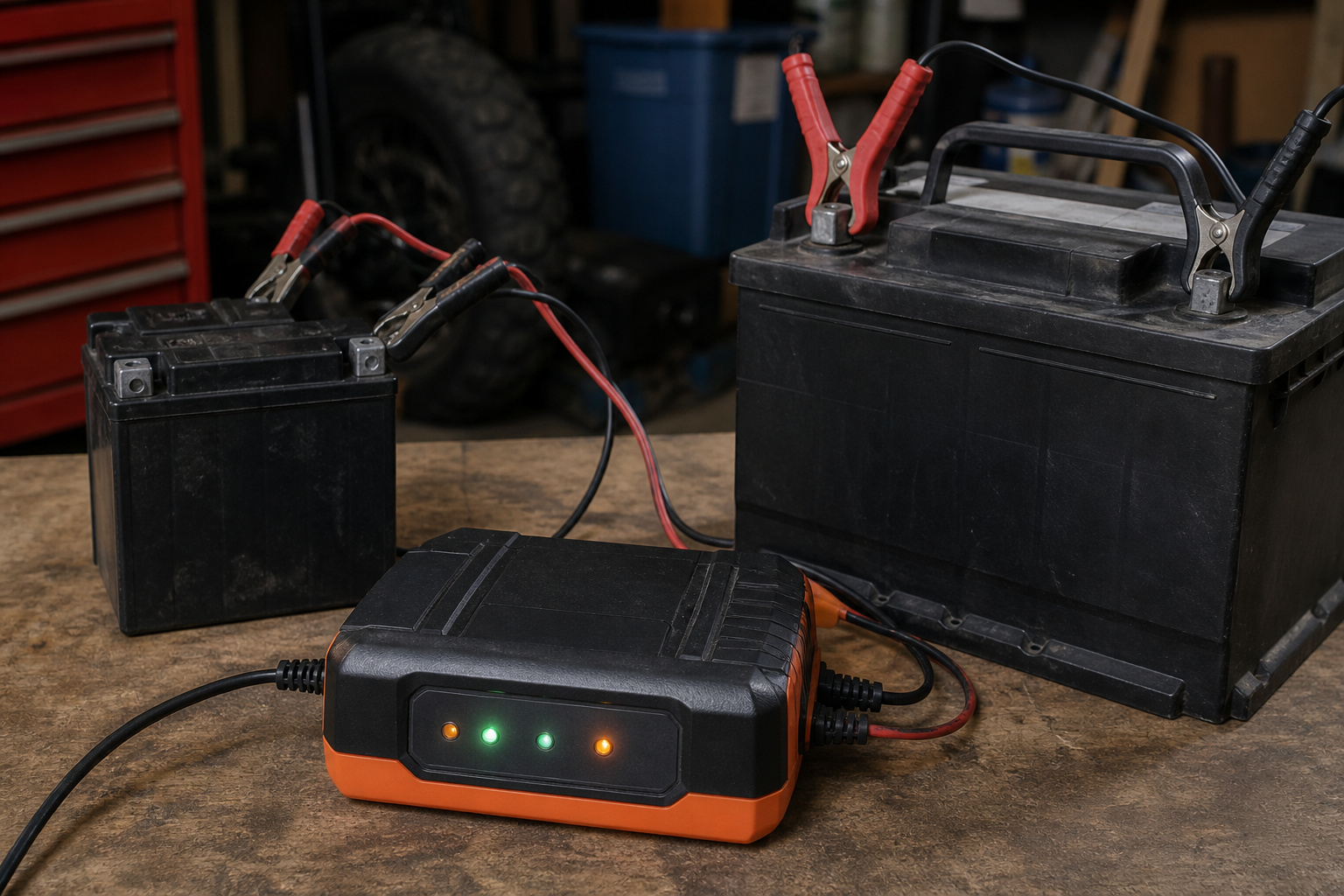
A battery charger plugs into a wall outlet and refills the battery slowly and carefully, usually over several hours. A modern smart charger watches the battery as it works, adjusts the power as the battery fills, and then drops into a gentle maintenance mode once it is full.
That slow approach is the point. CTEK, which makes battery chargers, says topping up with a charger is better for a battery’s health than relying on a jump starter. A charger also does something a jump starter cannot: it keeps a battery topped up while a car sits unused.
The tradeoff is that a charger needs an outlet and time. It lives in your garage, not your trunk.
Jump Starter vs Battery Charger: Side by Side
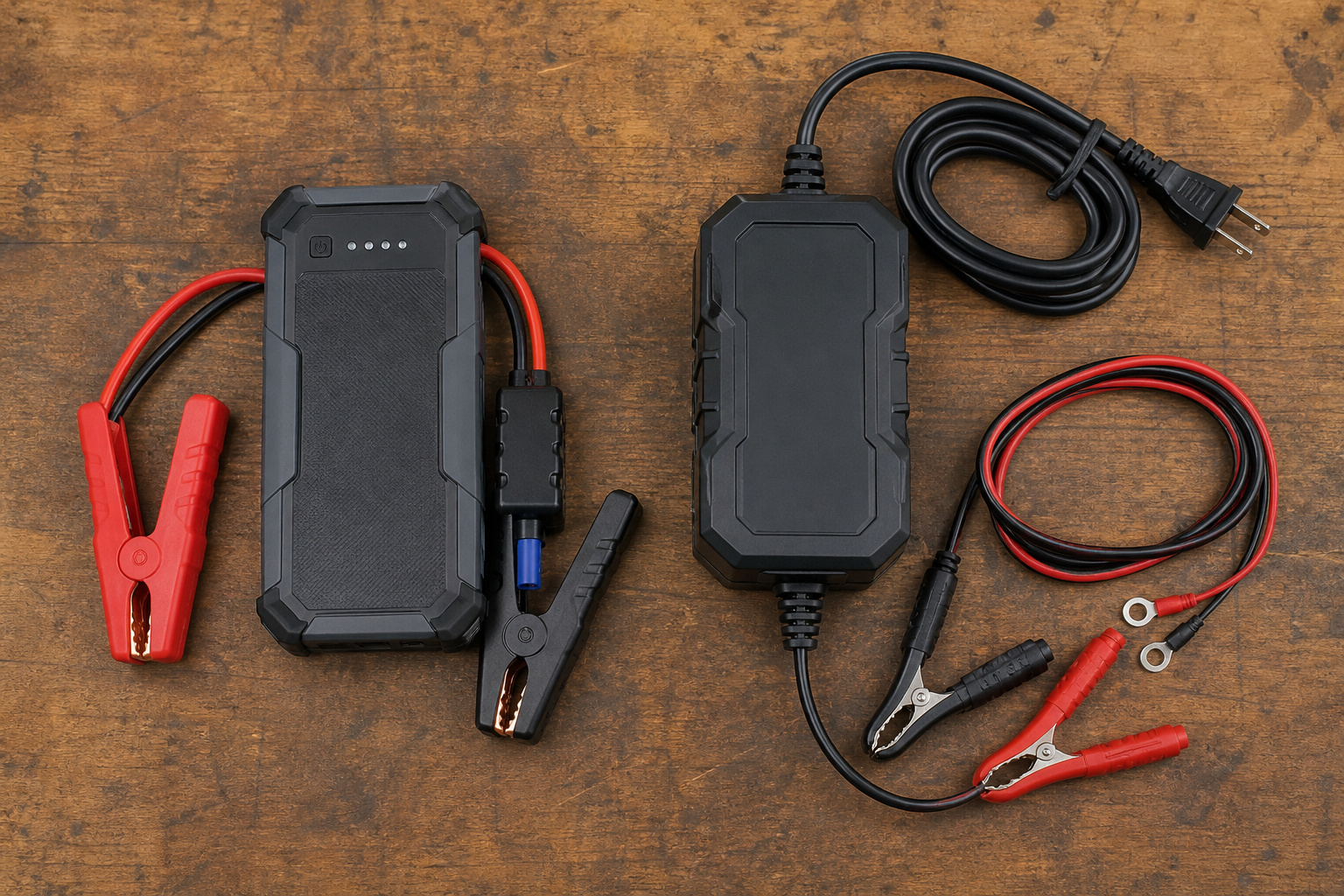
| Compared | Jump starter | Battery charger |
|---|---|---|
| Main job | Starts a car with a dead battery right now | Restores and maintains the battery over hours or days |
| Speed | Minutes | Several hours |
| Where it lives | Glove box or trunk | Garage, near a wall outlet |
| Power source | Its own built-in battery | Household outlet |
| Needs a second car | No | No |
| Best for | Emergencies away from home | Cars that sit, short trips, long-term battery health |
| Can stay connected for weeks | No | Yes, if it has a maintenance mode |
| Keep it ready by | Recharging it on the maker’s schedule | Nothing, just plug it in when needed |
Which One Do You Need?
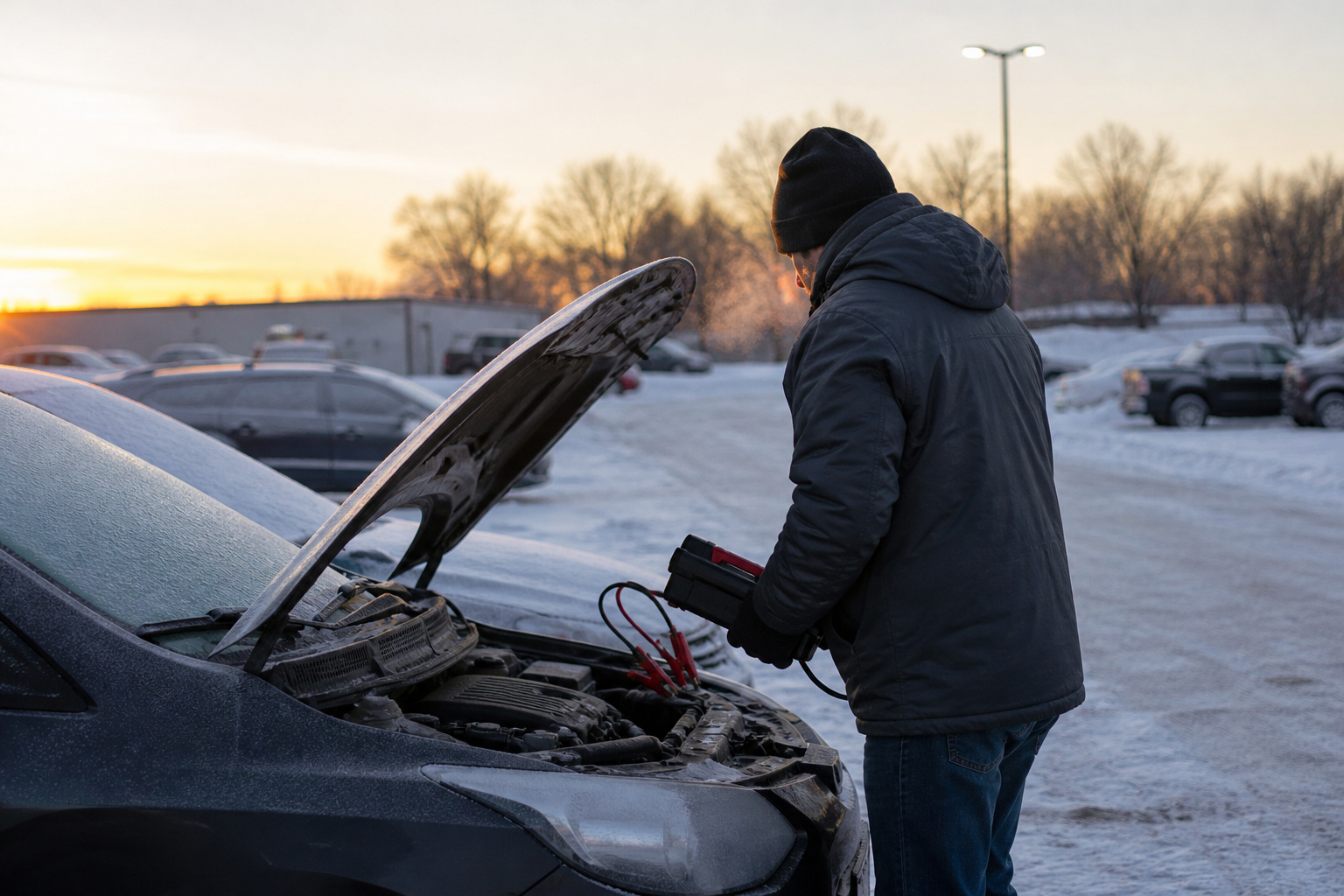
The two tools solve different problems, and CTEK’s own advice is that having both is a good idea. If you can only buy one, your driving habits decide.
Choose a Jump Starter If
- You drive every day and want a safety net wherever you park.
- You commute far from home, take road trips, or live where winters are cold.
- You would rather rescue yourself, or help a neighbor, than wait for someone with cables.
Choose a Battery Charger If
- A car, motorcycle, or RV sits for weeks at a time.
- Most of your driving is short trips. AAA warns that short trips may not be enough to keep a battery charged, especially when the heater adds strain in cold weather.
- You run a dash cam in parking mode or anything else that draws power while the car is off. Our guide on whether dash cams record when the car is off explains how that power draw works.
Get Both If
You want rescue and prevention. The jump starter is the rescue for the day a battery dies anyway. The charger is the prevention that makes that day less likely.
One caution applies to both: neither tool can save a worn-out battery. AAA lists a battery older than three years among the things that raise the risk of a failure, so if your battery keeps dying, have it tested before you spend money on accessories.
What to Look for in a Jump Starter
Match It to Your Engine
Makers list the largest gas and diesel engine each model is designed to start. Find your engine size in your owner’s manual and choose a unit rated comfortably above it. Expect a lower number for diesel than for gas on the same unit, because diesel engines are harder to turn over.
Do Not Shop by Peak Amps Alone
Peak amps is the big number on the box, but it describes a brief maximum. The unit’s capacity and its stated minimum operating temperature tell you more about whether it will start your car on a cold morning. If winters are harsh where you live, look for a model that publishes a cold operating limit.
Built-In Safety Features
Reverse-polarity protection, spark-proof clamps, and short-circuit protection matter most if you have never jumped a car before. They turn a mistake with the clamps into a warning beep instead of a damaged battery or a spark.
Size, Recharging, and Extras
A jump starter that fits in the glove box is one you will actually keep in the car. Check how it recharges and how long that takes. An air compressor is a handy extra but adds bulk, so choose it only if you would use it.
What to Look for in a Battery Charger
Match Your Battery Type and Voltage
Lead-acid batteries, including flooded, AGM, and gel types, charge differently from lithium (LiFePO4) batteries. Use a charger that lists your battery type, and confirm the voltage: most cars use 12V, some motorcycles and older vehicles use 6V, and some trucks and equipment use 24V.
Pick the Right Amperage
Low-amp chargers, roughly 1 to 5 amps, work as slow maintainers that are happy to stay connected. Chargers at 10 amps and above refill a drained battery faster. For a car you start every week, a maintainer is plenty. For a battery that has already run flat, more amps get you moving sooner.
Maintenance Mode and Safety Features
A float or maintenance mode lets the charger stay connected without overcharging, which is what makes it useful for a car that sits. Also look for reverse-polarity protection, overcharge protection, and temperature compensation, which adjusts charging for hot or cold garages.
Using Them Safely, and in Cold Weather
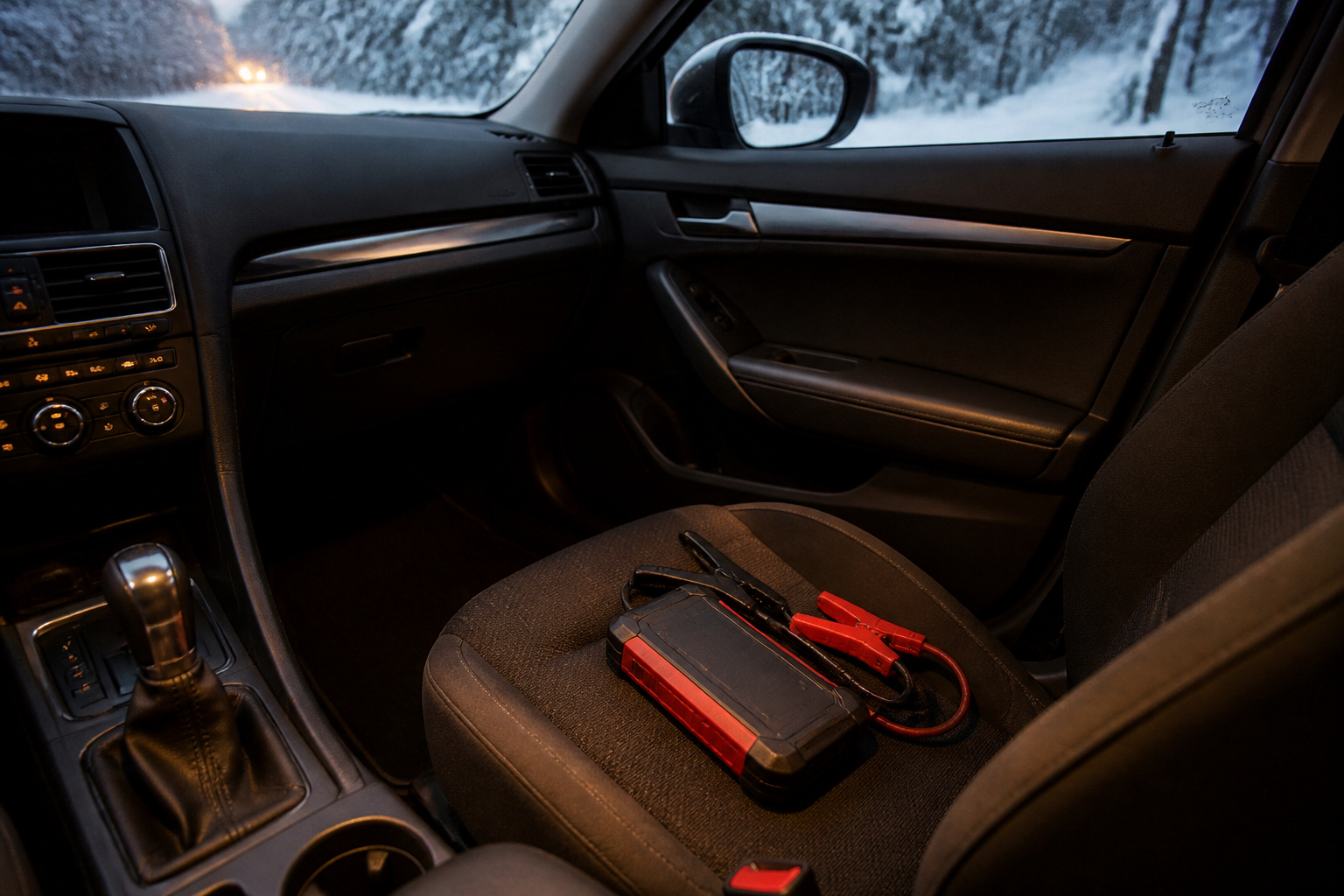
Always follow your own unit’s manual, because clamp order and indicator lights vary. As a general rule, turn the car and its accessories off, connect the positive clamp to the positive terminal, and connect the negative clamp the way the manual describes. After the engine starts, disconnect in reverse order. AAA also advises against jump-starting a battery that is leaking or has visible cracks.
With a charger, work in a ventilated space. Most chargers are meant to be connected to the battery before you plug them in and unplugged before you remove the clamps.
Cold is where a good plan pays off. According to AAA figures reported by NBC Chicago, a car battery can lose as much as 35 percent of its strength at 32 degrees Fahrenheit and 60 percent at 0 degrees. A jump starter suffers in the cold too. Jump starter maker Wolfbox advises keeping the unit in the cabin rather than the trunk, and warming a cold-soaked unit indoors for 10 to 15 minutes to recover much of its lost capacity.
The Bottom Line
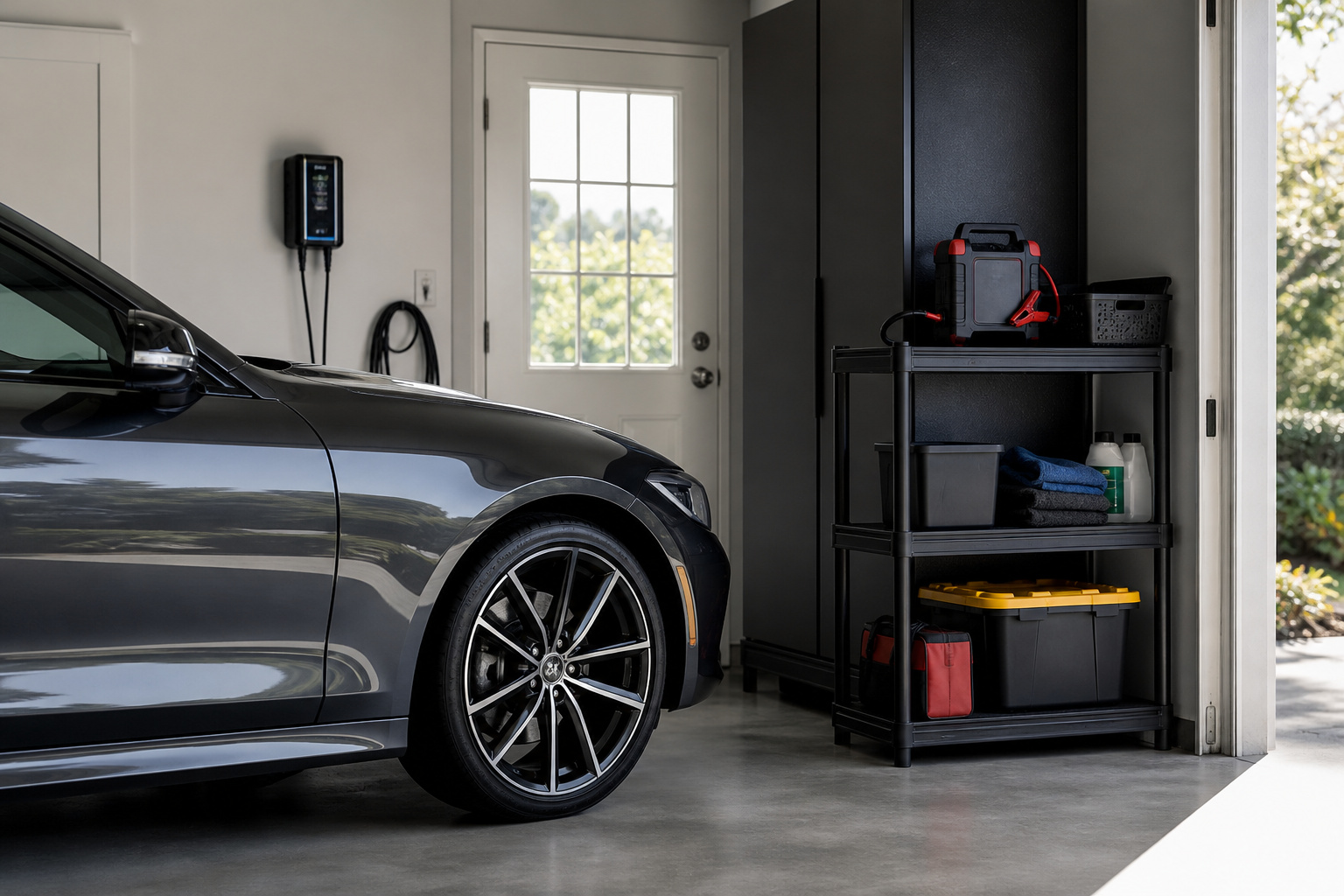
Buy a jump starter if you want a fast fix for the day your car will not start away from home. Buy a battery charger if your car sits, makes short trips, or powers extras while parked. If winter is coming and you can afford both, the pair covers you from every direction: one to get you going, the other to keep the battery strong.
Frequently Asked Questions
Can a jump starter charge my battery?
Not really. A jump starter gives the battery just enough boost to start the engine. Your alternator then recharges the battery as you drive, which AAA says takes at least 30 minutes. To restore a battery fully, use a battery charger.
Can I leave a battery charger connected for weeks?
Yes, if it is a smart charger or maintainer with a float or maintenance mode, which is designed to stay connected without overcharging. Check the manual for your model. A basic charger without that mode should not be left on.
Can a battery charger start my car?
Most cannot. A standard charger refills the battery over hours and does not deliver the burst needed to crank an engine. A few combination units include an engine-start function, so check the product listing if that is what you want.
How often should I recharge a jump starter?
Follow the maker’s recommendation, which AAA also advises. As a habit, check the charge level every few months and top it up after any use, so it is ready on the day you need it.
Can I use these on a motorcycle?
Yes, with a few checks. Make sure the jump starter lists support for your engine size, and make sure the charger supports your battery type and voltage. Small motorcycle batteries do best with a low-amp maintainer.
Do electric cars need a jump starter or charger?
Electric cars also carry a 12-volt battery, and AAA notes it can fail like any other. The jump-start procedure can differ from a gas car, so check your owner’s manual for the correct connection points before you connect anything.