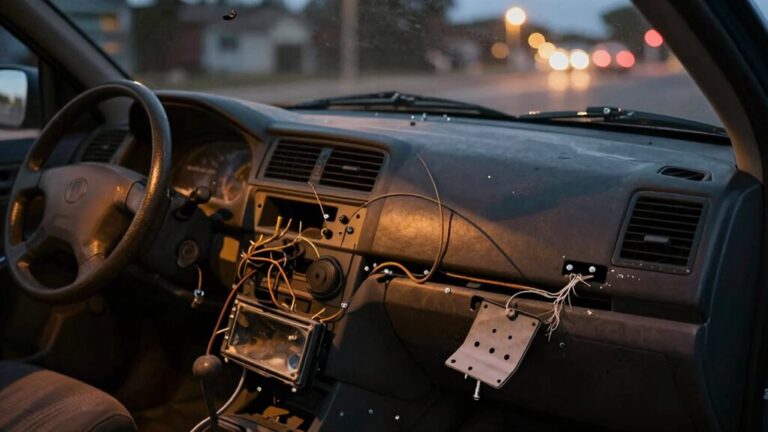
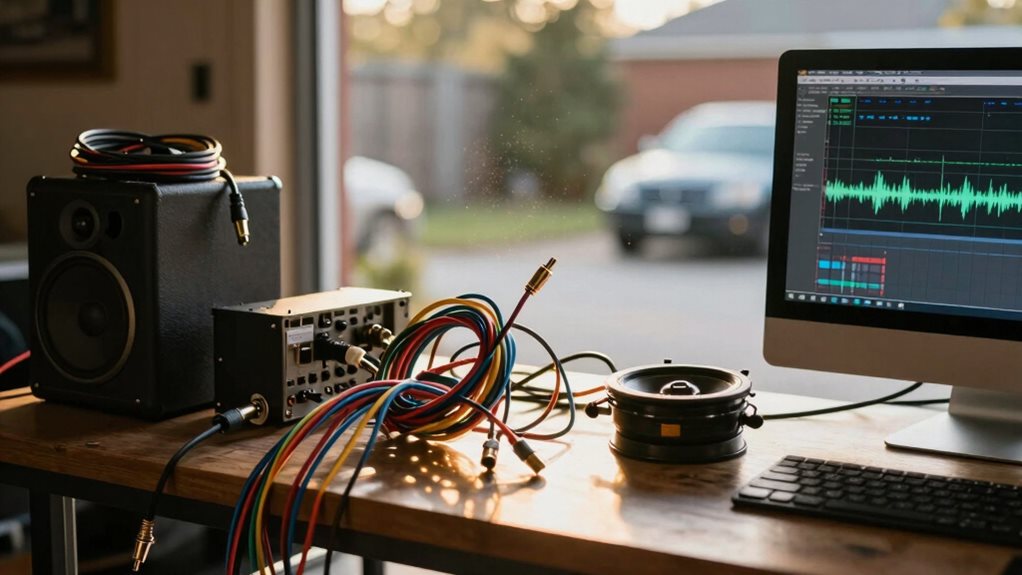
A preamp output is the small, low-voltage signal your head unit sends before amplification happens. It’s the cleanest, most direct way to feed an external amplifier.
If you’re adding an amp or a subwoofer, understanding what preamp outputs do (and whether your stereo has them) is the first step.
How Preamp Outputs Work
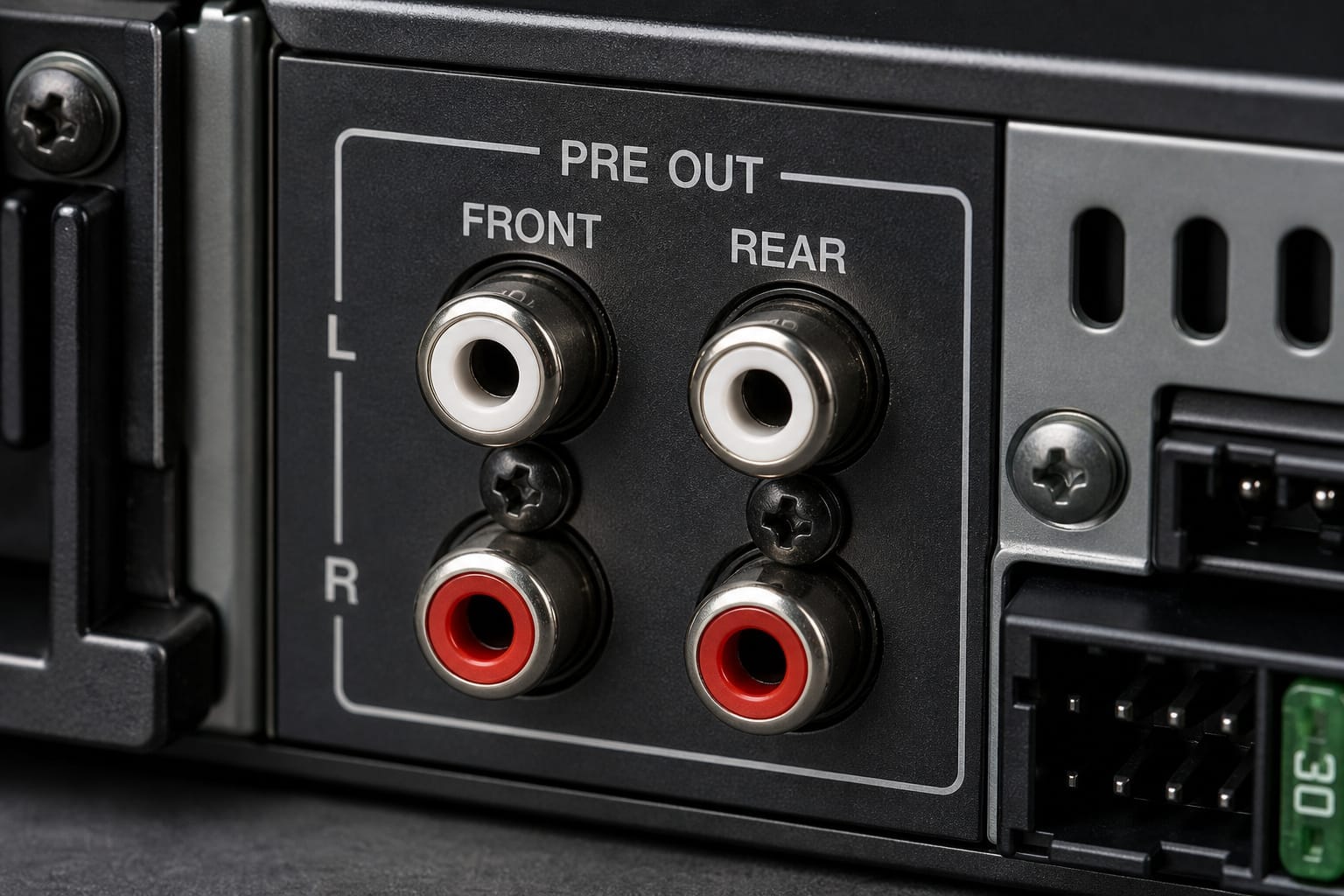
You’ve probably seen the RCA jacks on the back of a car stereo, usually a pair labeled front and rear, sometimes with an additional pair for a subwoofer. Those are preamp (or “pre-out”) outputs.
They carry your volume, balance, fade, and tone settings as a low-level signal, designed to send to an amplifier rather than driven directly to speakers.
Because the signal hasn’t been boosted yet, it stays clean and free of the noise that shows up when power and signal mix too early in the chain.
Recommended Products

connectors:RCA cables feature professional quality 24k gold plated connectors which protect the cables from corrosion and ensure a premium connection ,RCA shell surface adopts insulation coating, which has perfect anti-static effect

IN THE BOX: (1) 15 foot 2-Male to 2-Male RCA audio stereo subwoofer cable

Heavy Duty, Strong and Rugged Cable, Low-frequency vigorous and thick, IF is sweet, high-frequency resolution of first-class.
Preamp-Level vs. Speaker-Level Signal
Without preamp outputs, an amp has to tap into speaker-level output, a signal already amplified by the head unit.
A line-output converter can step that signal back down to preamp level, but it’s an extra piece of hardware in the chain and generally isn’t quite as clean as a true preamp output.
If your factory stereo doesn’t have RCA outputs, a line-output converter is still a perfectly workable way to add an amplifier; it’s just an extra step rather than a dealbreaker.
RCA Cable Quality Matters
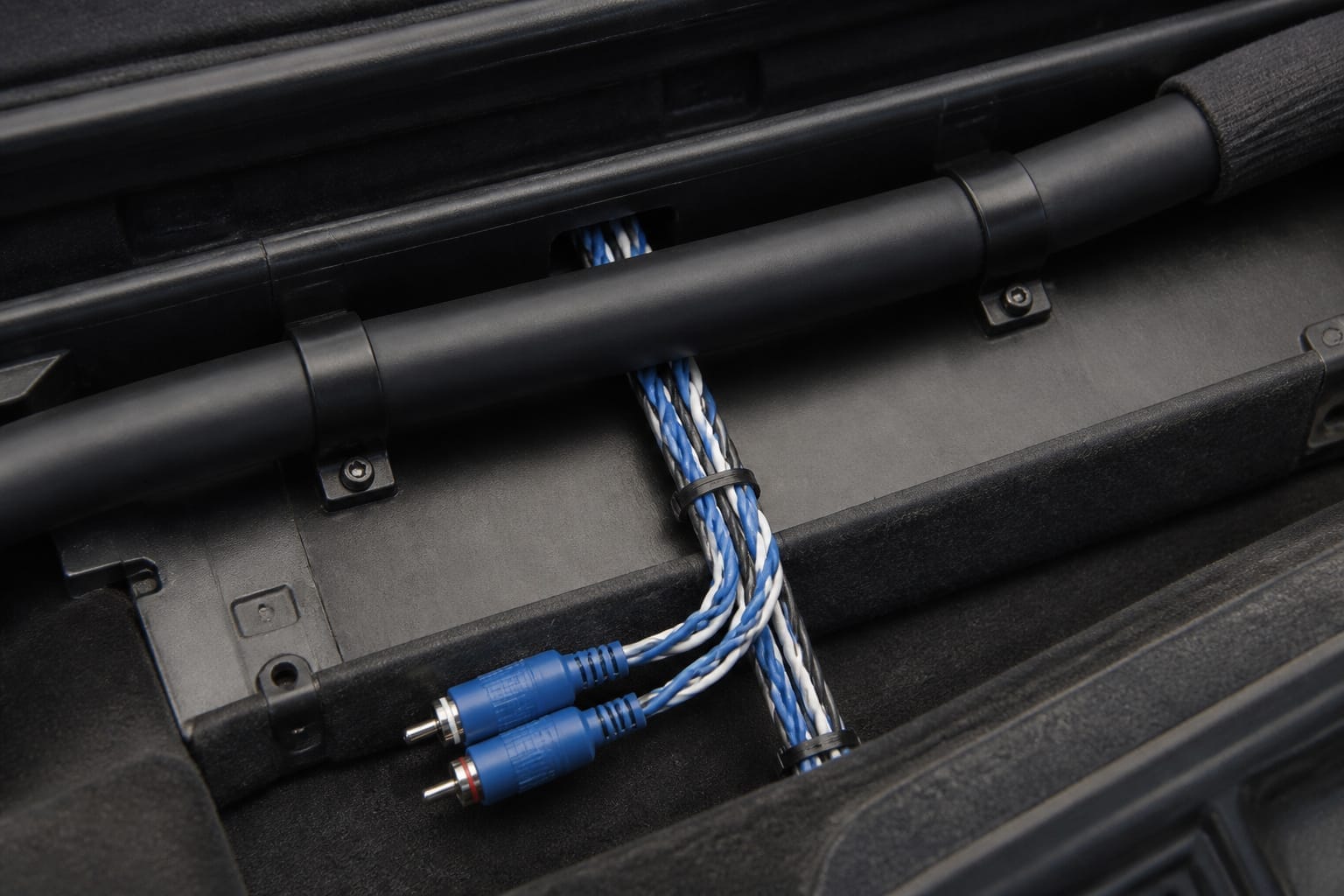
Since the preamp signal is low-voltage, it’s more susceptible to picking up electrical noise on its way to the amp, which is why cable quality matters more here than it does for speaker wire.
Look for cables with good shielding (twisted-pair or braided shielding resists noise better than basic designs) and keep them as short as the install allows. Route RCA cables away from power wires whenever possible, and cross them at a 90-degree angle if they have to intersect, since running them parallel is a common source of alternator whine and other electrical noise.
Recommended Products

Buy with Confidence: With Monoprice's Lifetime Warranty on all Cables, you can rest assured we stand behind our products and our customers.

* Low Noise Premium 2 channels RCA audio patch cable

Standard Audiophile Grade: This is a pair of 0.5m/1.64ft entry-level audiophile shielded RCA cables, which are constructed with 99.99% OFC cores and high-quality manufacturing, ensuring signal integrity with noticeable improvements in clarity, dynamic range, and noise reduction. Whether for beginner or mid-range systems, this shielded RCA phono cable is a reliable choice. NOTE: Choosing the right length is essential, add 20% extra length for routing flexibility. We offer custom length services
Using Multiple Preamp Channels
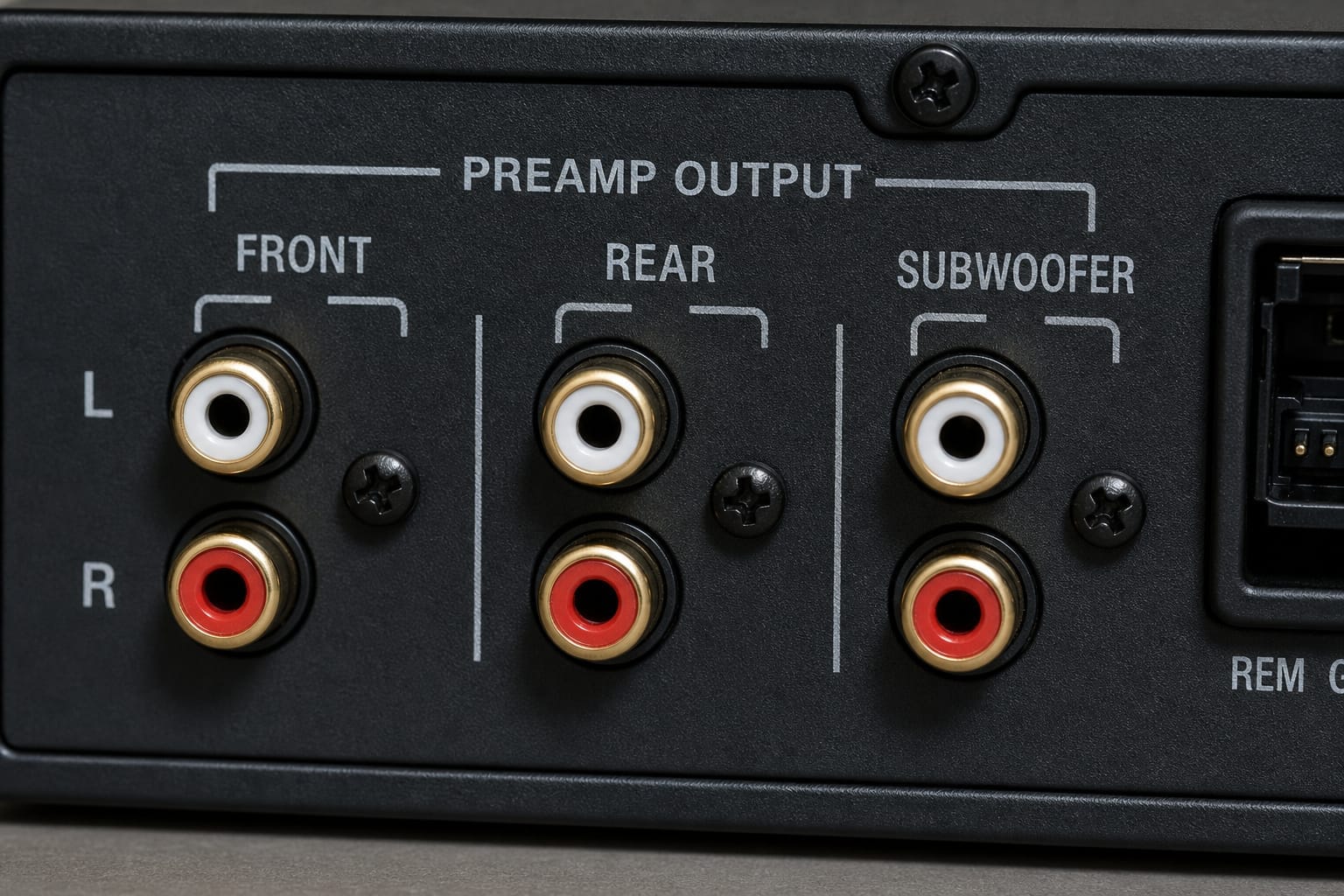
A stereo with separate front, rear, and subwoofer preamp outputs lets you send an independent signal to each amplifier in a multi-amp system. One channel to a 4-channel amp for your speakers, another to a monoblock amp for your subwoofer, with levels adjustable independently for each.
That’s the setup that makes it possible to fine-tune bass separately from the rest of the mix rather than fighting one shared volume level for everything.
Recommended Products
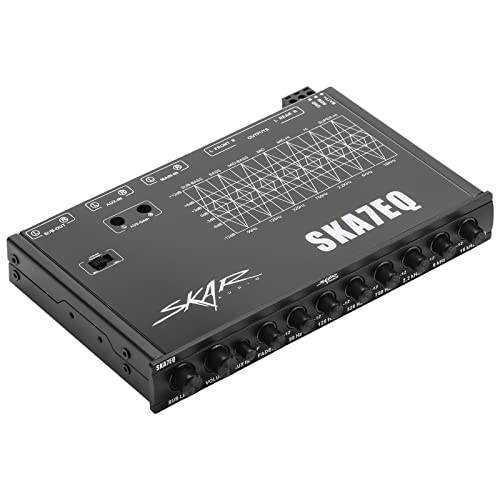
6 Channel 7-Band High Performance Car Audio 1/2 DIN Pre-Amp Electronic Equalizer

The Taramps TEQ 7.4 Stereo Equalizer boasts a 7-band graphic EQ with adjustable frequencies ranging from 50Hz to 12kHz. Fine-tune your audio with gain adjustments from -12dB to +12dB for optimal sound quality and clarity.

POWERS 4 HEADPHONES: The Pyle 4 channel amplifier headphone is a monitor distribution system that powers practically any headphones - up to four pairs at the same time. This allows four people in your studio to listen to the main mix while recording
Frequently Asked Questions
Can I add preamp outputs to any car stereo?
Not directly. Factory stereos rarely include them, while most aftermarket stereos do. If your stereo lacks RCA outputs, a line-output converter on the speaker wires can generate a preamp-level signal for an amplifier.
Do I need an amplifier for preamp outputs to work?
Yes. Preamp outputs carry a signal too weak to drive speakers directly; they’re built specifically to feed into an amplifier, which then boosts that signal to speaker level.
Are preamp outputs the same as speaker outputs?
No. Preamp outputs carry a low-voltage signal meant for an amplifier’s input. Speaker outputs carry an already-amplified signal with enough power to drive speakers directly. Connecting the wrong one to the wrong input won’t work correctly.
How do I know if my stereo has preamp outputs?
Check the back of the unit for RCA jacks, often labeled “Pre Out” or a similar name. Most aftermarket head units have them; most factory stereos don’t.