
Wired audio gives the most consistent connection and the lowest delay, while wireless audio gives the freedom to move. Modern wireless sound is good enough that the choice usually comes down to how you listen rather than raw quality. Here is how the two compare for headphones and speakers.
Sound Quality

A wired connection carries the signal directly, with no compression for transmission. Wireless audio has to compress the signal, and the codec used affects quality.
Better codecs close the gap, and most listeners will not hear a difference on ordinary music. Our guide to Bluetooth codecs explains the options. For serious listening with high-quality files, wired still has an edge.
Recommended Products

Dynamic, closed ear headphones with up to 32 dB attenuation of outside sound

FOUR DRIVERS - Diamond-like carbon dynamic driver (like mini speakers) + 3 balanced armatures (like mini tweeters) deliver unsurpassed dynamic power and definition.

Dolby Audio 7.1 Surround Sound: Brings your game to life, putting you directly in the middle of the action.
Reliability and Delay
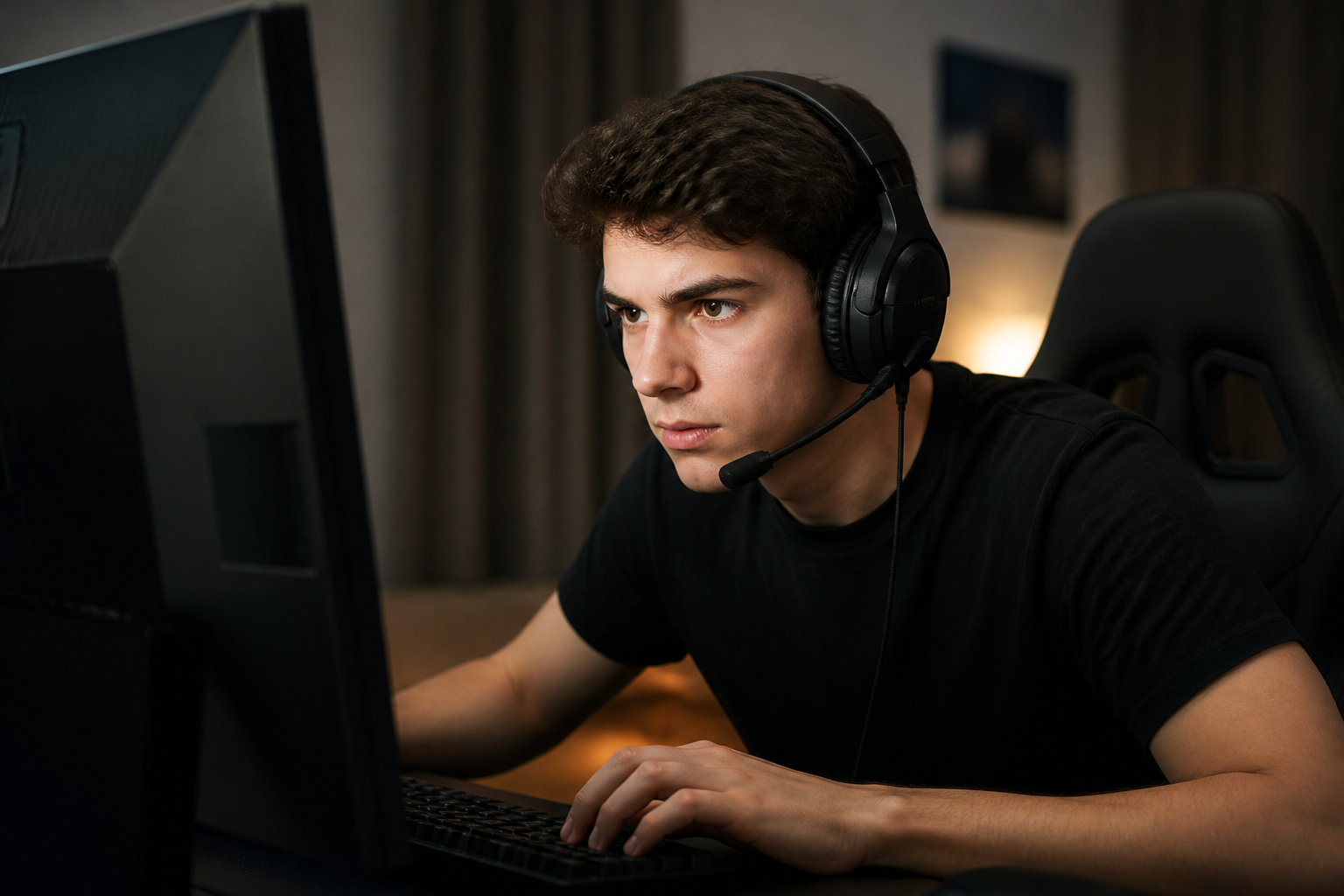
Wired connections do not drop out and have no wireless delay. Wireless can stutter when the signal is weak, and Bluetooth adds a delay that matters for gaming and music production.
Wi-Fi speakers tend to be more reliable than Bluetooth but need a network.
Recommended Products
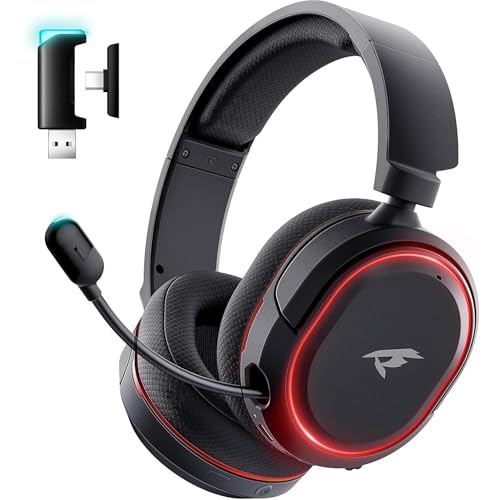
🎵【7.1 Surround Sound & Aesthetic Decorative Light】 UG-08S PC gaming headset can provide you with a cinema 3D stereo surround sound experience, designed specifically for gamers and audiophiles and multi-platform Compatibility. Long-press the 'M' key to activate 7.1 surround sound and dynamic driver reproduces deep bass and clear highs. Which allows you to hear every detail in the game with pin-drop clarity from up to 40 feet away. Such as teammates' voices, footsteps, direction, and more. Double-click the M key to activate the ambient light, then single-click the M key to switch between two modes: steady light and gradient. Valorise wireless pc headset will bring a cooler gaming atmosphere.

IMMERSIVE 3D GAMING AUDIO: Fachixy VK81 wireless gaming headset delivers powerful 3D stereo sound with deep bass, clear mids, and crisp highs. Hear footsteps, reloads, and environmental details precisely, improving reaction time and enhancing immersion for FPS, RPG, or open-world games on for PS5, PS4, PC, and Switch.

DUAL-MODE 2.4GHZ & BLUETOOTH GAMING EARBUDS Effortlessly switch between high-performance gaming and daily use. Comes with a Type-C 2.4GHz dongle and a bonus USB-C to USB-A adapter, ensuring seamless, plug-and-play compatibility with PC, Mac, PS5, Nintendo Switch, VR headsets, and Bluetooth-enabled mobile devices.
Convenience and Freedom

Wireless wins on convenience. There is no cable to snag, devices pair easily, and you can move around the room.
Wired setups need cables and ports, and many phones no longer have a headphone jack. For headphones in particular, see wired vs Bluetooth headphones.
Recommended Products

Hybrid Active Noise Cancelling: 2 internal and 2 external mics work in tandem to detect external noise and effectively reduce up to 90% of it, no matter in trains or offices.

Block the World, Keep the Music: Four built-in mics work together to filter out background noise — whether you're in a packed office, on a crowded commute, or moving through a busy street — so every beat comes through clean and clear. (Not available in AUX-in mode.)

[Ultra-Lightweight Ear Buds Designed for Small Ears] Each earbud weighs only 3.7g and features a compact, ergonomic in-ear design made especially for small ears. Secure, low-profile, and comfortable for workouts, all-day wear or overnight sleeping.The ultra-slim profile sits flush in your ear with no hard edges poking or rubbing, so you can even sleep on your side without discomfort.
Battery and Power
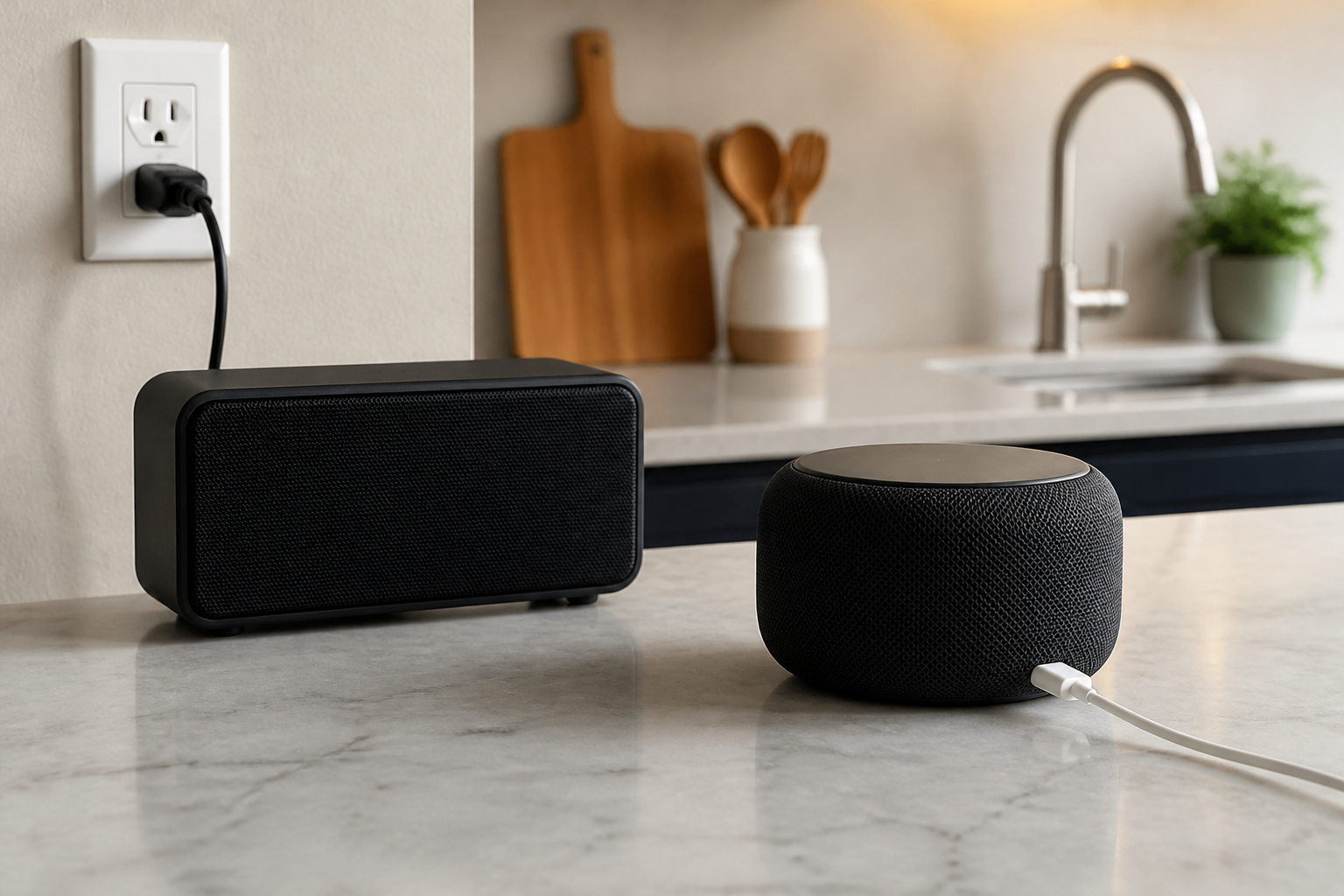
Wired headphones draw power from the device and never need charging. Wireless headphones and portable speakers have batteries that need charging and wear out over time.
Wireless speakers that plug into the wall avoid the battery issue but still need a power cable.
Recommended Products

FOR 2-PRONG DEVICES: Works with most TVs, monitors, printers, and other devices that require a 2-pin power connector

ETL Certified for Peace of Mind: This power cord features a pure copper core for stable power delivery, dependable durability, and safe daily use—ideal for home, office, and outdoor applications

Compatible with: JBL Speaker PartyBox 100 110 200 300 310 710 1000 On-The-Go, JBL Cinema 510, JBL Boombox 3 Portable speaker; ONN 100008736 / 100008734 party speaker.
Wired and Wireless Home Speakers
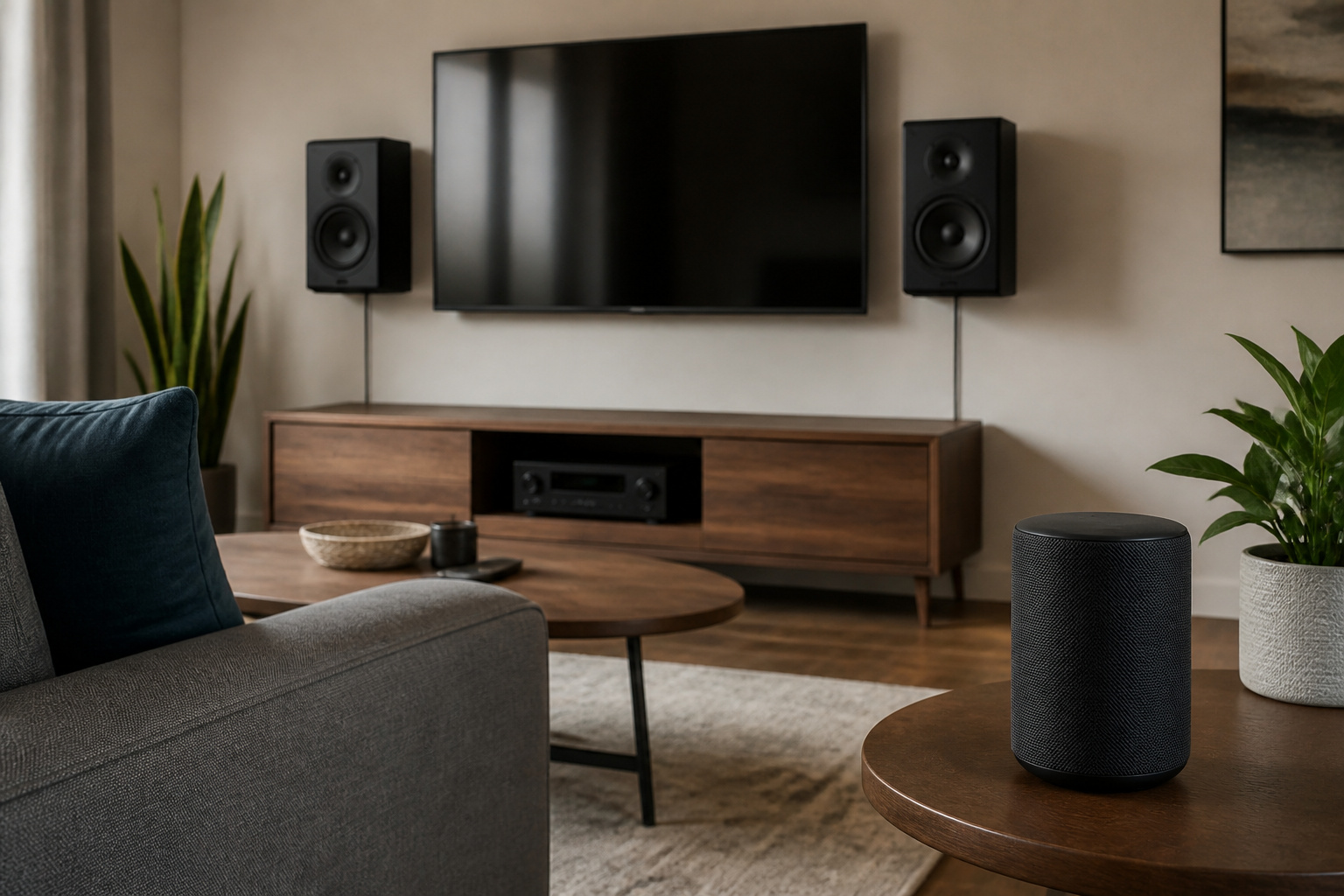
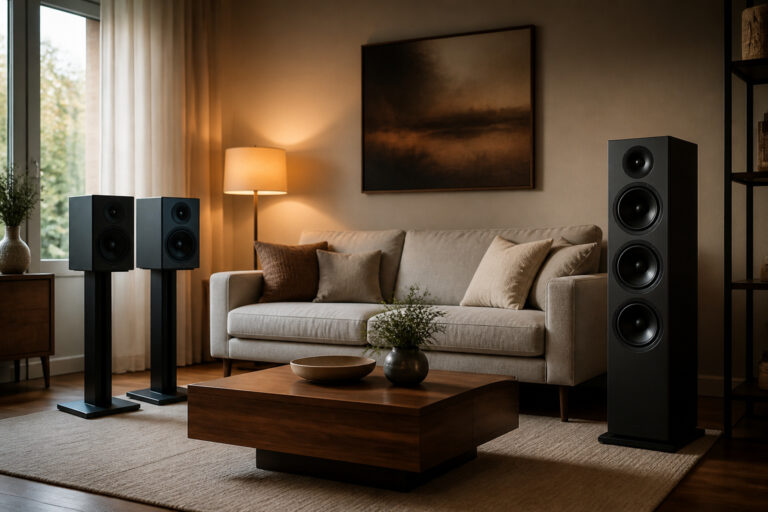
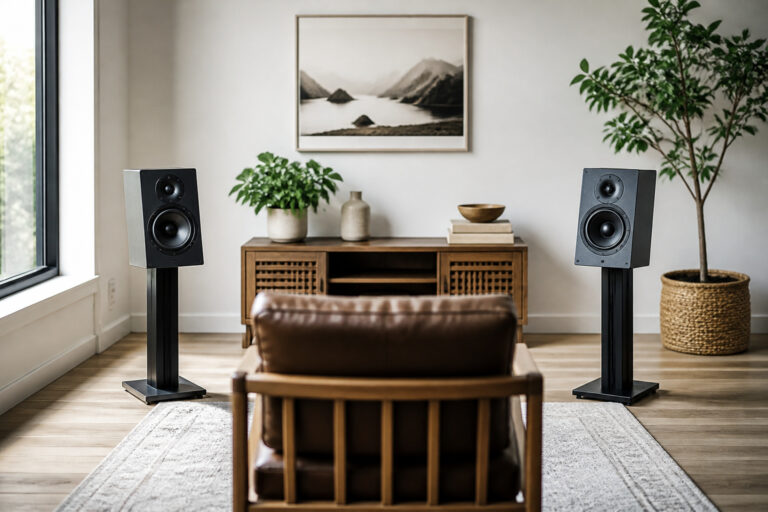
Wired speakers connect to an amplifier with speaker wire and avoid wireless interference, which suits a dedicated listening room. Wireless speakers connect over Bluetooth or Wi-Fi, which makes placement easy and suits multi-room setups.
Interference from other devices and thick walls can affect wireless performance.
Recommended Products

Seamless Audio Throughout Your Home: Transform your living space into an auditory haven with Dio Node, the pinnacle of Wi-Fi multi-room speaker technology. Effortlessly connect multiple speakers to blanket every corner of your home with rich, lossless sound. Whether you're hosting a party or enjoying a quiet evening, Dio Node ensures a flawless audio experience across your entire home, making it both a practical and luxurious addition to your daily life.

BLUETOOTH WIRELESS - Popular classic bookshelf speakers now can be enjoyed without the hassle of wires. Simply connection to an iPhone, Android, Tablet, PC or Mac.

Which to Choose

Choose wired for critical listening, gaming, studio work, or a fixed home setup. Choose wireless for portability, commuting, workouts, and flexible placement.
Many people use both: wired at home and wireless on the go. Our guide on improving headphone sound shows how to get more from either type.
Frequently Asked Questions
Can Wireless Audio Cause Hearing Damage Over Time?
Hearing damage comes from loud listening over long periods, not from whether the headphones are wired or wireless. Keep volume moderate, take breaks, and use noise cancelling to avoid turning up the volume in noisy places.
Do Wired Headphones Work Better With Older Devices?
Often yes. Older devices may lack modern Bluetooth, or support only basic codecs, while a wired connection works with any device that has a headphone jack. There is nothing to pair and no latency.
Is Wireless Audio Safe for People With Pacemakers?
Bluetooth transmits at very low power. The more common concern is that headphones contain magnets, and some manufacturers advise keeping them several inches from implanted medical devices. If you have a pacemaker or similar implant, ask your doctor and check the headphone manufacturer’s guidance.
Can I Use Wired and Wireless Headphones Simultaneously?
Usually not. Most devices send audio to one output at a time. Some phones support sharing audio between two Bluetooth devices, and a Bluetooth transmitter with a headphone splitter can feed several pairs.
Do Wireless Headphones Increase Earwax Buildup More Than Wired?
Not because they are wireless. Earwax buildup is related to earbuds that sit in the ear canal and trap warmth and moisture, whether wired or wireless. Clean your earbuds regularly, take breaks, and rotate with over-ear headphones if you listen for long periods.