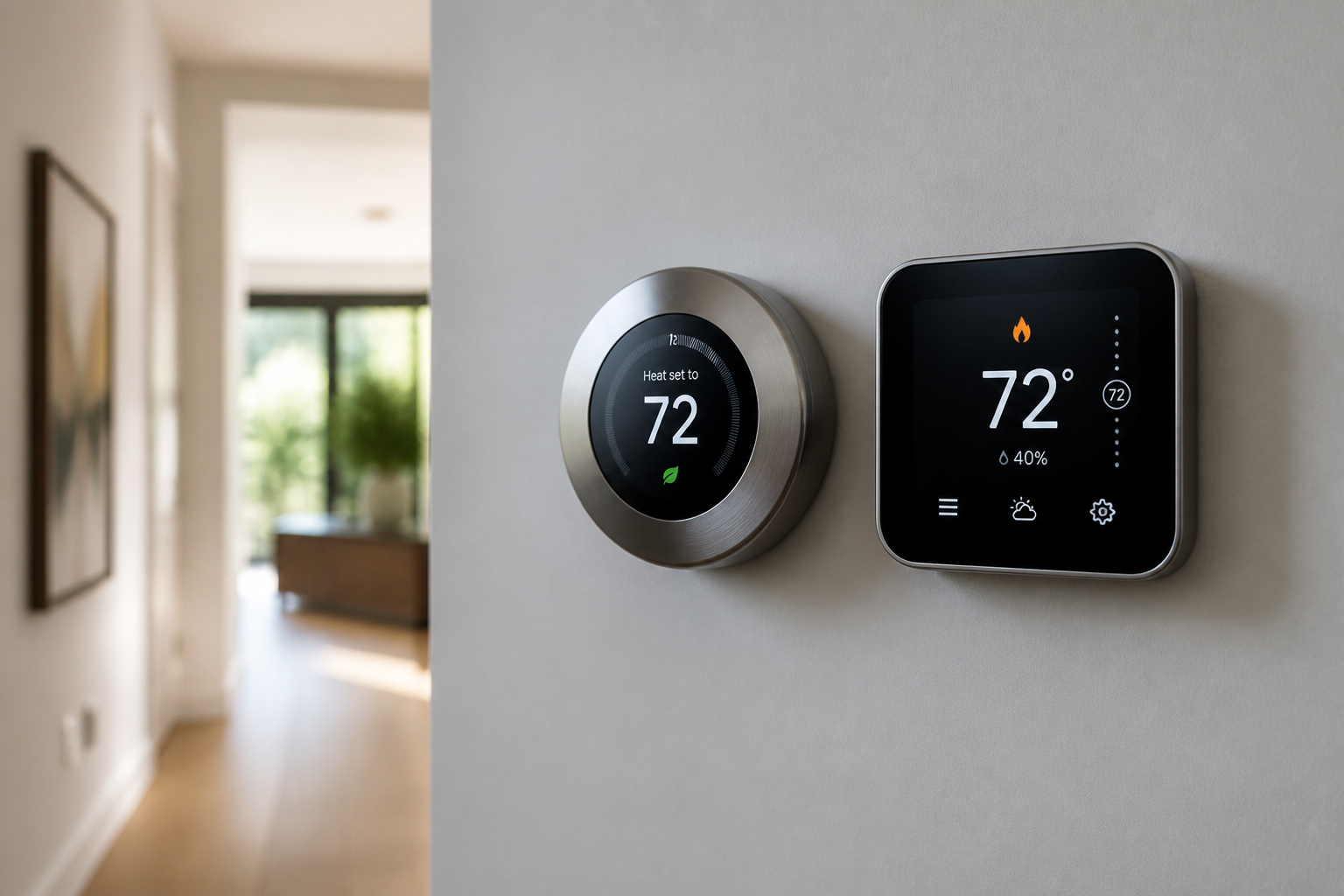
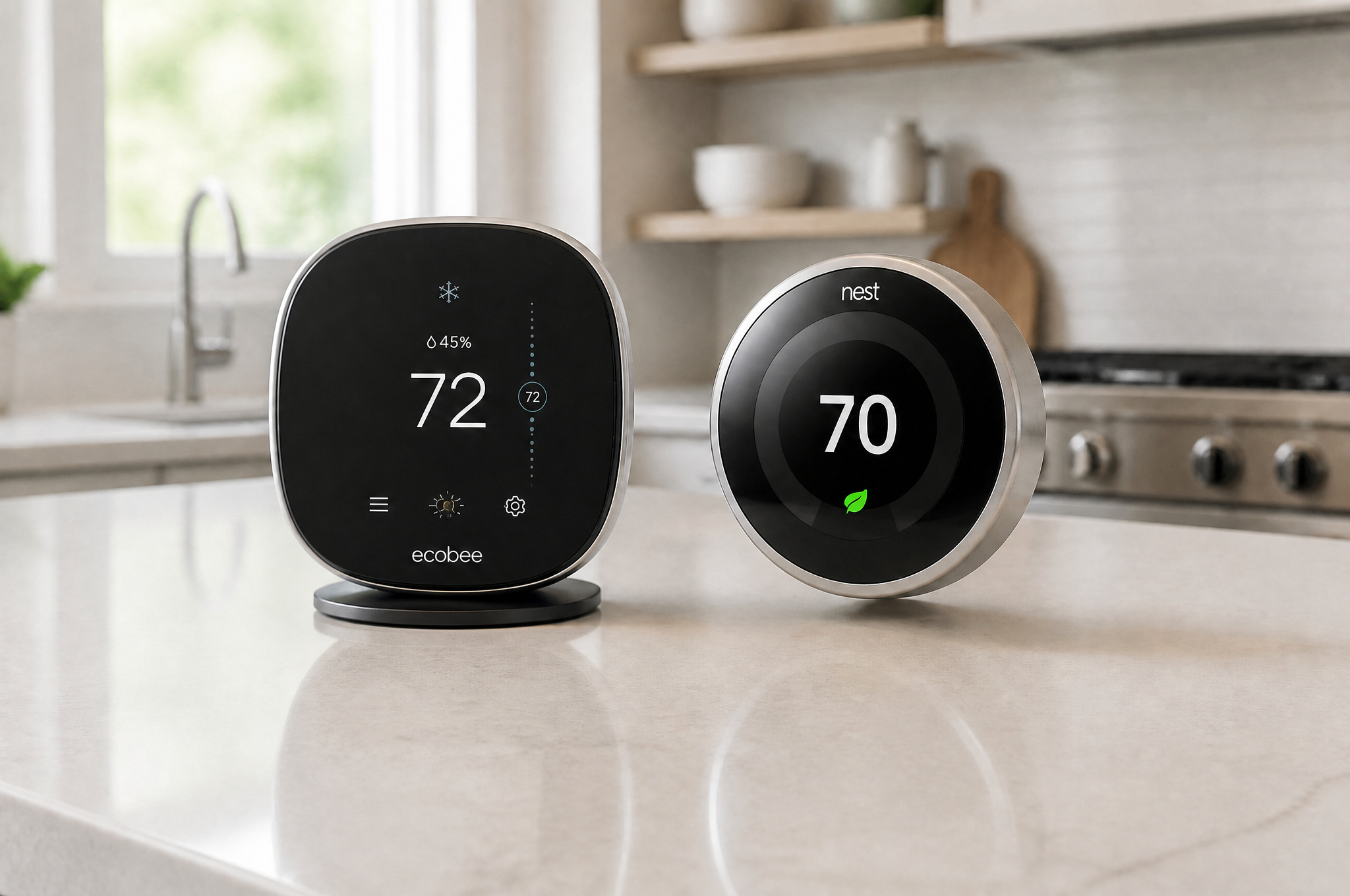
Shopping for a flagship smart thermostat almost always comes down to these two: the Nest Learning Thermostat and the ecobee Smart Thermostat Premium. Both are priced within a few dollars of each other, both include a bonus room sensor, and both work with Alexa, Google Assistant, and Apple HomeKit.
What actually separates them isn’t price or availability, it’s which set of extra features fits your house. Here’s the short version, followed by a closer look at each.
Key Takeaways
- The Nest Learning Thermostat (4th Gen) and ecobee Smart Thermostat Premium are both flagship-tier smart thermostats that include a remote room sensor in the box, so this is a genuine like-for-like comparison, not a budget-vs-premium mismatch.
- ecobee’s Premium model builds in Alexa voice control, air quality monitoring, and home-security-hub features (smoke alarm listening, freeze alerts) that Nest doesn’t attempt to match.
- Nest’s advantage is its Farsight display and genuinely hands-off auto-scheduling; it starts learning your routine in the first week with zero manual programming.
- Both work with Alexa, Google Assistant, and Apple HomeKit; only Nest currently lists Matter support directly on the device.
- Neither is dramatically cheaper than the other most of the year (both typically land in the low-to-mid $200s), so the deciding factor is usually which ecosystem and feature set fits the house, not price.
Nest Learning Thermostat vs. ecobee Premium at a Glance
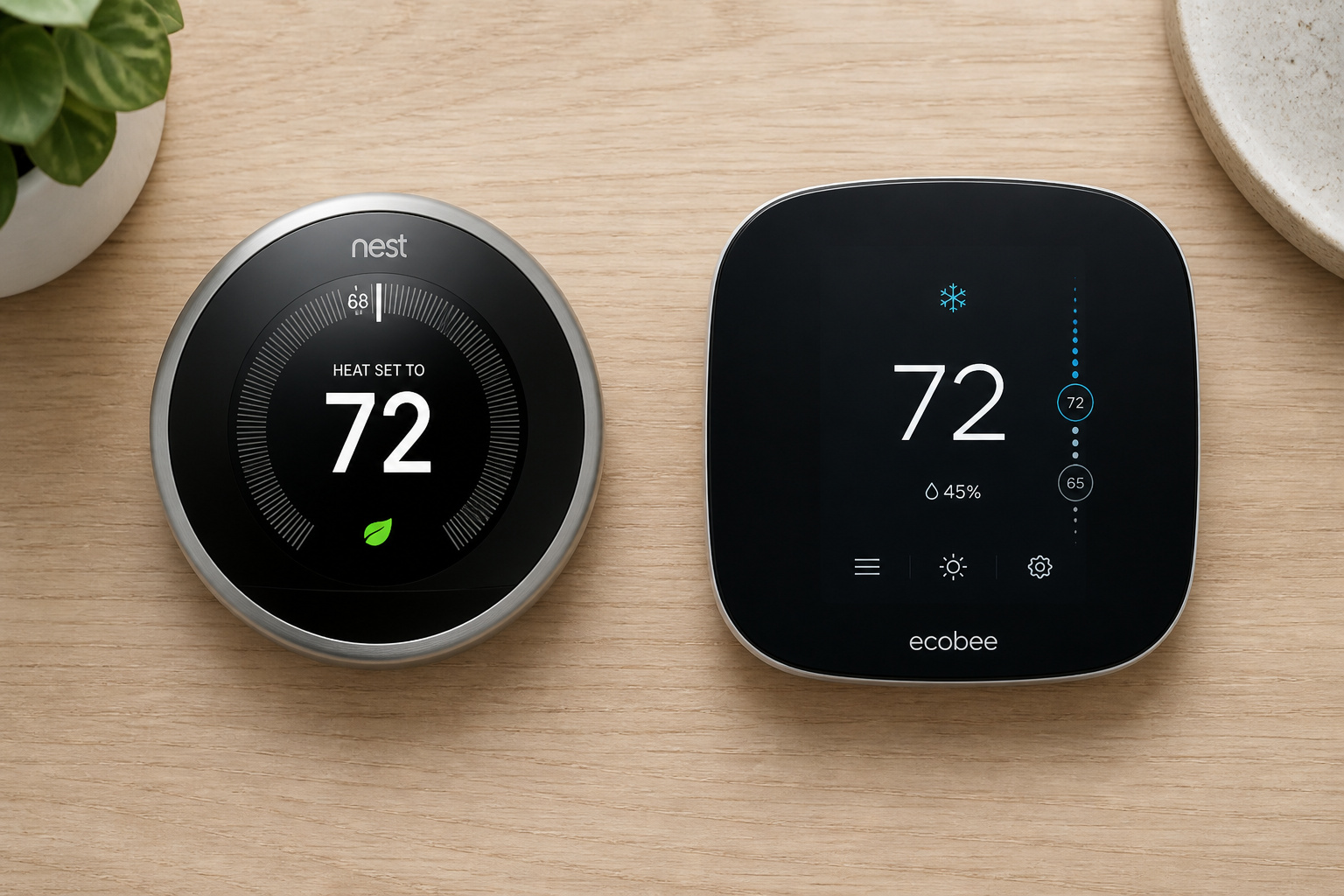
Both are the top-of-the-line models from their respective brands, and both ship with a bundled sensor, which matters because many cheaper smart thermostats charge extra for that. The core split: Nest leans on display quality and a genuinely automatic learning schedule, while ecobee leans on built-in voice control, air quality monitoring, and treating the thermostat as a small home-security hub. Neither is a clear universal winner; they’re built around different assumptions about what a homeowner wants a thermostat to do.
Readers coming from the site’s existing smart thermostat roundup will recognize both as the two most commonly recommended flagship picks; this piece exists to help decide between them as a final choice.
Meet the Nest Learning Thermostat
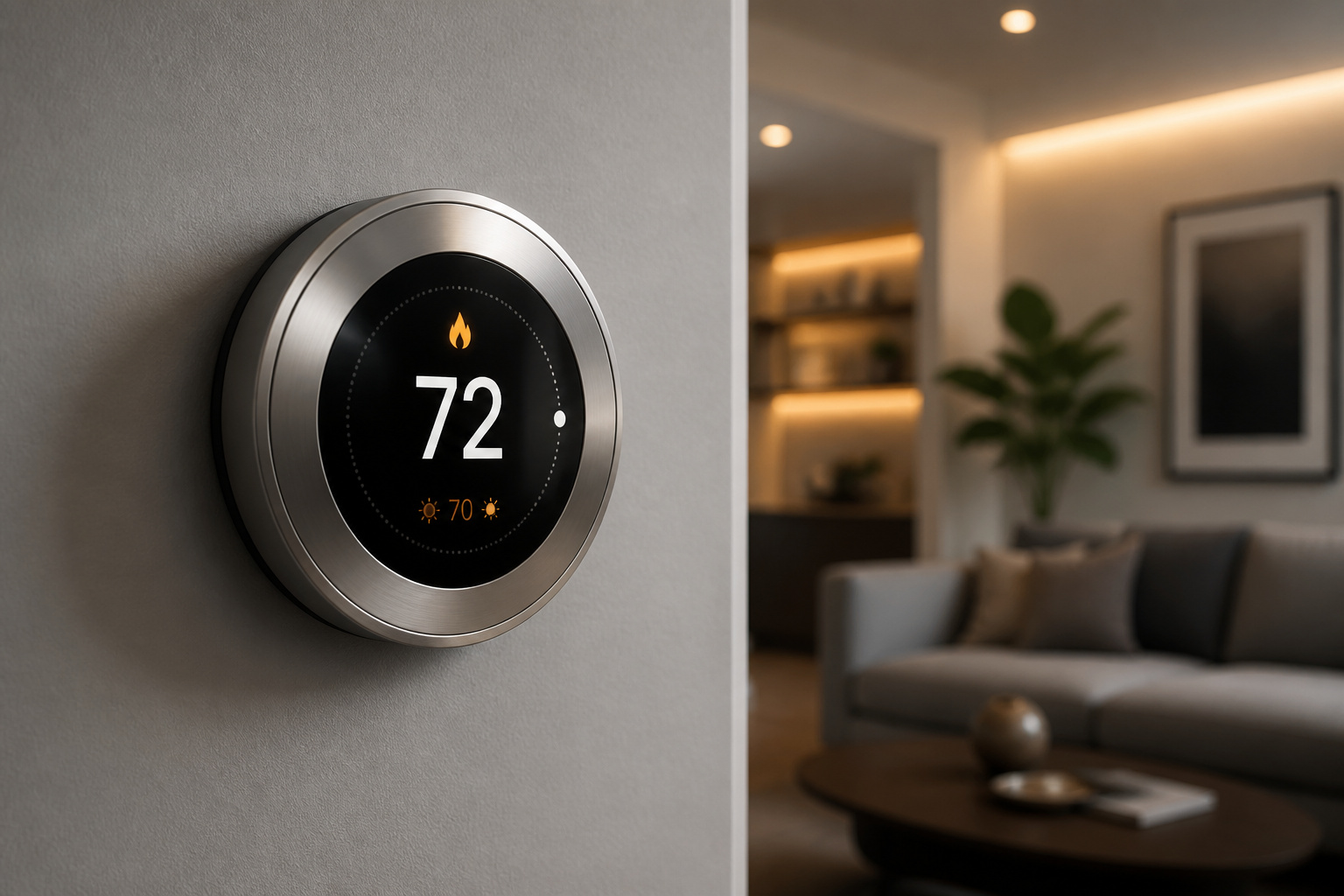
The 4th generation Nest Learning Thermostat is built around two things: a much larger, brighter “Dynamic Farsight” display (60% bigger than the previous generation, per Google, and legible from across a room with automatic brightness adjustment) and an auto-scheduling engine that genuinely doesn’t need manual programming.
It watches heating and cooling behavior for about the first week and builds a personalized schedule from that, then keeps adjusting as habits change. It also factors in outdoor temperature and sunlight exposure when deciding how hard to run the system, and its Adaptive Eco mode automatically dials back settings when everyone’s away.
This 4th-gen model comes bundled with a second-generation Nest Temperature Sensor, so a bedroom or den that runs hotter or colder than the thermostat’s location can instead be the reference point. It works with Alexa, Siri, Google Assistant, Apple HomeKit, and Matter, though all of its own smart features now run through the Google Home app rather than the legacy Nest app.
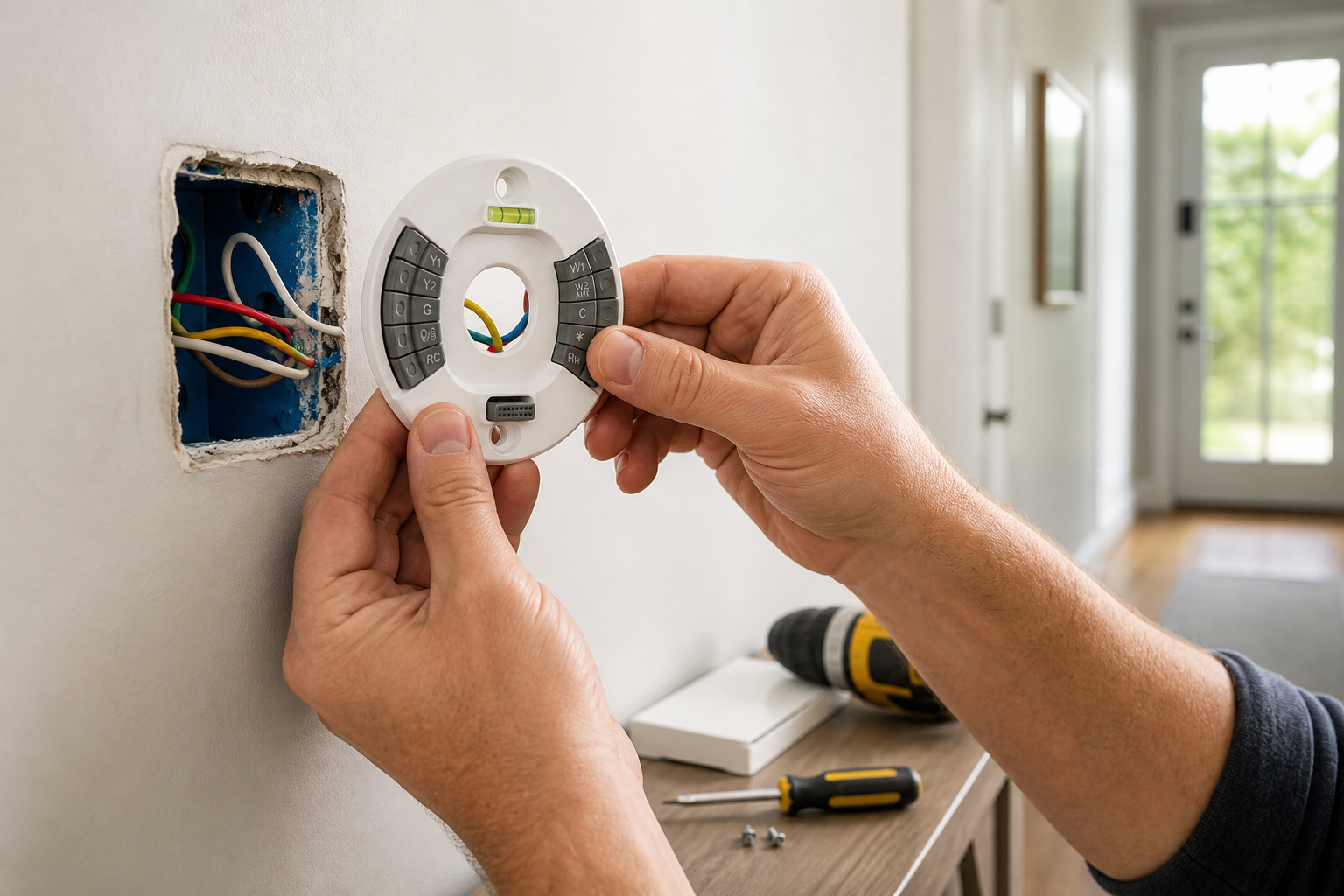
One practical caveat for readers upgrading from an older Nest: homes without a C-wire have occasionally reported power-detection issues during setup. That’s worth checking before buying if the current system is more than a decade old.

Nest’s smartest, most advanced thermostat yet, the Google Nest Learning Thermostat (4th gen) is a beautiful, brilliant way to save energy, keep your home comfortable, and...
Meet the Ecobee Smart Thermostat Premium
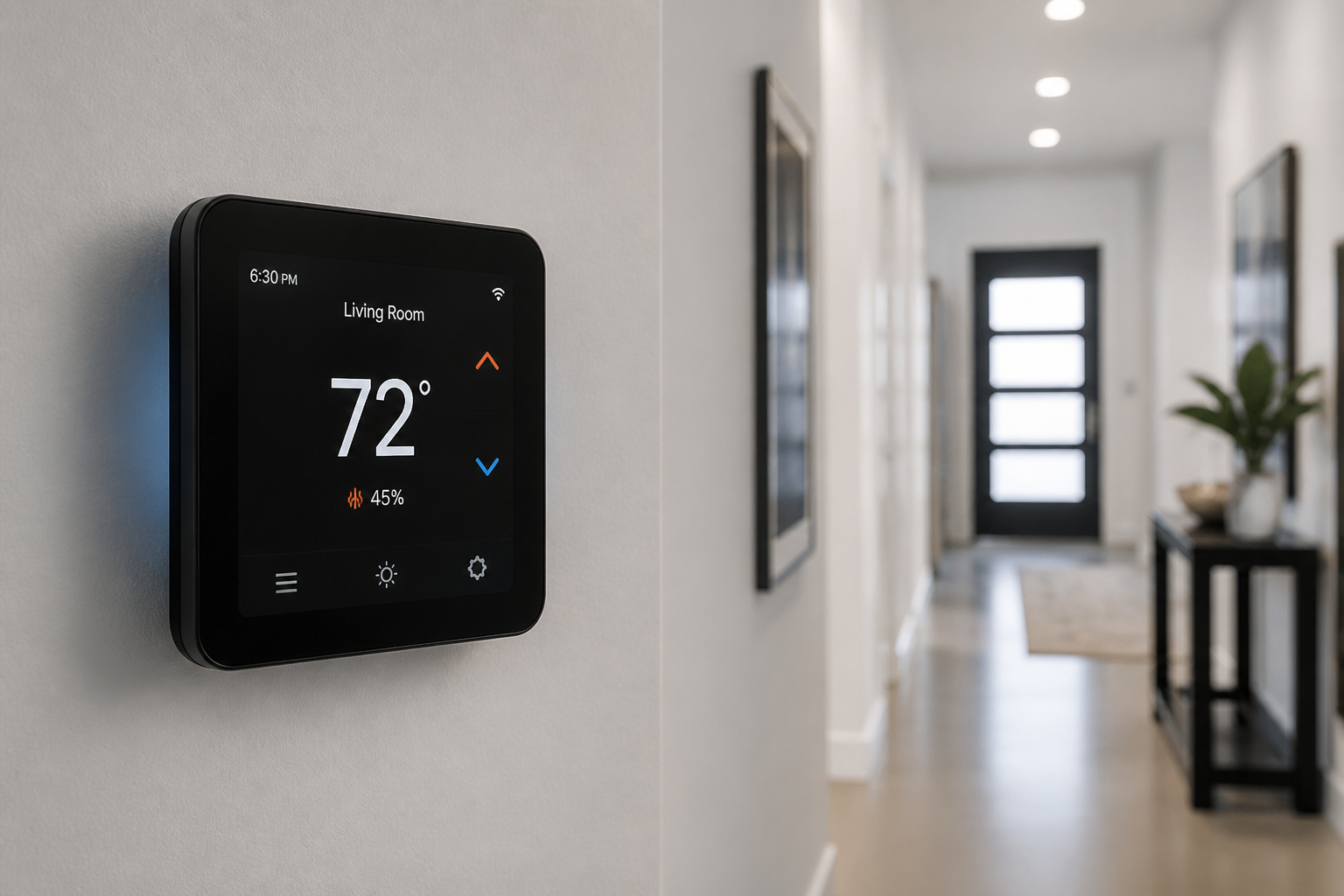
Ecobee’s flagship swaps Nest’s display-and-learning focus for a broader feature set. Its 4-inch touchscreen (50% larger than Ecobee’s previous generation) sits above built-in Alexa voice control; you can speak to the thermostat itself rather than needing a separate Echo speaker in the room.
It also runs a built-in air quality monitor that tracks and alerts on indoor air quality and offers filter-change reminders. Its radar-based occupancy detection is used both for scheduling and, notably, for a smoke-alarm-listening and freeze-pipe-alert feature that effectively turns the thermostat into a light home security hub.
Every Premium purchase includes one SmartSensor (for per-room temperature and occupancy) and a Power Extender Kit, which is ecobee’s own workaround for systems that lack a C-wire, a meaningfully different approach to the no-C-wire problem than Nest’s.
It’s compatible with Alexa, Google Assistant, Apple HomeKit/Siri, and Samsung SmartThings, plus it directly integrates with Generac backup-power products. Wirecutter has called it “the best smart thermostat,” and it was named to TIME’s Best Inventions list.

Save Up to 26% on your energy bills: ENERGY STAR certified. Automatically adjusts your temperature based on occupancy. Compared to a hold of 72°F Manage hot or cold spots in...
Display, Sensors, and Whole-Home Monitoring
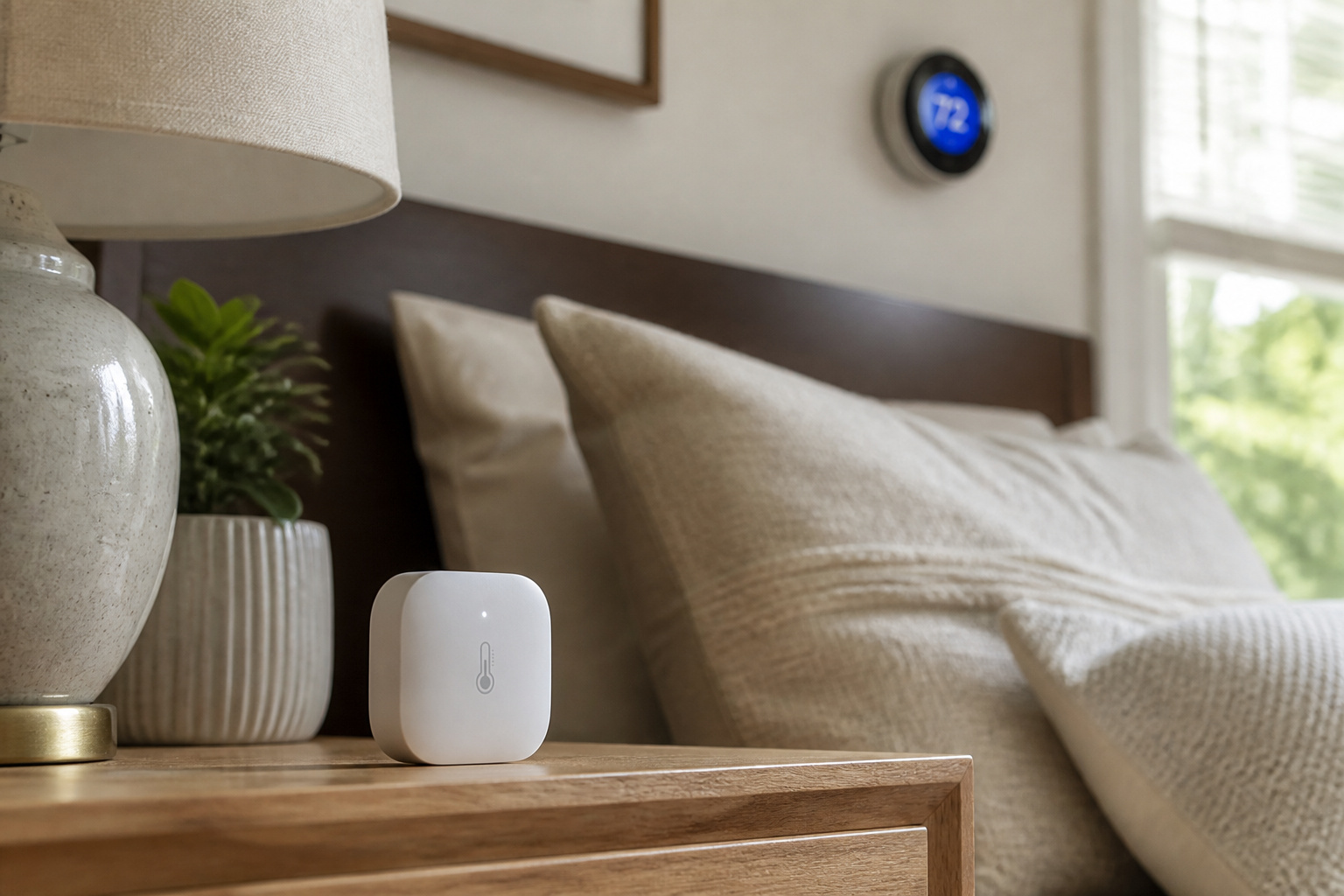
On raw display size and visibility, Nest’s Farsight is built specifically to be read from across a room without walking up to it, which is the one feature Nest talks about more than anything else in its own marketing.
Ecobee’s touchscreen is closer up, more app-like, and doubles as the interface for its extra monitoring features, which is really the bigger differentiator here: Ecobee’s Premium isn’t just a thermostat with a nicer screen; it’s positioning itself as a small monitoring hub (air quality, smoke alarm listening, freeze alerts) that also happens to control the HVAC system. Nest stays narrowly focused on temperature control and scheduling and does that one job with less to configure.
Both include one remote sensor in the box, so neither has a specific advantage there. Ecobee’s SmartSensor doubles as an occupancy sensor for its security-adjacent features. Nest’s temperature sensor doesn’t attempt that.
Smart Home Ecosystem Compatibility
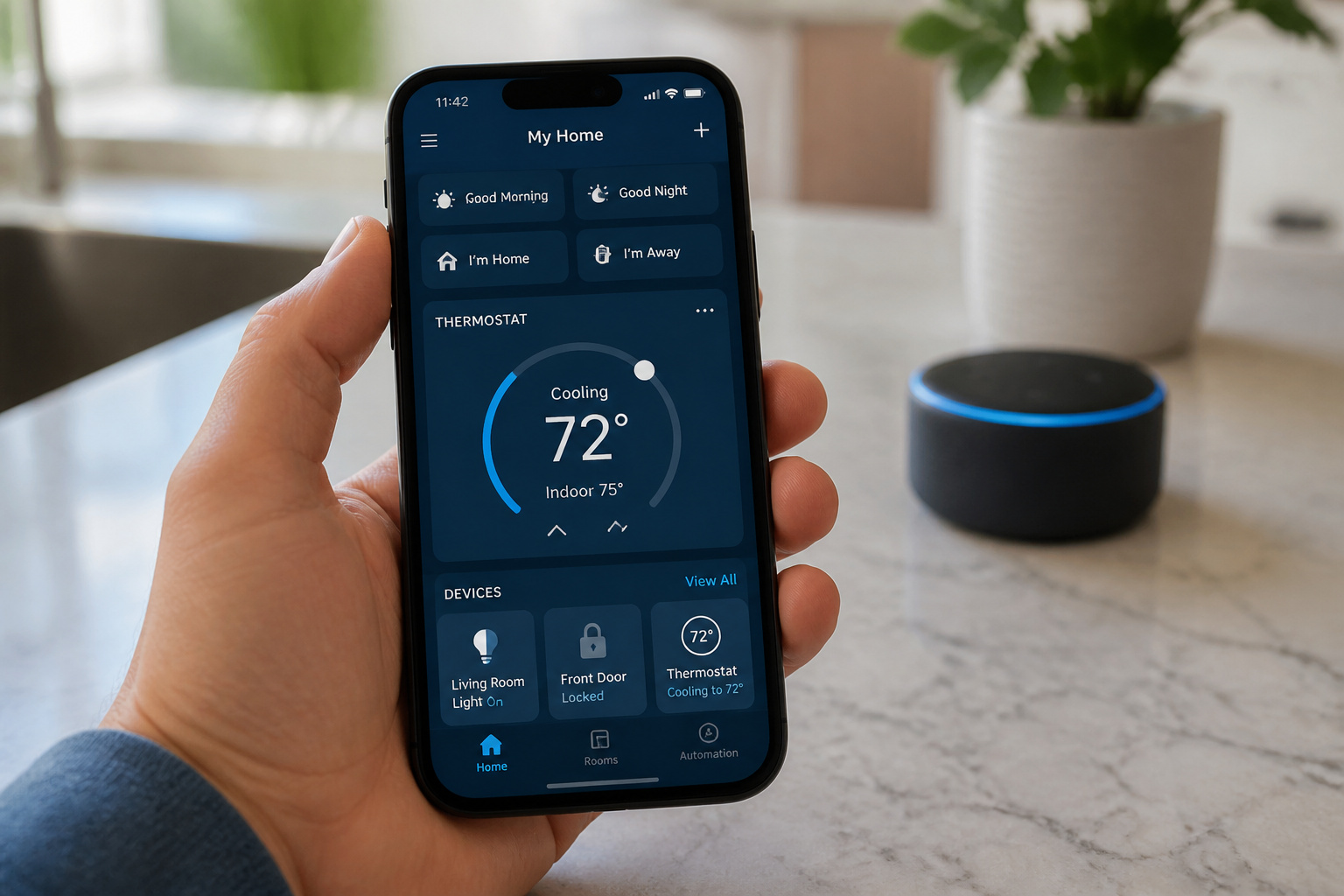
Both thermostats work across all three major voice ecosystems: Alexa, Google Assistant, and Apple HomeKit/Siri. The practical difference shows up in the details.
Ecobee has Alexa built directly into the thermostat, so voice commands work without another Alexa device in the room, and it also supports Samsung SmartThings and Generac integrations that Nest doesn’t.
Nest, being a Google product, integrates most tightly with the Google Home app and currently lists direct Matter support, which matters for anyone leaning toward Matter as the way to keep a mixed-brand smart home from getting fragmented (see the site’s Matter explainer for what that actually buys a household).
Readers still undecided on a broader ecosystem before committing to either thermostat may want to start with Alexa vs. Google Home vs. Apple HomeKit, since that decision affects more of the house than just the thermostat.
Energy Savings and Installation Considerations
Ecobee advertises up to 26% in combined heating and cooling savings for the Premium model; Nest’s own savings claims (independently verified by utility studies in the past) have generally landed in a comparable range for households switching from a non-programmable thermostat.
Either way, the bigger savings driver for most households isn’t which brand is chosen; it’s whether a smart thermostat replaces manual, forgotten programming at all (see the site’s breakdown of real smart-home energy savings for the actual math on payback time).
On installation, both anticipate the most common home-wiring problem, a missing C-wire, but solve it differently. Ecobee ships a Power Extender Kit with every Premium unit specifically for this.
Nest doesn’t include an equivalent accessory in the box, and some owners upgrading from very old systems have reported needing a C-wire adapter purchased separately. A home without a C-wire and without appetite for extra wiring work is a mild point in Ecobee’s favor for a smoother install.
Price and Which One You Should Buy
At the time of writing, both land in a similar range (Nest at $239.99 with its sensor bundle, ecobee’s Premium between $229.99 and $259.99 depending on ongoing sales), so price alone rarely settles this decision.
Pick the Nest Learning Thermostat for a household that wants the best-looking, most hands-off “set it and forget it” experience and is already leaning Google Home or Matter.
Pick the ecobee Smart Thermostat Premium for a household that wants the thermostat to double as an air-quality monitor and a lightweight security accessory, especially if a C-wire isn’t already in place, or if built-in Alexa without a separate speaker matters.
Frequently Asked Questions
Which one actually saves more on energy bills, Nest or Ecobee?
Independent studies on both brands report broadly similar savings, typically of 10-25% on heating and cooling versus a non-programmable thermostat. The bigger factor is usually whether the household had a working schedule before, not which of these two brands is chosen.
Does the ecobee Premium’s built-in Alexa replace an actual Echo speaker?
For thermostat-adjacent commands and general Alexa requests spoken near the thermostat, yes. It won’t replace a dedicated Echo speaker’s audio quality for music, but it does mean voice control works without one nearby.
Can the Nest Learning Thermostat be installed without a C-wire?
It can often work without one, but some owners upgrading from older systems have reported power-detection issues during setup. Checking current wiring before buying, or budgeting for a separate C-wire adapter, is the safer approach.
Is ecobee’s air quality monitor actually useful, or mostly a gimmick?
It tracks real indoor air quality metrics and sends alerts plus filter-change reminders, so it’s a genuine feature rather than a marketing add-on, though it’s not a substitute for a dedicated air quality monitor if that’s the primary goal.
Does either thermostat support Matter?
Nest currently lists direct Matter support on the device itself. Ecobee has not added the same direct support as of this writing, though its existing Alexa, Google Assistant, and HomeKit integrations cover most of what Matter is meant to simplify.