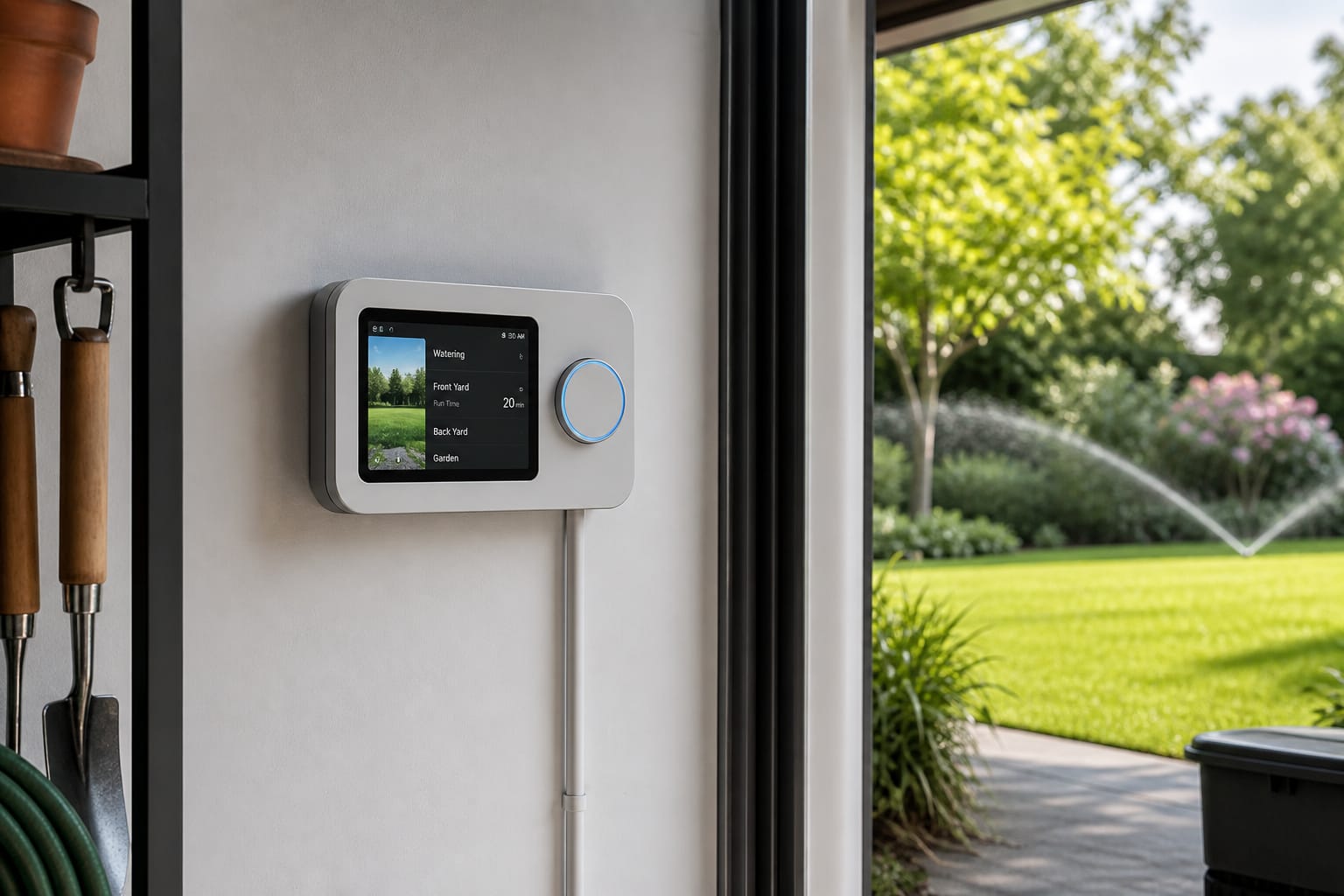
A smart sprinkler controller replaces the one thing a traditional timer can’t do: know it rained. That single change, watering based on actual conditions instead of a fixed clock, is where nearly all the real savings come from, not from anything resembling artificial intelligence.
Here’s what the water-savings numbers are actually based on, why installation is usually less intimidating than it looks, and the rebate money most people never bother checking for.
What a Smart Controller Actually Does Differently
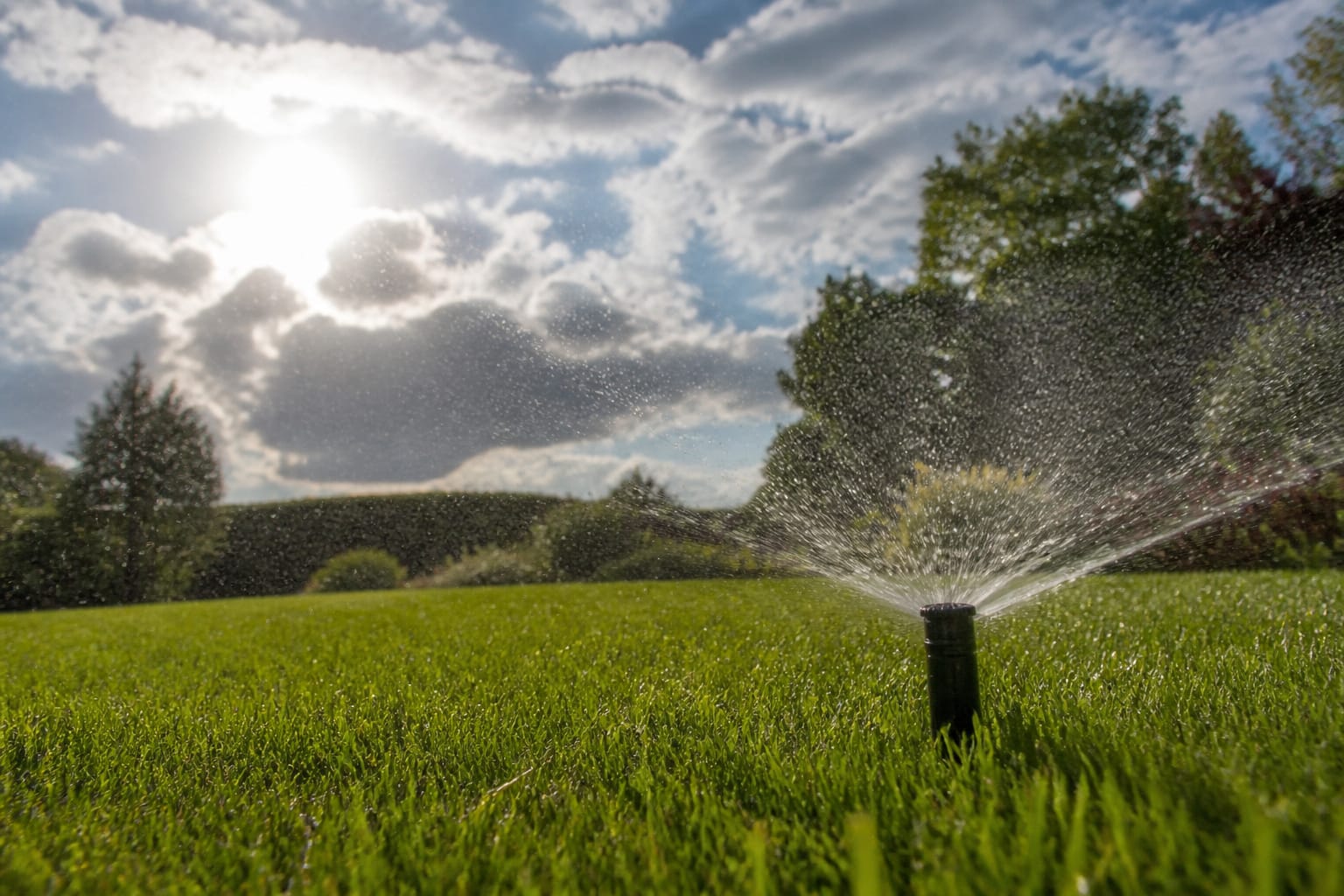
A standard sprinkler timer runs on a fixed schedule, Monday, Wednesday, Friday at 6 a.m., regardless of whether it rained the night before or the yard is already saturated.
A smart controller adjusts that schedule daily using either local weather data (a weather-based or “ET” controller, short for evapotranspiration, a calculation of how much water the soil and plants actually lost since the last watering) or a moisture sensor buried in the ground that measures actual soil conditions directly.
Either approach replaces guesswork with something closer to a real answer to “does this lawn need water today.”
The practical result isn’t a smarter watering schedule in some abstract sense; it’s fewer wasted watering cycles: skipped runs after rain, shortened runs during cool weather, and longer runs during a genuine dry spell, adjusted automatically instead of requiring someone to remember to change the dial by hand every season.
Products Worth Considering

Intelligent Irrigation Control: The Orbit Smart Sprinkler Controller manages watering with a powerful smart sprinkler that supports a completely automatic watering system

Smart Irrigation Control Anywhere: The Orbit B-hyve Indoor Smart Sprinkler Controller provides smart sprinkler timer functionality for efficient yard irrigation

Smart Irrigation Control Anywhere: The Orbit B-hyve Indoor Smart Sprinkler Controller provides smart sprinkler timer functionality for efficient yard irrigation
The Real Water Savings Number (and Where It Comes From)
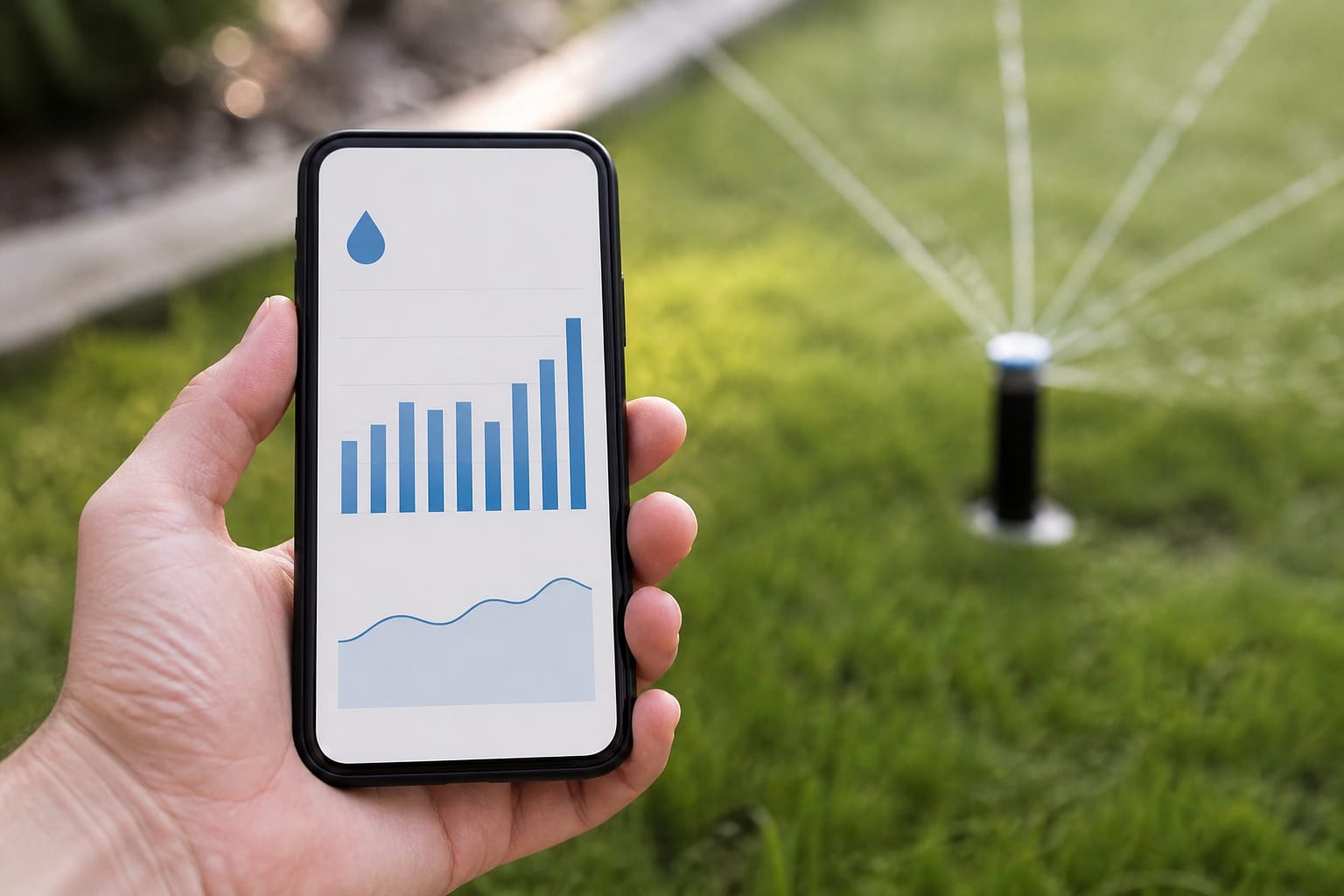
The EPA’s WaterSense program, which independently tests and certifies irrigation controllers, is the most trustworthy source for this number because certification requires proven real-world performance rather than a manufacturer’s marketing claim.
The EPA’s own figures: replacing a standard clock-based controller with a WaterSense-labeled weather-based controller saves an average home roughly 7,600 gallons of water annually, and WaterSense-labeled controllers generally can save up to 15,000 gallons a year compared to manual scheduling and overwatering habits.
Scaled nationally, the EPA estimates that if every U.S. home with an automatic sprinkler system used a WaterSense-certified controller, the country would save an estimated $4.5 billion in water costs and 390 billion gallons of water annually.
That’s a meaningful, independently verified number, and it’s worth checking for the WaterSense label rather than assuming any device marketed as “smart” delivers it; not every Wi-Fi-connected controller on the market has actually gone through WaterSense certification. The EPA maintains a searchable list of certified controllers, which is a more reliable way to confirm this than trusting a listing’s own claims.
Wiring: Why Installation Is Usually Easier Than It Looks
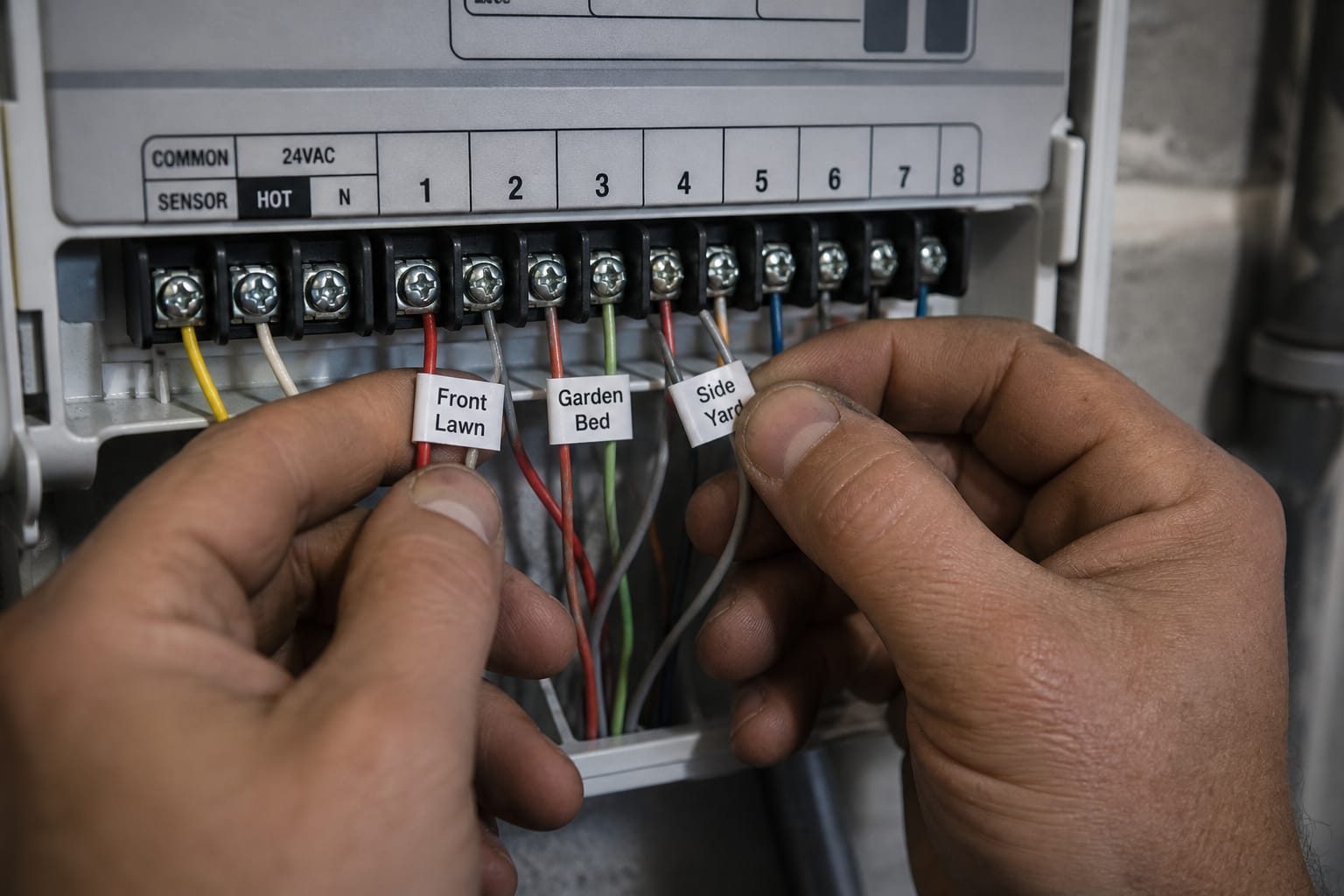
Most in-ground sprinkler systems run on a standard 24VAC low-voltage circuit. A smart controller almost always uses the same wiring topology as the timer it’s replacing: numbered terminals for each zone, one or more common wires (labeled C or COM), and, on systems that have one, a master valve or pump start terminal (labeled M, MV, or PS).
Swapping a smart controller generally means photographing the existing wiring for reference, labeling each wire by zone, and reconnecting them to the same-numbered terminals on the new unit, well within reach of a confident DIYer rather than a job that requires an electrician.
The details worth checking before buying: confirm the new controller supports at least as many zones as your system has, note whether your existing setup uses more than one common wire (some larger systems do, and each one needs a matching terminal on the new controller), and confirm compatibility if your system has a master valve or a pump rather than pulling directly from municipal water pressure.
A system without any in-ground wiring at all, a hose-based setup, isn’t left out either; Wi-Fi or Bluetooth hose-end controllers cover that case without any wiring project at all.
If you haven’t settled on a smart home ecosystem yet, check our comparison of Alexa, Google Home, and Apple HomeKit before buying into one for this category, since not every irrigation controller supports all three assistants equally.
Products Worth Considering

Easy Use App Control: Take charge of your sprinkler system from anywhere with the easy-to-use Hioazo app. Access watering schedules and monitor in real-time, so you won’t have to run back and forth to the garage anymore. Work indoor with 2.4GHz WIFI and 24VAC.

DITCH THE DIAL – Upgrade to smart irrigation with the free Rachio app for precise, easy control.
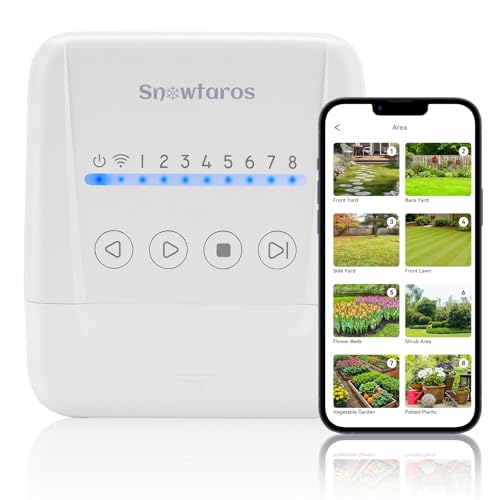
8 Zones Flexible Custom Scheduling --- This smart sprinkler controller supports 8 independent custom watering schedules with adjustable run times, start times and frequency. The Quick Run function allows instant watering without disrupting plans, and you can name and picture for zones for clear garden/yard irrigation management.
Weather-Based vs. Soil Moisture: Which Approach Actually Fits Your Yard
Weather-based controllers pull data in one of three ways: over Wi-Fi from regional weather stations and forecast data tied to your ZIP code, from an on-site sensor mounted at the property that measures actual local sunlight and temperature, or from a pre-programmed historical climate curve for your region as a fallback.
The Wi-Fi/regional-data approach is the most common and the easiest to set up, but it’s inherently a regional estimate rather than a reading of your specific yard; a property with unusual sun exposure, slope, or soil type won’t be perfectly captured by ZIP-code-level weather data alone.
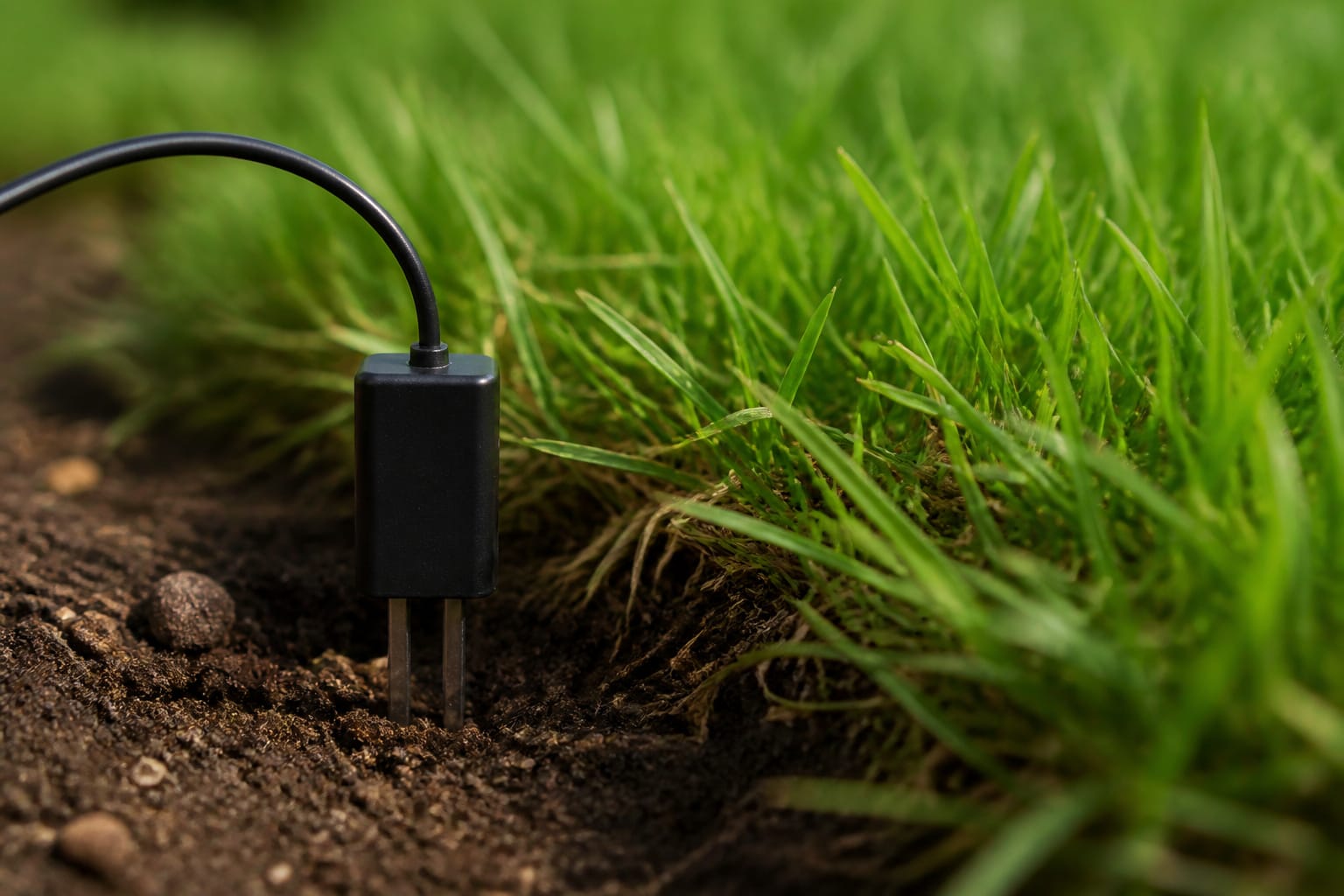
Soil moisture-based controllers instead use a sensor buried in the ground to measure actual water content directly, sidestepping the regional-estimate problem entirely, but requiring a physical sensor installation and, on larger or more varied yards, potentially more than one sensor to represent different zones accurately.
For a straightforward, relatively uniform yard, weather-based is simpler and works well. For a yard with meaningfully different zones, full sun versus deep shade, sloped versus flat, a soil moisture sensor (or a controller that supports both data sources) is worth the extra setup for more accurate results.
Products Worth Considering
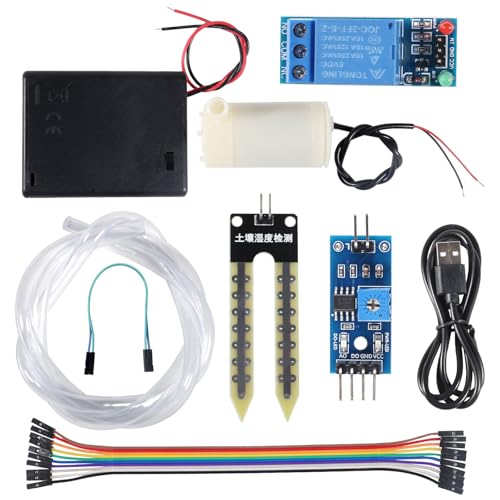
Automatic Irrigation DIY Kit: LM393 Soil Moisture Detect Sensor,Mini Water Pump, Tubing, Battery Case,One Channel 5V Relay Module and Jumper Wires in One Plant Watering System, It Can Water Plants and Flowers Automatically ,According to Monitor the Soil Moisture

✹✹Capacitive Sensor: Operating voltage: 3.3 ~ 5.5 VDC; Output voltage: 0 ~ 3.0 VDC; Interface: PH2.54-3P; Pin: Analog signal output, GND, VCC

Capacitive Soil Moisture Sensor: Compatible with for Arduino Raspberry Pi
Rebates: The Most Overlooked Part of the Math
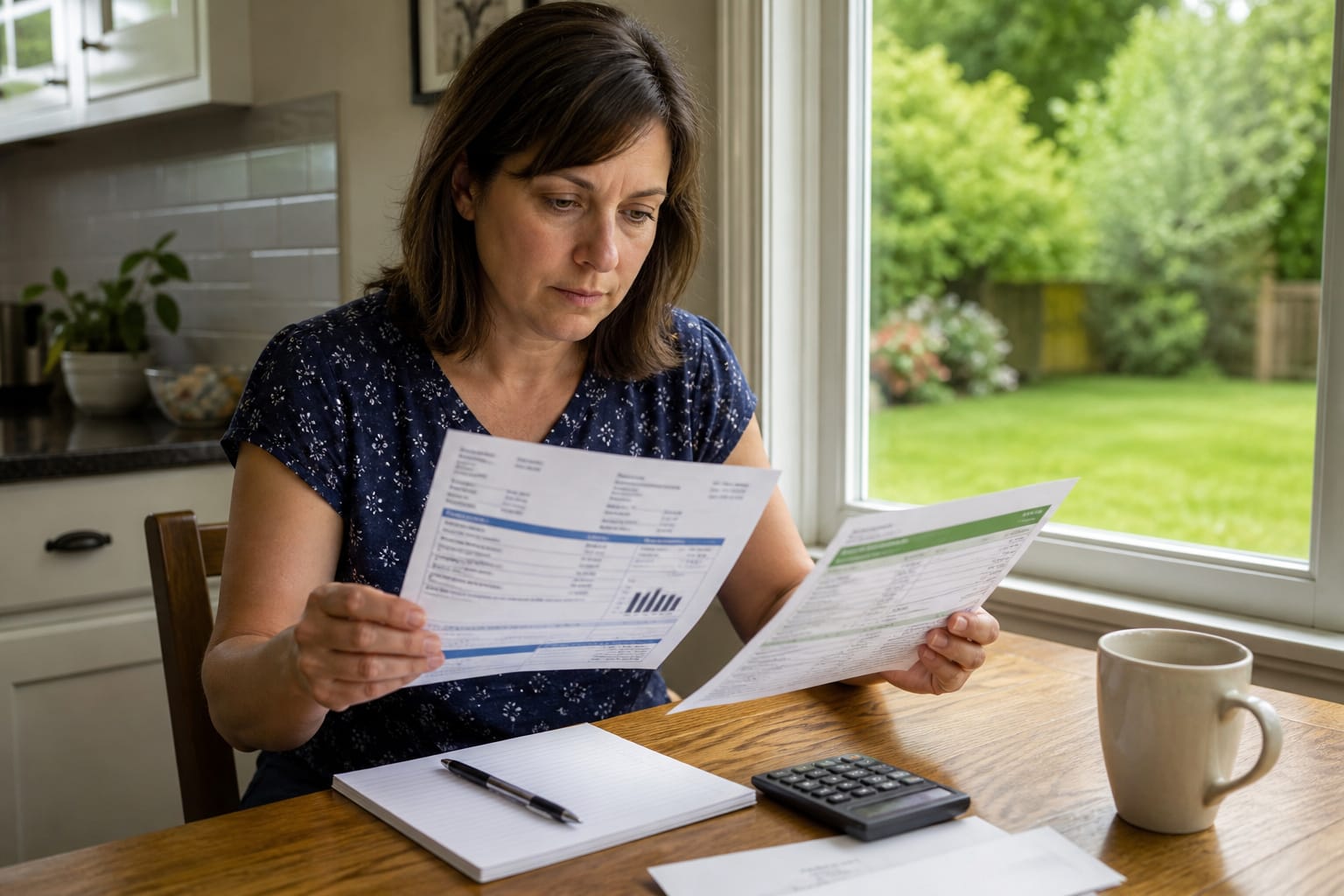
This is the part of the purchase most people never check, and it directly shortens the payback period. Many water utilities and municipalities offer a one-time rebate, usually around $50 to $100, for installing a WaterSense-certified weather-based or soil moisture controller, similar in structure to the utility rebates covered in our smart thermostat breakdown.
Eligibility and rebate amounts vary meaningfully by utility and region, so checking with your specific local water provider, or searching the WaterSense rebate finder, before buying is worth the few minutes it takes; a $100 to $300 controller with a $100 rebate attached is a meaningfully different purchase than the sticker price alone suggests.
Products Worth Considering

Indoor/Outdoor WiFi sprinkler timer puts control of your sprinkler system in the palm of your hand with intuitive Rain Bird mobile app

Intelligent Irrigation Control: The Orbit Smart Sprinkler Controller manages watering with a powerful smart sprinkler that supports a completely automatic watering system
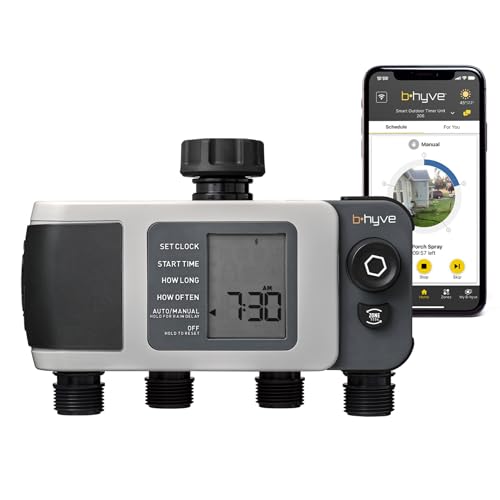
Automated Smart Watering: The Orbit 4-Port Smart Hose Watering Timer delivers effortless auto watering through an intelligent watering timer system
So, Is a Smart Sprinkler Controller Worth It?
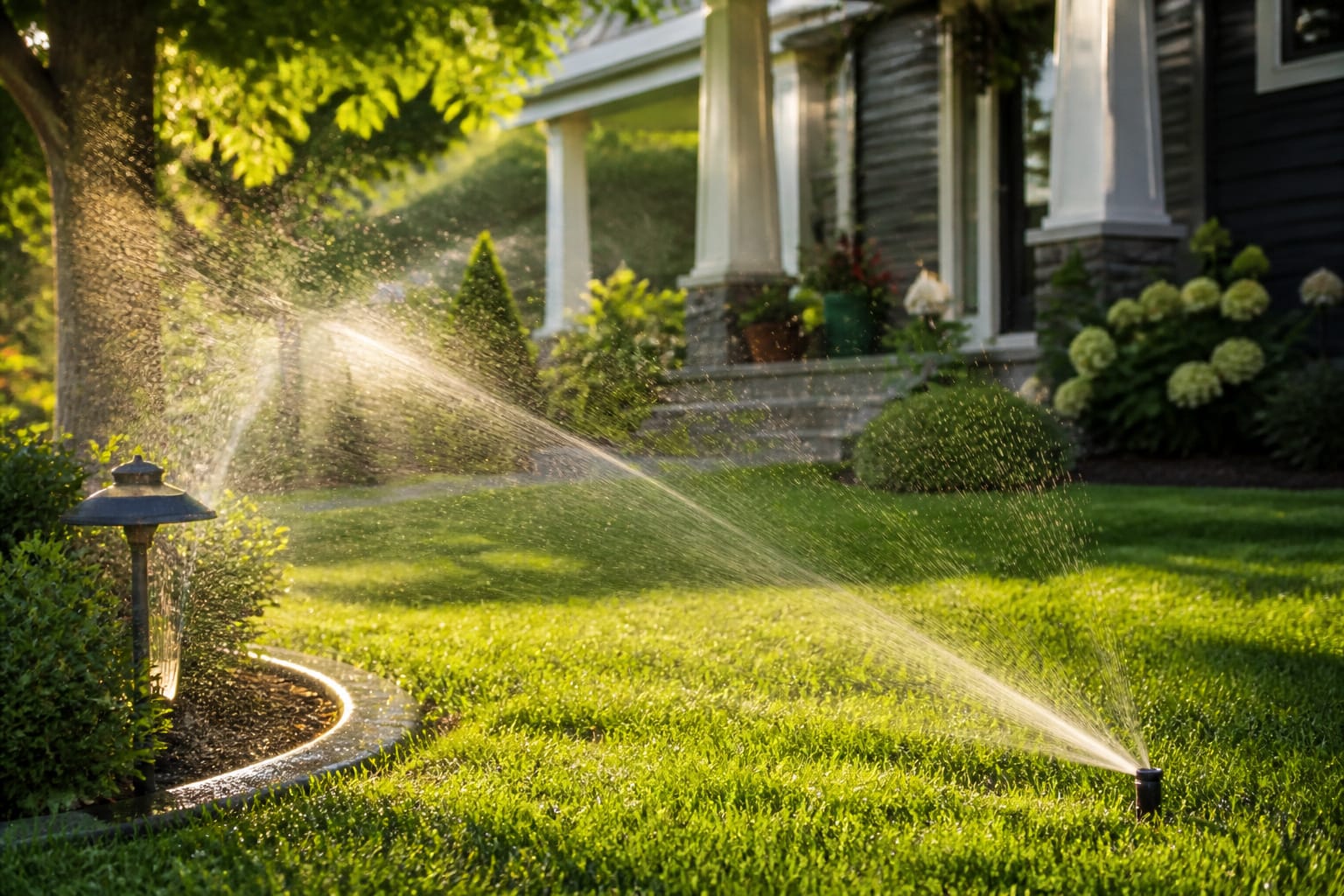
For most households with an existing in-ground irrigation system, yes, particularly if the current controller is a basic fixed-schedule timer that nobody’s been diligent about adjusting seasonally.
Look specifically for the WaterSense label to confirm the water-savings claim is independently verified, not just marketing language; confirm zone count and wiring compatibility (commons and a master valve, if applicable) before buying, and check for a local utility rebate before paying full price.
For the bigger financial picture across a full smart home setup, see our breakdown of what it actually costs to smart-home a house.
Products Worth Considering

Indoor WiFi sprinkler timer puts control of your sprinkler system in the palm of your hand with intuitive Rain Bird mobile app
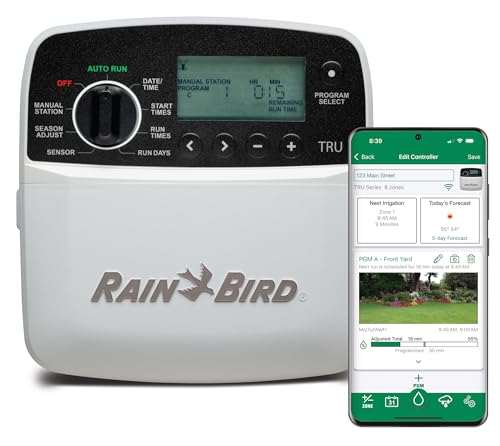
Convenient, economical bundle combines an easy-to-program 8-zone TRU timer with a preinstalled Smart WiFi module placing sprinkler system control in the palm of your hand anywhere in the world
Frequently Asked Questions
How much water does a smart sprinkler controller actually save?
According to the EPA’s WaterSense program, replacing a standard clock-based timer with a certified weather-based controller saves an average home 7,600 gallons of water annually. WaterSense-labeled controllers can save up to 15,000 gallons a year compared to manual ones. Look for the WaterSense label to confirm a controller has actually been independently tested rather than relying on marketing claims alone.
Will a smart controller work with my existing sprinkler wiring?
In almost all cases, yes. Smart controllers generally use the same 24VAC wiring topology as the standard timer they replace, numbered zone terminals, a common wire, and a master valve terminal if your system has one. Confirm the new controller supports at least as many zones as your system, and check for multiple common wires or a master valve/pump setup before buying.
Weather-based or soil moisture sensor, which is more accurate?
Soil moisture sensors measure your yard’s water content directly, while weather-based controllers estimate based on regional data tied to your ZIP code. For a fairly uniform yard, weather-based is simpler to set up and generally accurate enough. For a yard with meaningfully different zones, full sun versus shade, sloped versus flat, a soil moisture sensor gets more accurate results.
Are there rebates for smart sprinkler controllers?
Often, yes. Many water utilities offer a one-time rebate, commonly around $50 to $100, for installing a WaterSense-certified controller. Availability and amounts vary by utility and region, so check your local water provider or the WaterSense rebate finder before buying at full price.
I don’t have an in-ground system. Can I still get a smart controller?
Yes. Wi-Fi or Bluetooth hose-end controllers automate a hose-connected sprinkler or drip setup without any wiring or in-ground installation. They generally offer fewer zones and features than a full in-ground smart controller but the same weather-based scheduling in a simpler setup.