Fitness trackers are easy to buy and surprisingly easy to regret. The same few features appear on every box, so the questions that separate one from another are quieter: how long it lasts between charges, whether the data is useful without a monthly fee, and whether you will really wear it at night.
Lineups change every year, so this guide walks through the decisions in order and uses current models from recent testing by Tom’s Guide and NBC Select only as examples. Ratings below are how those reviewers reported them, and they change often.
Do You Need a Fitness Tracker or a Smartwatch?
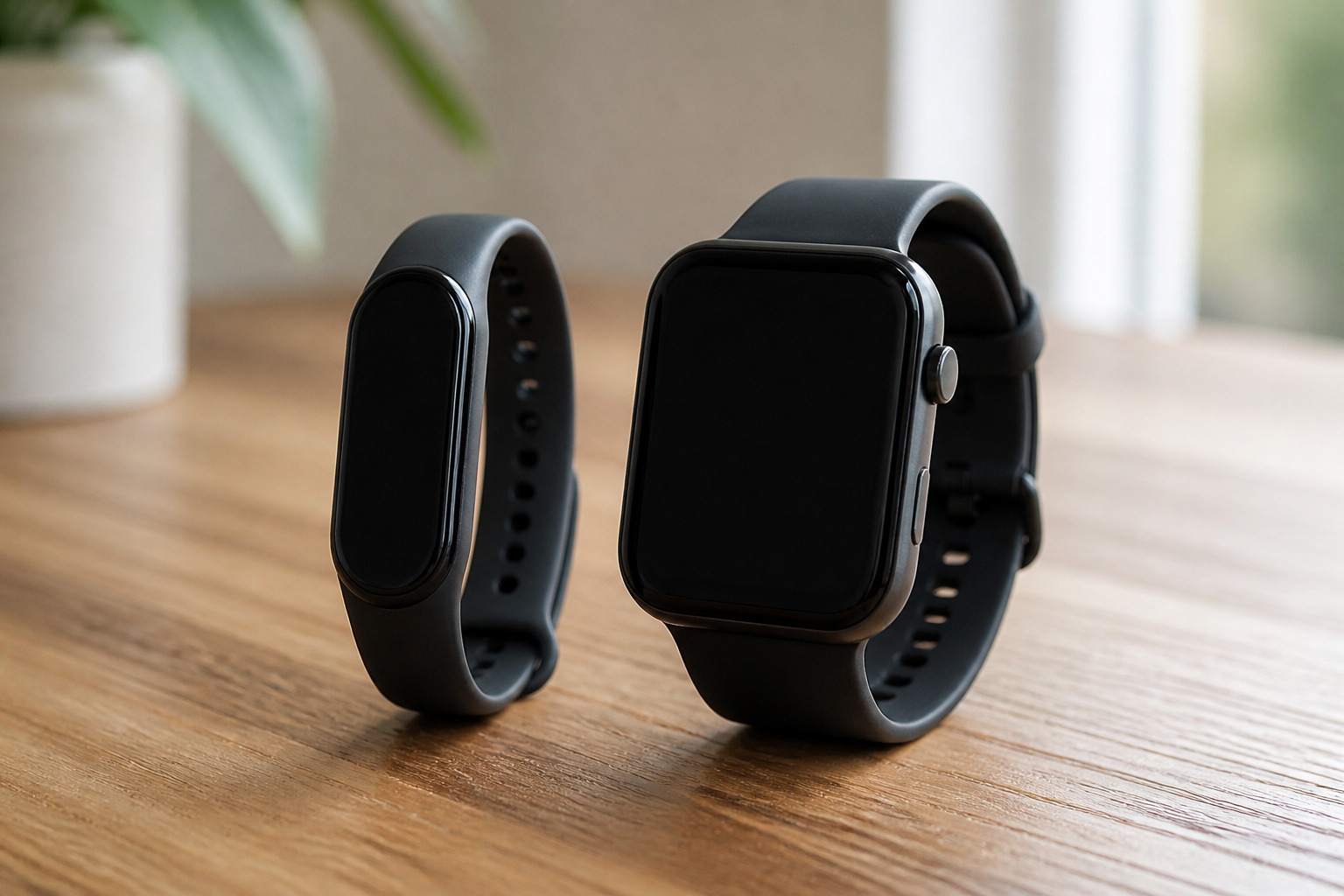
A fitness tracker focuses on steps, sleep, heart rate, and workouts, and it usually lasts a week or more on a charge. A smartwatch adds apps, payments, calls, and richer notifications, and it usually needs charging far more often. NBC Select lists the Apple Watch SE 3 at up to 18 hours of battery, while most trackers below are rated in days.
If you want phone-style features, our smartwatch buying guide covers that side. If you mostly want to see whether you are moving, sleeping, and recovering well, a tracker is simpler, cheaper, and easier to live with.
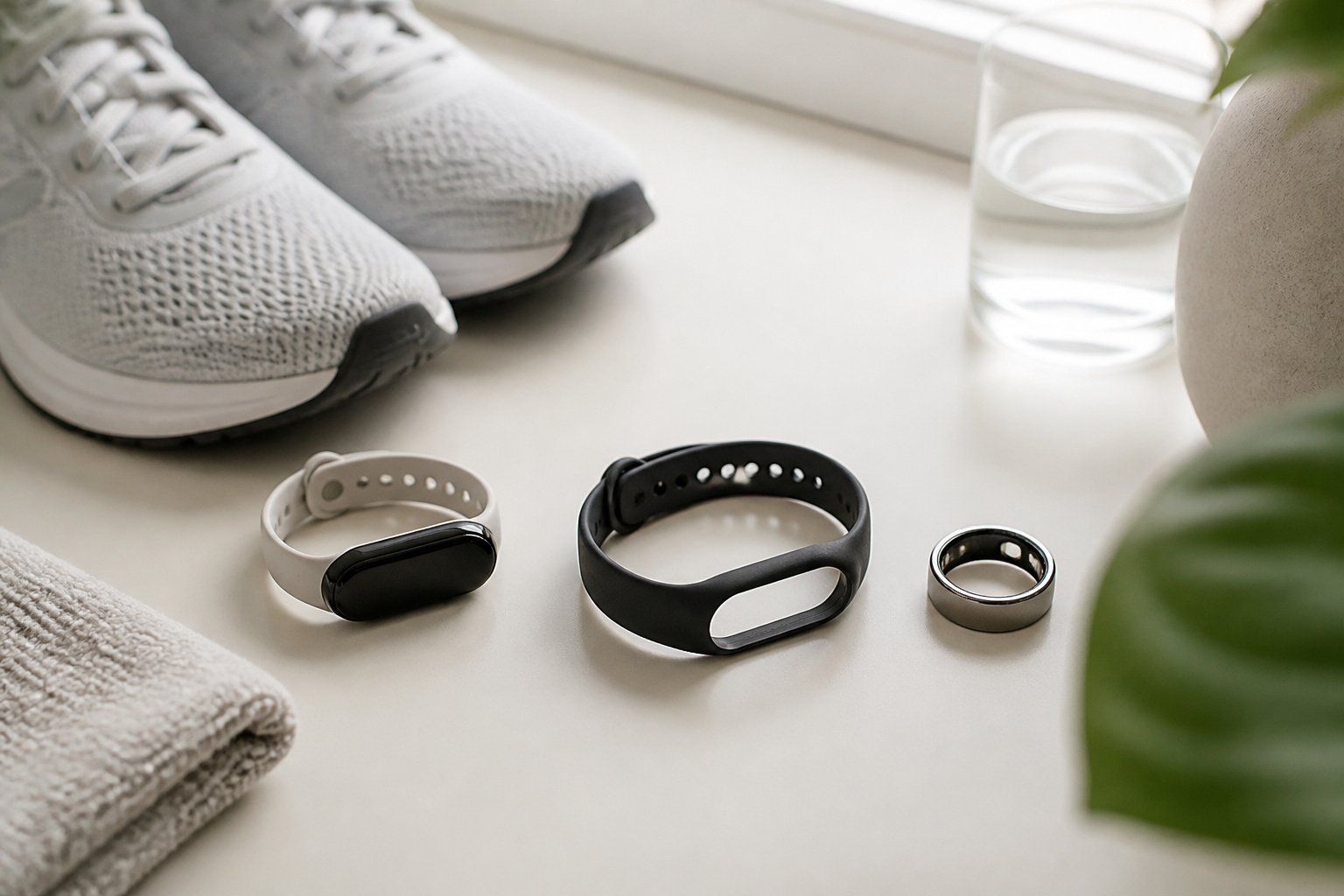
A third group, screenless straps and rings, skips the display entirely and makes you read everything in an app.
How Accurate Are Fitness Trackers, Really?

Step counts and sleep duration are good enough to show trends. Heart rate is where accuracy depends on what you are doing. A Cleveland Clinic study presented at the American College of Cardiology compared four wrist-worn devices and a chest strap against an EKG in 50 volunteers. The chest strap agreed almost perfectly with the EKG, while the wrist devices agreed less well and were off by roughly 15 to 34 beats per minute depending on the activity. They performed acceptably at rest and on a treadmill and worst on a bike or elliptical.
That study is from 2017 and tested older devices, and sensors have improved since, but the pattern still matters for buying. If you do interval training or cycling and want precise heart rate, pair your tracker with a chest strap rather than trusting the wrist alone.
Automatic workout detection is another weak spot. The NBC Select reviewer found that Google’s Fitbit Air didn’t always track workouts accurately on its own and recommended starting outdoor runs and rides manually, and gave the same advice for the Oura Ring 5. Treat auto-detection as a convenience, not a record. Sleep stages are the softest numbers of all, because they are estimated from motion and heart rate rather than measured brain activity.
How Long Should a Fitness Tracker Battery Last?
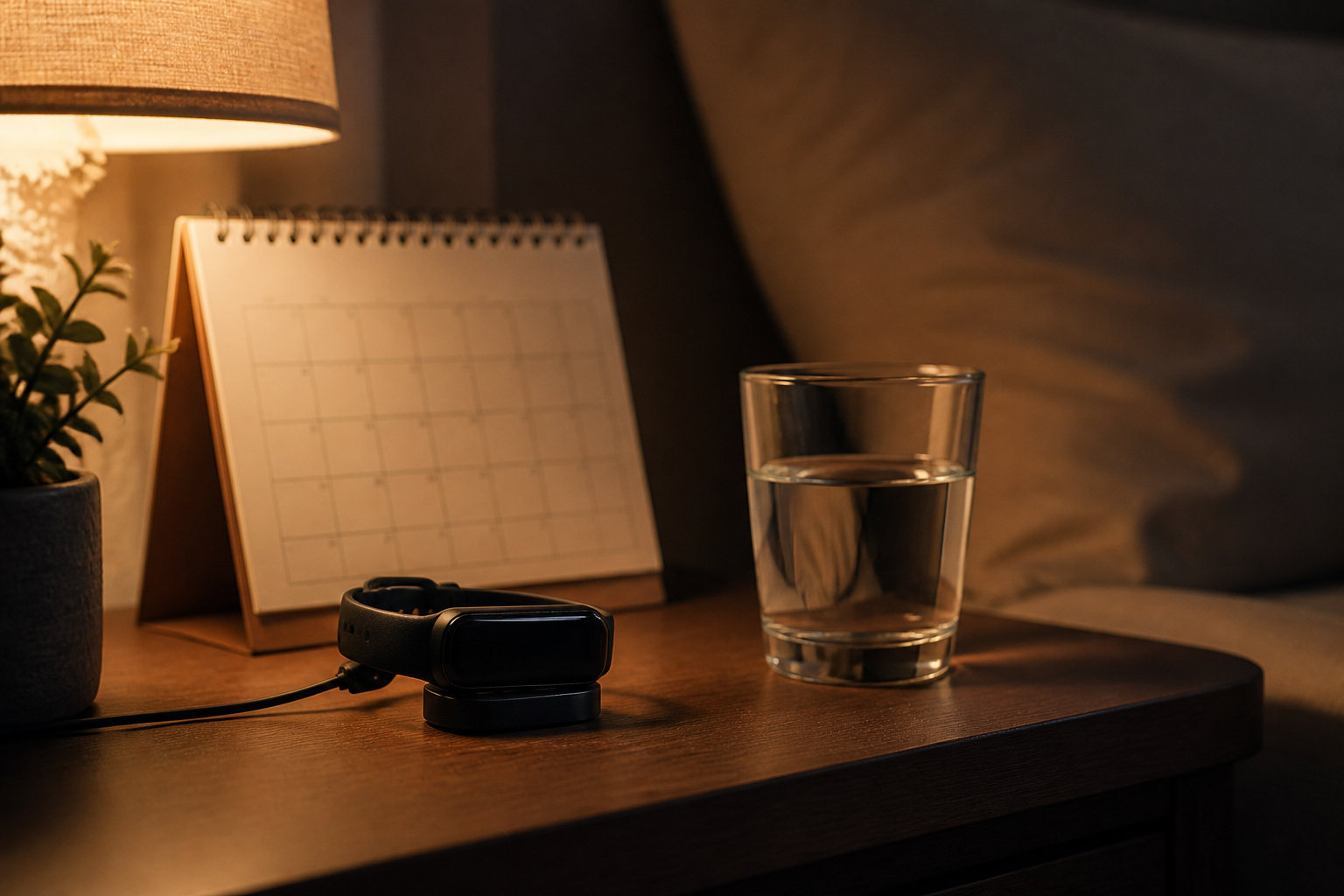
Battery life separates trackers more than almost any other spec, and it decides whether sleep tracking is practical. You will eventually stop wearing a tracker you have to charge nightly. These are the manufacturer ratings reported in recent testing.
| Tracker | Type | Rated battery |
|---|---|---|
| Xiaomi Smart Band 10 | Band | 21 days |
| WHOOP 5.0 | Screenless strap | Up to 14 days |
| Garmin Vivoactive 6 | Watch-style tracker | Up to 11 days, GPS up to 21 hours |
| Amazfit Active 2 | Watch-style tracker | Up to 10 days, GPS up to 21 hours |
| Oura Ring 5 | Ring | Up to 9 days |
| Fitbit Charge 6 | Band | Up to 7 days, GPS up to 5 hours |
| Google Fitbit Air | Screenless band | 7 days |
| Apple Watch SE 3 | Smartwatch | Up to 18 hours |
Treat every number as a best case. GPS, an always-on display, and frequent notifications all shorten it, and the GPS figure matters if you run or ride for long stretches. The Charge 6 is rated at only five hours of GPS, which is plenty for a daily run but not for a long race or a day hike.
Do Fitness Trackers Require a Subscription?
Often the sticker price is only part of the cost. Some trackers keep core data free and charge for coaching and deeper insights, and a few are barely useful without a membership. Check this before you compare prices, because a cheaper tracker with a fee can cost more than a pricier one without.
| Tracker or service | Subscription | How it is billed |
|---|---|---|
| WHOOP 5.0 | Required | Yearly membership, with several tiers |
| Oura Ring 5 | Needed to see more than the current day’s stats | Monthly membership |
| Google Fitbit Air and Fitbit trackers | Optional (Google Health Premium) | Monthly plan |
| Garmin watches | Optional (Connect+) | Monthly plan |
| Apple Watch SE 3 | None required | No fee for core data |
Add it up over two years. A low-priced tracker with an optional plan is cheap if you skip the plan and noticeably less cheap if you want the coaching. A ring or strap with a required membership keeps costing you long after purchase. If you only want steps, sleep, and workouts, favor trackers whose core features are free, such as the Xiaomi Smart Band 10, which Tom’s Guide lists as having no paywalled insights.
Band, Screenless Strap, Ring, or Watch: Which Form Fits You?
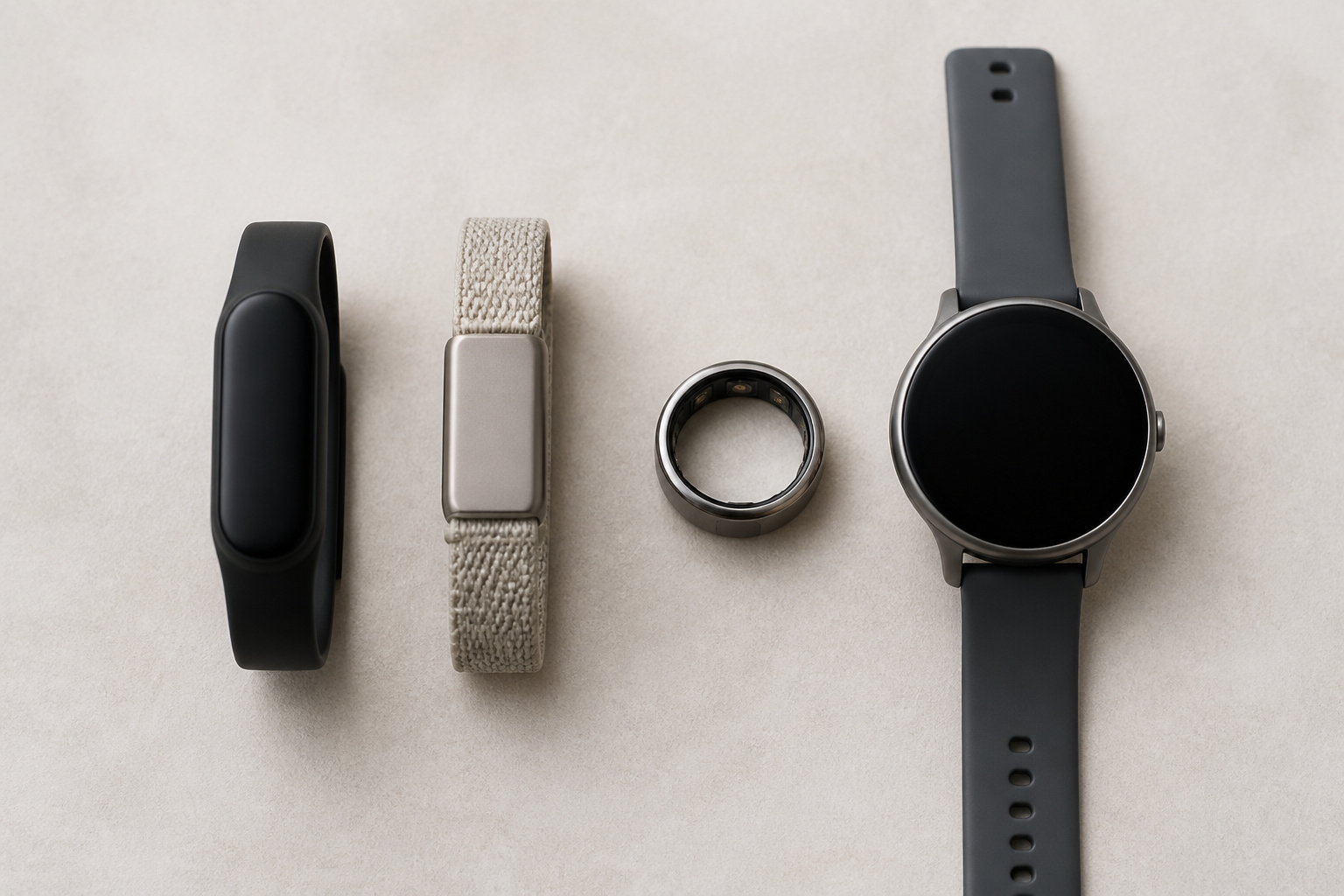
Pick the form first and the brand second.
- Slim band: A small screen band is the easiest place to start. NBC Select picked the Fitbit Charge 6 for beginners, and Tom’s Guide picked the Xiaomi Smart Band 10 as the best budget option.
- Watch-style tracker: A round or square screen gives you maps, training screens, and more sports modes. NBC Select named the Garmin Vivoactive 6 best overall and the Amazfit Active 2 best budget.
- Screenless strap or band: Nothing to look at on your wrist, so it suits people who want recovery and sleep data without another screen. Google’s Fitbit Air is one example, and the WHOOP 5.0 is another, aimed at athletes and sold by membership.
- Ring: Comfortable to sleep in and easy to forget you are wearing. The Oura Ring 5 is the example here, and it needs the membership noted above.
- Serious runner: Multi-band GPS gives more consistent distance and pace. NBC Select picked the Garmin Forerunner 570 for runners.
Will a Fitness Tracker Work With Your Phone?
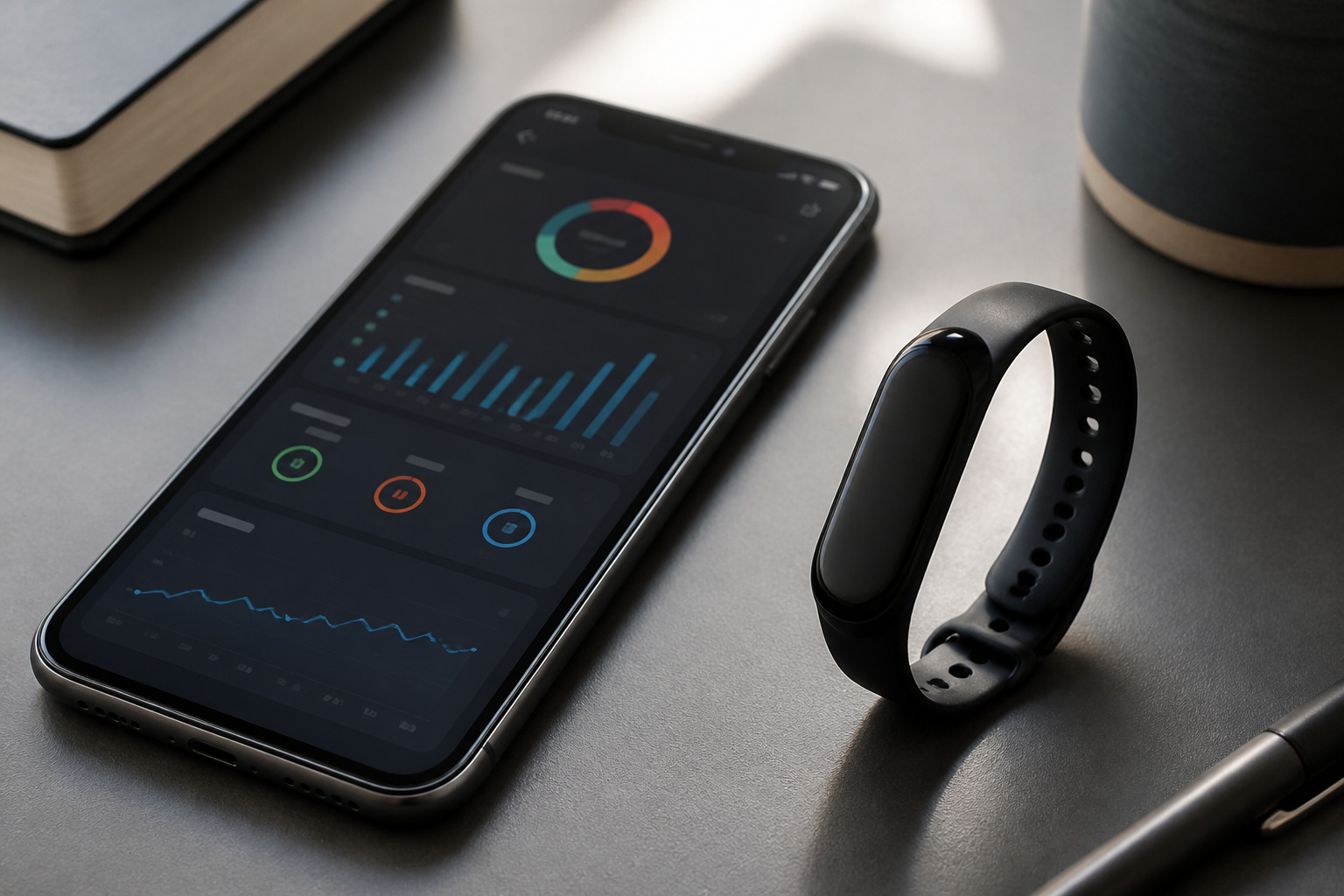
Check compatibility first, because it removes options faster than price. An Apple Watch works only with an iPhone, and Samsung Galaxy Watches are built for Android phones. Garmin, Amazfit, Fitbit, and Oura all have apps for both iPhone and Android, though some features work better with one OS or the other. Manufacturers also set a minimum phone software version that rises over time, so confirm it on the maker’s page if your phone is a few years old.
If you are still choosing a phone, our guides to which iPhone to buy and what to look for in an Android phone cover the other half of the decision.
How Much Should You Spend on a Fitness Tracker?
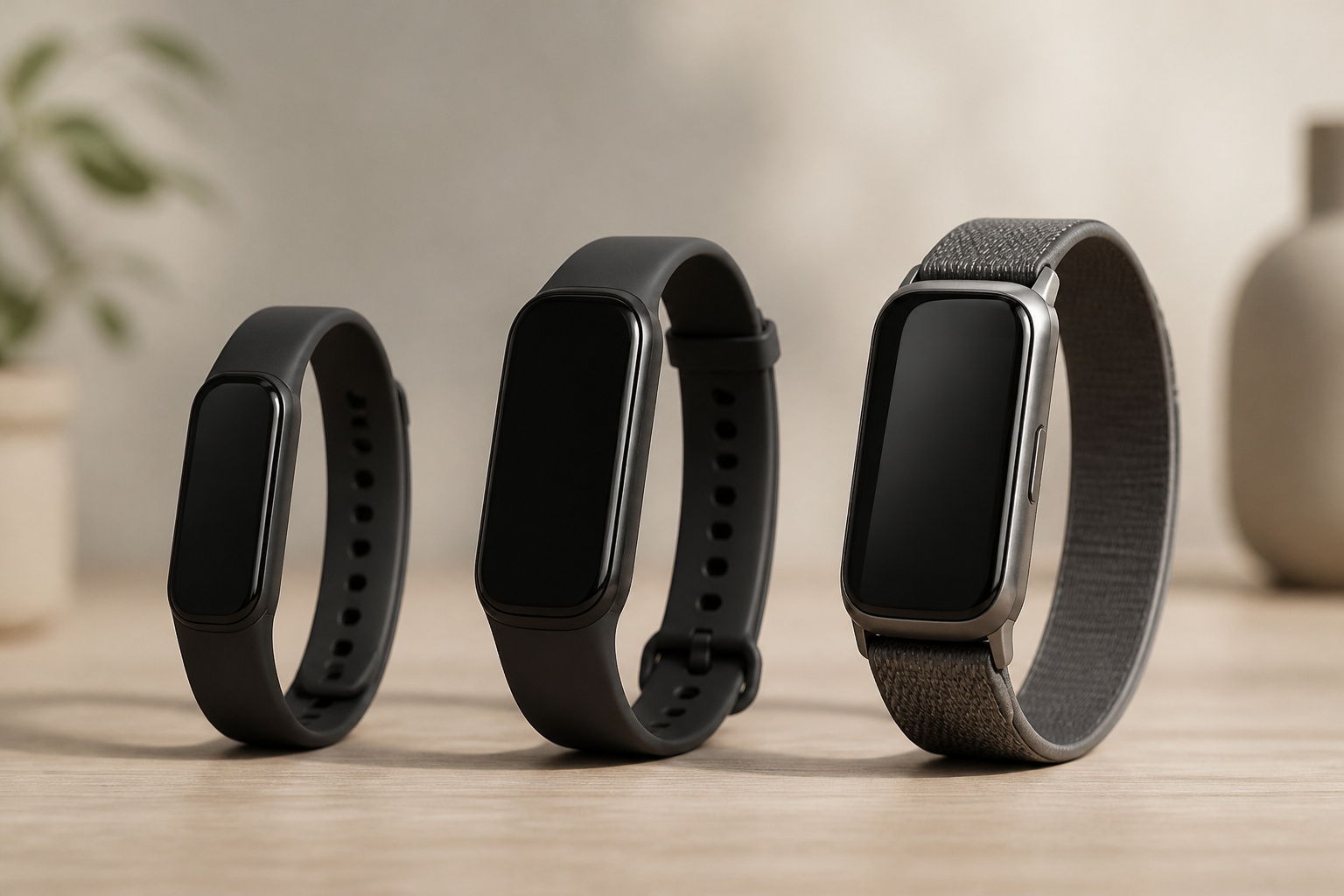
A budget band gets you a capable tracker with long battery life and no subscription, which is all most people need. Stepping up adds built-in GPS or a screenless design with optional paid insights. The higher you move, the better the displays, deeper training features, and watch-style designs, and at the top you are paying for a ring, a runner’s multi-band GPS, or a premium membership.
Spend more only for something you will use weekly: built-in GPS if you run without your phone, a longer battery if you want sleep tracking, or a screen you can read in sunlight. The best tracker is the one you will actually wear every day.
Frequently Asked Questions
Can I Wear a Fitness Tracker in the Shower or While Swimming?
Check the water resistance rating for your exact model. A rating of 5ATM or higher is generally suitable for pool swimming, but water resistance is not waterproofing, and seals can wear over time. Avoid hot showers, soap, and high-speed water impact unless the maker says the tracker is rated for it.
How Often Do I Need to Charge a Fitness Tracker?
It depends on the type. Most bands and rings last about a week or more, watch-style trackers last for 10 days or so, and smartwatches last for a day or less. GPS workouts, an always-on display, and notifications all shorten the rating.
Can a Fitness Tracker Track Sleep Accurately?
It is reasonably good at estimating when you fell asleep and how long you slept, and weaker at identifying individual sleep stages. Use the data to spot trends, such as how a late workout affects your night, and see a doctor if you think you have a sleep disorder.
Is a Cheap Fitness Tracker Good Enough?
For steps, sleep, and basic workouts, yes. A budget band, like the Xiaomi Smart Band 10, covers the basics with a very long battery and no required subscription. You give up refined GPS, coaching, and polished apps, so step up only if you need those.
Do I Need a Chest Strap for Accurate Heart Rate?
Only if precision matters. Wrist sensors are fine for resting heart rate and steady cardio, but they lose accuracy during fast intervals, cycling, and with a loose fit. A chest strap is the better reference for hard training, and many watch-style trackers can pair with one.
Closing Thoughts
Decide what you want to measure, then choose a form, a battery life, and a cost you can live with. For most people, that is a simple band with a week or more of battery and free core features. Add GPS if you run, a chest strap if you train hard, and a screenless strap or ring only if you want recovery data and are comfortable paying for the membership.