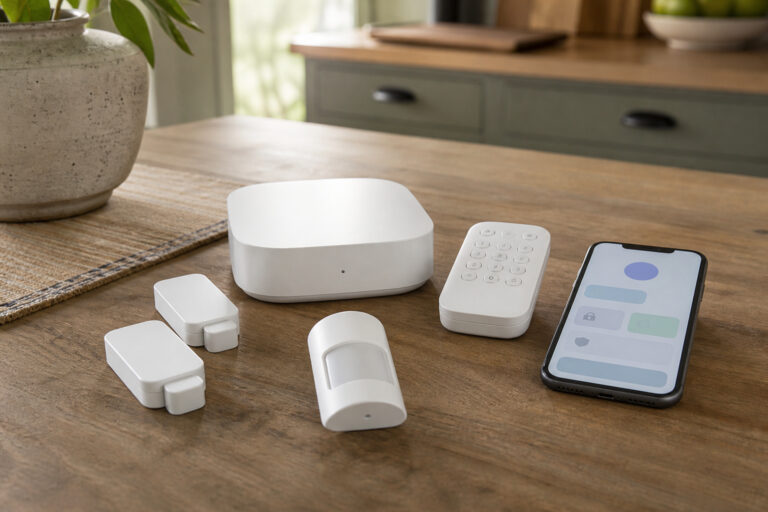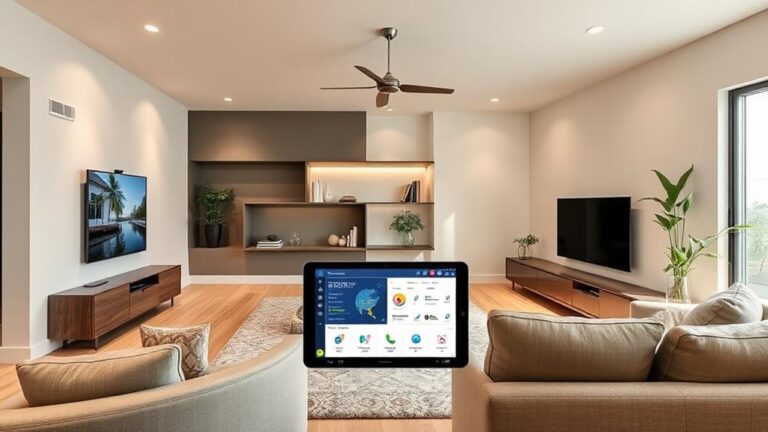
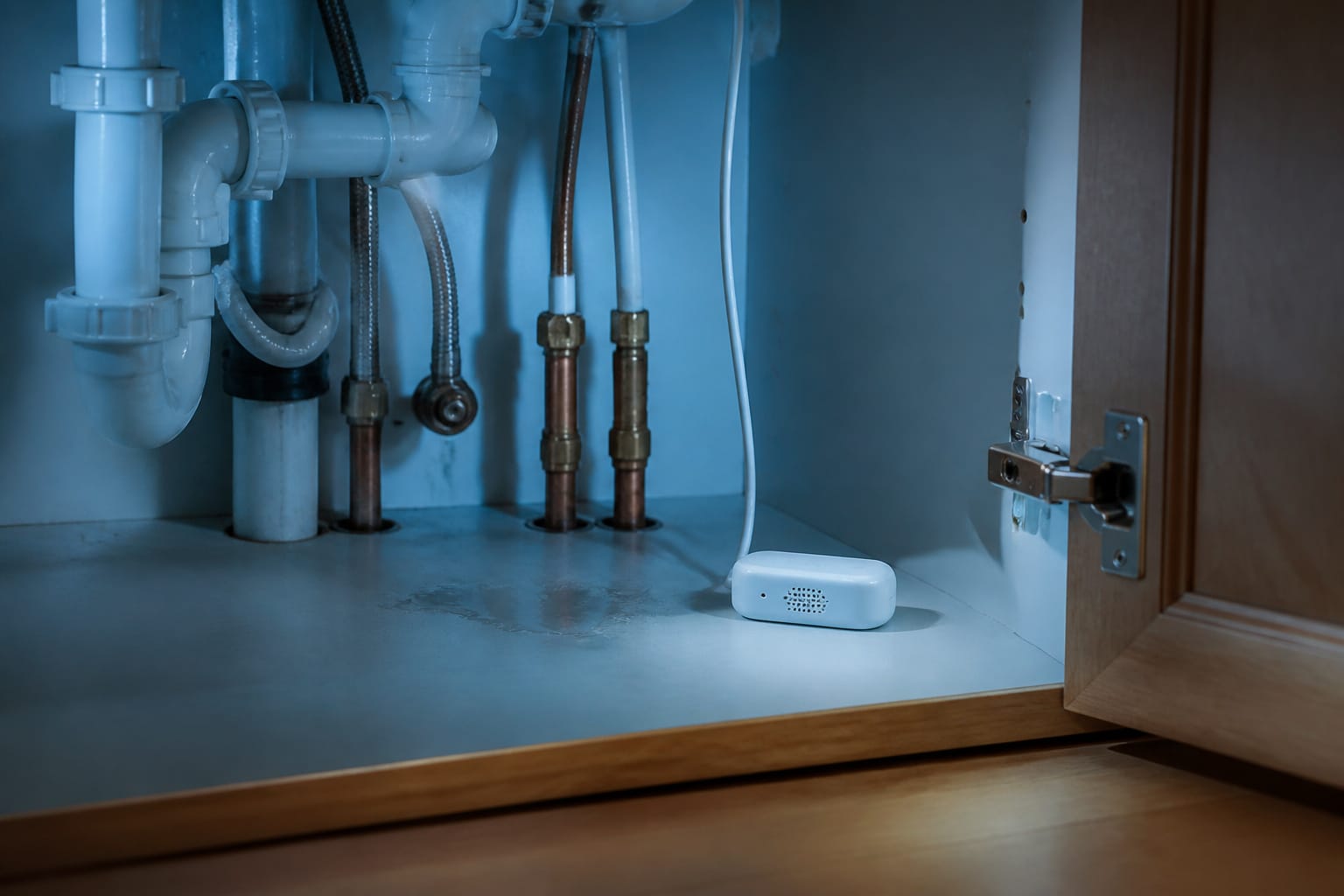
A burst pipe is one of the most expensive things that can go wrong in a house, often costing well over $10,000 in repairs, and it’s one of the few disasters a cheap sensor can genuinely help prevent with enough warning.
Winterizing a smart home isn’t about adding new gadgets for their own sake; it’s about a few devices that catch a specific, expensive failure early enough to act on it.
Here’s what helps, what’s worth adding before the cold sets in, and the cold-weather quirks in devices you probably already own.
Freeze Sensors and Leak Detectors: The Cheapest Insurance in the House
A freeze sensor is a small battery-powered device that tracks ambient temperature and alerts you when it drops below a set threshold, typically around 40-45°F, comfortably above freezing but low enough to warn you before pipes are at risk.
Placed in the specific spots most likely to run cold, like an unheated basement, a crawlspace, an exterior wall cabinet under a kitchen sink, or a detached garage with any plumbing, it’s genuinely one of the cheapest, highest-value additions to a smart home, precisely because the failure it’s guarding against is so expensive.
Many current models combine freeze detection with a water leak sensor in one device, which makes sense since they’re often needed in the same locations and a burst pipe produces both problems at once.
But know the limitation upfront: a sensor doesn’t detect the actual pipe temperature unless it’s mounted directly against it; it detects the nearby ambient air temperature, so placement close to the actual pipe or plumbing fixture matters more than just “somewhere in the room.”
Recommended Products

Help prevent costly water damage — Sends alerts the moment water is detected.

Complete plug-and-play kit: hub plus Leak Sensor 4 units, each with a built-in 105 dB audible alarm for instant on-site alerts.

No WiFi Worries: Say goodbye to WiFi dependency! YoLink devices use industrial-grade LoRa protocol for communication, offering an impressive 2,034 feet open air range. They don't connect to your network or the internet; they communicate securely with the Hub (Hub not included!). Enjoy obstruction-penetrating, long-range coverage without compromising your privacy.
Smart Water Shutoff Valves: The Step Beyond Just an Alert
A freeze or leak sensor only alerts you; it can’t act on its own if no one’s around. Damage can happen while you’re at work, traveling, or asleep. A smart water shutoff valve, installed on the home’s main water line, closes automatically when paired with a leak sensor that detects active water flow where it shouldn’t be, stopping a burst pipe from flooding a house rather than just warning that it happened.
This is a bigger installation project than a battery-powered sensor, generally involving cutting into the main water line, and it’s worth having a plumber handle the physical installation even if the smart features are self-configured afterward. It’s also worth checking with your homeowners insurance provider specifically; several insurers offer a premium discount for homes with leak detection and automatic shutoff installed, which can offset a meaningful chunk of the cost over a few years.
Recommended Products

AUTOMATIC SHUTOFF: The Moen Flo Shutoff is a whole-home leak detection device that installs on your main water line, monitors flow, pressure and temperature 24/7, and automatically shuts off your water before leaks become damage

WHOLE-HOME LEAK PROTECTION WITH AUTO SHUT-OFF: Installed directly at the main water line, the system automatically shuts off the water supply within seconds when a leak is detected, helping protect your entire home from costly water damage. Ideal for basements, kitchens, bathrooms, water heaters, RO systems, and under-sink areas.
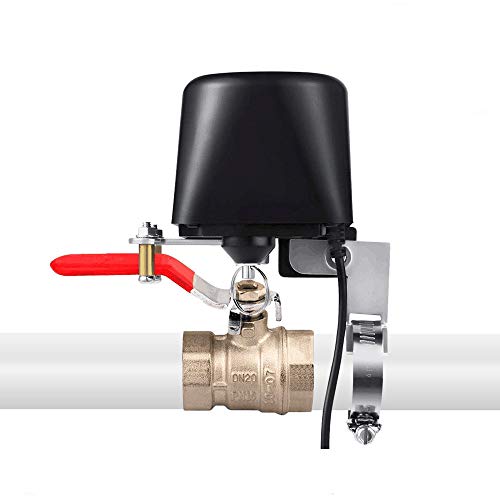
Ensure strong 2.4Ghz WiFi coverage for reliable operation. Proper alignment is CRITICAL: the pivot point of the opener MUST be directly above the valve's pivot point. Misalignment will cause insufficient force to open the valve and may damage the unit due to mechanical stress. Triple-check Alignment, Alignment, Alignment...!
Smart Thermostats in Winter: Setbacks, Satellite Sensors, and the Vacation Mistake
The single most common cold-weather mistake with a smart thermostat is setting it too low, or fully off, while away for an extended winter trip, treating an empty house the same as an empty house in summer.
A house needs to stay warm enough to keep pipes from freezing even when nobody’s home; the common guidance is not letting the thermostat drop below roughly 55°F during cold weather, regardless of how tempting a bigger setback looks for saving money while away.
Our smart thermostat breakdown covers the savings math in more detail, but winter absence specifically is the one case where the usual “set it back as much as possible” advice needs a hard floor.
Satellite temperature sensors, small add-on sensors that report a specific room temperature back to the main thermostat, are worth adding to a basement or any historically cold room for winter, since a thermostat only reading the temperature at its own location can miss a much colder pocket of the house entirely.
If a basement with plumbing running through it consistently reads noticeably colder than the rest of the house, a dedicated sensor there gives the thermostat (and you) a much more accurate picture of where the actual freeze risk is.
Recommended Products

Save up to 26% on your energy bills: ENERGY STAR certified. Automatically adjusts your temperature based on occupancy. Compared to a hold of 72°F

Save up to 23% every year on heating and cooling costs, adjusts to your set schedule to save energy when you’re gone and optimize comfort when you’re home. Compared to a hold of 72

PRIVACY PROTECTION*: Sensi won’t sell your personal information to third parties
Cold Weather and Your Existing Devices: Batteries, Doorbells, and Locks
Cold weather genuinely reduces battery performance and life on outdoor devices. It’s a well-understood chemical property of how batteries work. It’s not a defect specific to any brand. A video doorbell or outdoor camera that normally lasts a couple of months on a charge in mild weather can drain noticeably faster in sustained freezing temperatures. Check battery levels frequently during winter rather than assuming the usual schedule holds.
Our video doorbell guide covers the battery-versus-wired trade-off in more depth; a wired doorbell sidesteps this seasonal issue entirely, since it draws continuous power rather than running down a battery.
Smart locks with exterior keypads or fingerprint readers can also see slower response times or occasional missed reads in very cold weather, and battery-powered exterior locks face the same reduced-battery-life issue as outdoor cameras.
Keeping a mechanical key backup accessible (not locked inside, obviously) is sensible year-round advice, worth double-checking before winter, given the higher odds of a cold-weather battery or connectivity hiccup at exactly the moment you’re standing outside in the cold wanting the door to open.
Recommended Products
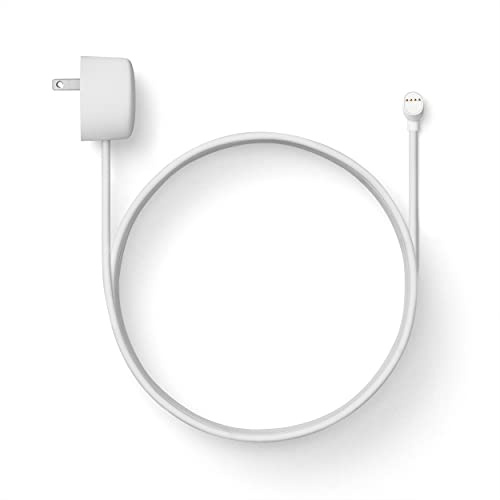
Weatherproof cable[1] and power adapter keep your Nest Cam home security camera connected with continuous power[2]

2K HD Live Video, Picture & Color Night Vision: The security cameras wireless outdoor provide a degree wide angle, 2K quality video and image. Regarding night vision, it has two modes, full color night vision and infrared night vision with a 33ft visible range. Whether it is night or day, it will provide a clear wide video of any area you wish to monitor. With the included app, the system’s live or recorded video can be accessed anywhere at any time. (Not support 5GHz WiFi)

【4K UHD Vision & Color Night Vision】LongPlus 2026 Enhanced 4K (8MP) resolution security camera delivers ultra-clear details for dependable day and night protection. Featuring an advanced starlight sensor and large aperture lens, it provides vivid full-color night vision even in low-light conditions, ensuring enhanced visibility after dark.
So, What’s Actually Worth Adding Before Winter?
For most households, a handful of freeze/leak sensors in the rooms most likely to run cold is the highest-value, lowest-cost addition, genuinely cheap insurance against an expensive, common failure.
A smart water shutoff valve is worth the bigger investment for anyone who travels frequently in winter, has a vacation property, or has had freeze damage before; check for an insurance discount before writing off the cost.
Beyond that, the main action items are behavioral rather than another purchase: never let the thermostat drop below the mid-50s while away, add a satellite sensor to a historically cold room if your thermostat supports one, and check battery levels on outdoor devices more often once temperatures drop.
For the bigger picture on smart home spending priorities generally, see our breakdown of what a smart home actually costs.
Frequently Asked Questions
What temperature should I set my thermostat to while away in winter?
Common guidance is not to let it drop below 55°F, even when away for an extended trip. Unlike a summer setback, where a bigger swing costs a little comfort on your return, an overly aggressive winter setback risks freezing pipes inside walls or unheated areas, which is a much more expensive problem than a few extra dollars on the heating bill.
Do freeze sensors actually detect pipe temperature, or just room temperature?
Most detect ambient air temperature near the sensor, not the pipe itself, unless it’s designed to clip onto or sit directly against the pipe. Placing it close to the actual plumbing, not just generally in the same room, makes a meaningful difference in how useful and timely the warning actually is.
Is a smart water shutoff valve worth the cost?
For frequent winter travelers, vacation property owners, or anyone who’s had freeze damage before, generally yes. It’s the difference between getting an alert about a burst pipe and automatically stopping the flooding. Check with your homeowners insurance provider. Several offer a premium discount for leak detection and automatic shutoff systems that can offset part of the installation cost.
Why does my video doorbell’s battery drain faster in winter?
Cold temperatures reduce battery performance and capacity across nearly all rechargeable battery types. It’s a normal chemical property of batteries, not a device defect. Check outdoor battery-powered devices more frequently during sustained cold weather, or consider a wired model if this is a recurring seasonal frustration.
Should I add a temperature sensor to my basement?
If your basement or another room is noticeably colder than the rest of the house and has plumbing running through it, yes. A thermostat’s built-in sensor only reads the temperature at its location. A satellite sensor in a consistently colder room gives a much more accurate picture of where the actual freeze risk is during winter.