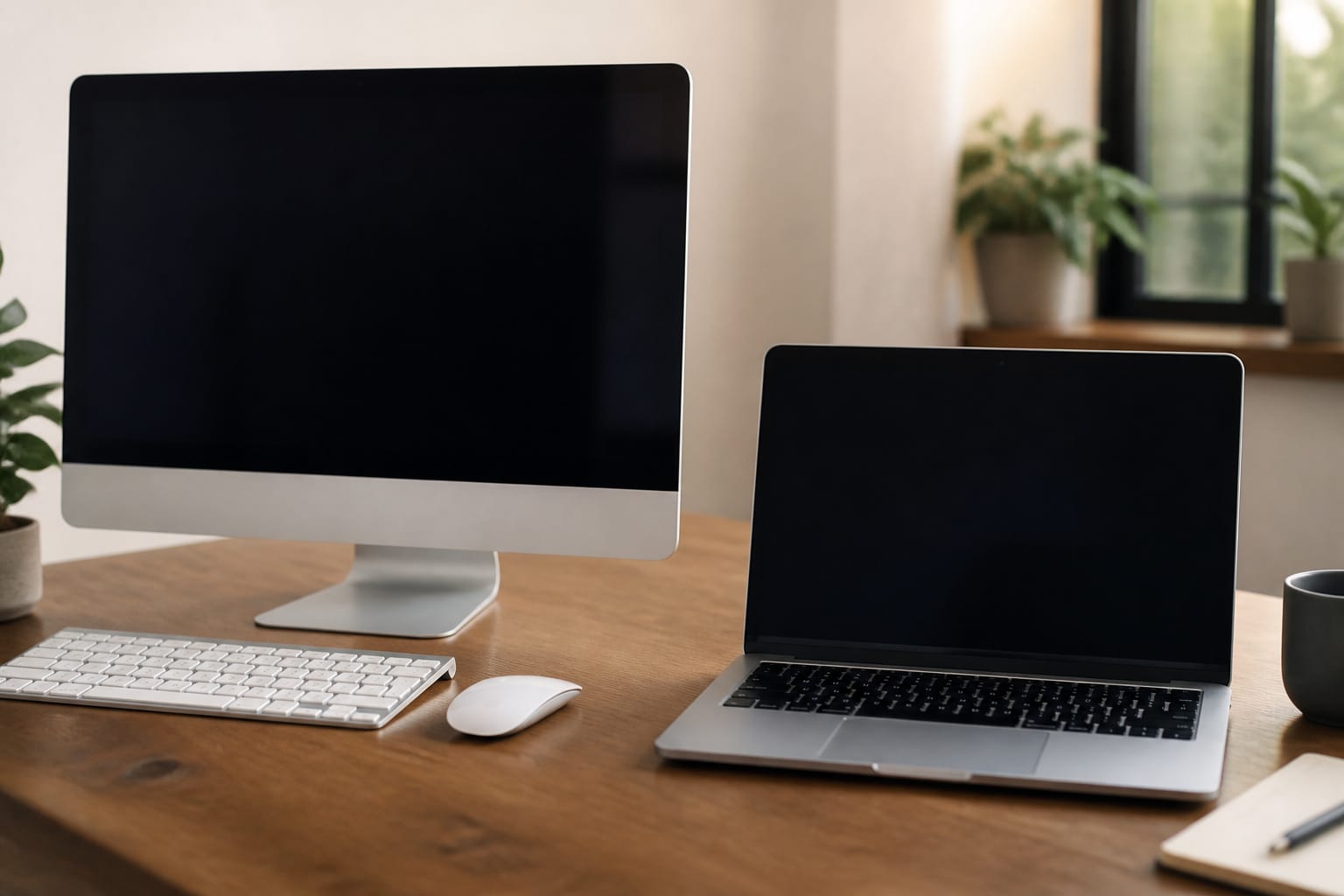
The choice between a desktop and a laptop comes down to whether you value portability or performance per dollar.
Both can run the same software, so the better question is where and how you will use the computer. This guide compares them across the factors that matter.
Portability

A laptop goes where you go and keeps working when the power fails. A desktop stays in one place.
If you work from several rooms, travel, or attend classes, a laptop is the practical choice. If the computer will live on a desk, portability is a feature you pay for and never use.
Performance for the Money
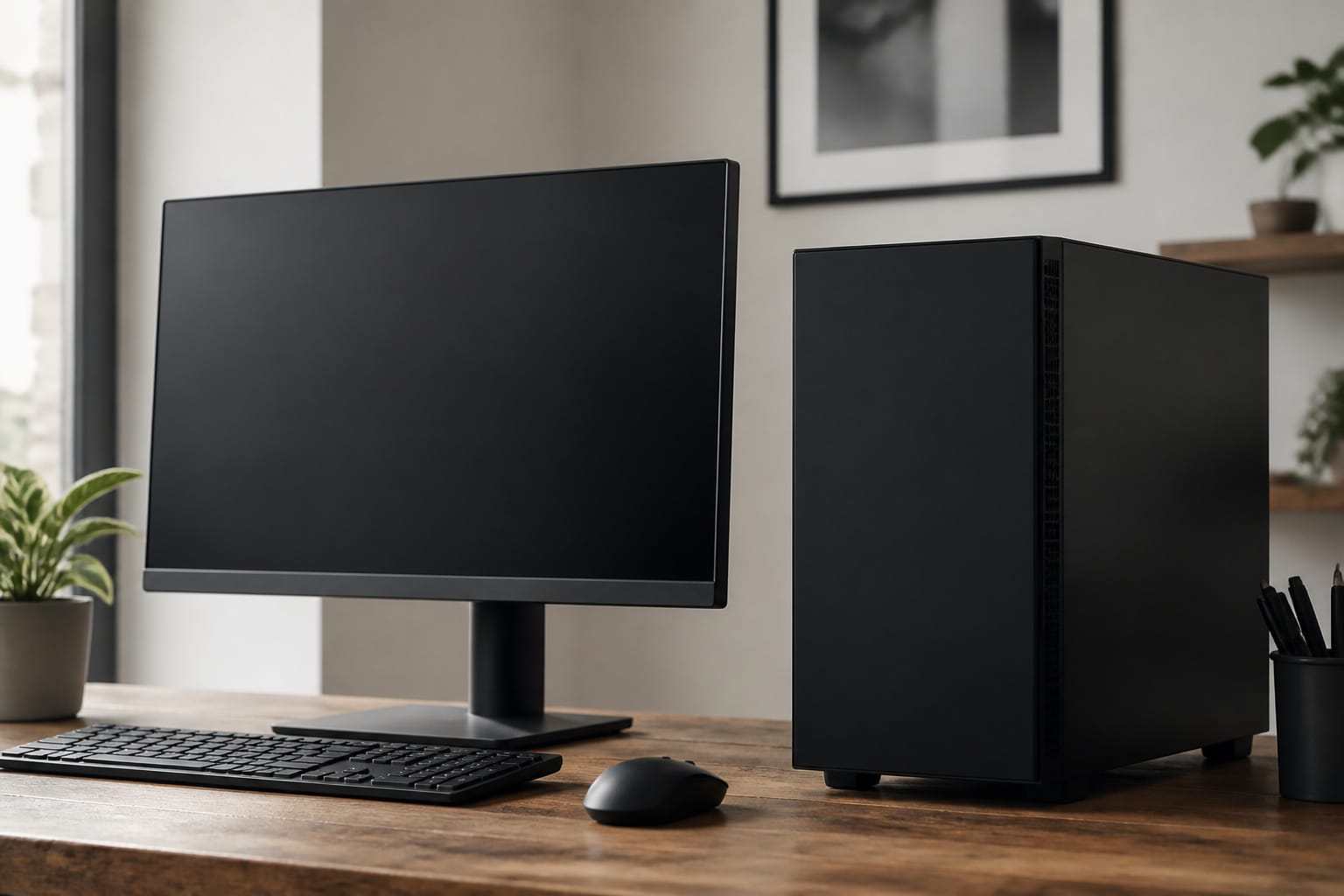
Desktops usually deliver more processing power and graphics performance for the same price, because they have room for larger cooling systems and do not need a battery or compact parts.
A laptop can match everyday performance but costs more for the same level of power, and heavy workloads can make it hot and loud.
Upgrades and Repairs
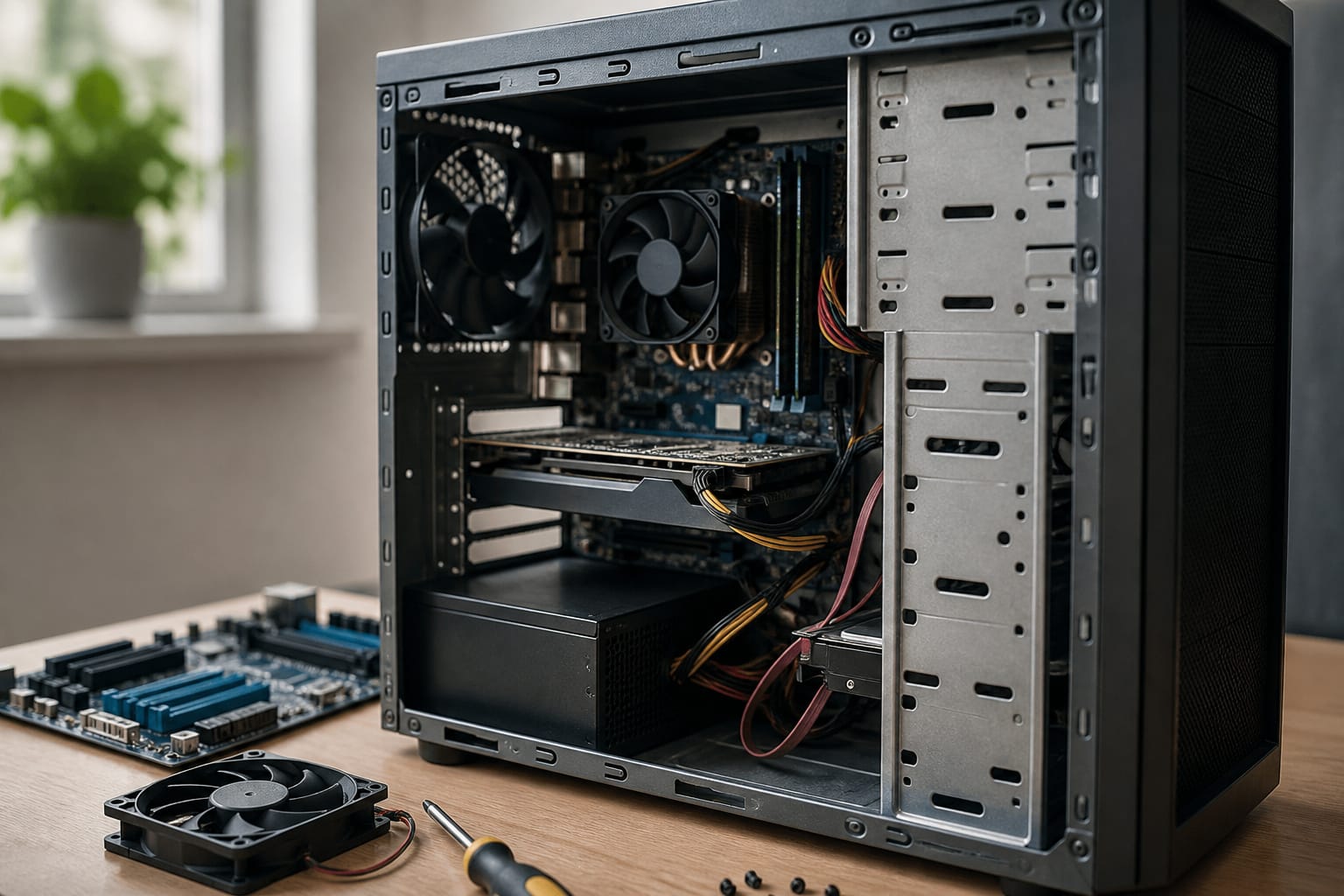
Desktops use interchangeable parts that can be swapped out as needed, including memory, storage, a graphics card, and a power supply.
Many laptops solder memory or storage to the board, and batteries wear out over time. If you want to extend the computer’s life by upgrading, a desktop gives you more options, as covered in our guide to upgrading an old computer.
Space, Setup, and Ergonomics
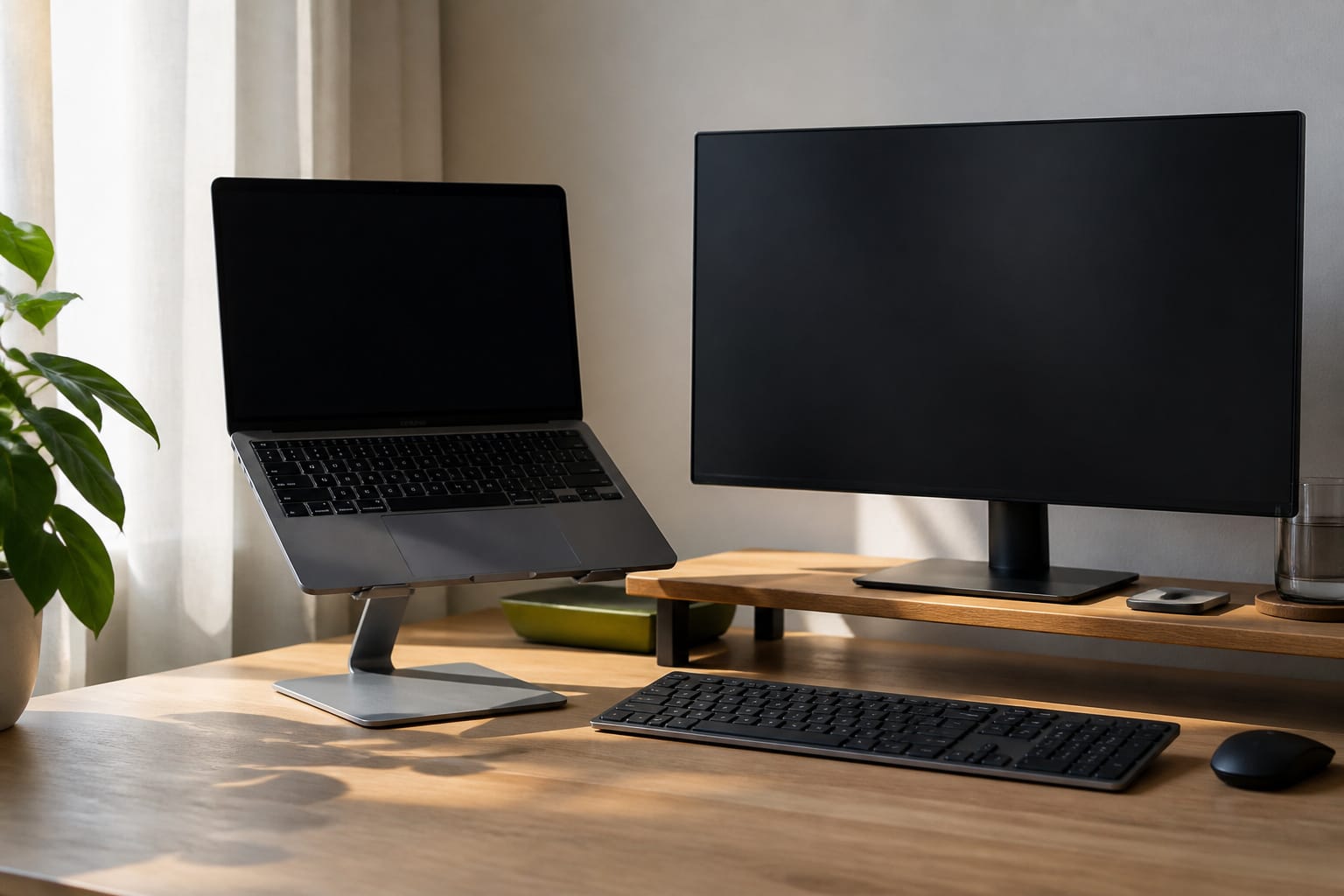
A desktop needs a monitor, keyboard, and mouse, which also lets you choose a comfortable setup.
A laptop is self-contained but has a small screen and a built-in keyboard, so many people who work at one for long periods add an external monitor and keyboard.
Small, form-factor desktops and all-in-one desktops save space.
Cost and Lifespan

Compare the total cost, including the monitor and accessories for a desktop. Both types are limited by software support dates rather than age alone; see how long a computer should last.
Desktops often last longer because parts that fail are easy to replace, while laptop batteries and hinges tend to be the first things to wear out.
Which to Choose

Choose a laptop if you need to move around, do not have a permanent workspace, or want one device for everything.
Choose a desktop if the computer will stay put and you want more performance and easier upgrades for the money. If you want both, a laptop with a dock, monitor, and keyboard at your desk covers most cases.
Our guide to choosing the right computer for your needs continues from here.
Frequently Asked Questions
Are desktops faster than laptops?
At the same price, usually yes, because they can use larger cooling and more powerful parts. Modern laptops are fast enough for most people.
Are laptops more expensive than desktops?
For the same performance, generally, but a desktop also needs a monitor and accessories, which narrows the gap.
Can a laptop replace a desktop?
Yes for most people, especially with an external monitor, keyboard, and mouse. Heavy gaming and professional workloads may still favor a desktop.
Which lasts longer, a desktop or a laptop?
Because parts are replaceable and there is no battery, desktops often stay useful longer, but software support dates limit both.
Is a desktop worth it if I rarely need power?
Only if you value a larger screen and a comfortable setup. A laptop or a small desktop is enough for light use.