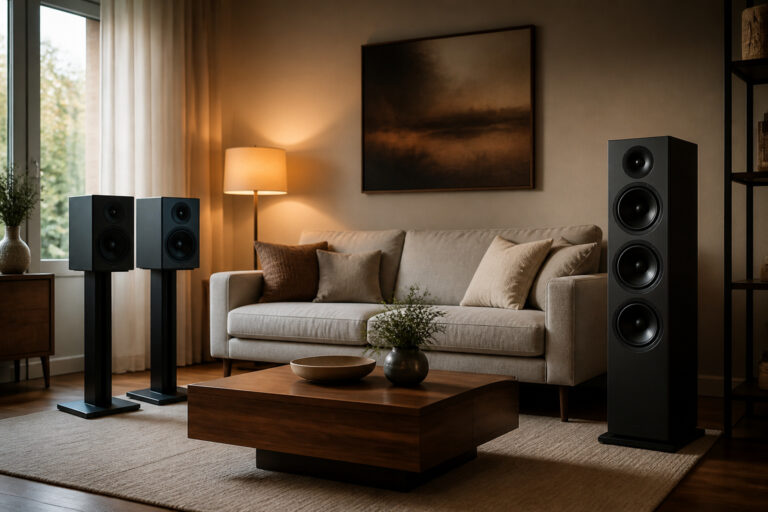
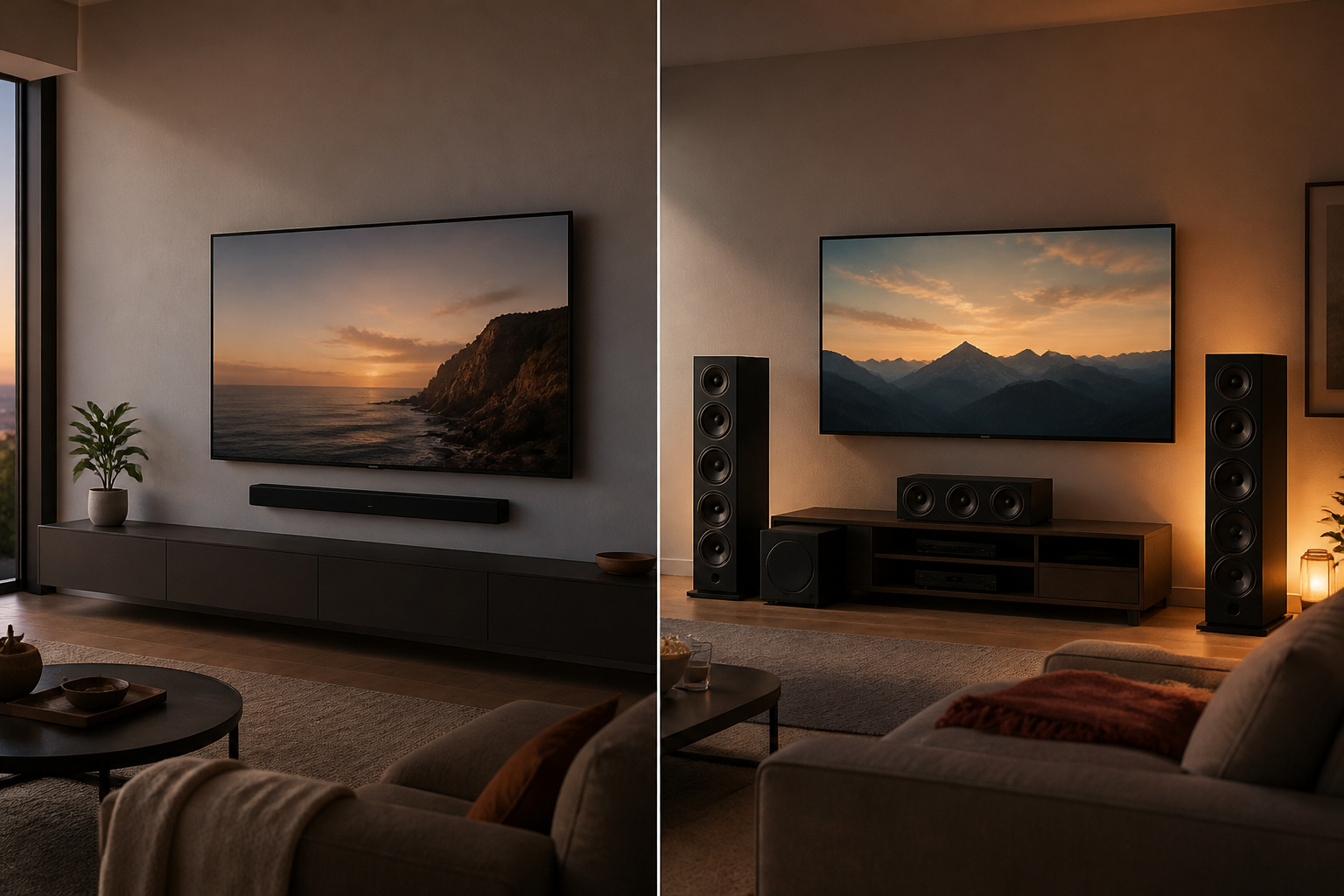
A soundbar is the easiest upgrade from built-in TV speakers, and a speaker system gives the most immersive sound. Which one sounds better depends on your room, your patience for setup, and how much you want to spend. This guide compares the two on sound, setup, and cost.
How a Soundbar Works
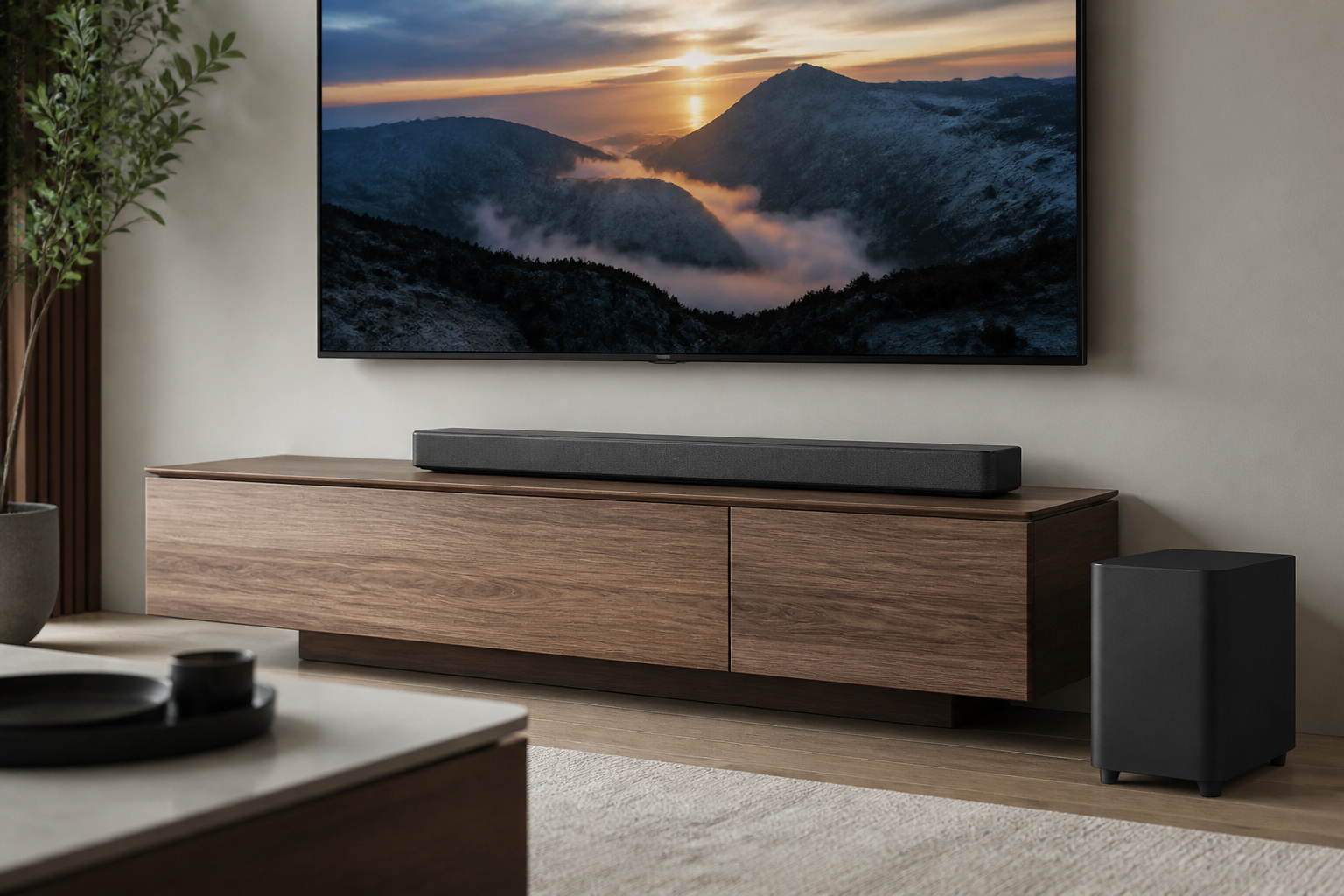
A soundbar puts several speakers in one long cabinet that sits under or in front of your TV. Most connect with a single HDMI or optical cable, and many also support Bluetooth. They improve dialogue clarity, add volume, and widen the sound compared with TV speakers.
Many include a separate wireless subwoofer for bass, and some use side-firing or upward-firing drivers to simulate surround sound by bouncing audio off the walls and ceiling.
Recommended Products

Elevating Your TV Sound Made Easy - Step into the scene with 2.1 channel audio and a subwoofer that delivers bold, lifelike soundscapes. Enjoy richer, more immersive sound powered by WOW Orchestra and AI Sound Pro.

【Powerful 120W Audio Performance】 – This sound bar delivers 120W of output power with a wired subwoofer for enhanced low-frequency response. Experience clear dialogue, detailed highs, and impactful bass for movies, TV shows, music, and gaming. The dedicated subwoofer ensures stable audio transmission without wireless interference

【AMP UP YOUR AUDIO — TRUE 2.1 SOUNDBAR WITH SUBWOOFER】Enhance your TV and music experience with a dedicated 5.25-inch wired subwoofer and dual 2.2" x 2.3" full-range drivers. Fuller sound. Clearer dialogue. Deeper bass
How a Speaker System Works
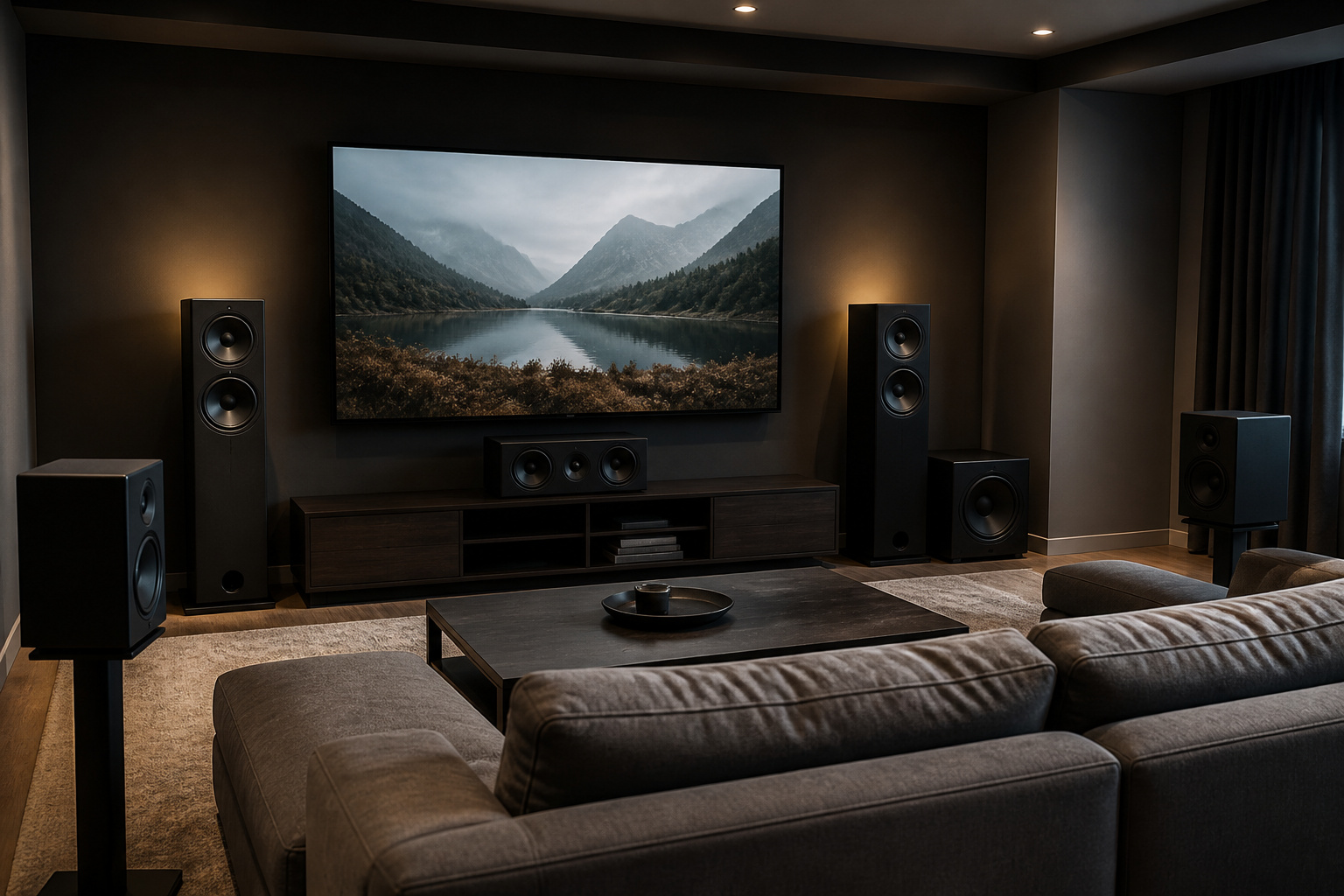
A speaker system uses separate speakers placed around the room, usually front left, center, front right, two surrounds, and a subwoofer. A receiver powers them and decodes the sound.
Because the speakers are spread out, movies place sound in the right direction, and music has more space and bass. Our guide on 5.1 vs 7.1 audio systems explains channel layouts.
Sound Quality Compared
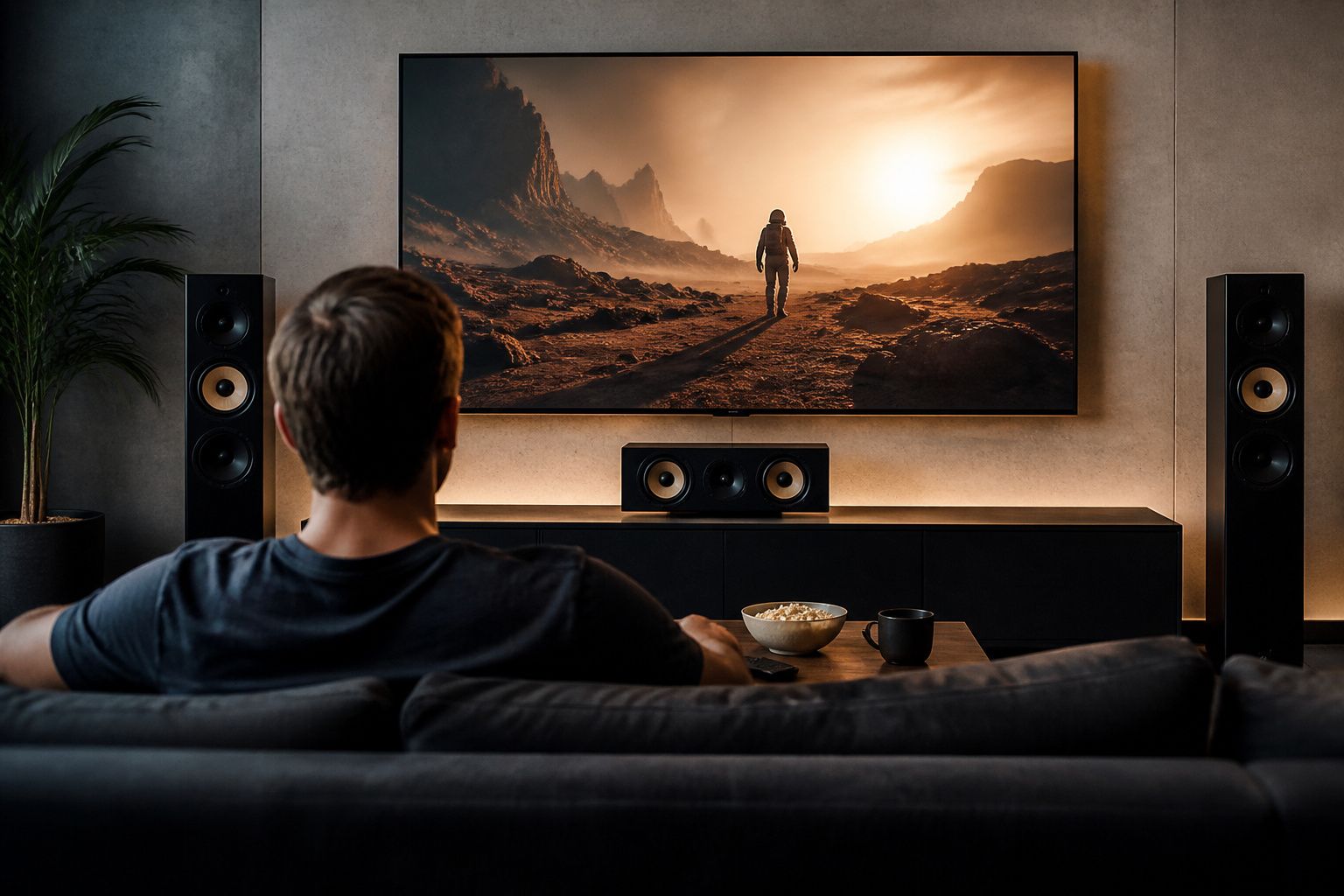
A speaker system generally sounds better. Separate speakers give real surround effects, larger drivers handle bass and dynamics more easily, and you can place each one where it works best.
A soundbar’s surround effect is simulated and depends on room shape, so it is less precise. Good soundbars still make a big improvement over TV speakers, especially for dialogue, and for many rooms they are more than enough.
If you are comparing the two for home theater, see soundbar vs home theater system. For newer formats, Dolby Atmos explained covers height effects.
Recommended Products

Feel every note with a 600W power output

【40Wx4 Bookshelf Speakers and 75w Center Speaker】: The surround sound system features four high-power and full-range speakers, including one 3-inch passive center speakers and two pair of 3-inch passive bookshelf speakers(four speakers are identical), allowing you to experience stunning surround sound from all angles.

VocalMatrix Algorithm: Powered by Ultimea’s VocalMatrix, the system intelligently extracts vocals and dynamically redistributes them across rear surround channels through 7.1 discrete outputs. By analyzing the original soundstage, it maintains accurate vocal positioning while preserving the surrounding ambient sound.
Setup and Space
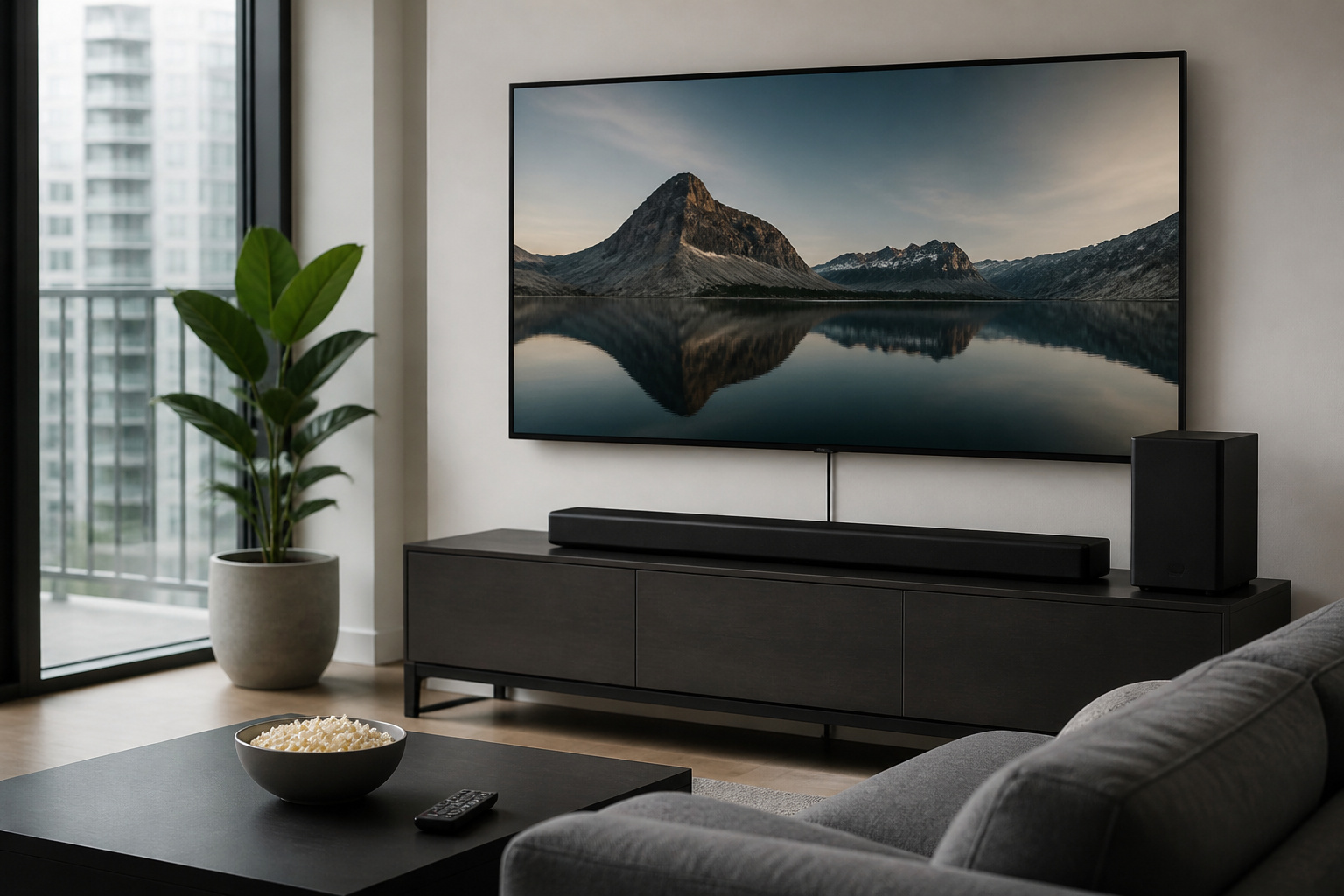
A soundbar takes minutes to set up and almost no space, which suits apartments, small rooms, and anyone who dislikes wires. A speaker system needs a receiver, speaker wire, stands or mounting, and thoughtful placement, and rear speakers need cables across the room or wireless kits.
See soundbar placement tips and how to connect a soundbar to any TV for soundbar setup.
Recommended Products

Straight from the theater to your home: easy set-up, built-in tweeter, 2-ch speaker with simple Bluetooth connection

HEAR YOUR TV BETTER: Designed with simplicity in mind, the Bose TV Speaker is an all-in-one soundbar that clarifies speech and is a simple fix for better TV sound
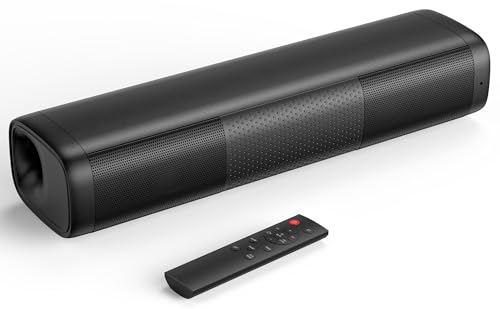
【Crystal-Clear, Balanced Audio】Experience rich, well-rounded sound with this sound bar(Powered by an AC Adapter) featuring 48W of peak power and perfectly tuned bass and treble—ideal for movies, music, and gaming without harsh highs or muddy lows.
Cost
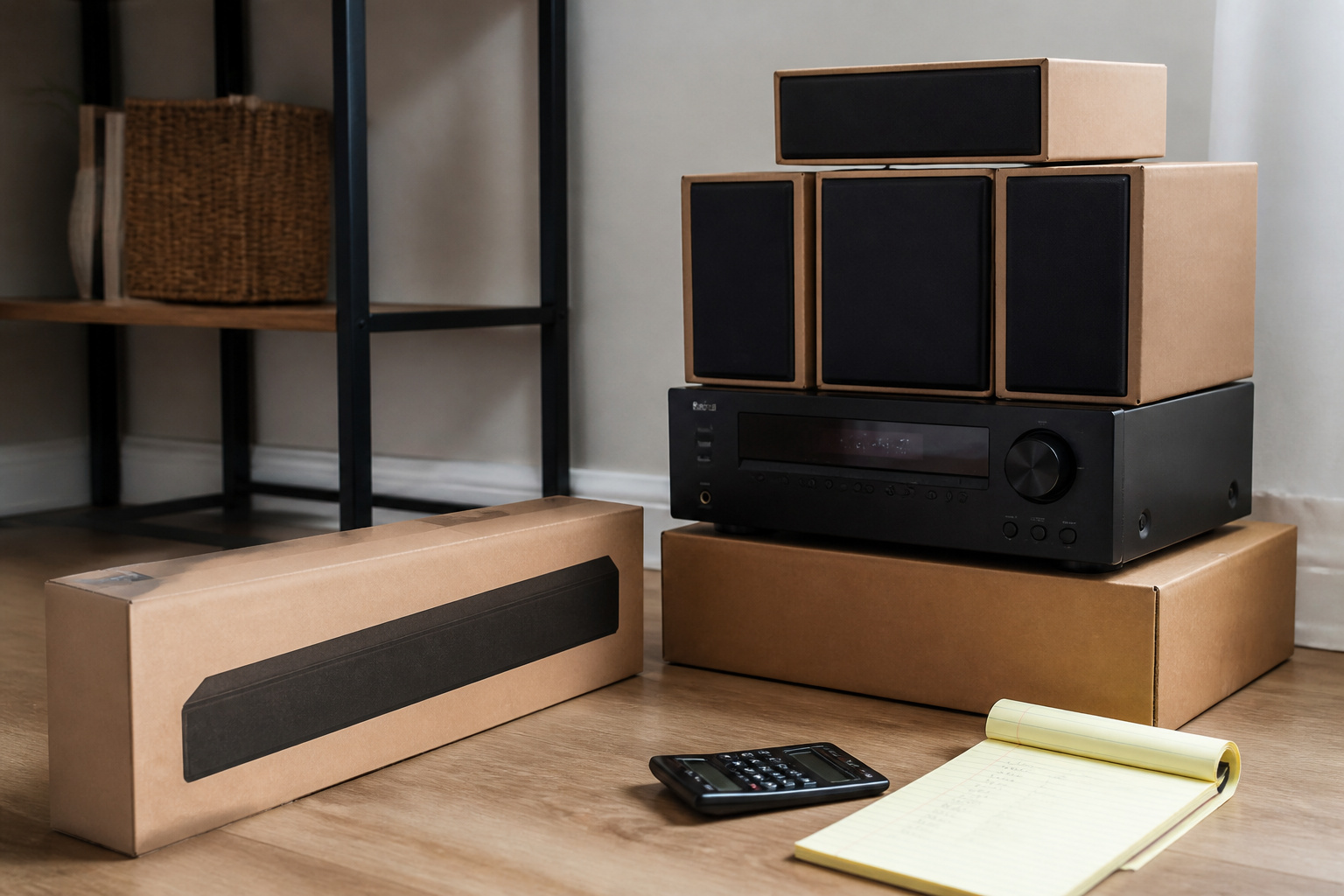
Soundbars range from inexpensive to premium, and a good one can cost less than a receiver and speakers. A complete system costs more because you buy the receiver and speakers separately, but you can build it in stages and upgrade pieces later.
See how to upgrade your audio setup in stages for one approach.
Which Should You Choose
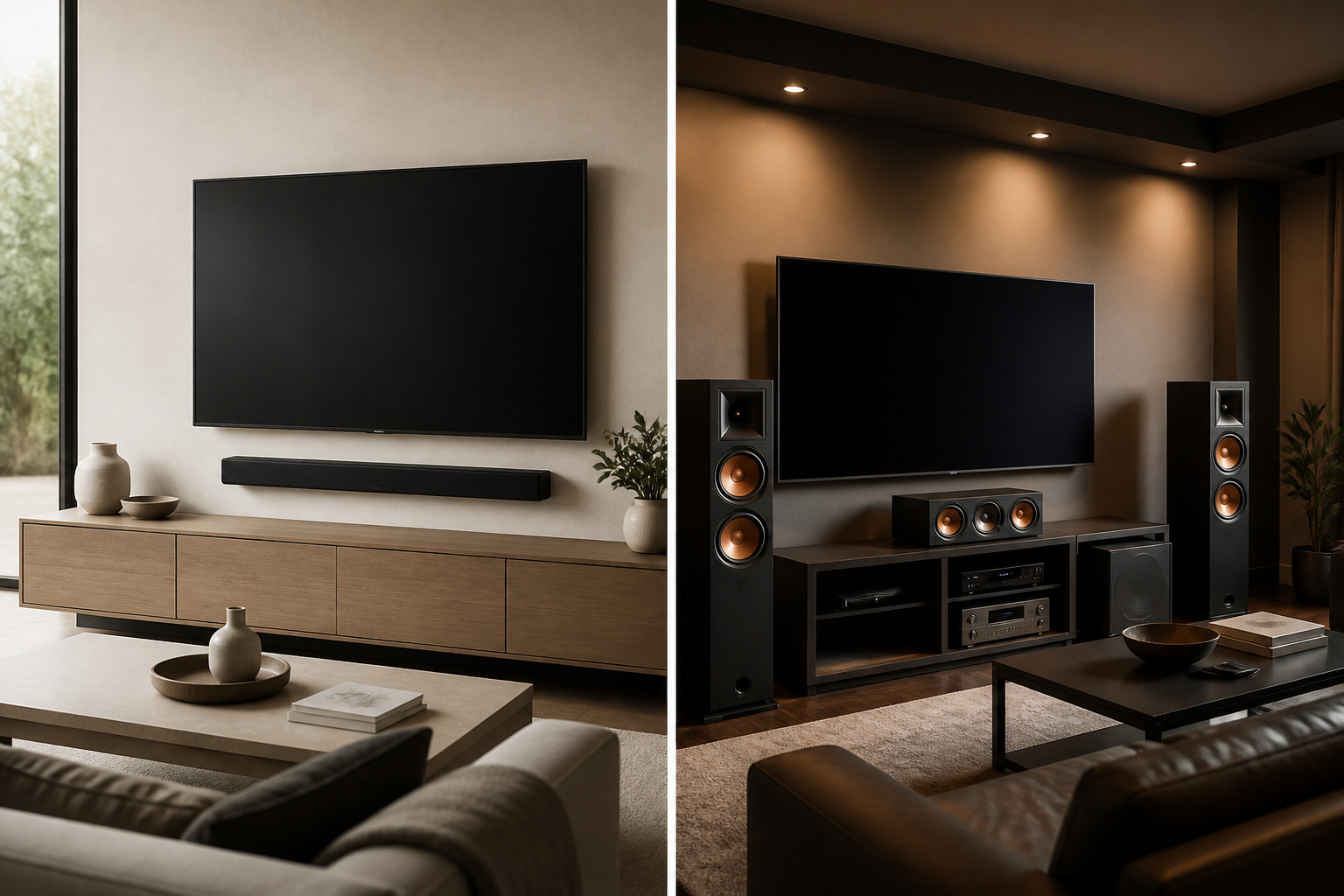
Choose a soundbar if you want quick, tidy, and affordable improvement, or live somewhere with limited space. Choose a speaker system if you want true surround sound, strong bass, and room to grow.
If you are somewhere in the middle, a soundbar with a wireless subwoofer and optional rear speakers is a common compromise.
Frequently Asked Questions
Can I Connect a Soundbar to an Older TV Without HDMI?
Yes. Many older TVs have an optical digital audio output, which most soundbars accept. Others use analog outputs such as red and white RCA or a 3.5mm headphone jack. Match the TV’s output to an input on the soundbar, and check the TV’s audio settings to send sound to the external device.
Do Speaker Systems Work With Smartphones and Tablets?
Yes, with the right connection. Many receivers include Bluetooth or Wi-Fi streaming, and you can also use a 3.5mm or USB connection, depending on the model. Passive speakers need an amplifier or receiver, so you cannot connect them directly to a phone.
Are Soundbars Easy to Move Between Rooms?
They are lighter and simpler to move than a speaker system. Unplug the power and the TV cable, and set it up in another room, though subwoofers and rear speakers add pieces to move. A basic soundbar with a single cable moves easily.
Can Outdoor Speakers Be Used Indoors Safely?
Yes, they work fine indoors. Most outdoor speakers are passive, so they need an amplifier or receiver, and their tuning may be lighter on bass than indoor speakers. Make sure the amplifier matches their power and impedance ratings.
Do I Need Wi-Fi for a Soundbar to Work?
No. A soundbar works with a power connection and a cable from your TV. Wi-Fi adds features such as music streaming, voice assistants, and multi-room audio, but it is not required for TV sound.