What if your car could remember everything? You’d know who cut you off, who backed into you, and whether that fender bender was really your fault. A dash cam gives your car that memory.
But here’s the real question: do you need just one front camera, or both front and rear? You’ve got choices, and each one shapes how much your car can recall.
What a Single Front Camera Covers
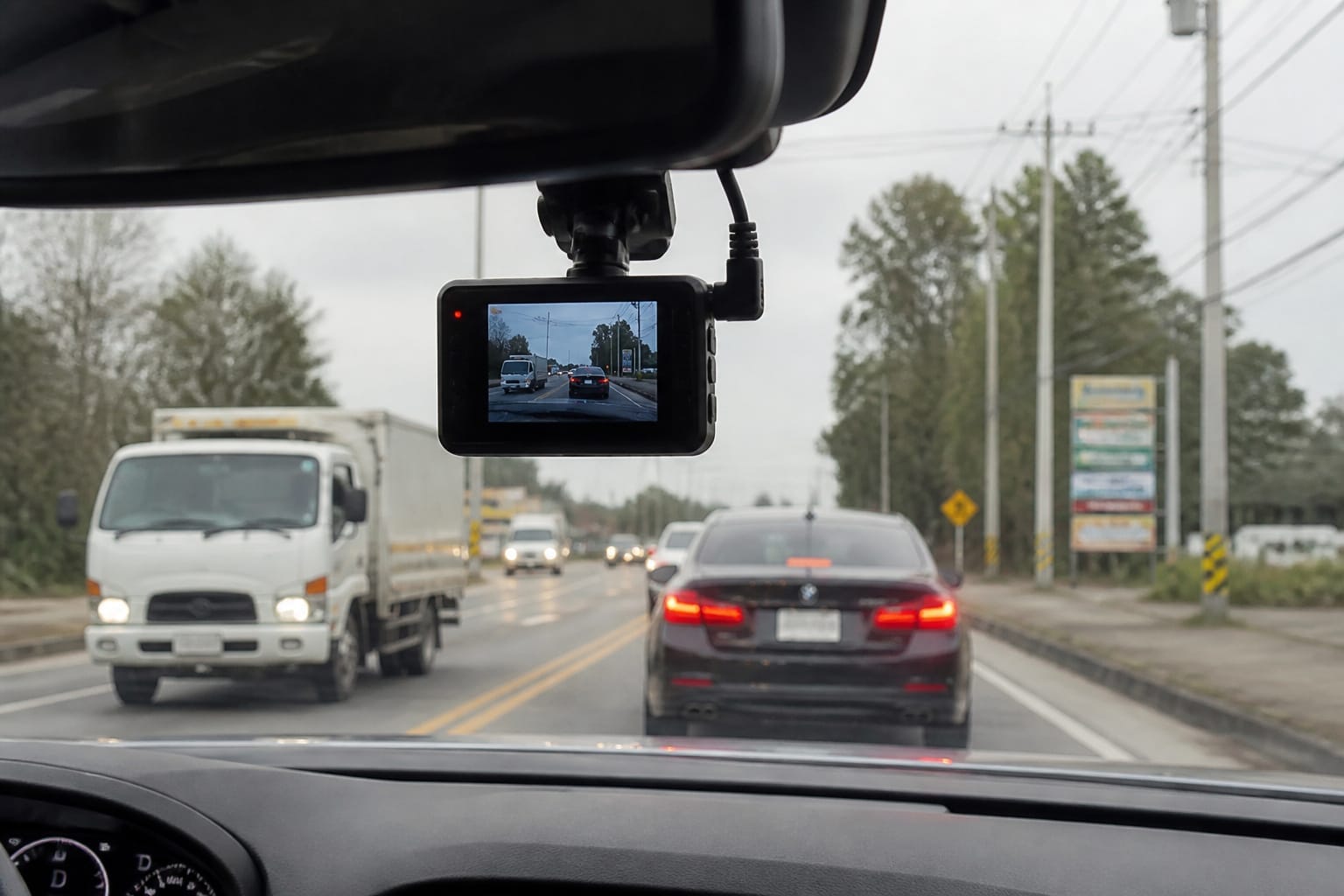
A single dash cam watches the road ahead. It records your drive, captures sudden stops, and logs near-misses. It’s simple, affordable, and easy to live with.
You install it once, plug it in, and forget it. When something happens, like a sudden swerve, a crash, or a false accusation, you’ve got proof. That front lens sees cars running red lights, pedestrians darting out, and trucks changing lanes without warning. It’s your silent witness.
Most accidents happen in front of you, so a front-only setup covers the basics for most drivers.
Products Worth Considering

【4K Ultra HD Clarity for Every Drive】Record every moment in true 4K UHD with this dash cam front, capturing sharper details. Easily read license plates, road signs, and critical details during daily commutes, highway driving, or unexpected incidents. The dashcams for cars with 140° wide-angle car camera expands your field of view to reduce blind spots, giving you more complete and reliable footage when it matters most

【4K UHD HDR Front Camera with F1.55 Aperture + 1080P Interior】Capture critical road details with a 4K front dash cam featuring HDR and a large F1.55 aperture, allowing more light intake for brighter, clearer footage in both daytime and low-light conditions. The built-in 1080P interior camera records clearly in-cabin activity, making this front-and-interior setup ideal for accident evidence, rideshare monitoring, and everyday driving documentation

True 4K+4K+1080P 3 Channel Dash Cam: The front camera records in stunning 4K UHD, the rear camera captures 4K footage, and the cabin camera records in 1080P, providing complete coverage of the road ahead, behind, and inside your vehicle. With wide viewing angles of 170° front, 150° rear, and 150° cabin, this dash camera for cars minimizes blind spots and keeps every important moment recorded
What a Rear Camera Adds
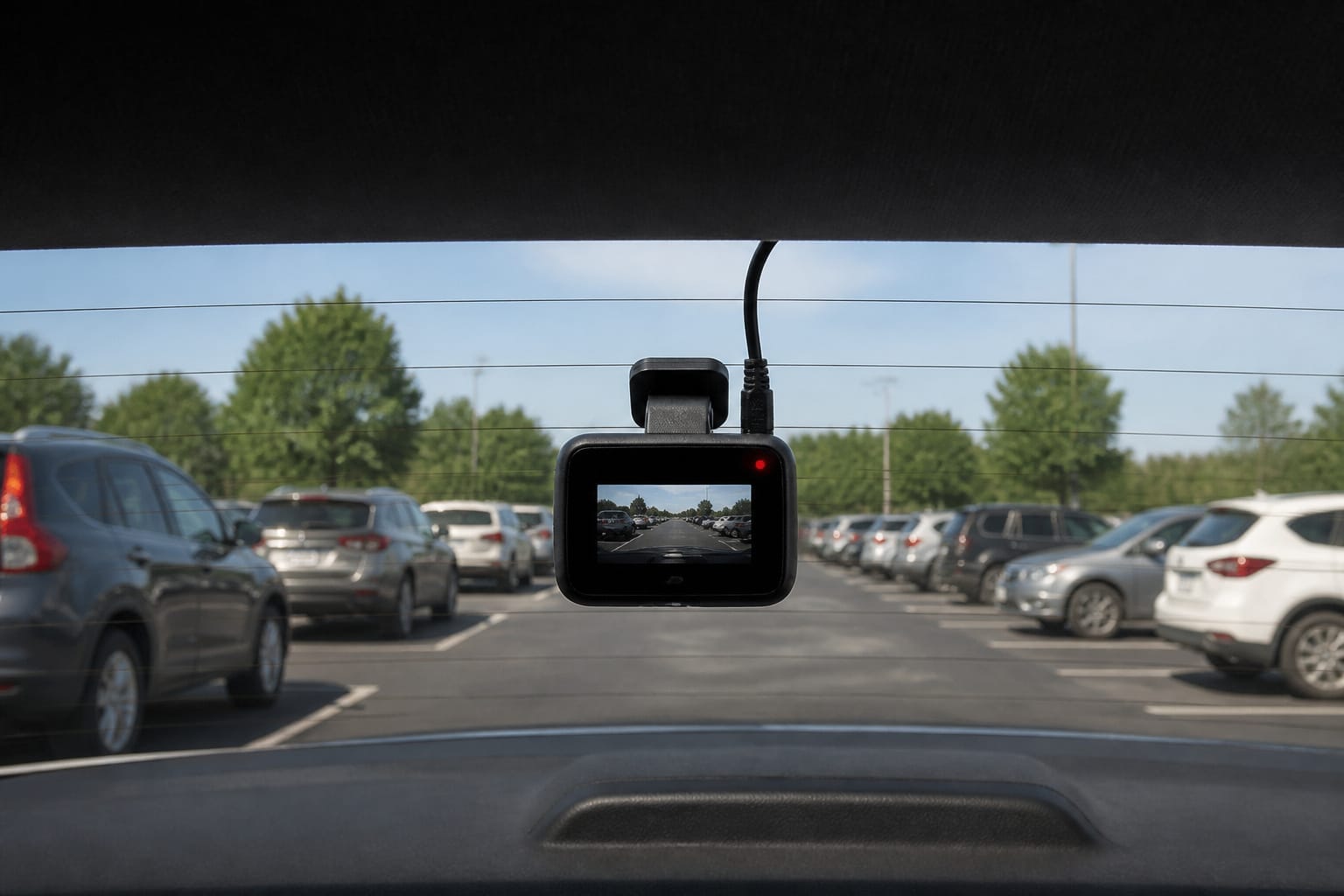
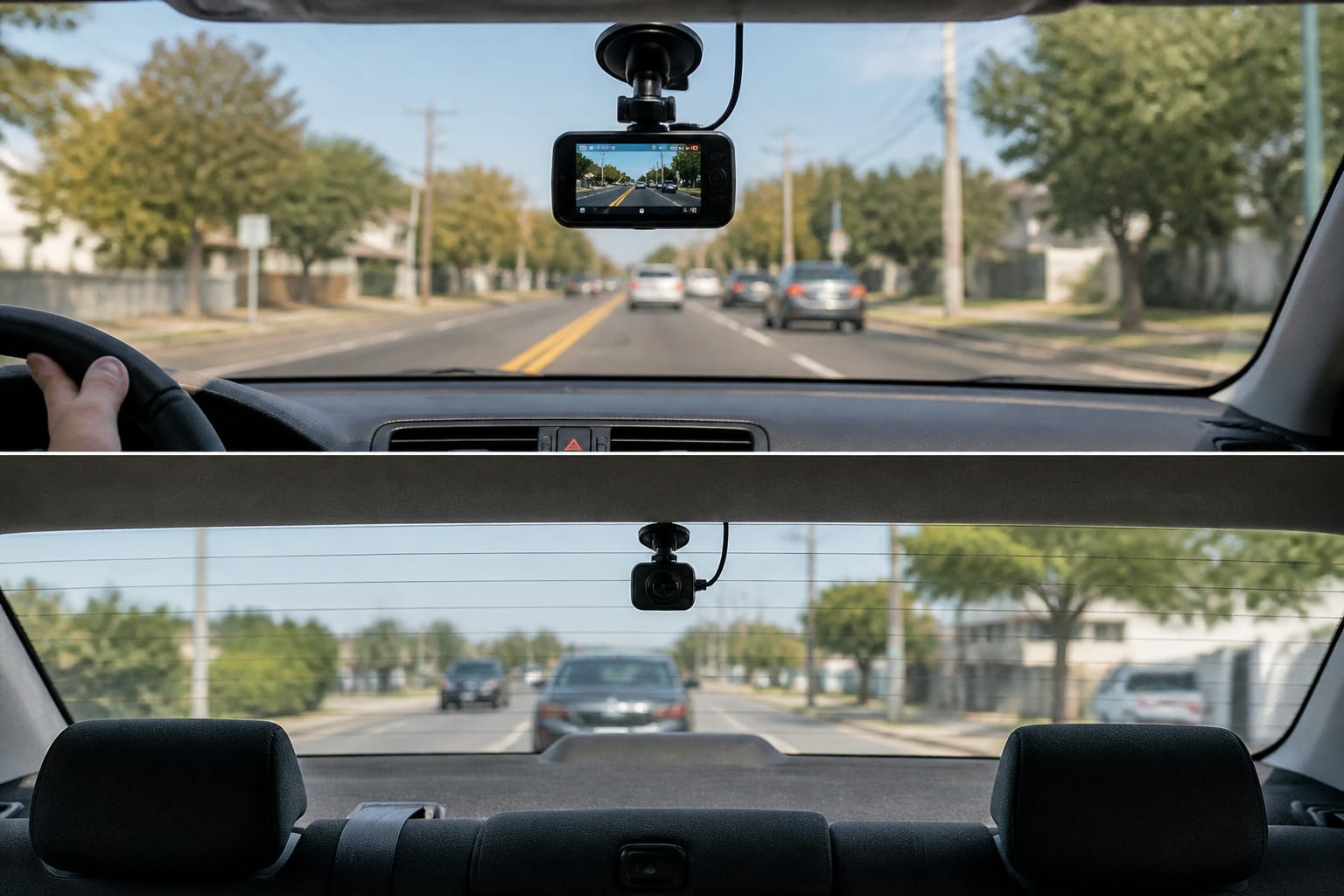
But what about behind you? Think about parking lots. Someone dings your door. A delivery van clips your bumper. You’re reversing, and another driver isn’t looking. A single camera won’t see that.
That’s where dual dash cams shine. The second camera faces the rear, covering your back like a co-pilot. It records every taillight flare, every sudden stop behind you, and it watches when you park and walk away.
Some dual-camera models keep recording when the car is parked and turned off, so it guards you while you’re inside the store or at work. Higher resolutions capture significantly more detail during accidents.
If you’re weighing resolution against the footage you can store, our storage guide breaks it down. Wide viewing angles matter too; see our notes on where to mount a dash cam for getting the most out of a front or rear lens.
You’ve got more angles, more proof, more peace of mind. But yes, it costs more, and installation takes a little longer since wires run through the car to connect both cameras.
What to Look for in a Dual Setup
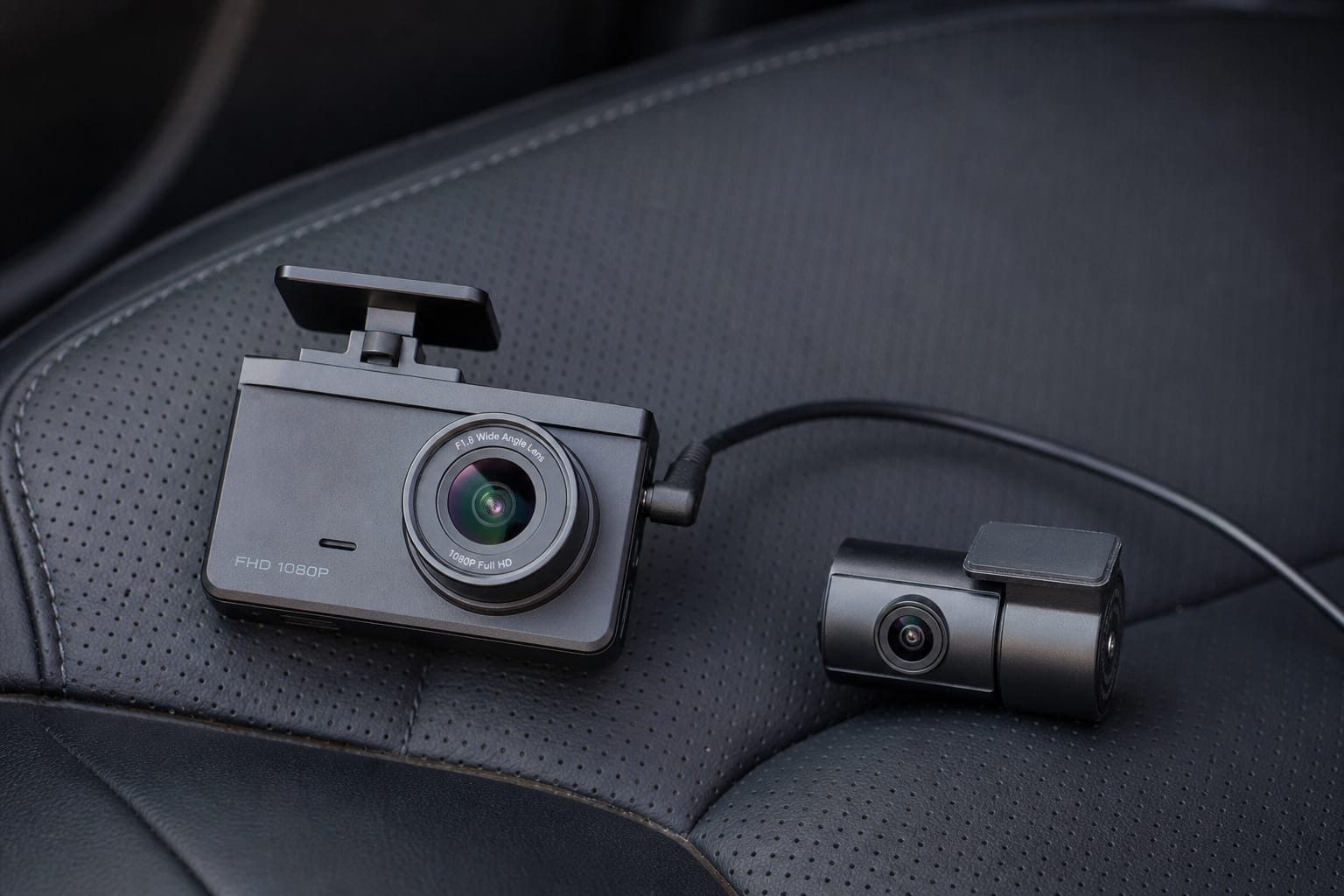
If you do go dual, a few specs decide how useful the rear camera actually is. Front resolution matters most for reading plates and signs, so look for at least 1440P up front and 1080P in back; most dual systems save 4K for the front lens only, since the rear angle rarely needs that much detail.
If you’re recording two video streams at once, storage fills up fast. Plan on at least 128GB, and go bigger if you record in higher resolution or want long parking-mode coverage. Cards over 32GB typically need to be formatted as exFAT, so double-check that your camera and card agree before you rely on it.
Parking mode is the other big differentiator. It needs a hardwired connection to your fuse box to run without draining your car’s battery.
Better systems use motion detection or a G-sensor to wake up only when something actually happens, instead of recording hours of an empty parking lot.
For the fuller list of what to look for beyond parking mode, our dash cam features guide covers it in depth.
Products Worth Considering

UPSCALED 4K FRONT + 1080P REAR DUAL DASH CAM: The ROVE R2-4K DUAL records the road ahead and behind at the same time. The front camera captures at 2.5K (QHD) and intelligently upscales to 4K (2160P) for higher-detail playback, while the rear camera records at Full HD 1080P. This is upscaled 4K, not native 4K, engineered to show sharper everyday detail than standard 1080P dash cams, so you can read license plates, signs, and surroundings in front and rear footage.
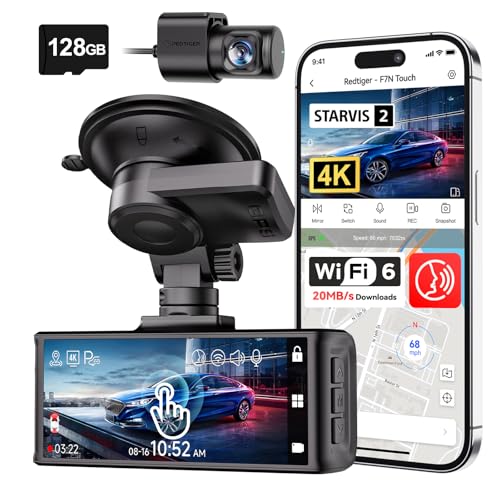
[4K+1080P Dual Recording] REDTIGER F7N TOUCH captures your drive journey in stunning 4K UHD resolution with STARVIS 2 sensor 170° wide-angle view for the front dash cam and 1080P FHD resolution 140° wide-angle for the rear car camera. Equipped with WDR and HDR technology, the enhanced super night vision ensures better visibility even in low-light situations, providing you with reliable recordings day and night.

[4K+1080P Front & Rear Recording] REDTIGER F7NP dash cam captures every detail with stunning 4K front and 1080P rear video. Featuring the advanced STARVIS 2 sensor plus the 170° front and 140° rear wide-angle lens, this dash camera delivers sharper images, balanced lighting, and reliable evidence day or night. Ideal for commuting, road trips, rideshare drivers, and new drivers.
Which Setup Fits Your Driving
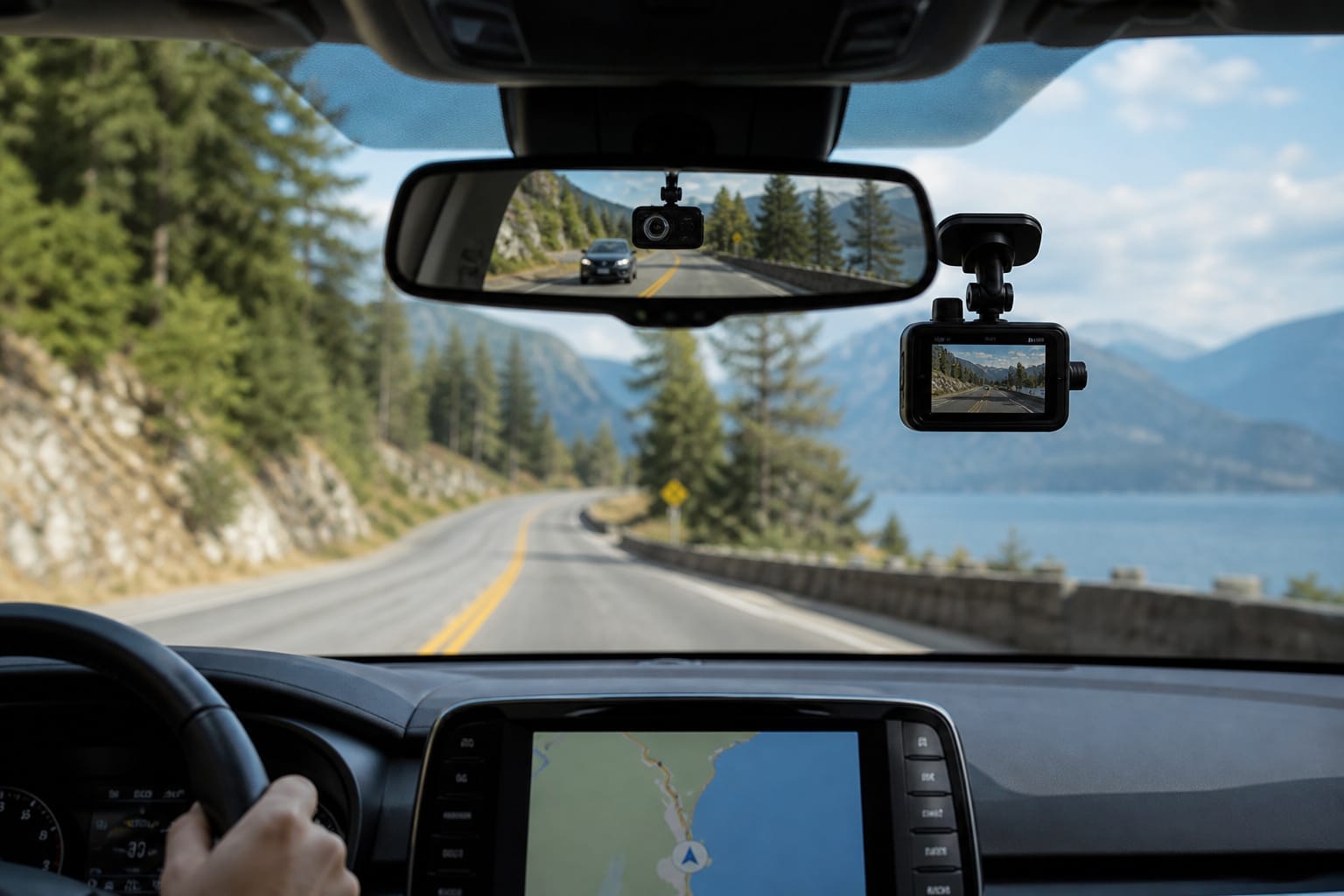
Imagine a rear-end collision. The front cam shows your brake lights were on. The rear cam shows the other car wasn’t slowing down. Together, they tell the full story.
You decide what matters most. If you mostly drive highways and city streets, a single cam might be enough. If you park on busy streets, haul kids, or drive in tight spots, dual cams give you the confidence of full coverage.
Once you’ve picked a setup, here’s how to route the wiring cleanly so a second camera doesn’t mean visible cords running through the cabin.
Choose front-only for simplicity. Choose front and rear for complete coverage. Either way, you’re smarter with eyes on the road, and when the unexpected hits, you’ll be glad you made the call.
Products Worth Considering

UPGRADED 4K UHD CLARITY - Experience stunning detail with the front camera's upgrade to 4K UHD (2160p) resolution, paired with a 1080p rear camera. The extra-large 12" display provides 1.5 times the viewing area of a standard mirror, significantly reducing blind spots for enhanced safety.
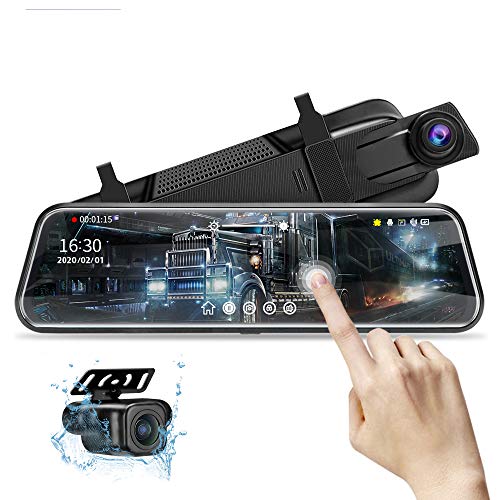
Dual 1080P Front and Rear Camera : Chip upgrade, clearer pixels! By optimizing image processing technology and enhancing light suppression, greatly improved night vision for the rear camera. 1080P front camera and 1080P IP68 waterproof rear camera use high-definition streaming technology, mirror dash cam can provide ultra clear video and capture license plates from a distance. Rear view mirror camera is wide angle lens reduce blind spots to capture many details on the road.

4-Channel Dash Cam for Complete Vehicle Coverage: This dash cam is equipped with four Full HD 1080P cameras, capturing footage of the front, rear, left, and right sides of your vehicle simultaneously. The adjustable front cameras enhance visibility and offer flexible recording angles, including interior footage.
Frequently Asked Questions
Can Dash Cams Record When the Car Is Parked?
Yes, you can set dash cams to record while parked. Plug them into hardwired power or use parking mode features. They stay alert and watch for bumps or motion. When something happens, they automatically save the clip.
Think of it like a guard on duty. Your front camera catches hit-and-runs. Add a rear camera, and you cover both ends. It’s smart, simple protection: always on, always ready.
Do Dash Cams Use a Lot of Battery?
No, dash cams don’t drain your battery much when driving. You’re already charging as you go.
But parked mode? That’s different. It sips power slowly, like a straw on a soda. Use hardwiring or a battery guard. They cut power before your car stalls. Smart move. You stay protected, never stranded.
Keep it simple. Stay safe. Watch the road, not the warnings.
Are Dash Cam Recordings Admissible in Court?
Yes, your dash cam recordings are admissible in court. You need clear, unedited footage. Judges accept it as solid proof after an accident.
Show the date, time, and location. Those details matter. Don’t tamper with the file. Keep it saved safely. If the video’s real and relevant, you’ve got a strong case. Courts trust what the lens sees.
Can I View Dash Cam Footage on My Phone?
Yes, you can view dash cam footage on your phone. Open the app, connect to the camera’s Wi-Fi, and you’ll get instant playback. Tap to zoom, swipe to browse clips. Some cams even send alerts straight to your screen.
Pair them once, then stream live or review crashes fast with no cords, no fuss, just smooth, real-time access whenever you need it.
Do Dash Cams Work in Low Light Conditions?
Yes, most dash cams handle low light well. You turn it on, and it works: clear footage, even at night. Look for wide dynamic range and large sensors; they grab light fast.
Park under streetlights, and details stay sharp. License plates stay visible, and shadows stay defined. In rain or dusk, the lens adapts, giving you smooth, bright video later. It’s built for dim streets, dawn drives, and midnight stops.